Oatmeal Cookie Dough Lava Cake
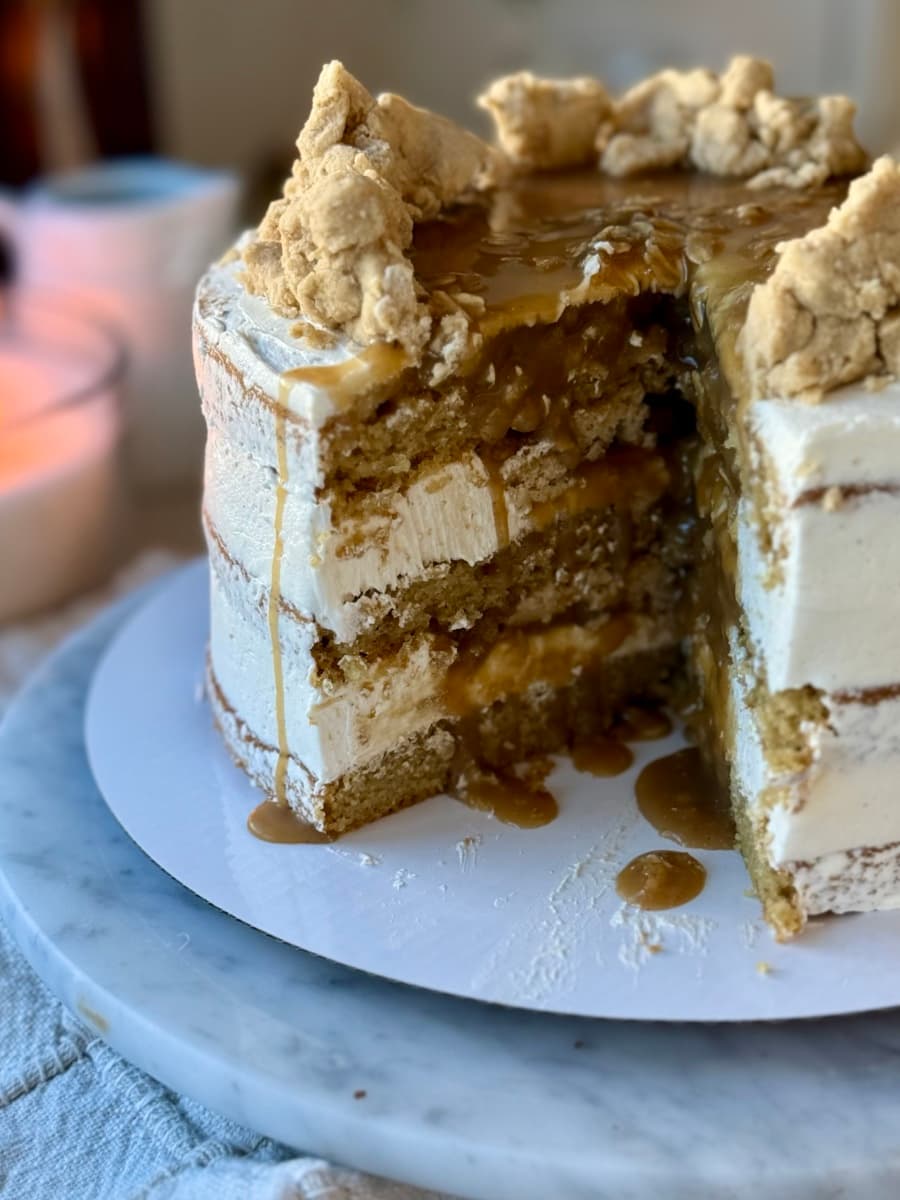
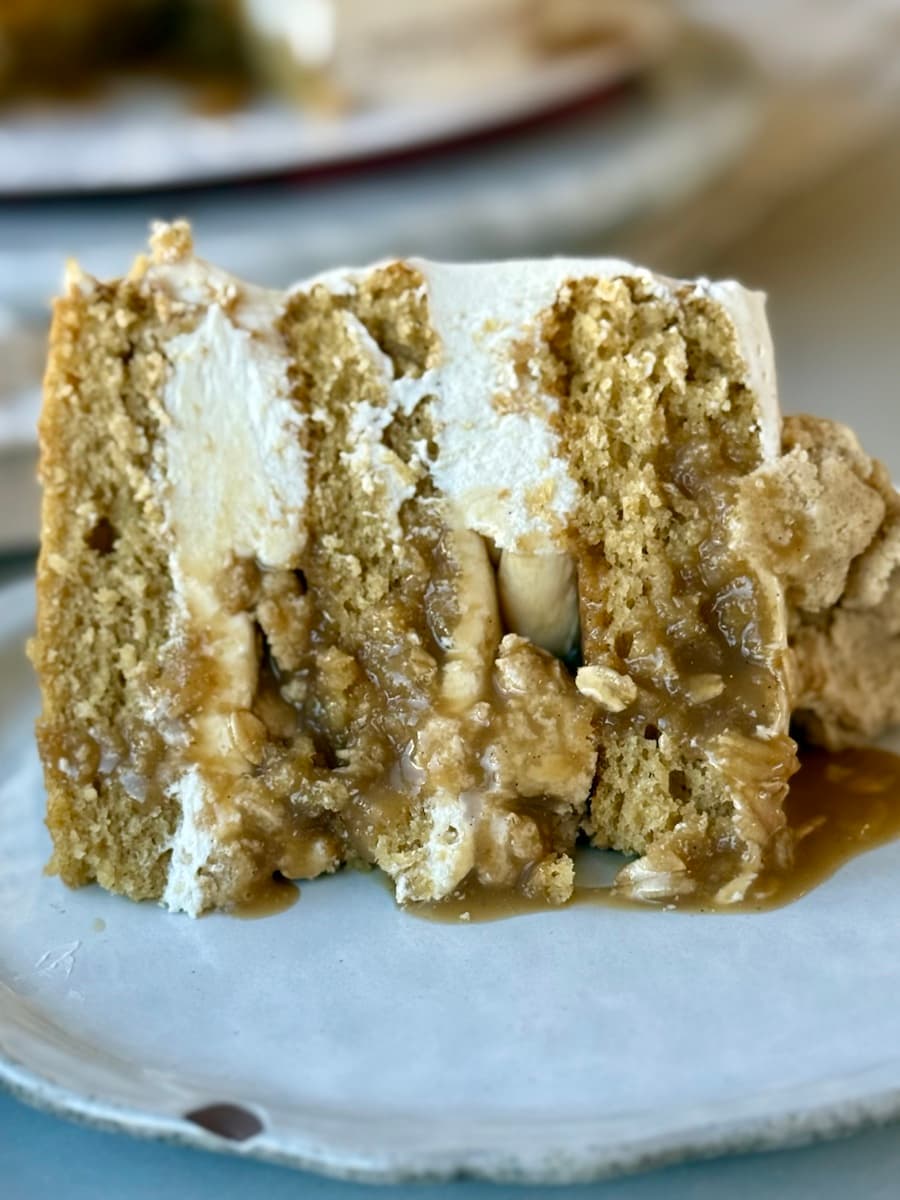
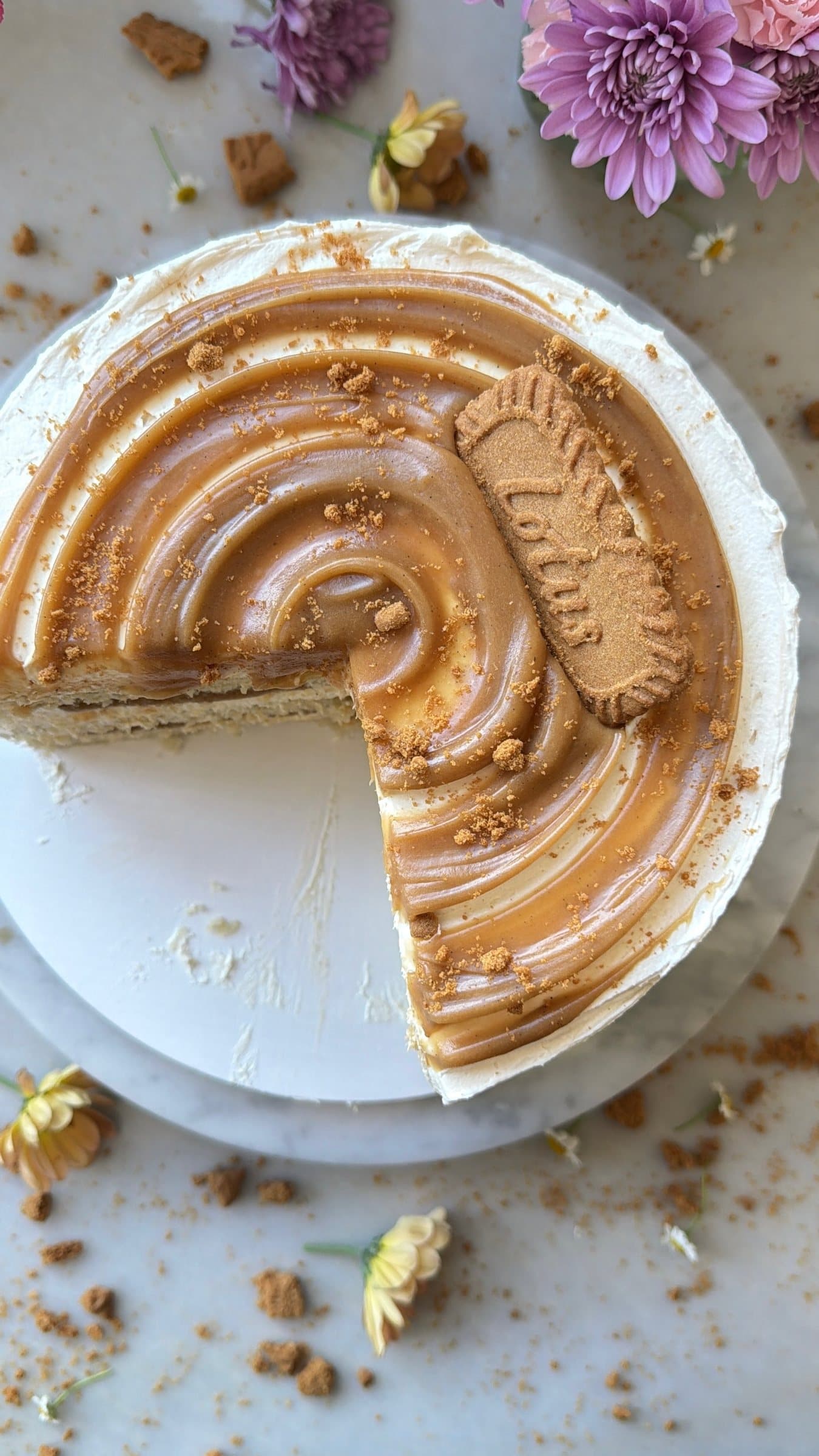
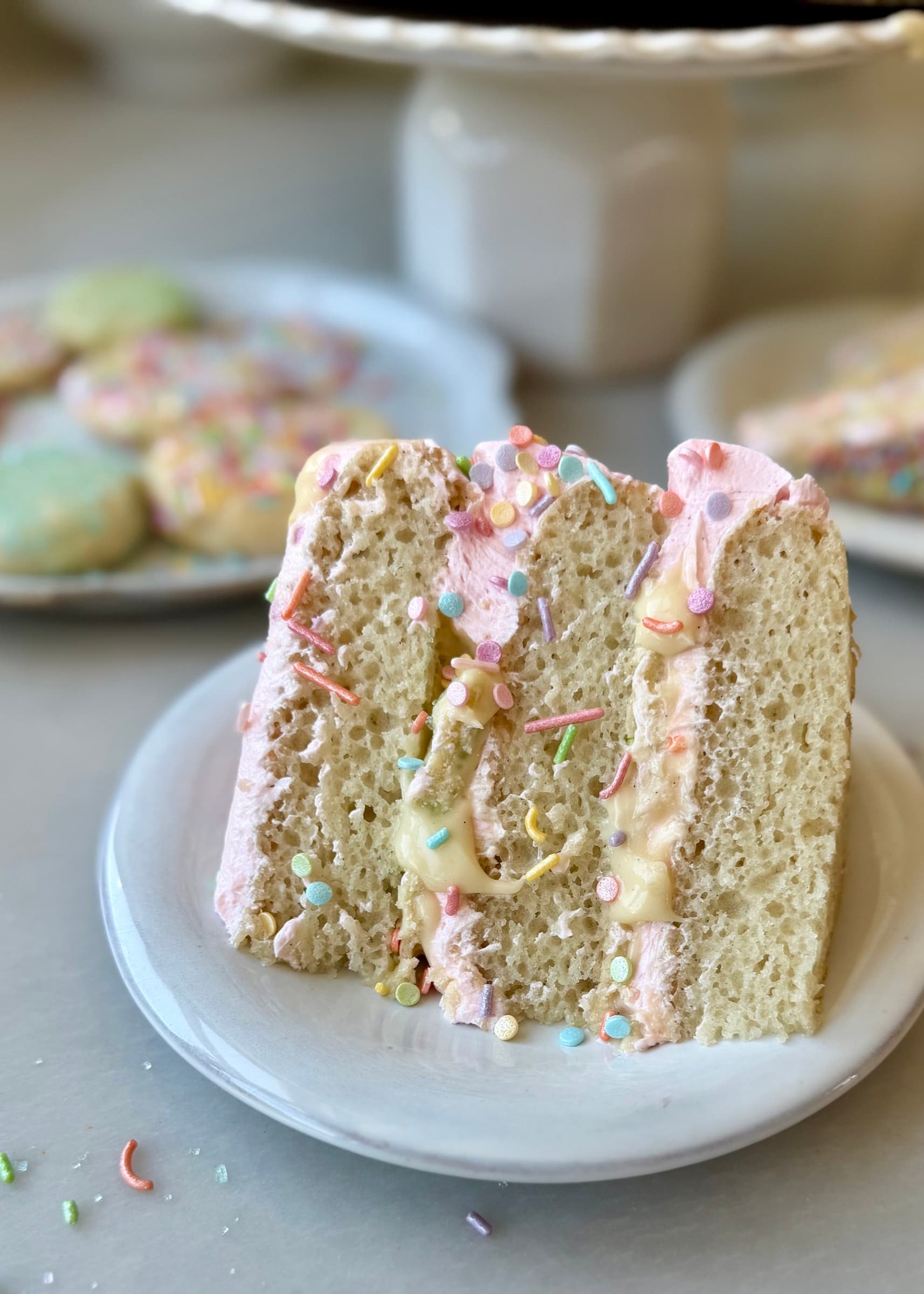
5.0 from 1 reviewThis oatmeal cookie dough lava cake turns the warmest parts of an oatmeal cookie into a tall celebration cake. Soft brown sugar and oat cake surrounds glossy caramel lava, fluffy vanilla buttercream, and generous pieces of oatmeal cookie dough.
The whole rolled oats in the caramel soften just enough to give the filling texture, while finely blended oats keep the cake and cookie dough tender. Every slice lands somewhere between a soft oatmeal cookie, a spoonful of cookie dough, and a caramel layer cake.
For a steady cake with a generous center, cool every component completely and keep the caramel and cookie dough below halfway up a sturdy buttercream dam.
Save this recipe
Want to save this recipe for later?
Enter your email and I’ll send it to your inbox.
Oatmeal Cookie Dough Is a Sleeper Hit
Out of every kind of cookie dough, oatmeal raisin is tied with chocolate chip for me. I love the grainy brown sugar, the butter, the chewy oats, and the occasional raisin. I am completely in. For this cake, I focused on the brown sugar, butter, and oats that make the dough so good.
An oatmeal cookie dough lava cake felt like the obvious next cake to make. This one is a sleeper, and it should not be. Even if oatmeal cookies are not usually your first choice, I think this cake can win you over.
The brown sugar caramel, with whole oats softened into it, is the perfect bridge between the tender oatmeal cake and the chewy cookie-dough pieces. Each bite has soft cake, glossy caramel, fluffy buttercream, and that buttery brown sugar chew. It is a reminder that the dough - with all its flavor and texture before the cookie ever reaches the oven - might be the best part.
Ingredient notes
Key ingredients
Old-fashioned rolled oats
Blend the oats for the cake and cookie dough until they become a very fine flour. Keep the oats for the caramel whole so they soften into the filling while retaining a little texture.
Light brown sugar
Brown sugar carries the flavor through the cake, cookie dough, and caramel. Pack volume measurements firmly, or use the gram measurements for the most consistent results.
Butter extract
Butter extract is concentrated and brands vary. Begin with 1/4 teaspoon in the cake, then use up to 1/2 teaspoon if you want a fuller oatmeal-cookie flavor.
Flour for the unbaked cookie dough
Heat-treat the flour to 165°F, then let it cool completely before making the cookie dough.
Brands I used for this recipe
These are preferences, not requirements. If you choose the non-dairy route, these are the products I test with. Dairy equivalents can be used at the same listed amounts and temperatures.
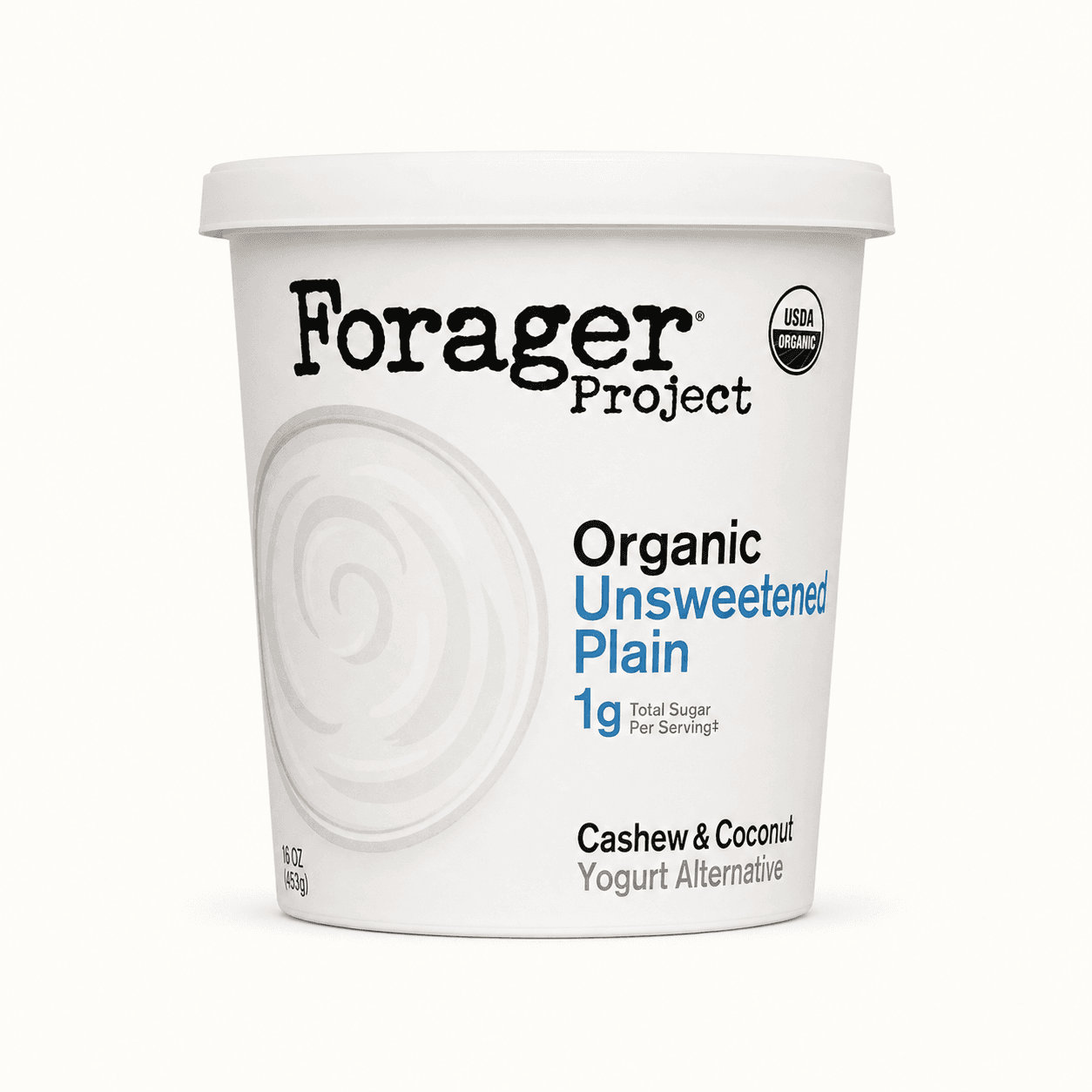
Forager Unsweetened Plain Yogurt
Plain unsweetened yogurt adds moisture, acidity, and body so the crumb bakes up tender without tasting tangy.
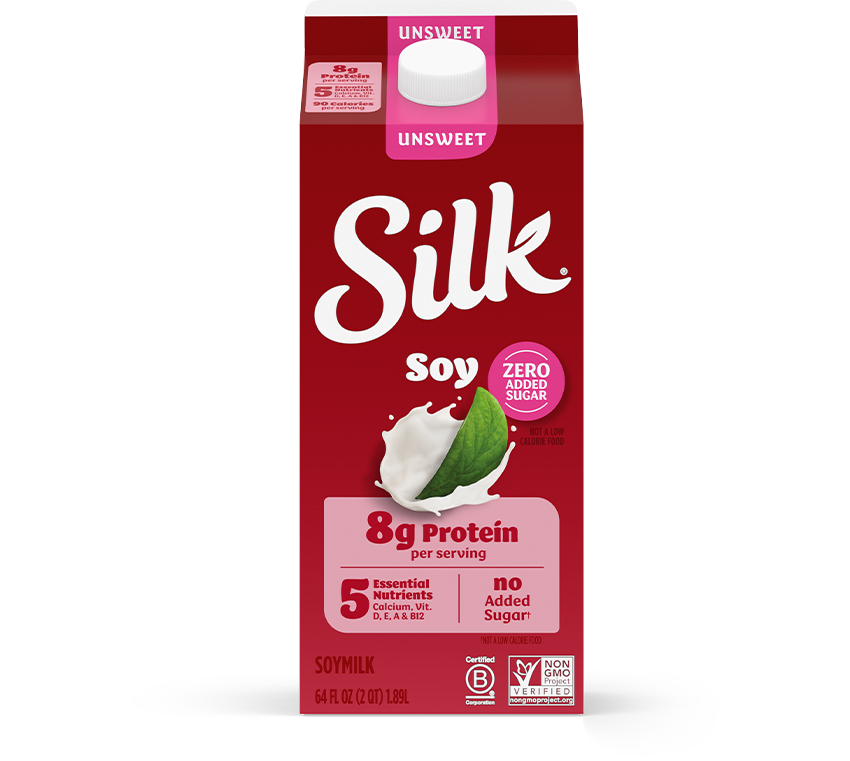
Silk Original Unsweet
Milk affects how smoothly a batter, filling, or frosting comes together. Soy milk and Ripple tend to emulsify well because their protein and fat help create a creamy, cohesive finish.
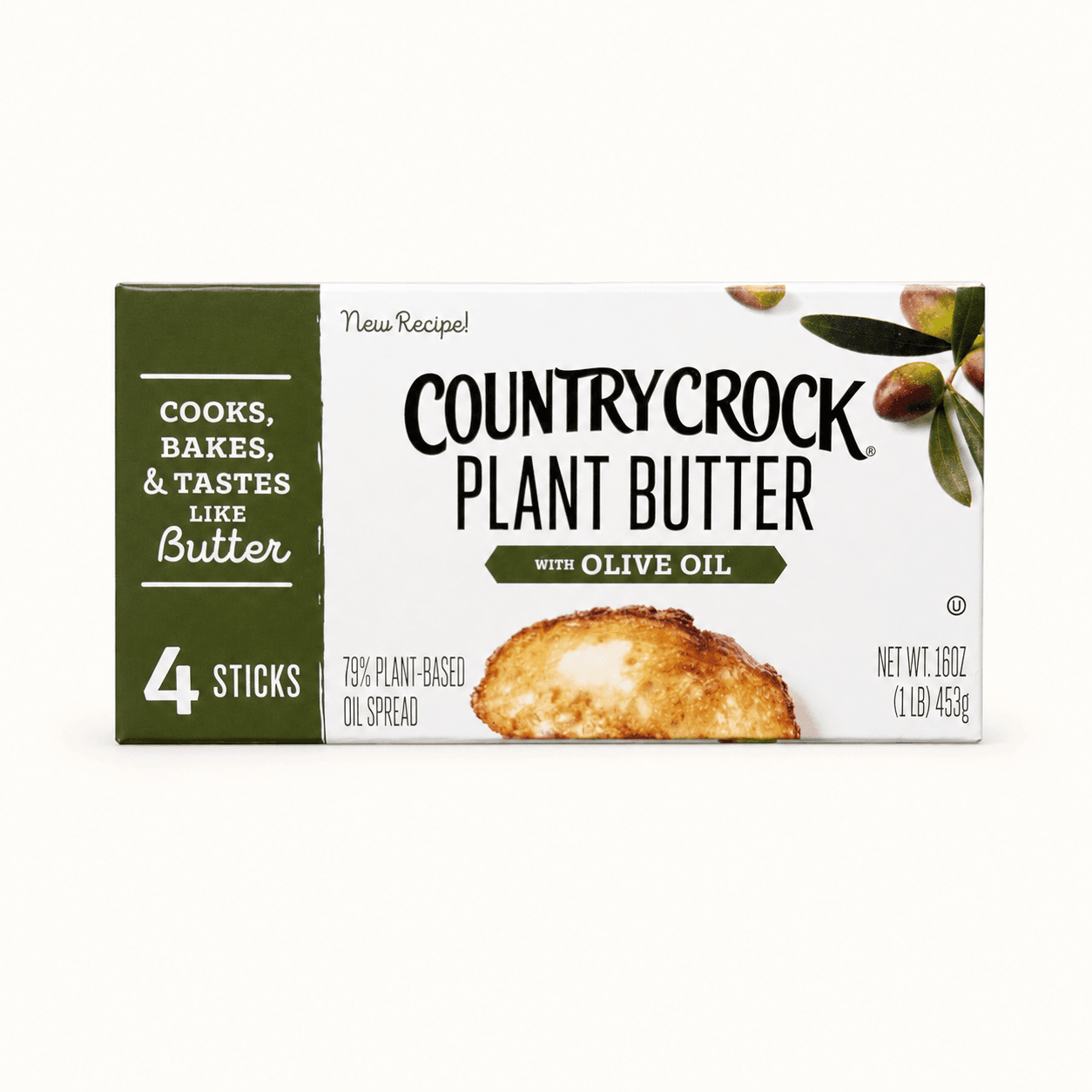
Country Crock Plant Butter Sticks
Use butter sticks for buttercream and fillings that need to hold their shape.
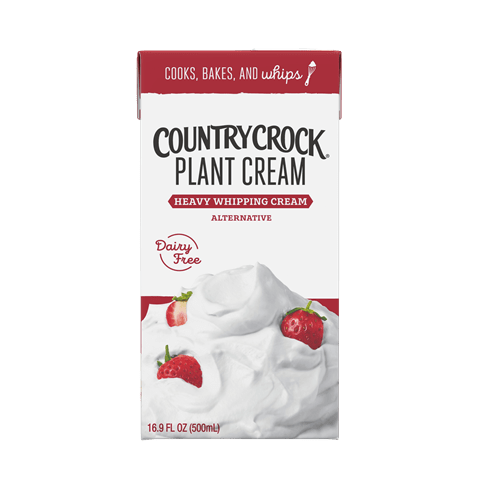
Country Crock Heavy Plant Cream
Heavy cream affects silkiness, looseness, and how buttercream or filling sets after chilling.
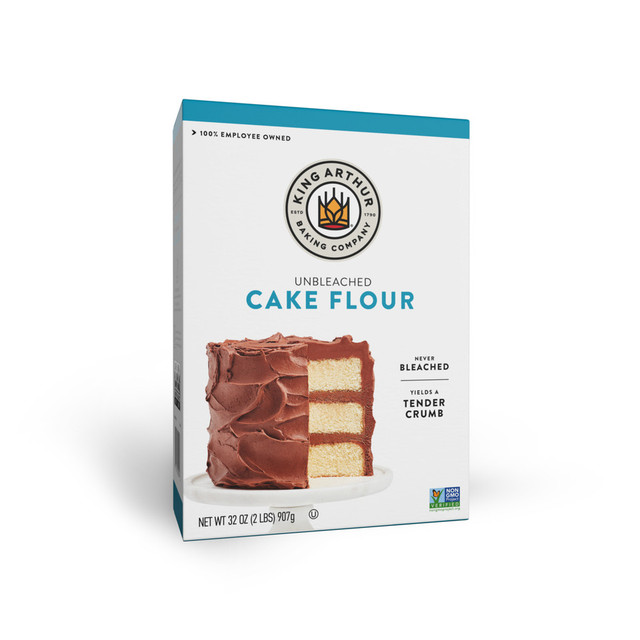
King Arthur Unbleached Cake Flour
I use King Arthur Unbleached Cake Flour for this recipe.

Rising Star Baking Supply Vanilla Bean Paste
I use Rising Star Baking Supply Vanilla Bean Paste for this recipe.
Testing notes
Why this works
How finely to blend the oats
Blend the rolled oats until they resemble a fine flour with no large flakes remaining. A finer grind disperses evenly through the cake and cookie dough and gives both a smoother, more cohesive texture.
Why the hot milk goes in last
Streaming in the hot milk after the flour mixture is incorporated loosens the batter and helps the finely ground oats hydrate evenly. Whisk gently and stop as soon as the batter is smooth and glossy.
Why every component must be cold
The cake layers and caramel lava must be completely cold before assembly. Warm cake or filling can soften the buttercream dam and weaken the structure of the finished cake.
Keep the filling contained
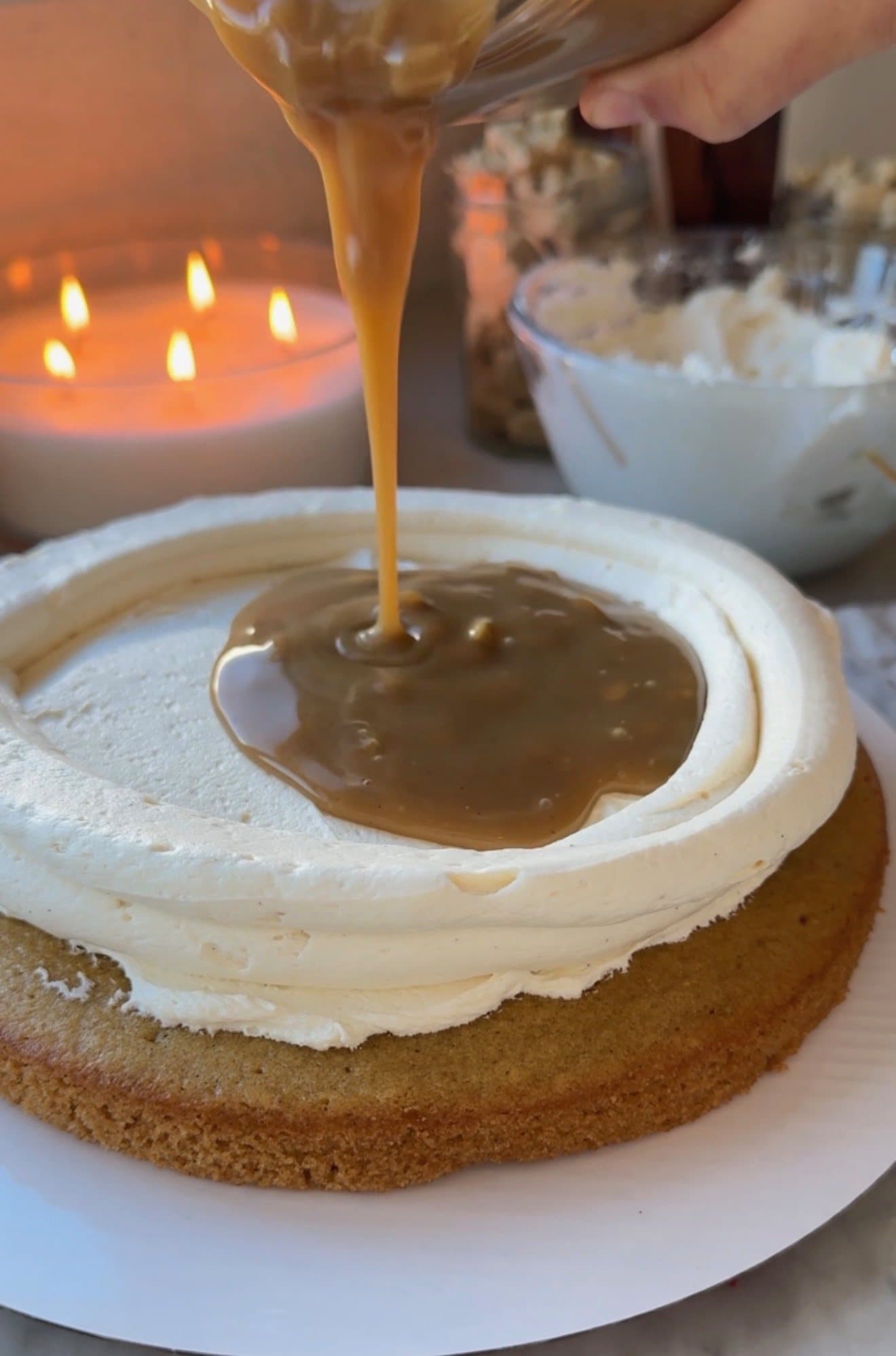
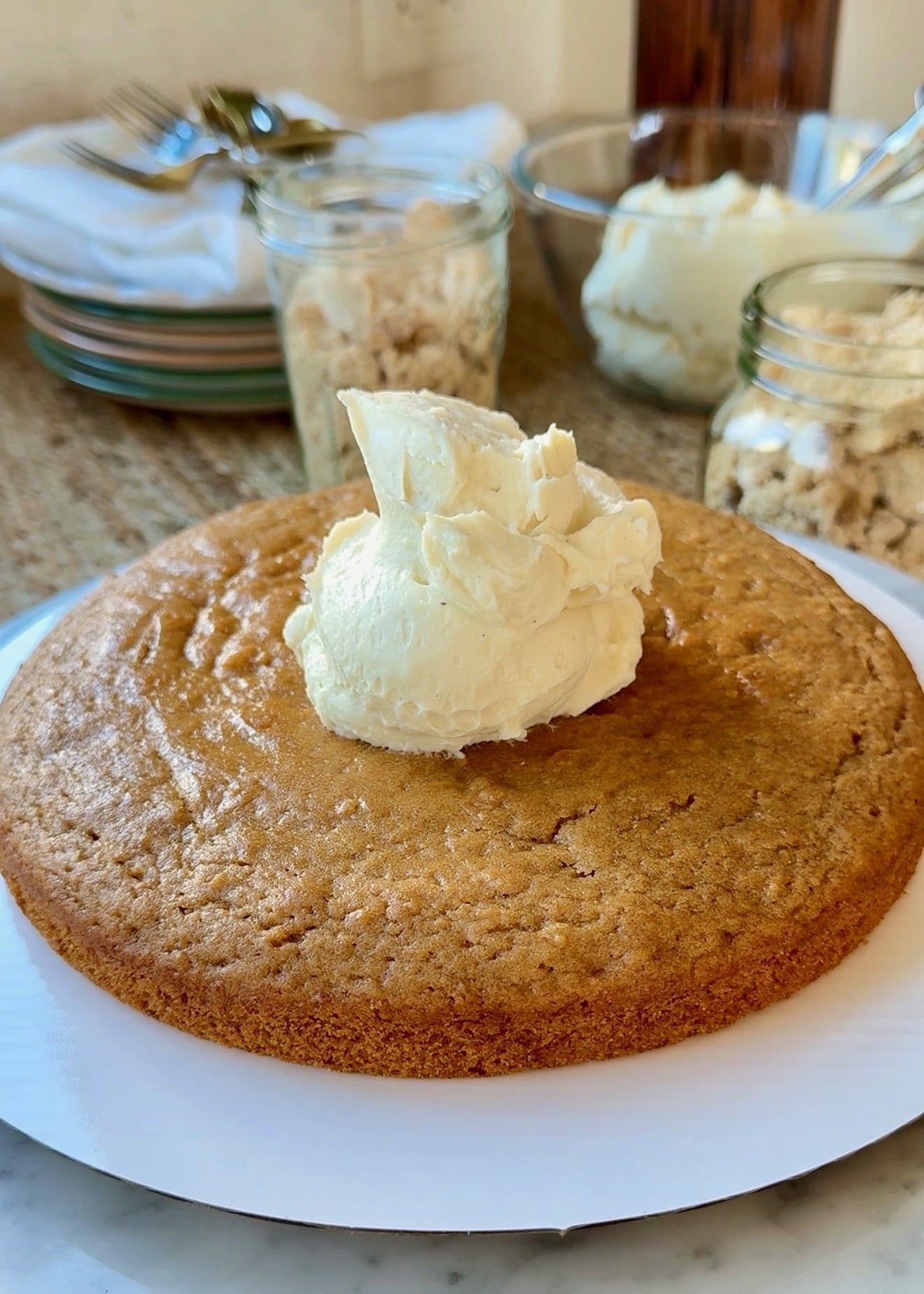
Pipe a tall, continuous buttercream dam and keep the caramel and cookie dough below halfway up its height. This leaves room for the next cake layer without forcing the filling out through the sides.
Inside the recipe
How It All Comes Together
From Instagram
Watch the reel
Watch the oatmeal cake, brown sugar caramel lava, vanilla buttercream, and oatmeal cookie dough come together layer by layer.
Open the reelTroubleshooting
If This Happens
The ground oats still look coarse
Keep blending until no large flakes remain. The oats should look like a fine flour before they go into the cake batter or cookie dough.
The caramel is too loose to stack
Give it more time in the refrigerator. It should be completely cold and thick enough to spread slowly before it goes inside the buttercream dam.
The caramel is pushing through the buttercream
Make sure the dam is tall and completely closed, then use less filling. Keep both the caramel and cookie-dough pieces below halfway up the dam so the next cake layer rests on buttercream.
The cookie dough is too soft to break into pieces
Flatten it in a covered container and give it the full 15-20 minutes in the freezer. It should feel firm enough to break into small irregular pieces without smearing.
Before you slice
Texture and serving notes
For clean slices, cut the cake while it is slightly cool, then let each slice soften toward room temperature.
Serve extra chilled caramel lava alongside the cake for anyone who wants another spoonful.
Keep it good
Storage
Fridge
Store the assembled cake covered in the refrigerator for up to 3 days.
Fridge
Store extra caramel lava and cookie-dough pieces separately in airtight containers in the refrigerator.
Serve
Let the cake sit at room temperature for about 45 minutes before slicing for the softest cake, buttercream, and filling.
Recipe FAQ
Questions that come up
Can I make the Oatmeal Cookie Dough Lava Cake ahead?
Yes. Bake and chill the cake layers, prepare the cookie dough, and make the caramel up to 2 days ahead. Store each component separately, then assemble while the cake and caramel are completely cold.
How do I keep the caramel from escaping the cake?
Use completely chilled caramel, pipe a tall unbroken buttercream dam, and keep the filling below halfway up the dam. Chill the stacked cake briefly before applying the final coat of buttercream.
Can I use dairy ingredients?
Yes. Use the ingredient options you have on hand, keeping the listed temperatures and textures the same.
Should I weigh the ingredients or use volume measurements?
I strongly recommend weighing the ingredients in grams for the most reliable result. Volume measurements are included for convenience, but the amount in a cup can change depending on how an ingredient is filled, packed, or poured. These recipes are easy to follow, but their ratios are precise, so I cannot guarantee the exact same result when volume measurements are used. I still use teaspoons and tablespoons for small amounts like leaveners, salt, spices, and flavorings because those are the most practical measurements.
Can I make this recipe gluten-free?
I have not tested this recipe with gluten-free flour, so I cannot guarantee the same texture, rise, or structure. If you would like to experiment, a cup-for-cup (1:1) gluten-free baking blend intended to replace all-purpose flour is the best place to start. Results may differ from the recipe as written.
Can I use all-purpose flour instead of cake flour?
Yes, of course. Replace the cake flour with the same amount of all-purpose flour by weight. The cake will have a slightly sturdier, less delicate crumb, but it will still be great.
More lava cakes to try



- Prep
- 1 hr
- Bake
- 22–27 min
- Total
- About 3 hr, including cooling and chilling
- Yield
- One 3-layer 8-inch cake
Measurement note
For the closest match to the recipe I tested, use grams. Volume measurements are included for convenience, but cups can vary, so I cannot guarantee the exact same result when measuring by volume.
Ingredients
Oatmeal Cake
- 210 g cake flour210 g (about 1 3/4 cups) cake flour
- 90 g old-fashioned rolled oats, blended into a fine flour90 g (about 1 cup) old-fashioned rolled oats, blended into a fine flour
- 10 g baking powder (weigh for accuracy)2 teaspoons baking powder
- 5 g baking soda (weigh for accuracy)1 teaspoon baking soda
- 8 g cornstarch8 g (about 1 tablespoon + 1/2 teaspoon) cornstarch
- 3/4 teaspoon fine sea salt3/4 teaspoon fine sea salt
- 250 g light brown sugar (packed)250 g (about 1 cup + 3 tablespoons) light brown sugar (packed)
- 230 g milk, room temperature230 g (about 3/4 cup + 3 tablespoons) milk, room temperature
- 15 g apple cider vinegar15 g (about 1 tablespoon) apple cider vinegar
- 140 g neutral oil140 g (about 1/2 cup + 2 tablespoons) neutral oil
- 120 g plain unsweetened yogurt, room temperature120 g (about 7 tablespoons + 2 1/2 teaspoons) plain unsweetened yogurt, room temperature
- 2 1/2 teaspoons vanilla bean paste2 1/2 teaspoons vanilla bean paste
- 1/4–1/2 teaspoon butter extract1/4–1/2 teaspoon butter extract
- 130 g hot milk130 g (about 1/2 cup + 2 teaspoons) hot milk
Oatmeal Cookie Dough
- 113 g butter, softened113 g (about 1/2 cup) butter, softened
- 100 g light brown sugar (packed)100 g (about 7 tablespoons + 1 1/2 teaspoons) light brown sugar (packed)
- 40 g granulated sugar40 g (about 3 tablespoons + 3/4 teaspoon) granulated sugar
- 120 g all-purpose flour, prepared and cooled as noted120 g (about 1 cup) all-purpose flour, prepared and cooled as noted
- 60 g old-fashioned rolled oats, blended into a fine flour60 g (about 2/3 cup) old-fashioned rolled oats, blended into a fine flour
- 1 1/2–2 teaspoons vanilla bean paste1 1/2–2 teaspoons vanilla bean paste
Brown Sugar Caramel Lava
- 170 g light brown sugar (packed)170 g (about 3/4 cup + 2 teaspoons) light brown sugar (packed)
- 40 g water40 g (about 2 tablespoons + 2 teaspoons) water
- 85 g butter85 g (about 6 tablespoons) butter
- 120 g heavy cream120 g (about 1/2 cup) heavy cream
- 20 g old-fashioned rolled oats20 g (about 3 tablespoons + 2 teaspoons) old-fashioned rolled oats
- 1 teaspoon vanilla bean paste1 teaspoon vanilla bean paste
- 1/4 teaspoon fine sea salt1/4 teaspoon fine sea salt
Vanilla Buttercream
- 270 g butter, softened270 g (about 1 cup + 3 tablespoons) butter, softened
- 450 g powdered sugar, sifted450 g (about 3 3/4 cups) powdered sugar, sifted
- 80–100 g heavy cream, room temperature or slightly warm80–100 g (about 1/3 cup to 6 tablespoons + 2 teaspoons) heavy cream, room temperature or slightly warm
- 2 teaspoons vanilla bean paste2 teaspoons vanilla bean paste
Pan used
I use Fat Daddio's 8-inch anodized aluminum round cake pans for this recipe.
Instructions
- 1Make the oatmeal cake. Preheat the oven to 350°F (175°C). Grease and line three 8-inch round cake pans with parchment paper.
- 2Blend the 90 g rolled oats in a high-speed blender or food processor until they resemble a fine flour with no large flakes remaining.
- 3In a large bowl, whisk together the brown sugar, room-temperature milk, apple cider vinegar, oil, yogurt, vanilla bean paste, and 1/4 teaspoon butter extract until completely smooth and emulsified. Add up to 1/4 teaspoon more butter extract if desired.
- 4Add the cake flour, oat flour, baking powder, baking soda, cornstarch, and salt directly to the bowl. Whisk gently until mostly combined and no large pockets of flour remain.
- 5Slowly stream in the hot milk while whisking gently. Stop as soon as the batter is smooth and glossy; do not overmix.
- 6Divide the batter evenly between the prepared pans by weight and gently tap each pan once or twice to release large air bubbles.
- 7Bake for 22–27 minutes, beginning to check at 22 minutes. The layers are done when the centers spring back lightly and a toothpick inserted into the center comes out with a few moist crumbs and no wet batter.
- 8Cool the layers in the pans for 10 minutes, then turn them onto wire racks and cool completely. Once fully cool, wrap and refrigerate the layers until assembly.
- 9Make the oatmeal cookie dough. Beat the softened butter, brown sugar, and granulated sugar for 2–3 minutes, scraping the bowl as needed, until light and fluffy.
- 10Add the vanilla bean paste and mix until fully incorporated. Add the prepared flour and the 60 g finely blended oats, then mix on low just until a cohesive dough forms.
- 11Flatten the dough into a shallow covered container and freeze for 15–20 minutes, until firm enough to handle. Break it into irregular pieces about 1/2 inch wide, then refrigerate until assembly.
- 12Make the brown sugar caramel lava. In a medium saucepan, combine the brown sugar, water, and butter. Cook over medium heat, stirring frequently, until the butter melts and the sugar dissolves.
- 13Bring the mixture to a gentle simmer. Slowly whisk in the heavy cream, then simmer for 2–3 minutes, stirring frequently, until smooth and glossy.
- 14Remove from the heat and immediately stir in the rolled oats. Let the caramel rest for 10 minutes, stirring once halfway through, so the oats soften slightly.
- 15Stir in the vanilla bean paste and salt. Transfer to a heatproof container and refrigerate until completely chilled before assembly; the caramel will thicken as it cools.
- 16Make the vanilla buttercream. Beat the softened butter for 2–3 minutes, scraping the sides of the bowl, until light and creamy.
- 17Add the powdered sugar and vanilla bean paste. Mix on low until incorporated, then mix on medium just until smooth.
- 18With the mixer on low, slowly stream in 80 g of the cream. Add more only as needed, a little at a time, until the buttercream is light, smooth, and sturdy enough to hold a filling dam. Do not overmix.
- 19Assemble the cake. Place the first cold cake layer on a cake board or serving plate. Spread a very thin layer of buttercream over the cake, then pipe a tall, continuous buttercream dam around the edge.
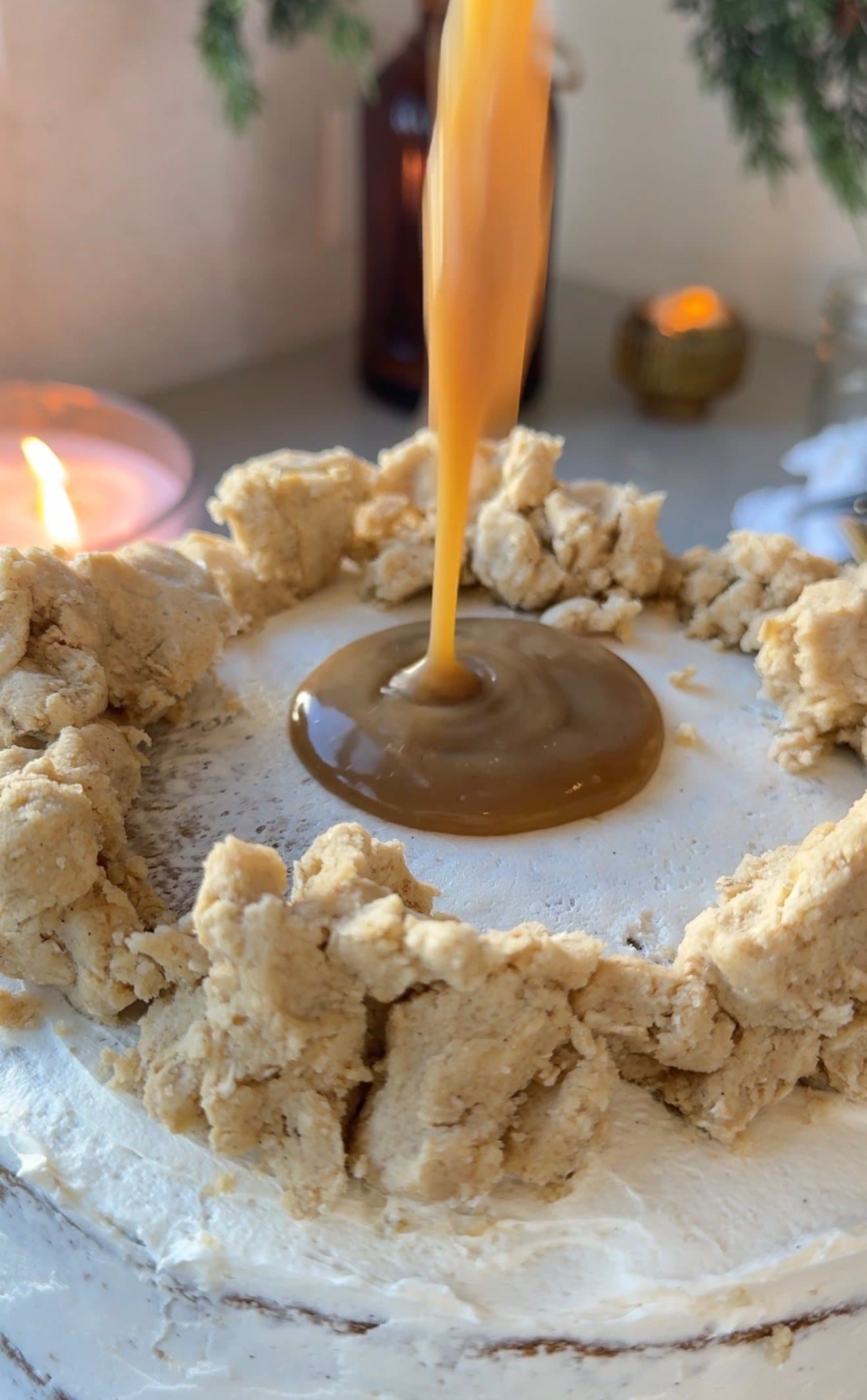
- 20Spread chilled brown sugar caramel lava inside the dam, keeping it below halfway up the dam. Scatter chilled oatmeal cookie-dough pieces evenly over the caramel without overfilling the layer.
- 21Place the second cake layer on top and repeat the thin buttercream layer, sturdy dam, caramel, and cookie dough. Top with the final cake layer.
- 22Apply a thin crumb coat and refrigerate for 20 minutes. Frost the cake with the remaining vanilla buttercream, then chill for 20–30 minutes to set the structure.
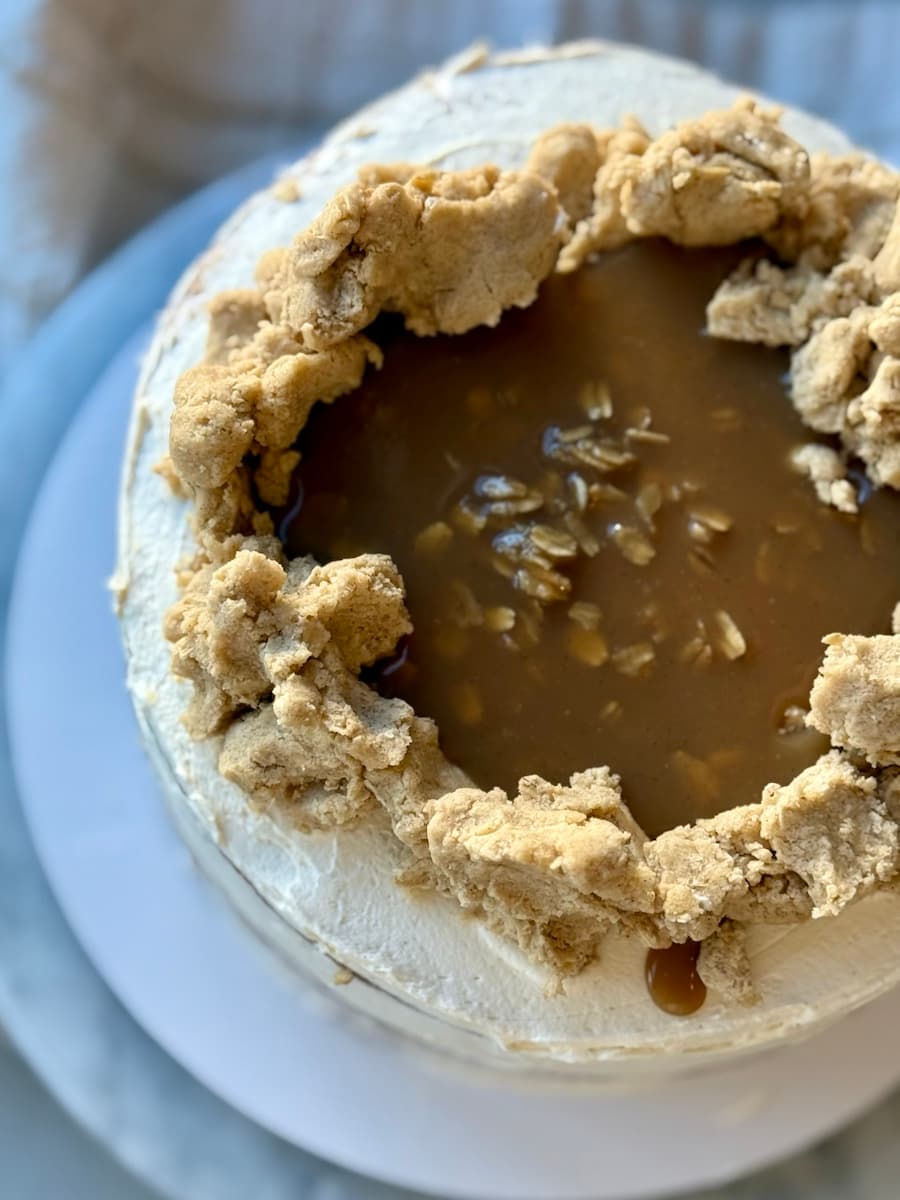
- 23Before serving, finish the top with remaining caramel lava and additional chilled oatmeal cookie-dough pieces. Keep any extra caramel on the side for serving.
Helpful notes
- Heat-treat the flour to 165°F, then let it cool completely before making the cookie dough.
Meet the baker
Angela Heckler
Angela Heckler is the recipe developer, baker, and photographer behind Obsessed Cakes. Her Old-Fashioned Donut Loaf series is a growing collection of cake-donut-inspired loaves with soft, deeply moist crumbs, buttery streusel, and crackly glaze. Angela develops and tests every recipe in her Arizona kitchen. Follow Obsessed Cakes on Instagram, TikTok, and YouTube.
Made it? Tell us.
Ratings and reviews
This cake turned out amazing! I have a brother with celiac disease, so I made this using King Arthur’s gluten free all purpose flour and the taste and texture turned out great. The caramel and cookie dough in the layers and on top was so good! My whole family loved it!
Awesome!! Thank you so much for sharing how it turned out with King Arthur's 1:1! I haven't tested it yet, so hearing it was a success is great! I'm so glad everyone was able to enjoy it :)
Did you make this?
Share your bake on Instagram - tag @obsessedwithcashews and use #obsessedcakes.