Old-Fashioned Donut Loaf
4.9 from 24 reviewsRecipe revised August 8, 2026.
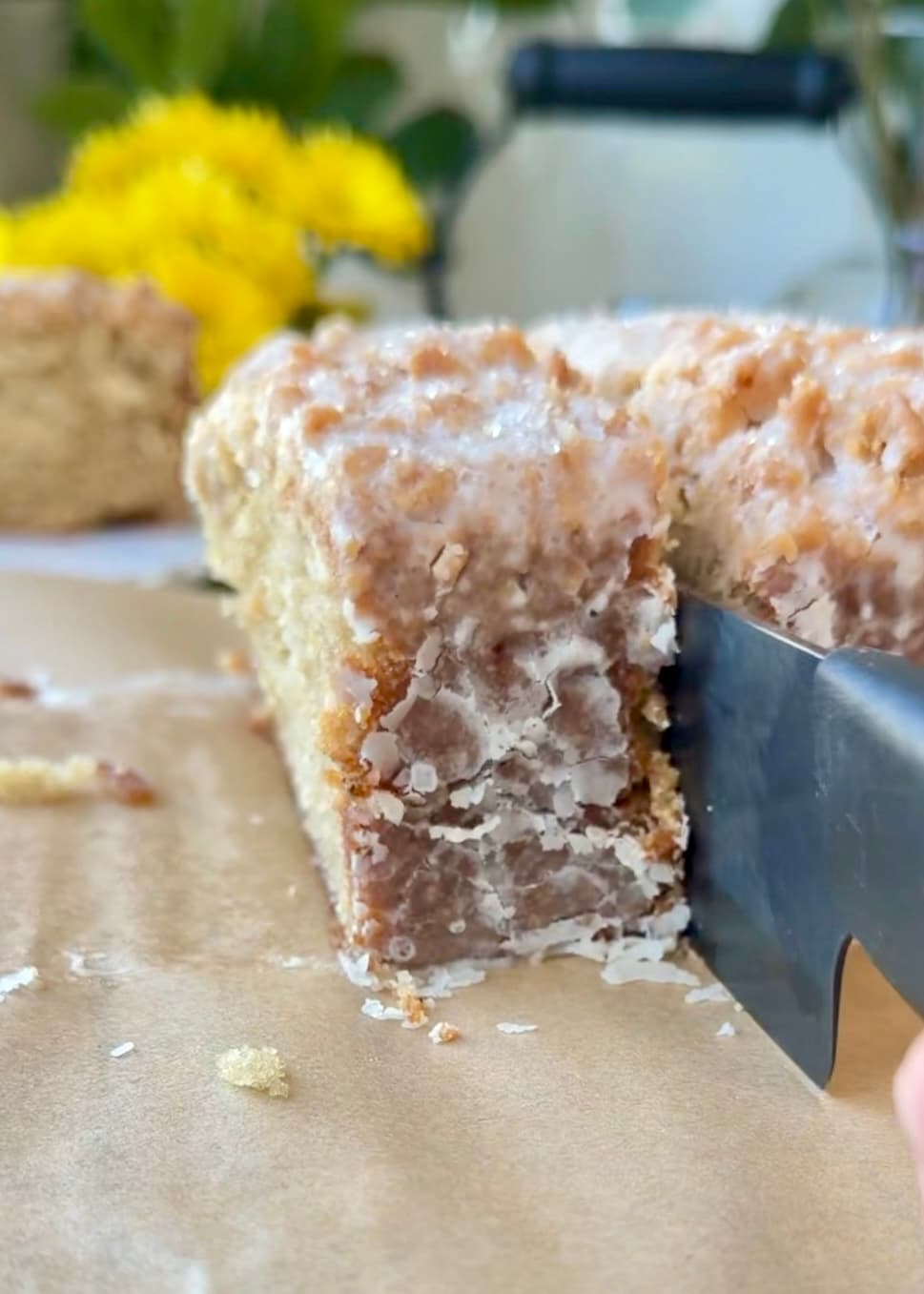
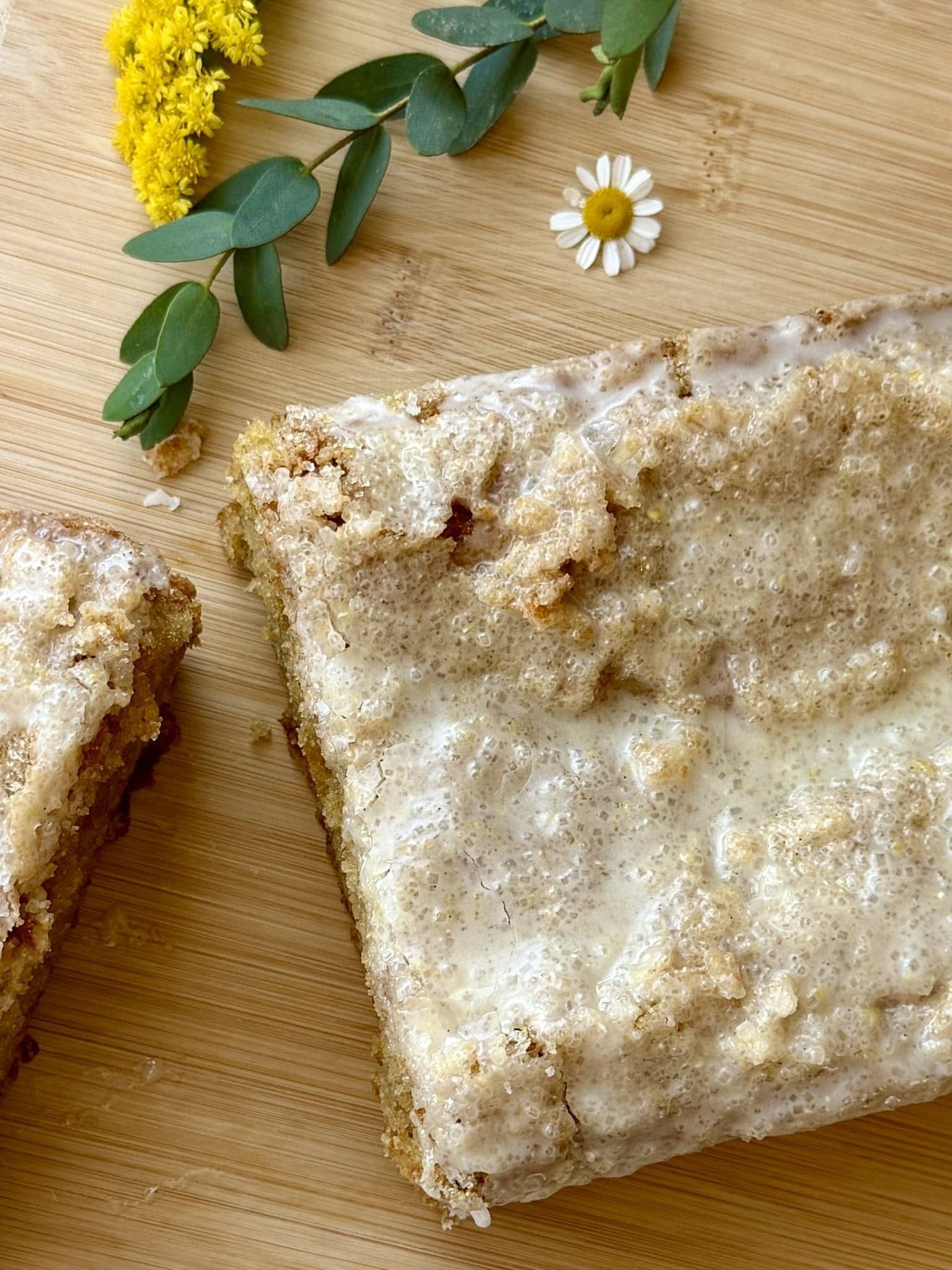
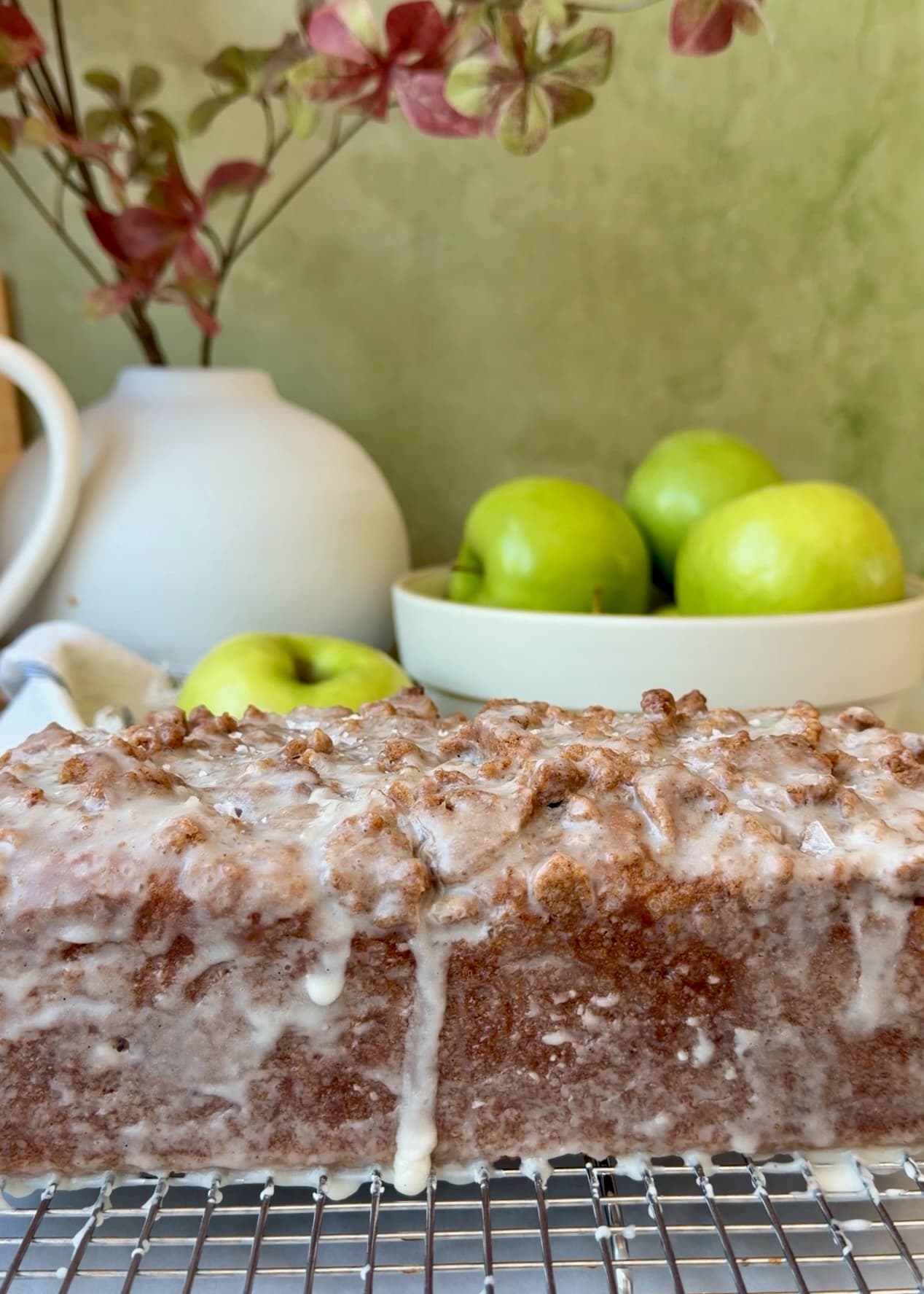
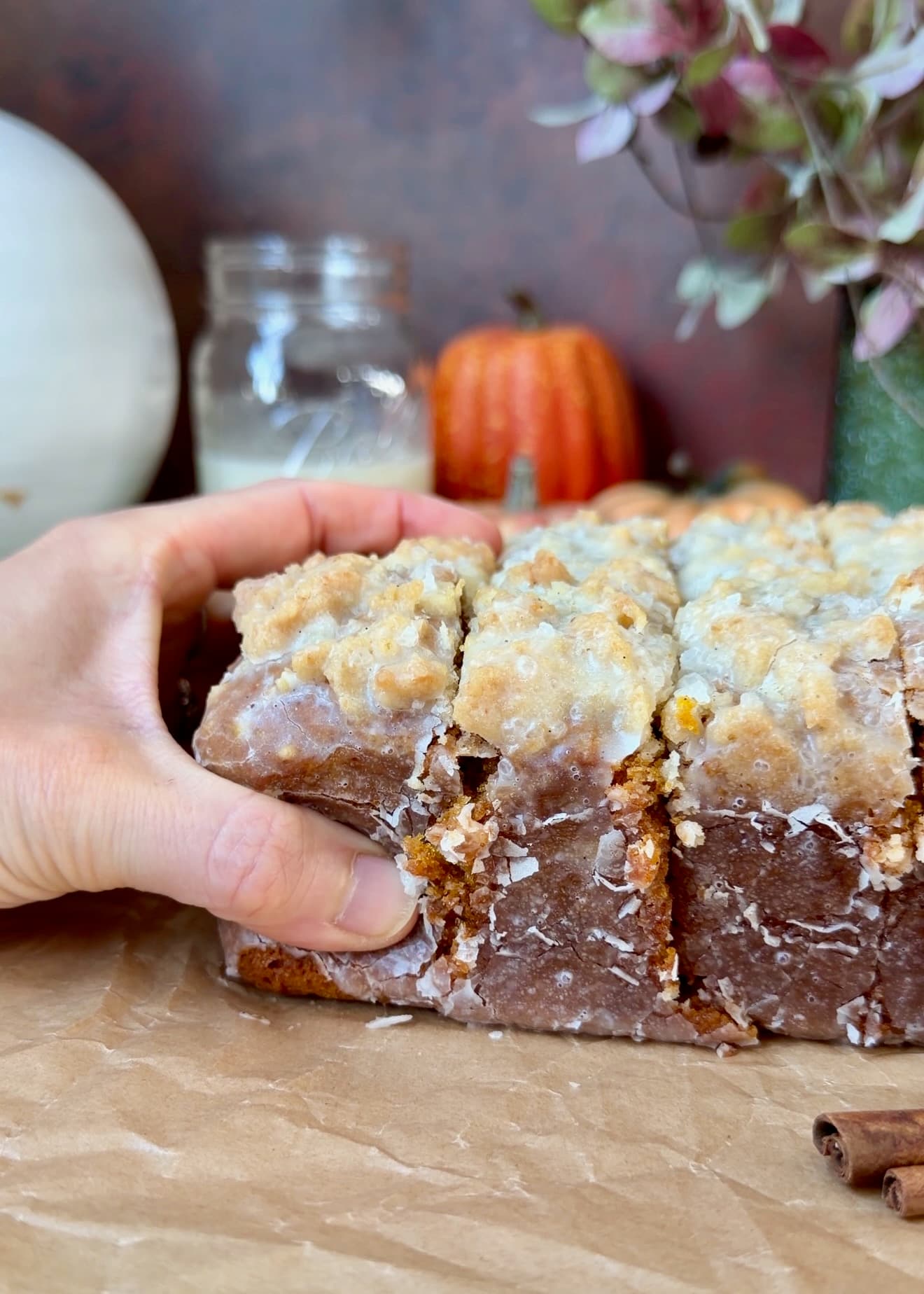
This Old-Fashioned Donut Loaf has a soft, substantial vanilla-nutmeg cake-donut crumb, buttery streusel baked through the middle and over the top, and a thin glaze that settles into every golden crevice - all baked in a loaf pan with no frying required.
The yogurt keeps the center moist and tender, while a restrained amount of nutmeg gives the loaf its unmistakable old-fashioned donut flavor. It is wonderful once the glaze sets and even better the next day, when the crumb, streusel, and crackly coating have completely settled together.
Save this recipe
Want to save this recipe for later?
Enter your email and I’ll send it to your inbox.
How This Recipe Came About
My donut loaf series actually started as a mistake. I was attempting to create a blondie coffee cake, but - as I often do - I pushed the limits and added far too much streusel between the layers and over the top of the batter.
The moment I tasted it, I thought of an old-fashioned donut. The top was crisp under the vanilla glaze, and the middle layer of streusel had settled into the cake. It reminded me of an extra-moist cake donut, even though I hadn't fried it.
After a few more versions, I had the Old-Fashioned Donut Loaf. I added just a hint of nutmeg for that familiar flavor without overpowering the vanilla and buttery streusel.
This is still one of my favorite things I have ever baked, which is why I kept going with the series. I love it for dessert, but I am just as happy having a slice with coffee at breakfast or brunch.
Ingredient notes
Key ingredients
Plain unsweetened yogurt
Yogurt gives this egg-free loaf moisture, body, and the substantial but tender crumb of an old-fashioned cake donut.
Cold butter
Cold butter creates streusel that holds both fine crumbs and larger clusters. Keeping it chilled until assembly prevents the streusel from melting directly into the batter.
Nutmeg and vanilla bean paste
The nutmeg is intentionally subtle. It creates the familiar old-fashioned donut flavor while vanilla bean paste keeps the loaf warm, fragrant, and bakery-like.
Coarse sanding sugar
A generous layer of coarse sanding sugar gives the streusel top extra crunch and sparkle beneath the thin vanilla glaze.
Brands I used for this recipe
These are preferences, not requirements. If you choose the non-dairy route, these are the products I test with. Dairy equivalents can be used at the same listed amounts and temperatures.
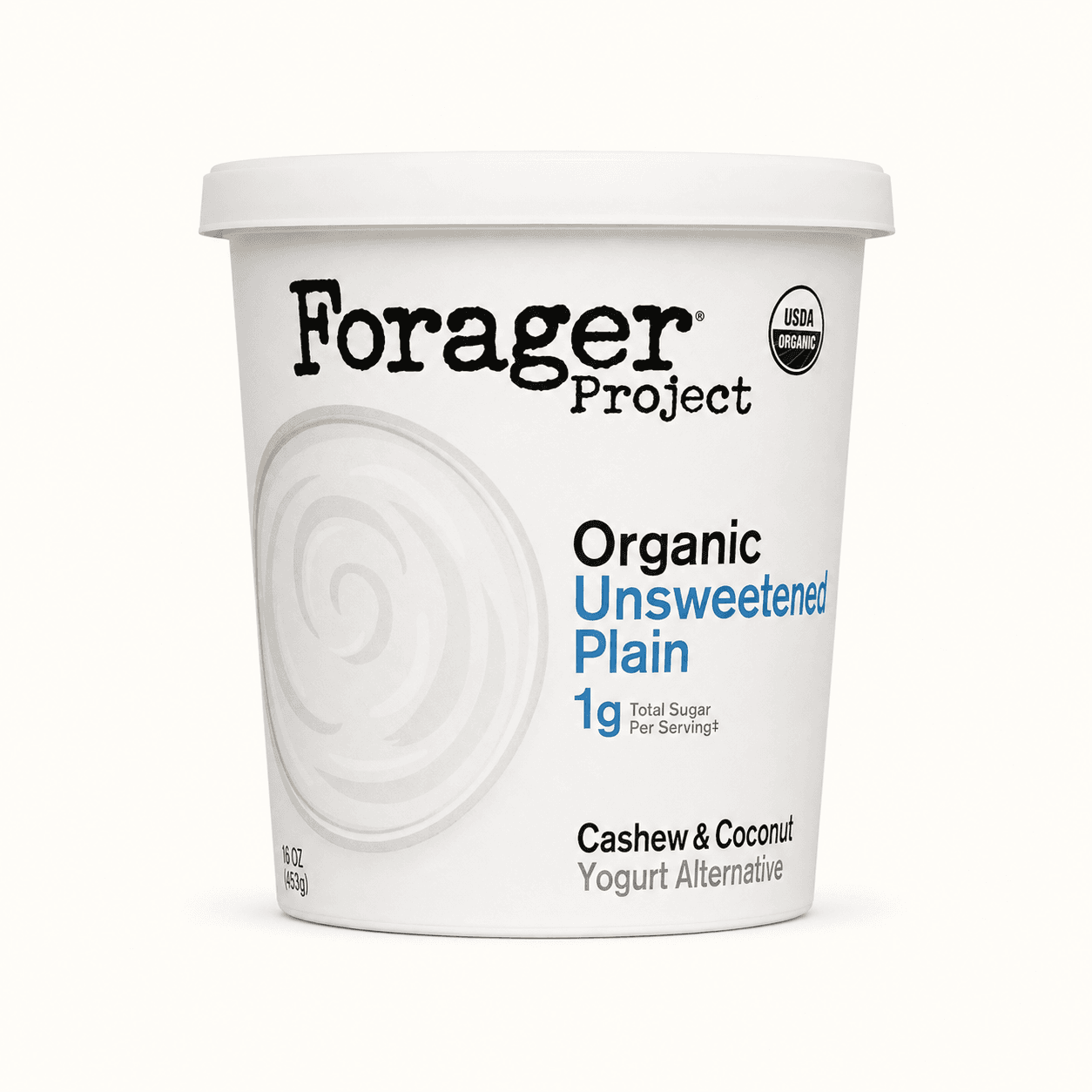
Forager Unsweetened Plain Yogurt
The yogurt I use in this loaf.
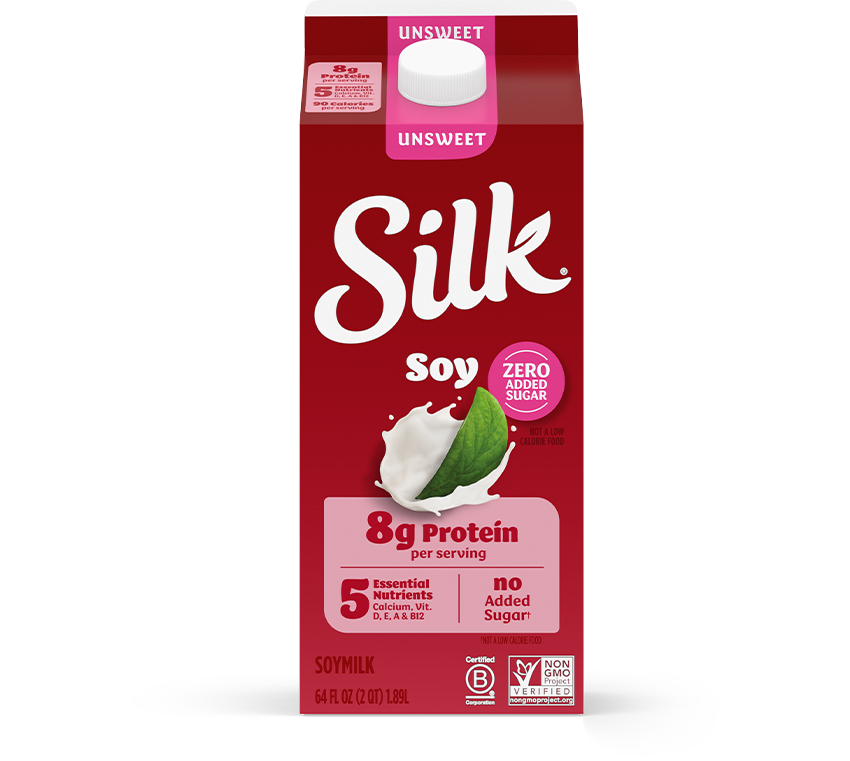
Silk Unsweet Soymilk
The milk I use in this loaf and glaze.
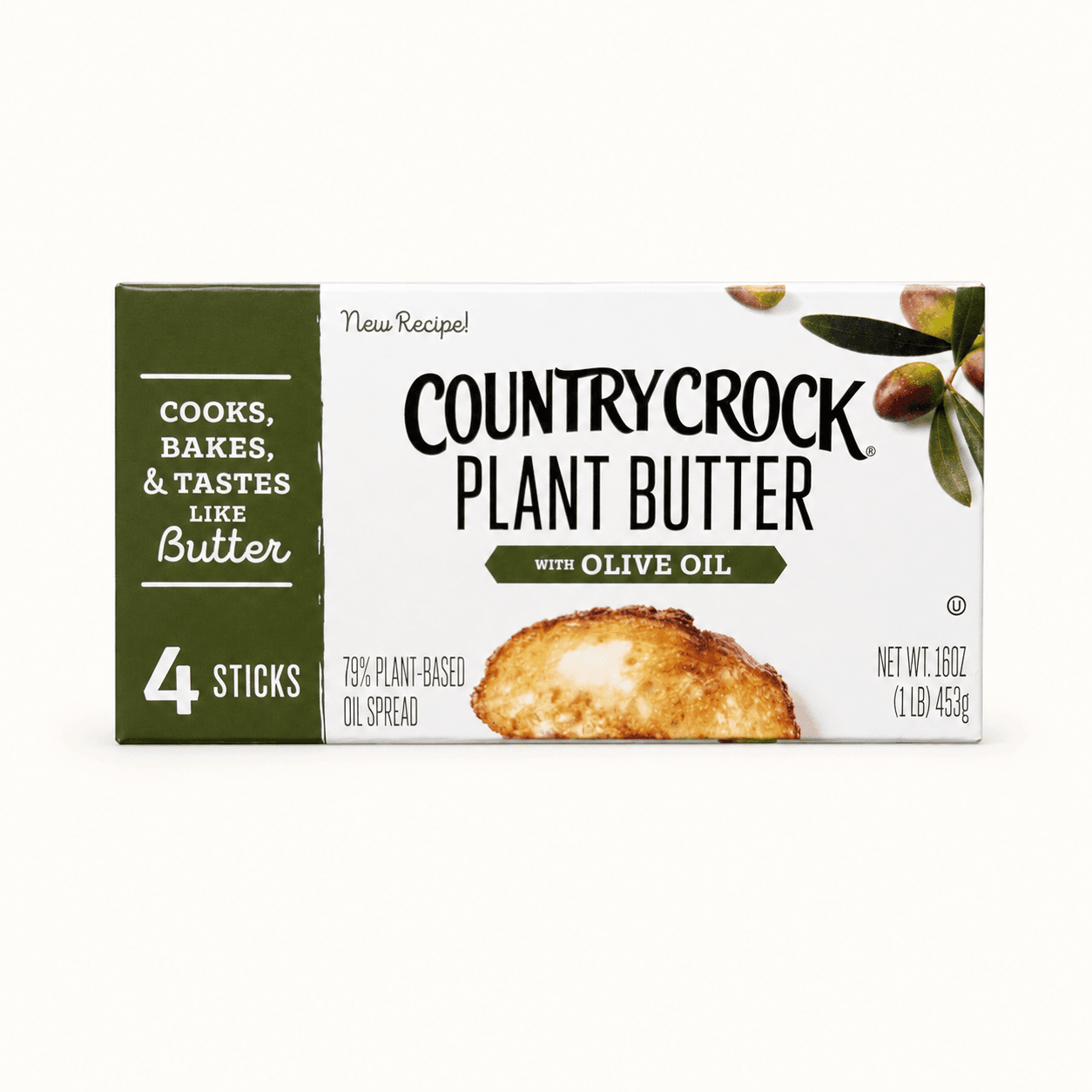
Country Crock Plant Butter Sticks
The butter sticks I use for the streusel.
Modern Mountain Baking Company White Sparkling Sugar
The coarse sparkling sugar I use on this loaf.

Rising Star Baking Supply Vanilla Bean Paste
The vanilla bean paste I use, linked to the 4-ounce Walmart bottle.
Step by step
How It All Comes Together
Step 1
Prepare the streusel and wet ingredients
Make the streusel first and keep it cold. In a separate bowl, whisk the sugars, oil, yogurt, vanilla bean paste, milk, and apple cider vinegar until the wet mixture is completely smooth.
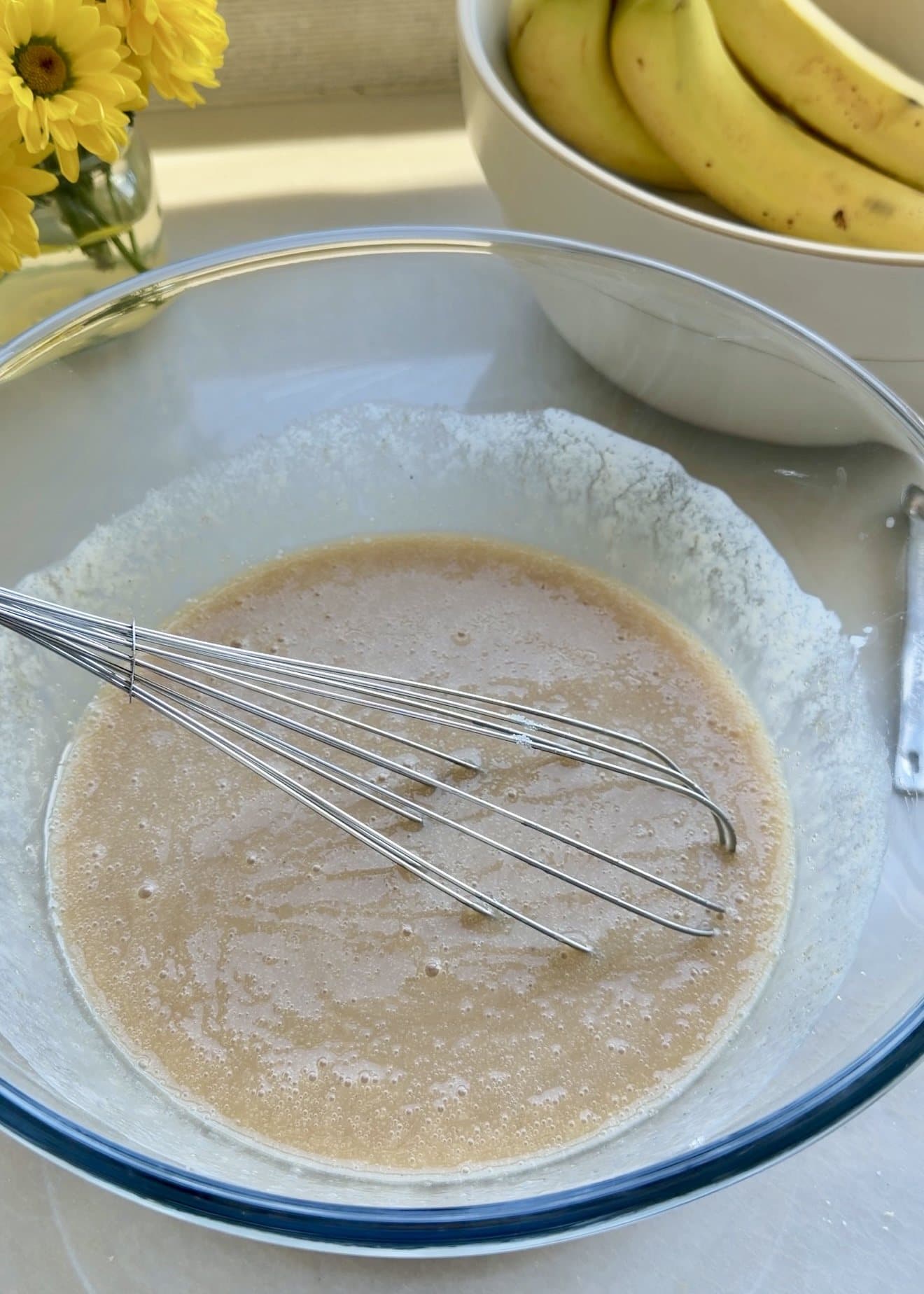
Whisk the wet ingredients until smooth before adding the flour. Step 2
Mix the donut loaf batter
Add the dry ingredients to the smooth wet mixture and stop mixing as soon as the batter comes together. The finished batter should be thick, smooth, and easy to spread.
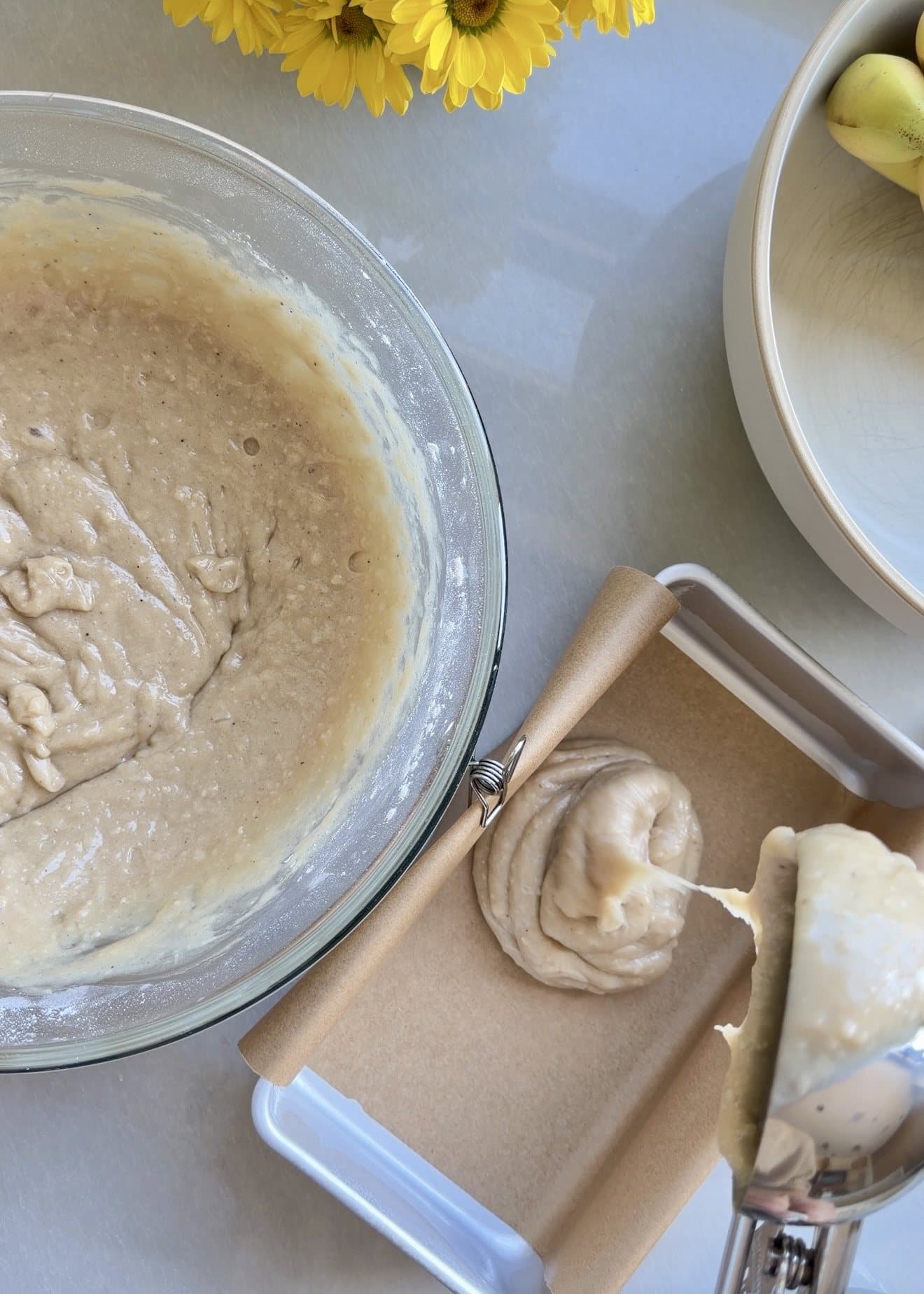
The batter should be thick but easy to spread. Step 3
Build the middle streusel layer
Spread just under half of the batter into the lined loaf pan, then scatter half of the cold streusel evenly over it. This becomes the soft, buttery ribbon through the center of every slice.
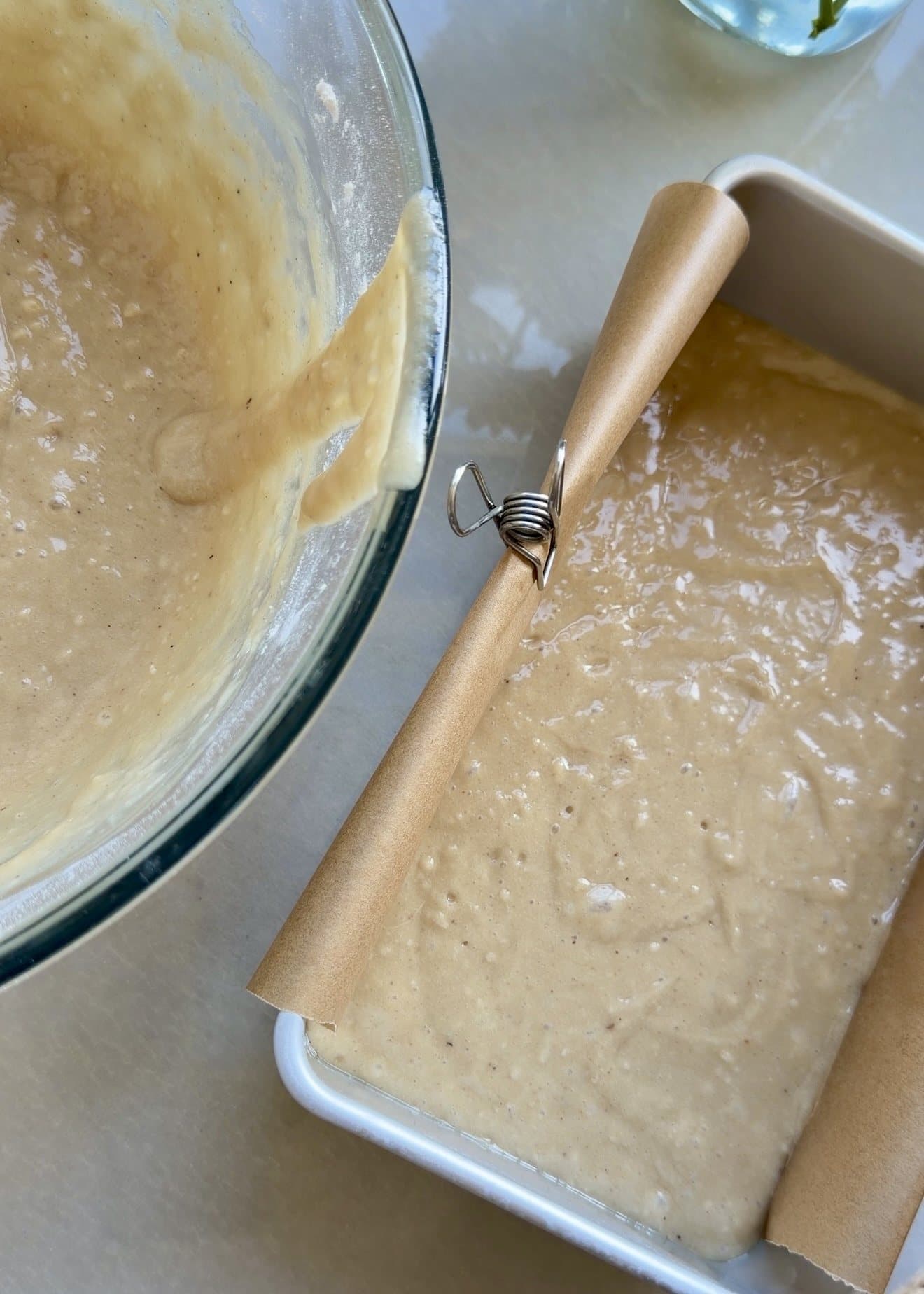
Spread just under half of the batter across the bottom of the pan. 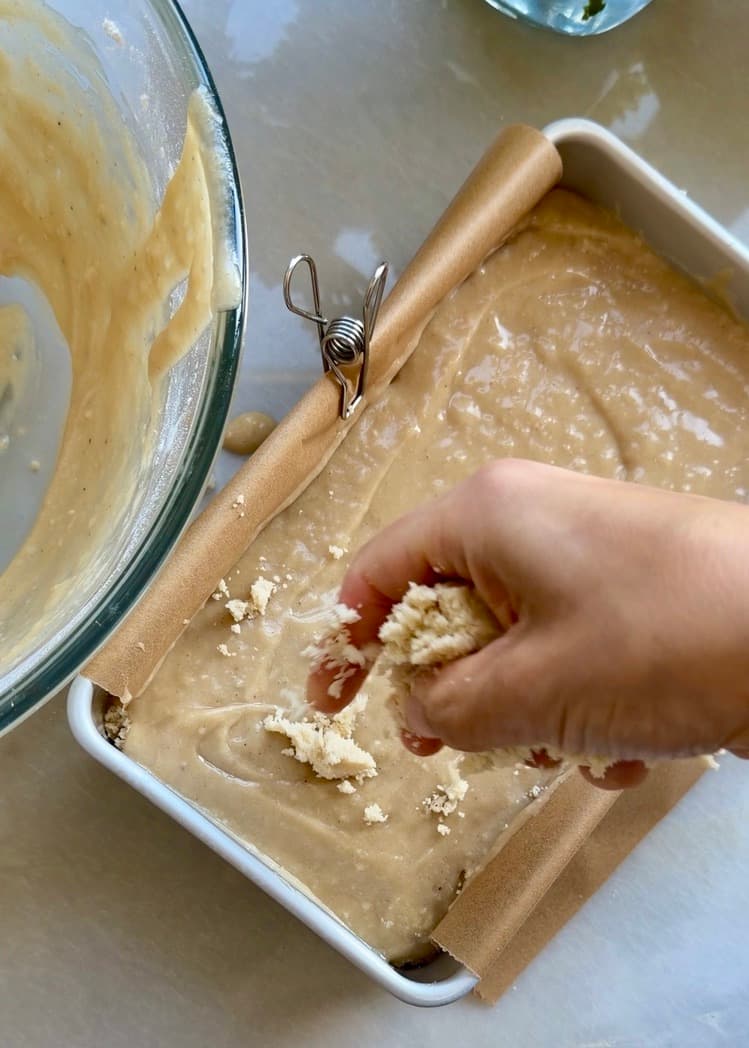
Scatter half of the cold streusel over the batter. 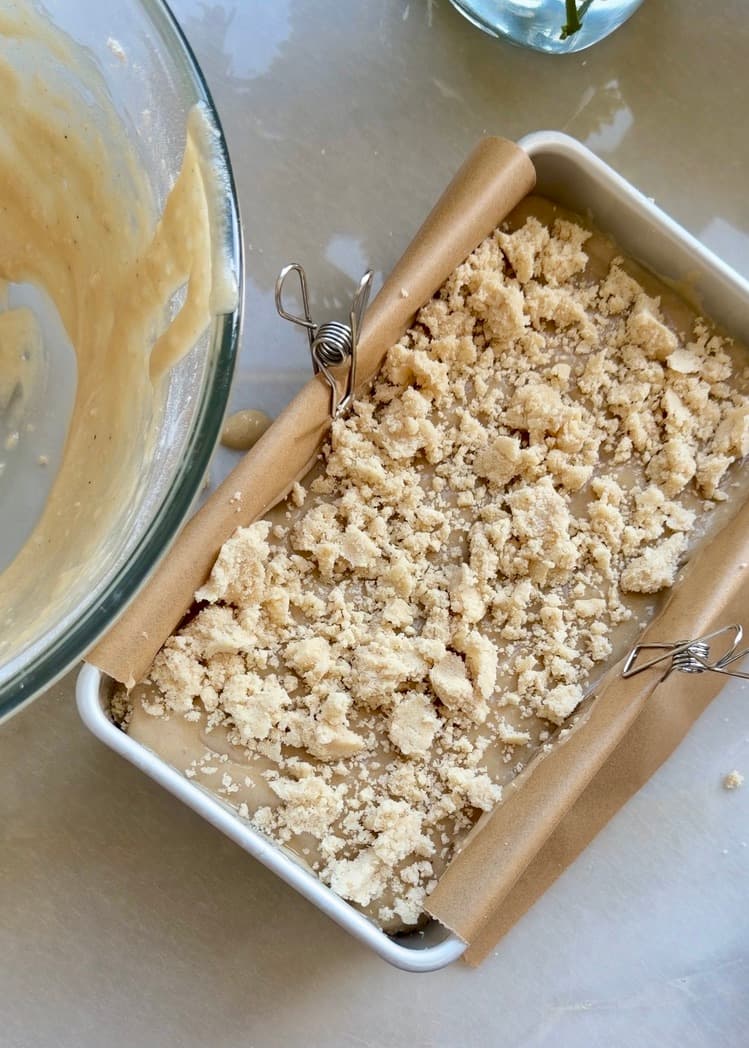
This middle layer of streusel gets covered with the remaining batter. Step 4
Finish the top
Cover the middle streusel with the remaining batter and add the rest of the streusel in loose clusters. Do not press it down. Finish with a generous sprinkle of clear coarse sanding sugar.
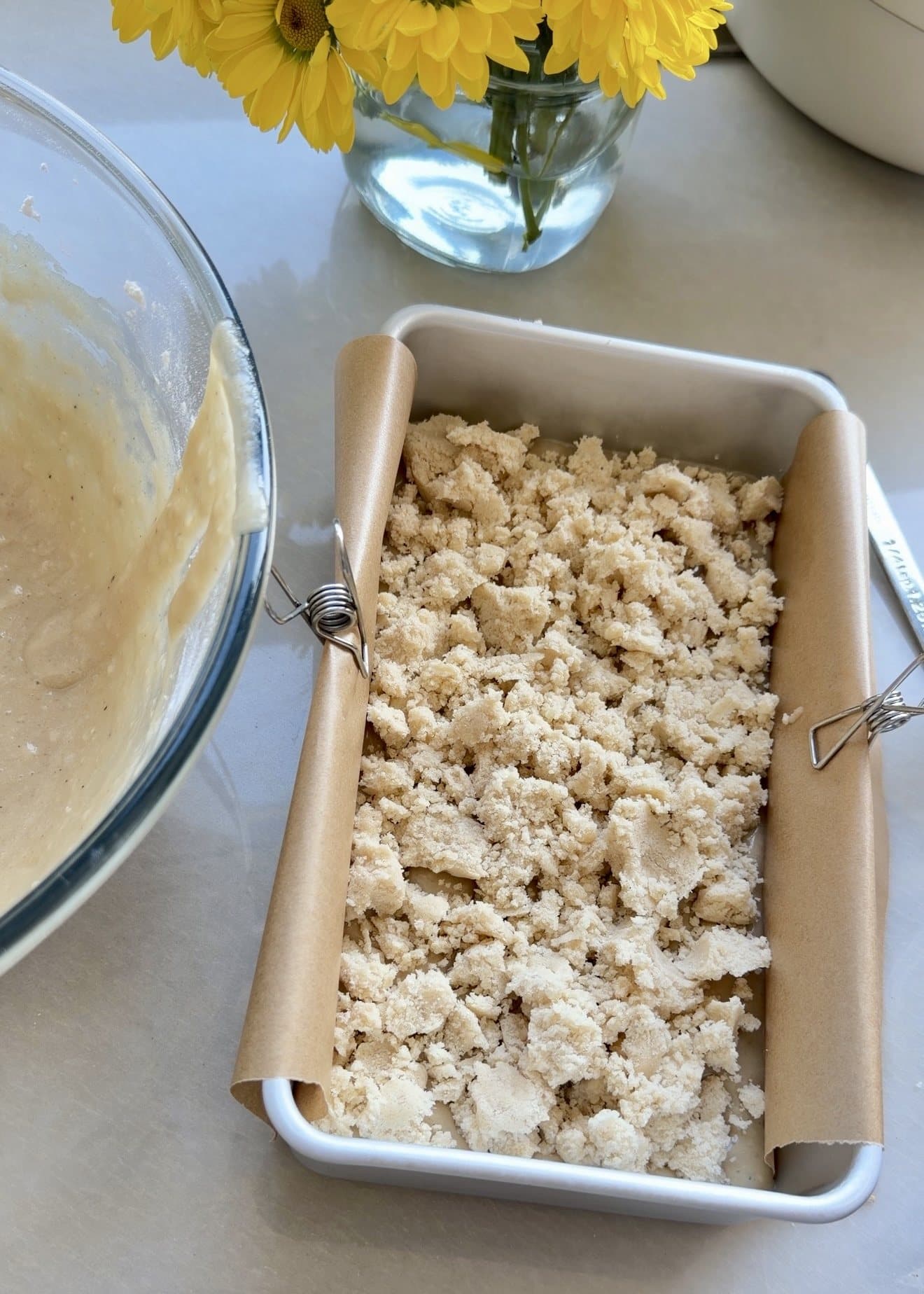
Add the rest of the streusel without pressing it down, then sprinkle with coarse sanding sugar. Step 5
Bake until the center is set
Bake until the streusel is golden and a tester inserted into the cake portion comes out with only crumbs and no wet batter. Let the loaf rest in the pan for 20 minutes before lifting it onto a rack.
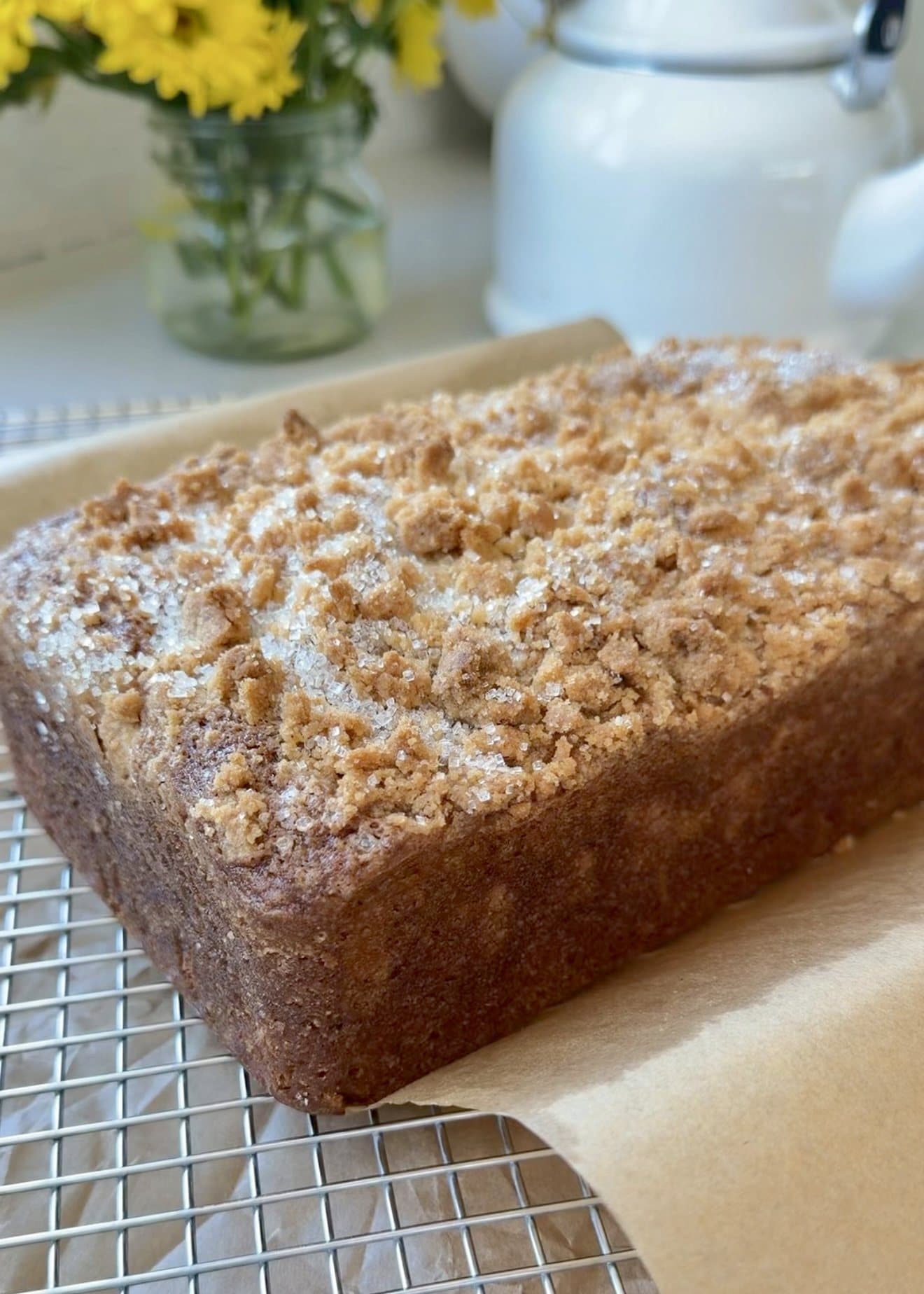
Let the loaf cool until warm but no longer hot before adding the glaze. Step 6
Glaze, set, and slice
Move the loaf to a wire rack and let it cool until warm but no longer hot. Pour on the smooth vanilla glaze, let it settle around the streusel, and wait until it sets before slicing.
Give the glaze time to set before slicing.
Bake with me
Watch the full Old-Fashioned Donut Loaf tutorial
I walk through the complete loaf from mixing the batter and layering the streusel to cooling, glazing, and slicing it.
From Instagram
Watch the reel
Watch the vanilla-nutmeg batter get layered with buttery streusel and finished with a thin old-fashioned donut glaze.
Open the reelTroubleshooting
If This Happens
The batter seems very thick
This batter should be thick but spreadable. Stop mixing as soon as the dry ingredients disappear.
The middle of the loaf collapsed
The loaf was most likely taken out too early or the oven door was opened too frequently. Bake until a tester comes out with only crumbs and no wet batter. The center should usually read 205-210°F.
The top is browning before the center is done
Tent the loaf loosely with foil once the streusel is golden, then continue baking until the cake portion is fully baked.
It is taking a long time to bake
Every oven is different. Make sure to keep the oven door closed instead of checking frequently. If the tester has a thick, paste-like residue, check again in 3-5 minutes. If it looks like wet unbaked batter, wait 7-10 minutes.
The tester looks wet even though the temperature is in range
These loaves are dense, so do not get discouraged if the center reaches 205°F and there is still batter on the tester. Keep baking until the tester comes out with only crumbs. The temperature can reach 210°F or even 212°F and still be perfectly fine - I have baked this loaf a little longer after forgetting about it. The tester is the most important judge.
The glaze is disappearing into the loaf
Let the loaf cool on the wire rack until it feels warm but no longer hot. A hot loaf can absorb or melt the glaze instead of letting it form a thin crackly coating.
Before you slice
Texture and serving notes
Serve the loaf warm for the softest crumb, or chill it fully for a denser, more traditional cake-donut bite.
Keep it good
Storage
Fridge
Store covered in the refrigerator for up to 4 days.
Freezer
Freeze individual slices for up to 2 months. Thaw overnight in the refrigerator or at room temperature before serving.
Recipe FAQ
Questions that come up
What makes this an old-fashioned donut loaf?
The soft cake-donut-style crumb, subtle nutmeg, vanilla bean, buttery streusel, and thin set glaze all echo the flavor and texture of an old-fashioned donut.
Is an old-fashioned donut loaf the same as a loaf cake?
It is baked in a loaf pan like a loaf cake, but its subtle nutmeg, tender cake-donut crumb, buttery streusel, and thin set glaze are inspired by an old-fashioned donut. It gives you the flavor and texture of a glazed cake donut without frying.
How do I know when Old-Fashioned Donut Loaf is done?
The tester is the most important judge. Insert it into the cake portion and keep baking until it comes out with only crumbs and no wet batter. These loaves are dense, so it is completely normal to reach 205°F while the tester still shows batter. Do not get discouraged - give it more time. A finished temperature of 210°F or even 212°F is perfectly fine.
Can I use dairy ingredients in this donut loaf?
Yes. I test this recipe with Forager Unsweetened Plain Yogurt, Silk Unsweetened Original Soymilk, and Country Crock Plant Butter Sticks. Dairy equivalents can be used at the same listed amounts and temperatures.
Why should the streusel stay cold?
Cold butter helps the streusel hold its clusters instead of melting into the batter. Keep it chilled until you are ready to layer the loaf.
Does it still taste good the next day?
Yes! Even the day after that...and that! That is the beautiful thing about these loaves. Since they are not fried, they taste just as good for longer.
Can I make this ahead of time?
Yes! In fact, these loaves often taste even better the next day. Keep the loaf refrigerated in an airtight bag or container until you are ready to serve it.
Will it turn out the same if I use volume measurements?
Often, yes - but not always. Flour and other ingredients can weigh differently from one cup to the next depending on how they are filled or packed, and even humidity can make a difference. That is why I recommend using a scale when you can. These loaves are easy to make, but their ratios are precise. Baking ingredients are expensive, and there is nothing more frustrating than a loaf that does not turn out as expected. Volume measurements are included for convenience, but weighing gives you the closest match to the recipe I tested.
Can I make this recipe gluten-free?
I have a separate gluten-free version with its own ingredients and method. Follow that recipe rather than swapping the flour in this one. Gluten-Free Old-Fashioned Donut Loaf
More donut loaves to try

- Prep
- 25 min
- Bake
- 55-90 min
- Total
- 2 hr
- Yield
- One 9x5-inch loaf
Measurement note
For the closest match to the recipe I tested, use grams. Volume measurements are included for convenience, but cups can vary, so I cannot guarantee the exact same result when measuring by volume.
Ingredients
Classic Streusel
- 115 g all-purpose flour115 g (about 3/4 cup + 3 tablespoons + 1 teaspoon) all-purpose flour
- 80 g granulated sugar80 g (about 6 tablespoons + 1 1/2 teaspoons) granulated sugar
- 1/2 teaspoon fine sea salt1/2 teaspoon fine sea salt
- 85 g cold butter, cubed85 g (about 6 tablespoons) cold butter, cubed
- 1/2 teaspoon vanilla bean paste1/2 teaspoon vanilla bean paste
Old-Fashioned Donut Loaf
- 260 g all-purpose flour260 g (about 2 cups + 3 tablespoons) all-purpose flour
- 15 g cornstarch15 g (about 2 tablespoons + 1/2 teaspoon) cornstarch
- 1 3/4 teaspoons baking powder1 3/4 teaspoons baking powder
- 1/4 teaspoon baking soda1/4 teaspoon baking soda
- 3/4 teaspoon fine sea salt3/4 teaspoon fine sea salt
- 1/4 teaspoon ground nutmeg1/4 teaspoon ground nutmeg
- 150 g granulated sugar150 g (about 3/4 cup) granulated sugar
- 70 g light brown sugar, packed70 g (about 1/3 cup) light brown sugar, packed
- 120 g neutral oil120 g (about 1/2 cup + 2 teaspoons) neutral oil
- 200 g plain unsweetened yogurt, room temperature200 g (about 3/4 cup + 1 tablespoon) plain unsweetened yogurt, room temperature
- 1 tablespoon vanilla bean paste1 tablespoon vanilla bean paste
- 135 g milk, room temperature135 g (about 1/2 cup + 1 tablespoon) milk, room temperature
- 1/2 teaspoon apple cider vinegar1/2 teaspoon apple cider vinegar
Vanilla Crackle Glaze
- 250 g powdered sugar, sifted250 g (about 2 cups + 1 tablespoon) powdered sugar, sifted
- 60 g milk60 g (about 1/4 cup) milk
- 1 teaspoon vanilla bean paste1 teaspoon vanilla bean paste
- Pinch fine sea saltPinch fine sea salt
Before Baking
- Coarse sanding sugar, for sprinklingCoarse sanding sugar, for sprinkling
Pan used
I personally prefer a light-colored aluminum pan for these loaves. Here is the one I use. Not sponsored. I don't earn a commission from this link.
Glass holds heat longer, so the edges can overbake before the center is done. If you use glass, loosely tent the loaf with foil early, as soon as the top starts to brown. The foil helps protect the top, but it does not stop the sides or bottom from baking too quickly.
Removing the parchment
Carefully lift the loaf onto a wire rack and remove the parchment from underneath. I carefully flip the loaf onto its side, then turn it upside down onto my forearm so I can peel away the parchment without damaging the loaf.
Instructions
- 1Preheat the oven to 350°F. Grease a standard 9x5-inch loaf pan and fully line it with parchment paper.
- 2Make the streusel. In a medium bowl, whisk together the flour, sugar, and salt. Add the cold cubed butter and vanilla bean paste. Work the mixture together with your fingertips until fine crumbs and large buttery clusters form. Refrigerate while you prepare the batter.
- 3In a large bowl, whisk the granulated sugar, brown sugar, oil, yogurt, vanilla bean paste, milk, and apple cider vinegar until completely smooth.
- 4Add the all-purpose flour, cornstarch, baking powder, baking soda, salt, and nutmeg. Whisk just until combined. Do not overmix.
- 5Spread just under half of the batter into the prepared loaf pan. Scatter about half of the chilled streusel over the batter in an even layer.
- 6Add the remaining batter and gently spread it to fully cover the streusel. Do not fill the loaf pan more than 3/4 full, even if some batter remains. Top generously with the remaining streusel, keeping the texture loose and clustered; do not press down.
- 7Sprinkle generously with clear coarse sanding sugar before baking. I sprinkle a lot.
- 8Bake at 350°F for 55-90 minutes. Check the loaf at 45 minutes and tent it loosely with foil if the streusel is browning quickly. Make sure to keep the oven door closed instead of checking frequently.
- 9
Before you take the loaf out
Baking time is a guide, not a deadline.
Check the center: Insert a skewer or toothpick into the cake in the center, avoiding the streusel layer.
Ready to come out: The tester comes out clean or with moist crumbs. No wet batter.
Keep baking: Thick, paste-like batter: bake 3-5 minutes more. Wet batter: bake 7-10 minutes more. Then test the center again.
The 205-210°F (96-99°C) range is an extra check. Batter on the tester still means keep baking, even at that temperature. A finished temperature of 210°F or even 212°F is perfectly fine.
An underbaked center can collapse as the loaf cools.
- 10Cool the loaf in the pan for 20 minutes, then use the parchment to lift it onto a wire rack. Let it cool until warm but no longer hot.
- 11Make the glaze. Whisk the powdered sugar, milk, vanilla bean paste, and salt until completely smooth and the glaze ribbons off the whisk without becoming watery.
- 12Spoon or pour the glaze generously over the warm loaf once it no longer feels hot, allowing it to run naturally down the sides.
- 13Allow the glaze to set before slicing.

Meet the baker
Angela Heckler
Angela Heckler is the recipe developer, baker, and photographer behind Obsessed Cakes. Her Old-Fashioned Donut Loaf series is a growing collection of cake-donut-inspired loaves with soft, deeply moist crumbs, buttery streusel, and crackly glaze. Angela develops and tests every recipe in her Arizona kitchen. Follow Obsessed Cakes on Instagram, TikTok, and YouTube.
Made it? Tell us.
Ratings and reviews
This was absolutely delicious! Super easy follow with the a fabulous outcome!
Yay, Jackie! So great to hear, thank you for sharing :)
This base recipe is a real winner! We followed the instructions as written, and our loaf turned out great! We think a flavored version would suit our taste buds a bit more hence the four out of five stars, but would definitely recommend this recipe and look forward to trying another version
Awesome!! Well, that is perfect because I have so many flavors to choose from - let me know what you try next!
It turned out beautiful! And very yummy. I enjoyed it very much. By the way, I added ube jam to the recipe, swapped it with nutmeg. Love it. It will part of my baking go-to recipes! Thank you, Angela!
Whoa, that sounds really delicious! Good call! I'm so glad you enjoyed it Nins, thank you so much for sharing :)
Subbed yogurt and apple cider vinegar with sour cream and lemon juice and it still turned out great! Stayed moist for days at room temp too!
Yay! Thank you for sharing, Jada!
This loaf was SO moist with the perfect amount of sweetness., It’s hard to believe it was completely vegan because it tasted that indulgent. Pro tip: If you just cut off a little piece here and there throughout the day, the calories don’t count. That’s just science. 😂
😂😂 so true!! Thank you for sharing, Abbi, I’m so glad you enjoyed it!
Lordy is it delicious. I was only going to eat a tiny slice, wasn’t happening. Probably the best thing I have ever baked.
Thank you so much for sharing, Allison! This is so relatable 😂😅
I’ve baked this two separate times and am having some difficulties? The loaf splits and the center collapses during the first 20 minutes of baking. I don’t open the oven and let it do its thing. What could this be from? It tastes delicious though! I can’t wait to try the other flavors.
Hey! Are you using the most recent recipe that’s published on my website? Email me: angela@obsessedcakes.com so we can figure it out!
Turned out brilliantly first time! Used all the batter and streusel as I missed the line about filling the tin 3/4 of the way, but it didn't matter! Rose well, and a skewer came out clean at 65 minutes. It measured 90°c. Didn't sink at all after it came out. I don't think it'll last all that long!
So glad it was a success, Kat!! Thank you for sharing 😊❤️
It was so GOOD!!! My kids gobbled it up this morning before school!!! Mine was fully baked at 212 F and didn’t sink !! I was so proud!!! I subbed plain yogurt for greek, the whole milk with half evaporated milk and 1% milk and used a bit of brown sugar on top, didn’t have sanding !! And the glaze?! Super yummmm!! I halved the recipe and it was the perfect touch of sweetness!! I will be making a bunch more of your recipes here again!!
Yay!! Always a plus when the kids love it! Love all of your tweaks, too! Thank you so much for sharing ☺️❤️
I love donuts I love icing and I love cake. I loved the texture and incredible taste. This recipe met all my sweet treats needs!
Yes! I'm so glad it checked all the boxes! Thank you for sharing :) <3
I haven't made it yet. But I am planning to. Question: Can I substitute sour cream for the yogurt? I have a lot of sour cream that I need to use up.
Yes you can! Let me know how it turns out!
Angela, your Old Fashioned Donut Loaf has officially converted me from someone who has never liked donuts to a donut lover! The texture was divine; light, airy and moist, with that hint of 'crackle' from the glaze - nothing I ever imagined a donut could be! And don't get me started on the streusel ... so good that some didn't even make it onto the loaf before baking! For anyone concerned that this loaf would be too sweet with all the components, I can assure you that it's not! As for the difficulty level, I truly believe that even the most novice baker could turn out a perfect loaf. Angela, thank you for taking the time to explain the importance of weighing your ingredients. As the sister of a professional baker, I know that makes all the difference in what comes out of your oven! Your passion for and love of baking is clearly evident in your videos and recipes.
Ohhh my goodness, thank you so much your kind words and thoughtful feedback, Risa! 🥹 it really means a lot coming from someone who wasn’t the biggest donut lover!! ❤️
I made this a couple weeks ago and it was so good! I used regular dairy ingredients, but I am excited to try the vegan version as well. The loaf has held up incredibly well in the freezer too!
Awesome, Lisa! You can't go wrong with either version! <3 Thank you for sharing!
I'm leaving a review on this loaf because I don't see the one I made on her Instagram page, which is the banana nut glazed pecan loaf without the cream cheese. After all, it's just that good without it. It was the best dessert I've ever made. I fell in love with it the first time I made it. I make it all the time for family. Everyone loves it. Dairy-free, by the way! Thank you for sharing your delicious recipes with the world. I'm going to try this recipe and the blueberry loaf next. I know you won't disappoint.
Oh, wow! Thank you so much for sharing! 🥹 gosh, I want to go make it now 😂😂 it’s been a minute! Thank you again, Nikki
Recipe was easy to follow and it turned out delicious.Will definitely be making this again.
Yay, thank you, Karen!!
I was a little skeptical about the recipe since it did not have eggs and some commented their loaf sank in the middle. I decided to use full fat sour cream- what I had and make as directed. The loaf is moist and delicious. I only have an 8x4.5 loaf pan, so I cooked for the recommended 45 minutes at first. It still needed a few minutes more- about 8. It didn’t sink at all. I used the remaining batter to make cake donuts with my donut pan. I only needed to cook these about 18 minutes. I didn’t have sanding sugar, but had purchased the McKormick fall finishing sugars, so tried the Maple Brown Sugar and it was fab! I will be making more and can’t wait to try the apple and pumpkin this Fall. Thanks for sharing the love of cake!
I’m so glad you gave it a go, Sabrina!! Thank you very much for sharing ❤️❤️❤️
I am skeptical when I hear a recipe creator say the phrase, "Viral recipe". With so many so called viral recipes that have fallen flat in my opinion. A straightforward recipe (I subbed sour cream for the yogurt, sue me) however in my oven it took almost 2hr to get to 207°. We did not wait for the loaf to cool nor did I line my pan with Parchment paper. All that being said this recipe was great. I will definitely be making again but in a mini loaf pan. And will confirm this does qualify as what I would consider a viral recipe worth making!
Yes! I certainly took a risk using the word "viral" LOL. I'm glad it grabbed your attention and took you by surprise...that's always the goal. You'll have to let me know how the others turn out if you give them a try. Thank you!
Recipe was super easy to follow and the loaf turned out really yummy! My whole family ate it up!! Will be baking again!
Thanks for sharing, Ashley!! I'm so glad it was a success! :)
This recipe was so easy to follow! The measurements and ingredients are perfectly laid out. I’ve made this a few times, and each time it’s delicious. It’s a crowd favorite every time.
Awesome! I agree, it's impossible to only make this once, haha. I'm glad the recipe is easy to follow, thank you so much for reporting back! :)
Perfection! I’m obsessed with this loaf! Reminds me of Austrian dessert
Awesome, Amy! Thank you for sharing! Curious - which Austrian dessert? Feel free to email me obsessedcakes.com :)
This recipe was such a hit in my family! It’s going to become a staple for any and every occasion
Love this, Maggie! Thank you so much for sharing :) <3
I loved this recipe! I thought immediately of a old fashioned donut when tasting it!
I’m so glad you enjoyed it, Ashley! 😍
It's one our favorites. I get teased a lot dur to the frequency of making it. It's very good you guys, a must try
Awe, thank you so much, Clarence! I'm glad you love it as much as I do LOL - there's one in my fridge right now, too!
As a GF, DF and egg allergic person, cake is something I NEVER have. Until now. I just won't settle for crap--it's not worth it. This recipe was an incredible surprise. I made one in a loaf pan and the second in a mini spring-form round. Both were excellent. Incredible actually. The people I live with are big fans of sweet treats. Not GF or DF, but they loved the cakes too. I am overjoyed I've found you. ❤️
I'm so glad this one was a hit, Lisa! Knowing that you now have a cake to look forward to truly makes my day! Thanks so much for the kind words :)
Questions from readers
Recipe questions and answers
Hi! Could gluten free Cup4Cup flour be subbed in this? Would it need then need psyllium husk powder and/or powdered buttermilk to help with moisture? I saw a brief mention in a comment that someone was GF and DF but she didn’t specify if and what she swapped. I appreciate it and can’t wait to try this out!
Hi there! I know that people have done this and the results were positive. I personally haven’t tested it and I don’t believe they used psyllium husk. I test all of these recipe with DF ingredients and they behave so similarly to dairy that it shouldn’t be an issue which route you go. :) let me know how it turns out!
Can I use buttermilk instead of whole milk? Excited to try!
That should be just fine :) let me know how it turns out!
Hi Angela! I follow a gluten and dairy free diet. Have you ever made this version of a donut loaf? Do you have any recommendations for swaps?
Hi! Yes, I have a gf non dairy old fashioned donut loaf :) it’s posted in the series ❤️
Hey! Could I use extra yoghurt or perhaps melted butter instead of the oil? Thank youuu
The texture will be quite different because of the added water content. I recommend sticking with oil for this one. If you give it a go though, let me know how it turns out!
I live at 6000 feet and baking is harder in altitude. Is there any tips for baking this loaf in high altitude?
Hey! I’ve baked this at 4,500 with no issues. I would tent sooner and it’ll likely be ready sooner too. Don’t use a glass pan, use aluminum. Don’t increase the temp of the oven and do not fill above 2/3. ☺️ let me know how it turns out! Baking in high altitude is such a doozie. I feel for you!!
Will Vanilla Extract work in these recipes?
Absolutely! Enjoy! :)
Hi! I printed a recipe from your website last week and it worked perfectly, but I’m having trouble with the recipes now. The Original Donut Loaf and the Banana Poke Cake both come up as a completely blank PDF when I try to print them. Actually, none of the recipes seem to be working for me when I try to print. I’ve tried it on my phone as well as on my computer using two different browsers, and each time the PDF just loads as a blank page. The “share” option doesn’t seem to be working either. :( I’m not sure if there’s something going on with the website or if there’s another way I can get the recipes to print. Is there anything you would suggest trying? Thank you so much!
Hi! I’m working on it right now! ❤️
Love your recipes, but i wish there was either a translation button or the recipes were in both US and Metric Teaspoons, Ounces, Cups ,this way I do nit have to spend a all that time translating the recipes. Thank you. I do love your recipes thank you for sharing them with us
So I made this I have not tasted it yet, but it sunk. I had all my ingredients at room temperature and I did exactly as the recipe said other than I used regular milk? Any ideas on what I did wrong?
Hi Cindy! What was the internal temperature when you took it out of the oven? Dairy products work perfectly fine for these loaves.
Hey I do not own a kitchen scale, unfortunately. By any chance, is this recipe written in cups abd spoons anywhere?
Hey Stephanie! I removed volume measurements to ensure accuracy. These loaves have to be precise in order to achieve the best results. Scales will also make the prep faster with fewer dishes :D. I highly recommend grabbing on on Amazon - you'll never go back, I promise!
are there make ahead instructions available? For example, can I make the batter ahead of time and then bake the next morning?
For making ahead, mix dry ingredients store in airtight container. In another container, mix wet ingredients and refrigerate. When it comes time to bake, allow wet ingredients to reach room temperature and combine. You can also prep streusel ahead in a separate bowl. Apply the streusel chilled. :)
Having trouble with the topping! I've tried it a couple of time but it always just melts into the cake while baking I've tried chilling it for ages and using it straight out of the fridge but same result
Hi Emily! Few things 1.) are you weighing ingredients? If using volume measurements, there could be less flour than there should be. 2.) are you using stick butter? Tub butter or spreadable butter does not work for this recipe 3.) the streusel should consist of large chunks, if it is dispersed into little bits, the streusel will bake into the loaf <3 - feel free to email me Angela@obsessedcakes.com so we can get this solved for you!
Do you chill it in the fridge at the end or just let it continue to cool on the counter after you’ve glazed it?
Hi Molly! I chill in the fridge to speed up the process. A solid 30 is perfect for the icing to set. These taste even better after being in the fridge overnight, too <3
Did you make this?
Share your bake on Instagram - tag @obsessedwithcashews and use #obsessedcakes.