Lava Cakes
Carrot Cinnamon Roll Lava Cake
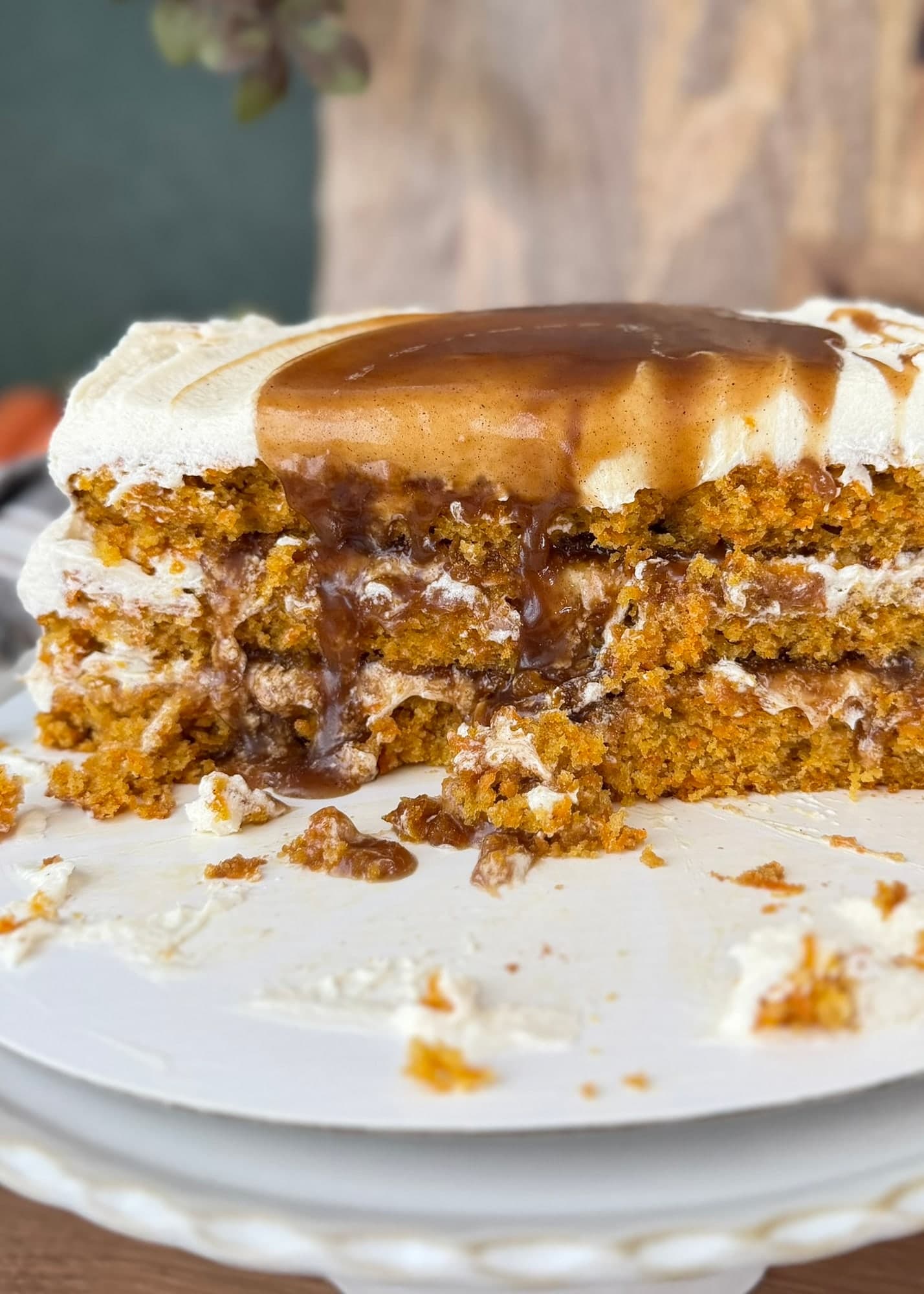
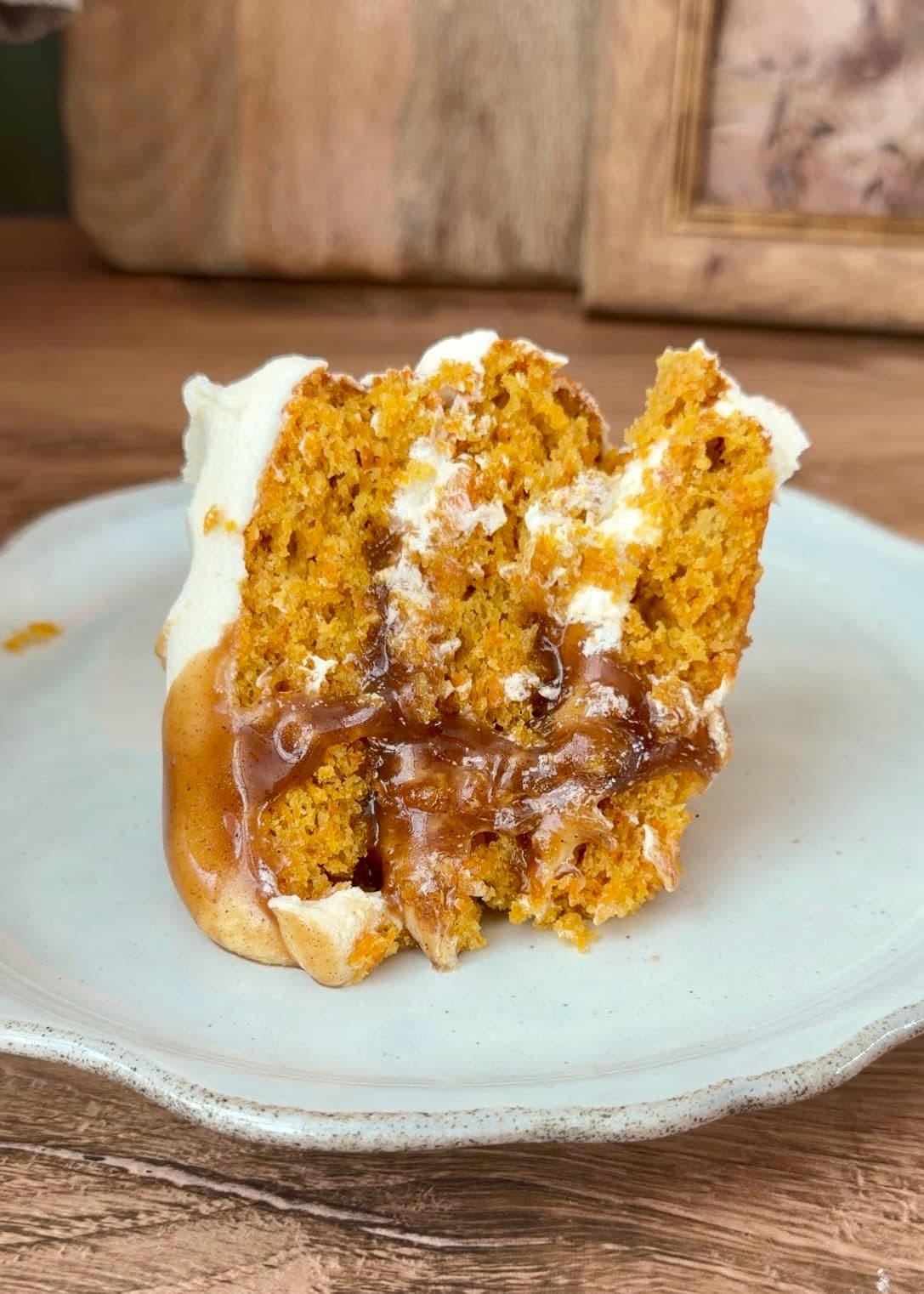
This carrot cinnamon roll lava cake has three soft carrot cake layers, a thick brown sugar cinnamon filling, and cream cheese frosting. Finely grated carrots, Greek yogurt, and a little crushed pineapple keep the cake moist without making pineapple the main flavor.
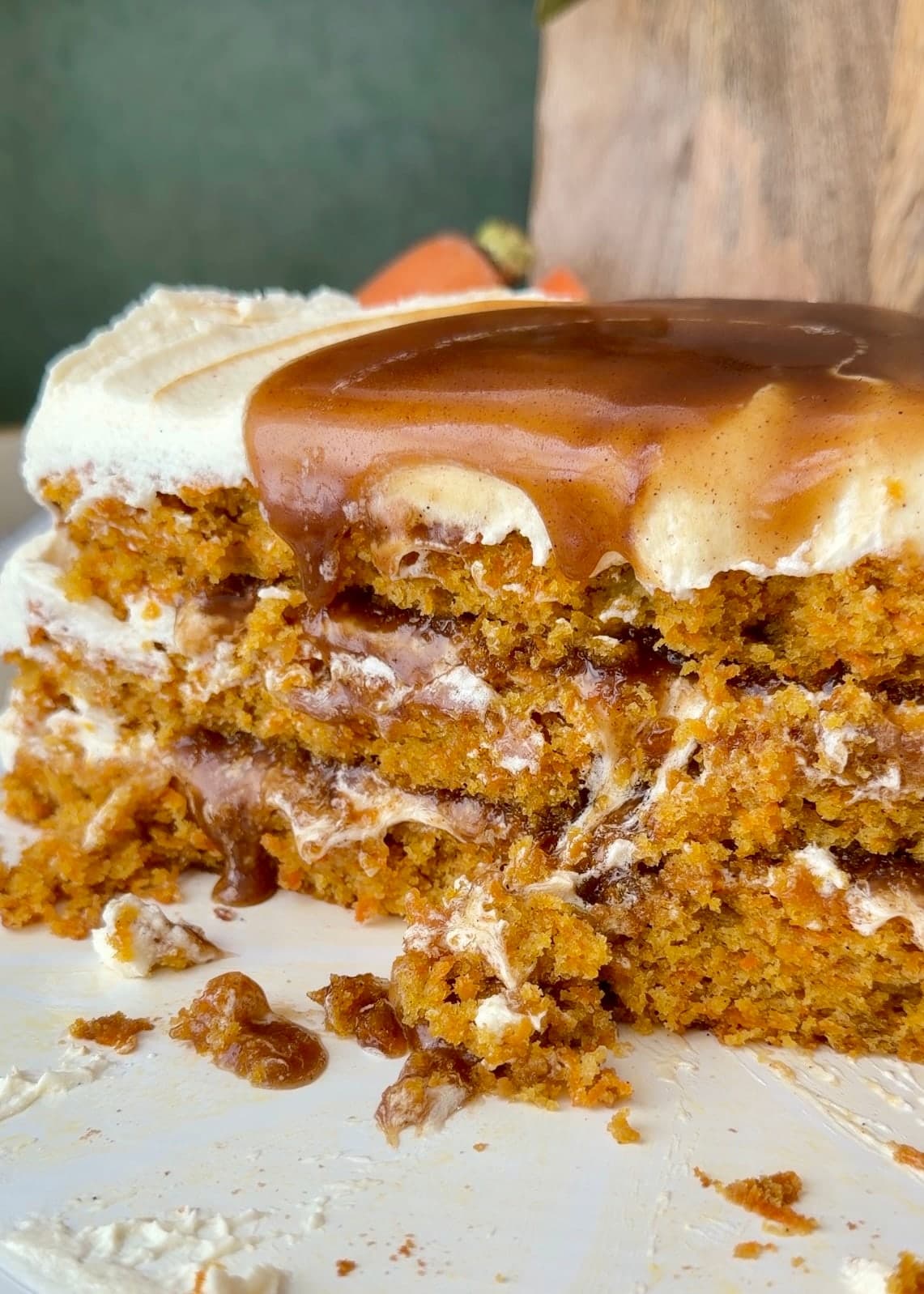
The lava in these photos is the thicker version, made without extra milk. It still settles into every slice. If you prefer a looser filling, I explain how to adjust it after it has cooled.
Save this recipe
Want to save this recipe for later?
Enter your email and I’ll send it to your inbox.
Thinking out loud
The carrot cake I kept meaning to make
This lava cake is long overdue. I've had so many requests for it, and carrot cake is one of my all-time favorites. When I was at ASU, I lived at 5th and Mill, right behind Gordon Biersch. They had the best carrot cake - something like six layers. I never saved any for later. It was always gone.
I left the crushed pineapple a little textured this time because my son was sleeping and I wasn't about to turn on the blender. I actually loved those little pieces. Smooth or textured, it tastes wonderful, and once the cake is baked, the flavors all blend together.
My one plea: weigh the carrots. When a recipe says 'packed,' how packed are we talking? A gentle push, or are we tamping espresso? A scale takes that whole question out of it. Here, it's 250 g of very finely grated carrot, with every bit of its moisture left in.
Ingredient notes
Key ingredients
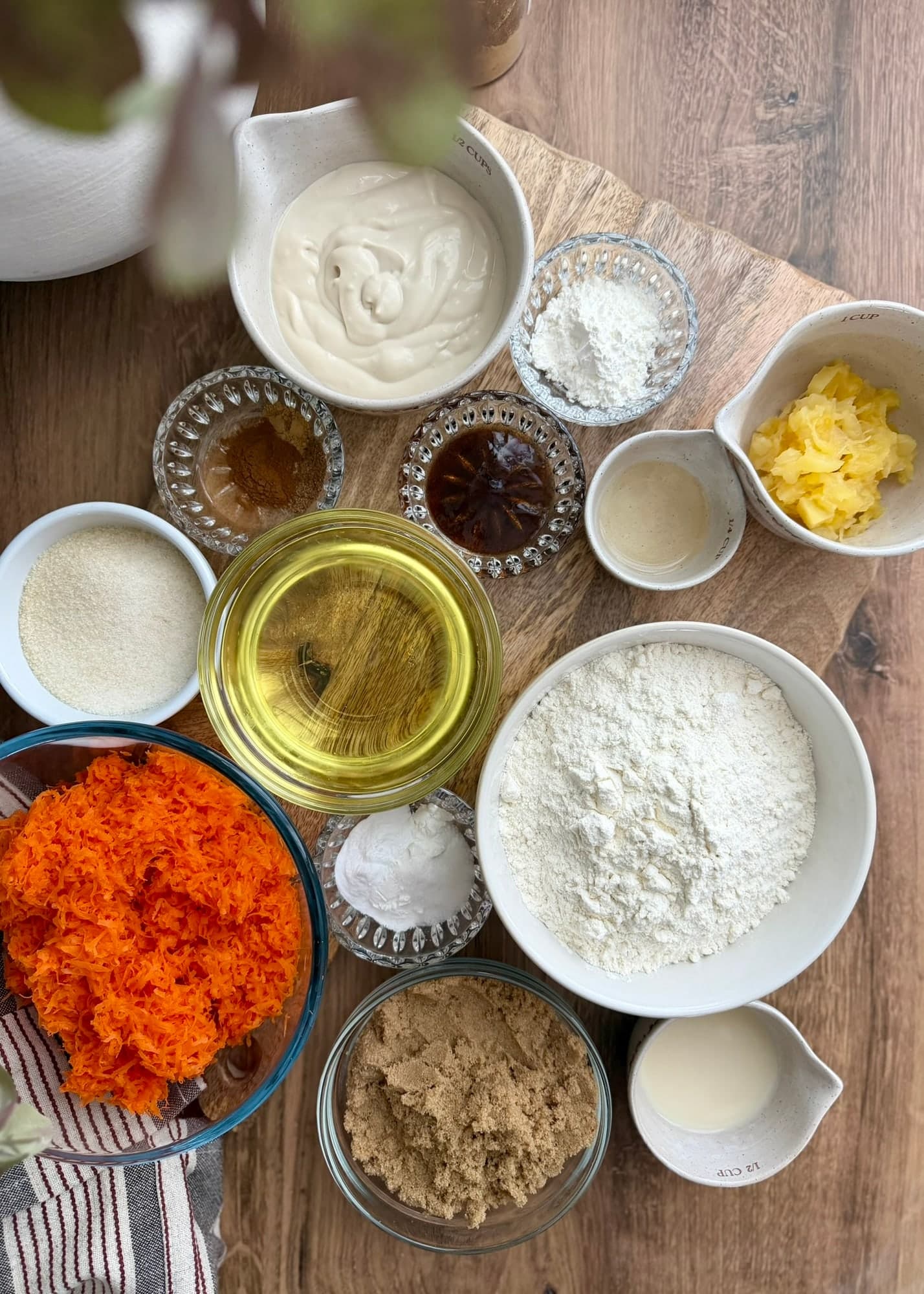
Very finely grated carrots
Grate finely, then weigh 250 g with all the natural moisture intact. Do not squeeze, press, or drain the carrots, and skip the dry, thick pre-shredded kind.
Crushed pineapple
Gently drain first, then weigh 60 g. Do not squeeze it dry. I liked leaving the small pieces intact, but you can blend the drained pineapple smooth if you prefer.
Cake flour and cornstarch
Cake flour makes the layers tender, and the small amount of cornstarch gives the crumb that extra-soft texture I love.
Plain Greek-style yogurt
I chose Greek yogurt because so many people already have it, and it works beautifully here. Use it at room temperature, along with the milk.
Neutral oil
Canola and vegetable oil work perfectly here. Avocado oil does, too, but it is more expensive.
Brick cream cheese
Use softened cream cheese in bricks, not a spread from a tub. This frosting needs enough body to support the layers and contain the filling.
Brands I used for this recipe
These are preferences, not requirements. If you choose the non-dairy route, these are the products I test with. Dairy equivalents can be used at the same listed amounts and temperatures.
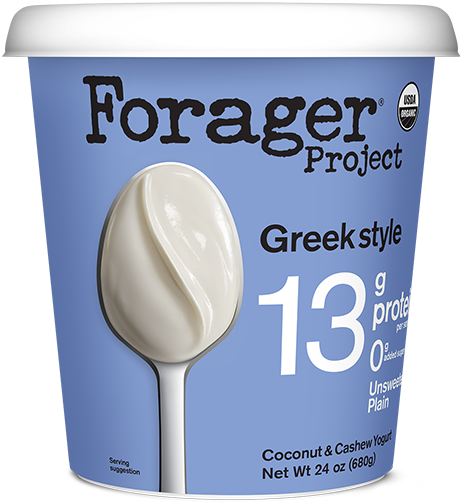
Forager Unsweetened Plain Greek Style Yogurt
I use this plain unsweetened Greek-style yogurt in the carrot cake layers, at room temperature.
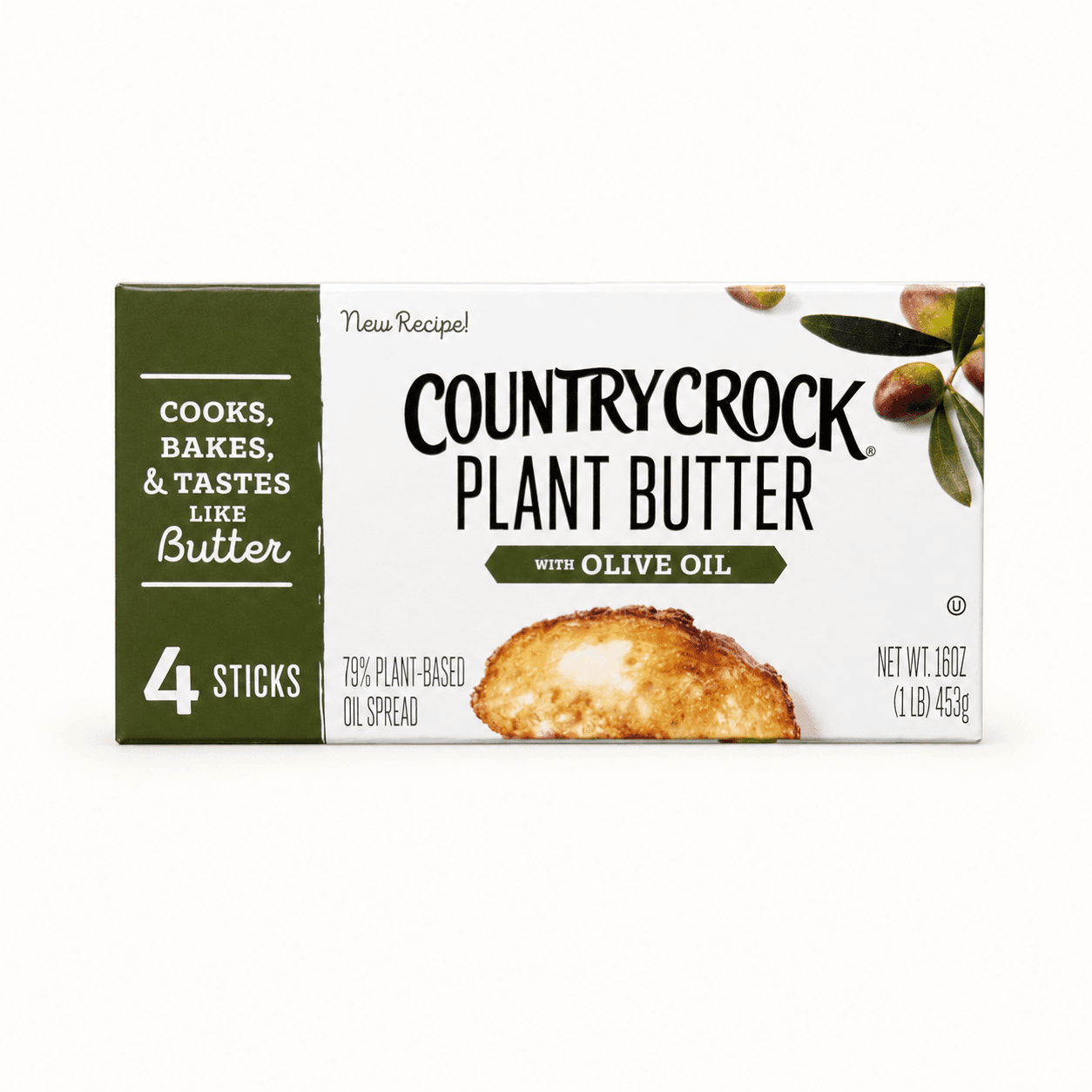
Country Crock Plant Butter Sticks
I use these sticks in the cinnamon filling and cream cheese frosting. Bring the frosting butter to room temperature.
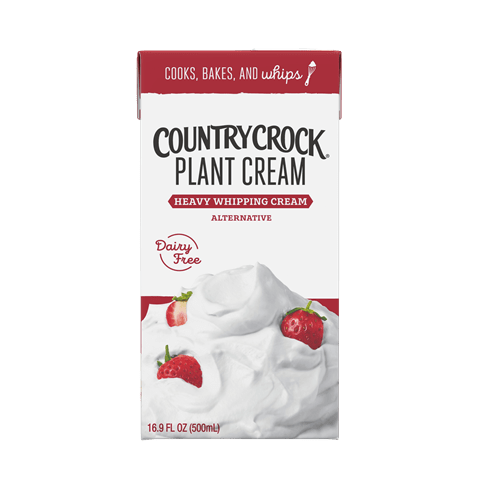
Country Crock Heavy Plant Cream
I use this cream in the cinnamon roll lava filling.
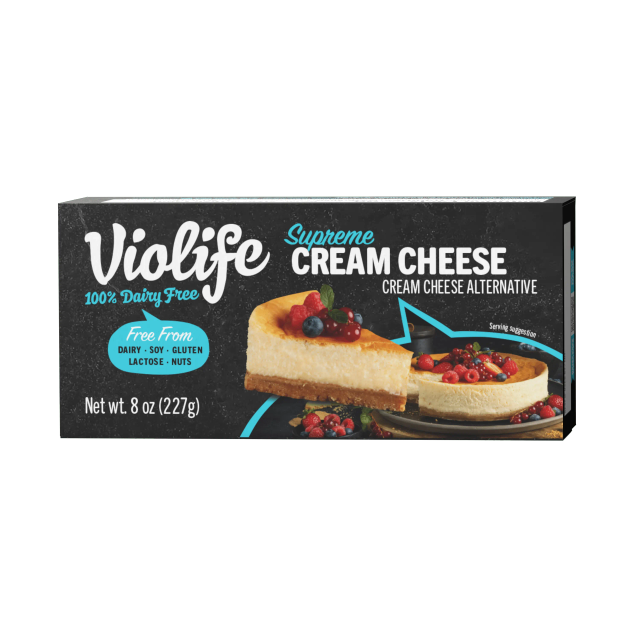
Violife Supreme Cream Cheese Block
I use these softened cream cheese bricks in the frosting. Choose bricks rather than a tub-style spread.
From this recipe
Tested notes
The gram amounts are the recipe standard. Cup and spoon equivalents are approximate, especially for grated carrots, packed sugar, and drained pineapple. Weighing gives you the closest match; do not change the gram amounts to match a cup measure.
For a looser lava filling, stir in room-temperature milk after the filling has cooled completely, 1 tablespoon at a time, up to 3 tablespoons. The photographed version has no extra milk.
Canola, vegetable, and avocado oil are suitable neutral oils. Use brick cream cheese, not a tub-style spread, and add it last on low speed.
Testing notes
Why this works
Butter, sugar, then cream cheese
Beat the butter first and work in the powdered sugar before adding the cream cheese. This coats the sugar with butter before the cream cheese joins it. Add the softened cream cheese gradually on low and stop once combined.
Give the lava time to thicken
Warm filling looks much thinner than cooled filling. Let it cool evenly on the counter before deciding whether it needs milk; refrigeration firms the edges first. This is a cooling step, not a room-temperature storage method.
Step by step
How It All Comes Together
Step 1
Prepare the fruit and mix the batter
Weigh the finely grated carrots without squeezing out any moisture. Gently drain the pineapple, then weigh it. If you prefer it smooth, blend it after draining and weighing. Whisk the wet ingredients, sift the dry ingredients over the bowl, and fold gently. The photos show the pineapple mixed into the wet ingredients; it can also be folded in with the carrots as written in the recipe card.
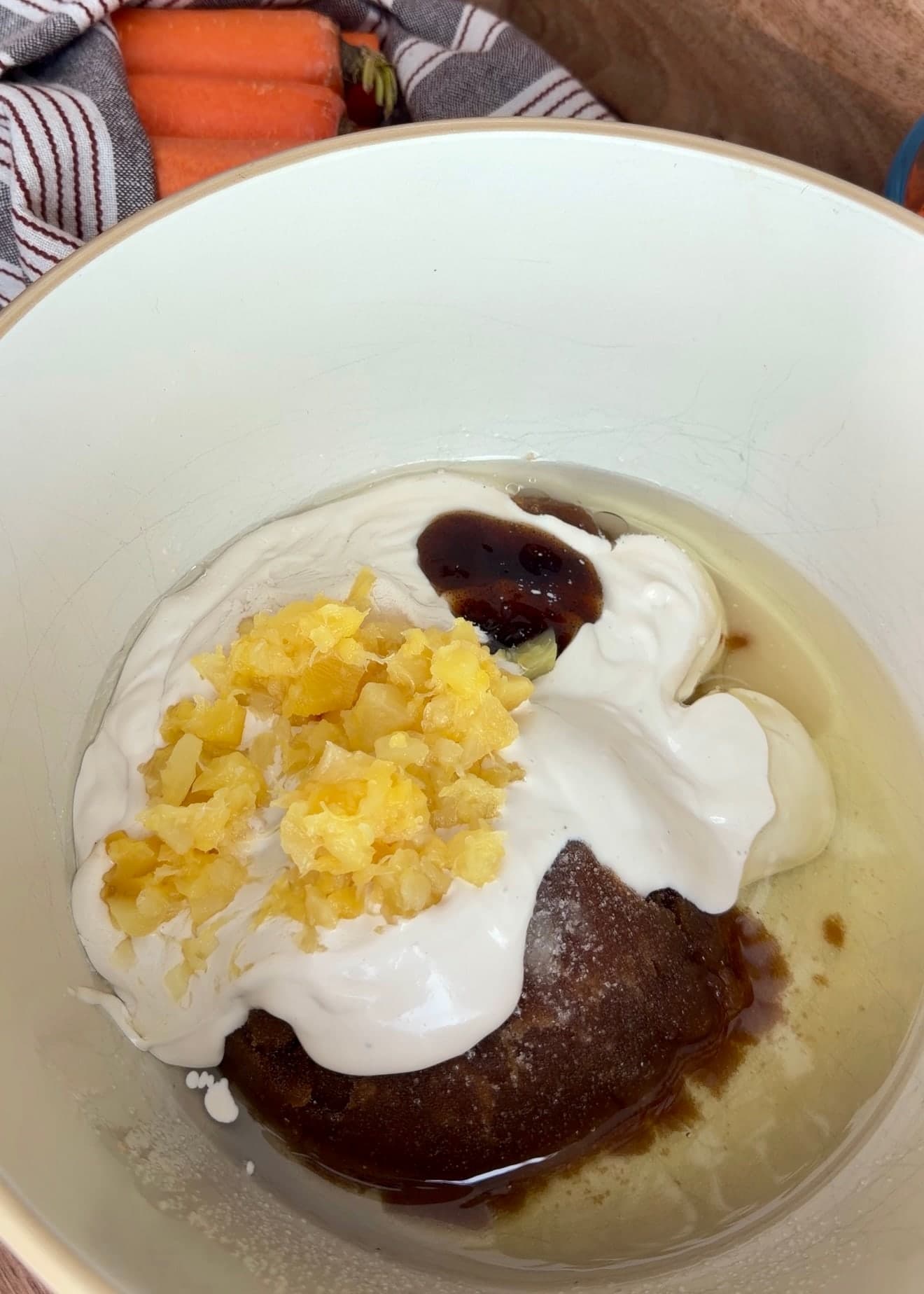
I left the pineapple in little pieces for this batch. 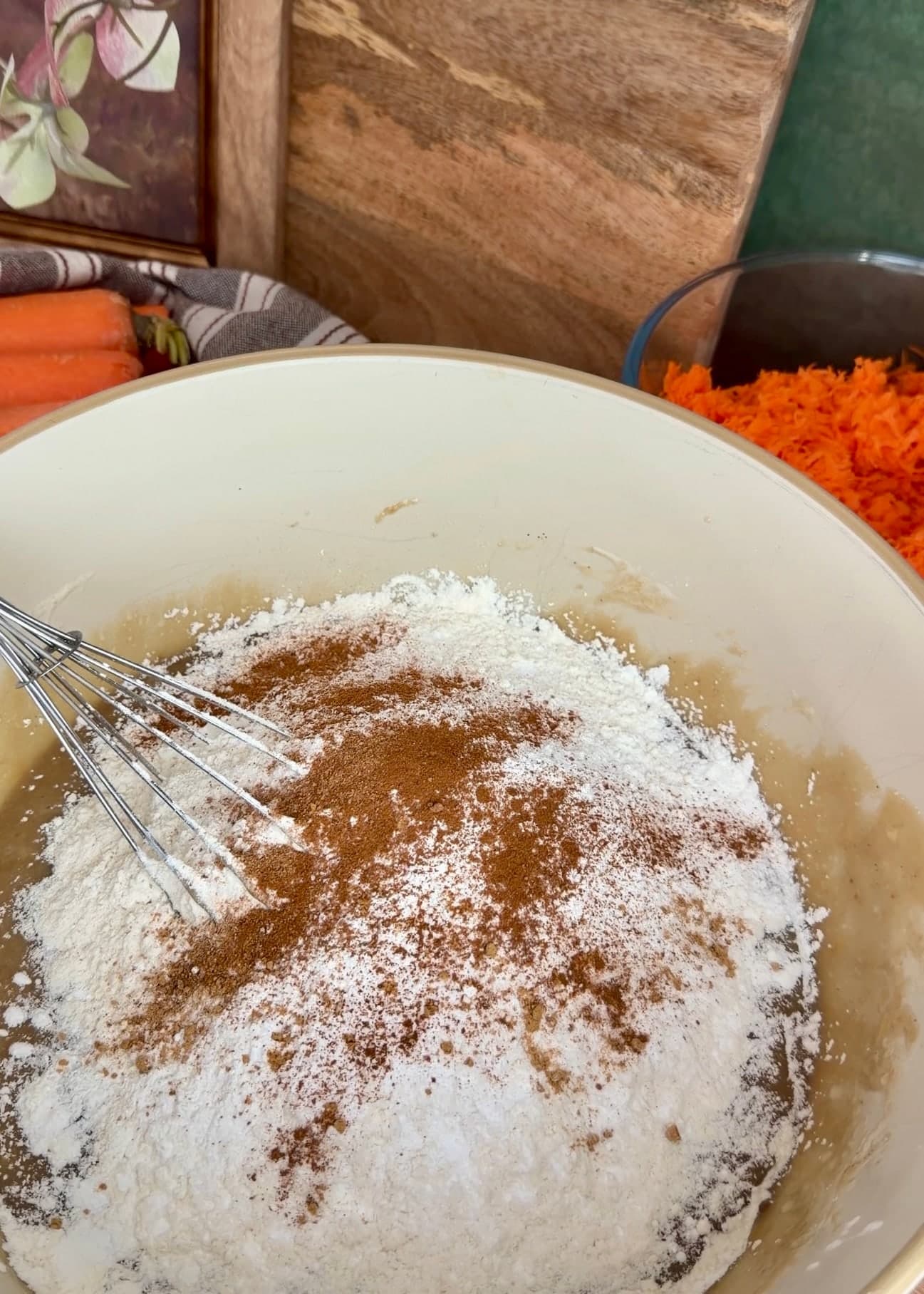
The dry ingredients go in next. 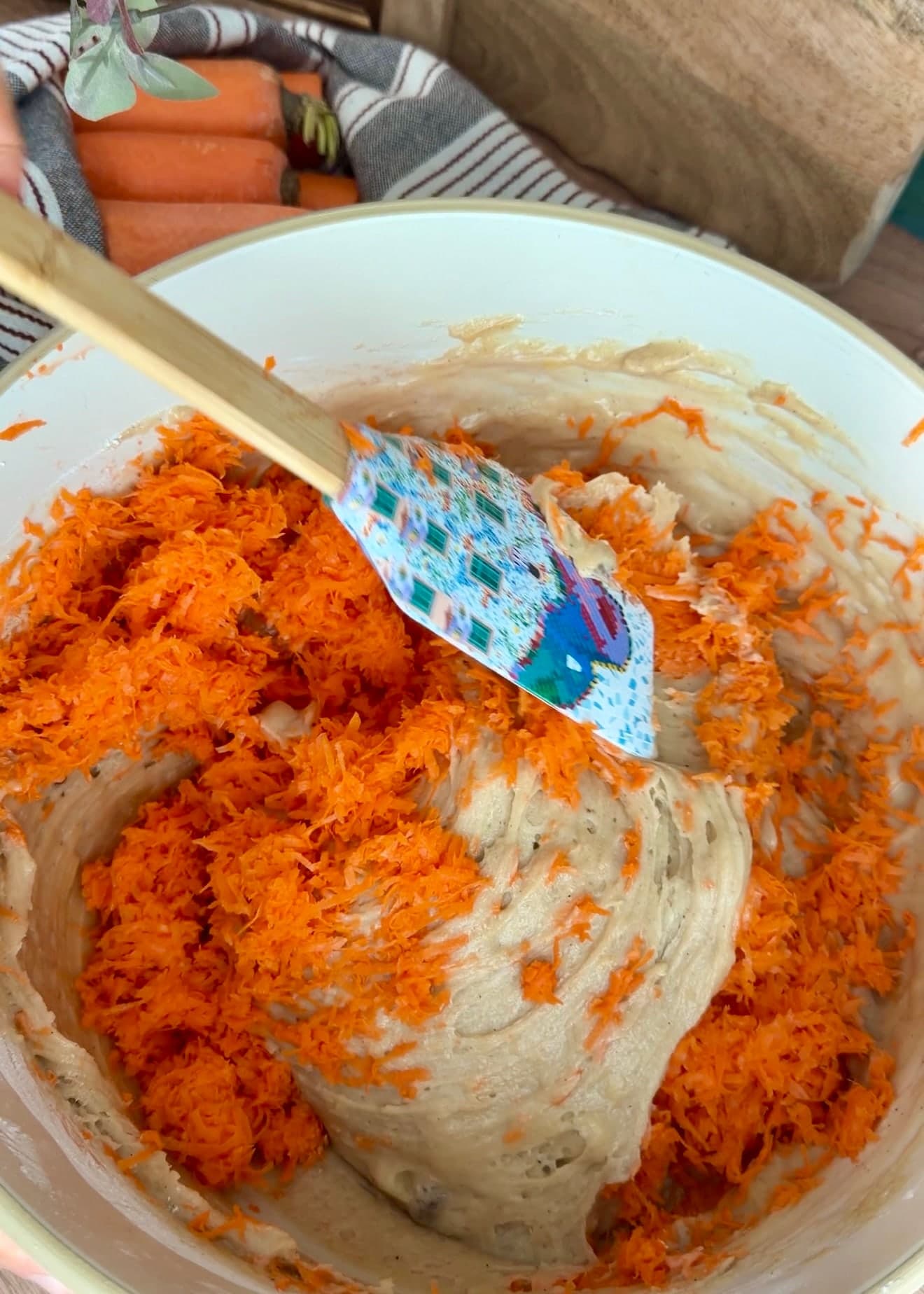
Fold in the finely grated carrots without overmixing. Step 2
Divide, bake, and cool
Divide the batter evenly between three prepared 8-inch pans. Bake at 350°F (175°C) for 22-25 minutes, checking at 20 minutes if you use dark pans or your oven runs fast. Let the layers cool completely before frosting.
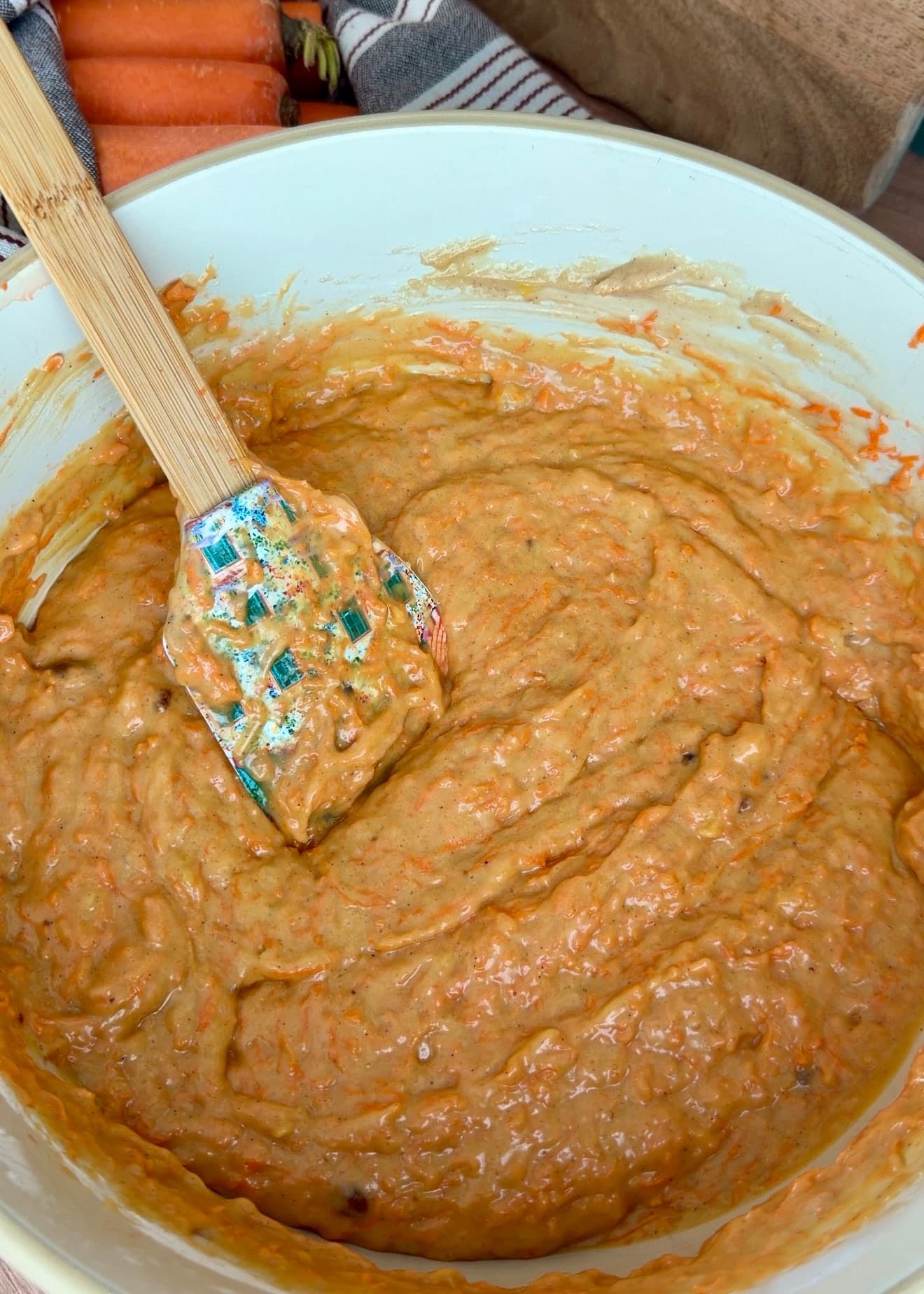
The batter is thick, with little bits of carrot throughout. 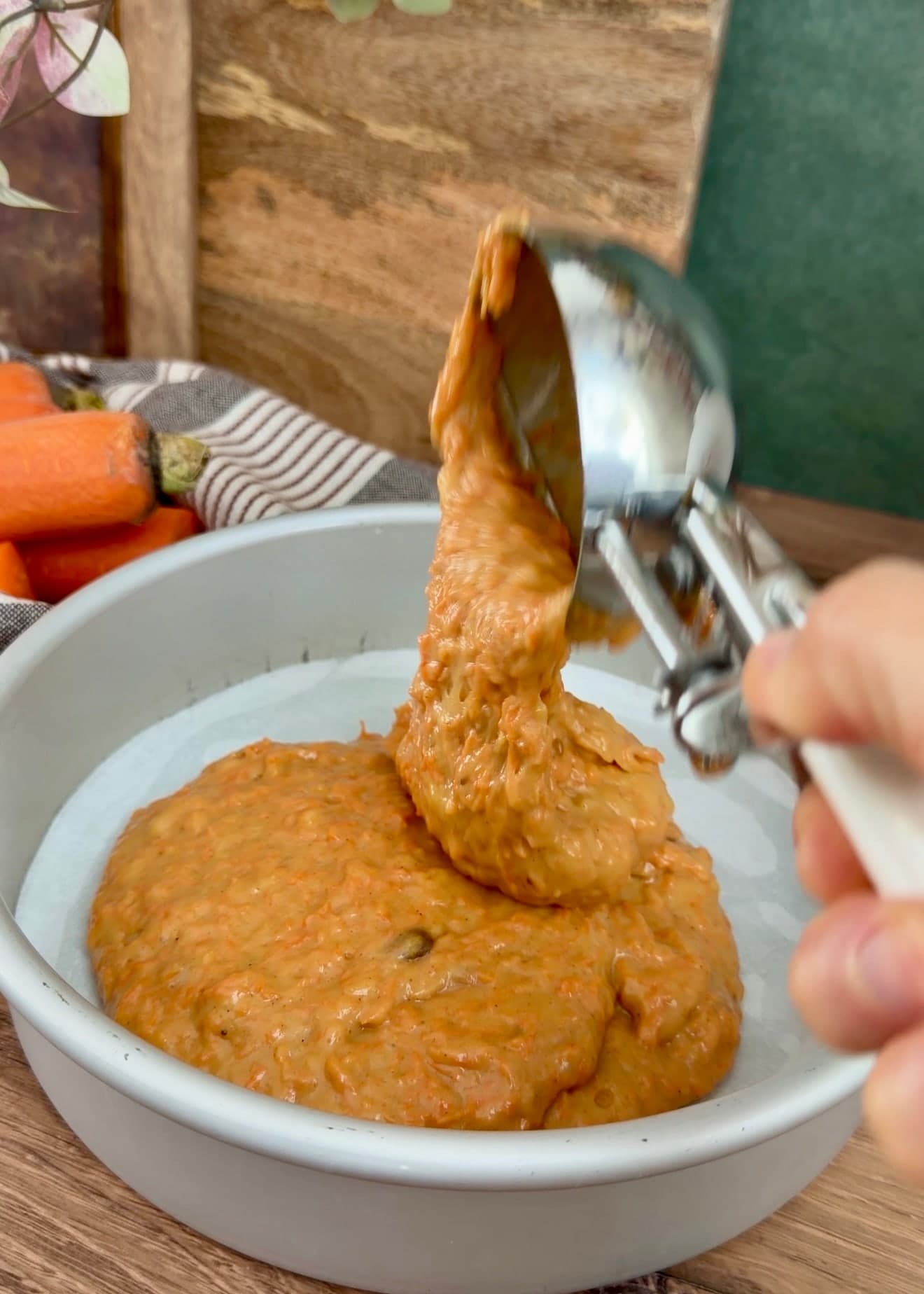
Divide it evenly between the three lined pans. 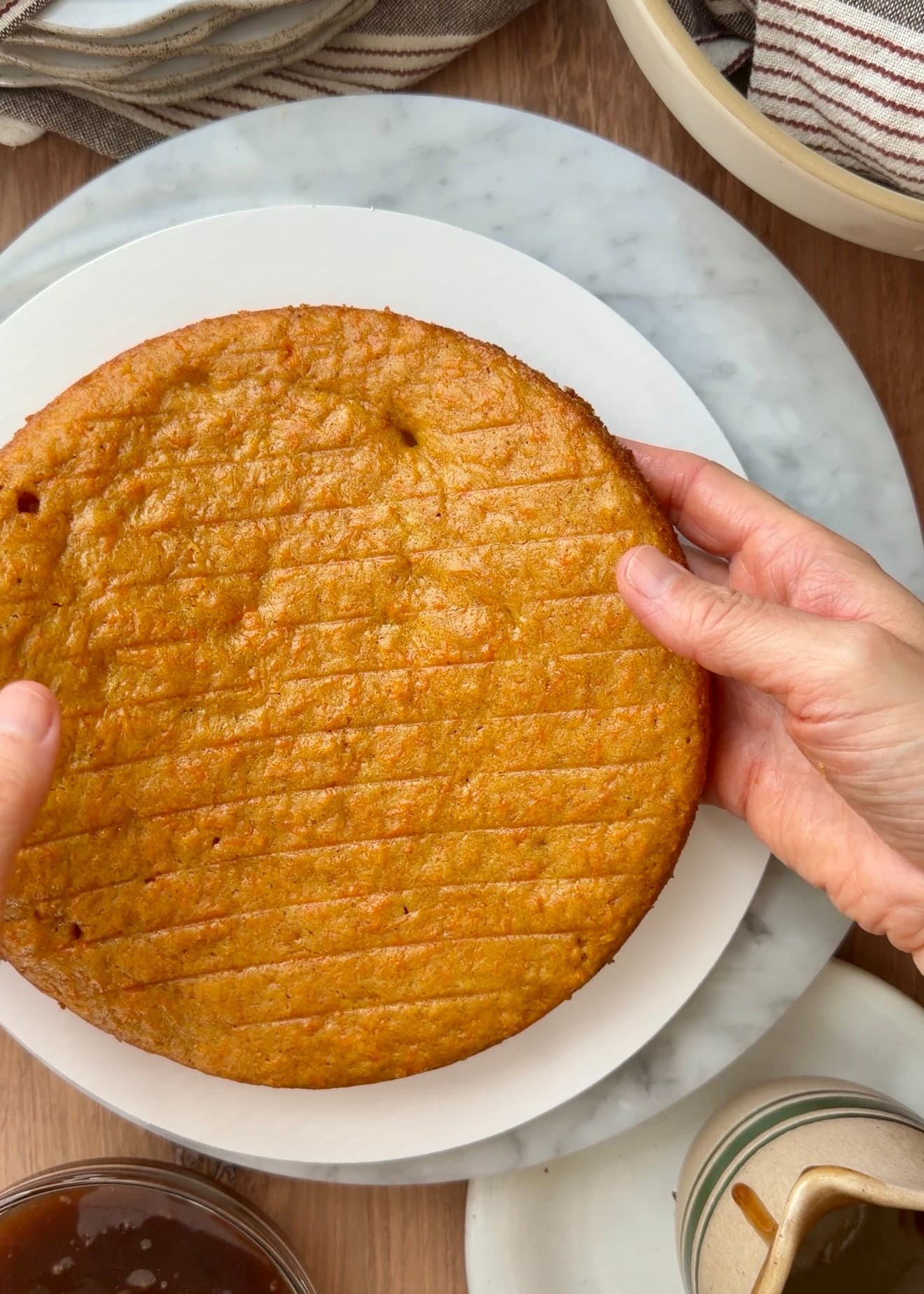
Let the layers cool completely before adding frosting. Step 3
Cook the cinnamon roll lava
Stir the butter, brown sugar, and cinnamon over controlled heat until smooth. Carefully whisk in the cream, then simmer gently for about 3 minutes, whisking almost constantly. Look for a dark amber coating on the spatula, not a hard boil.
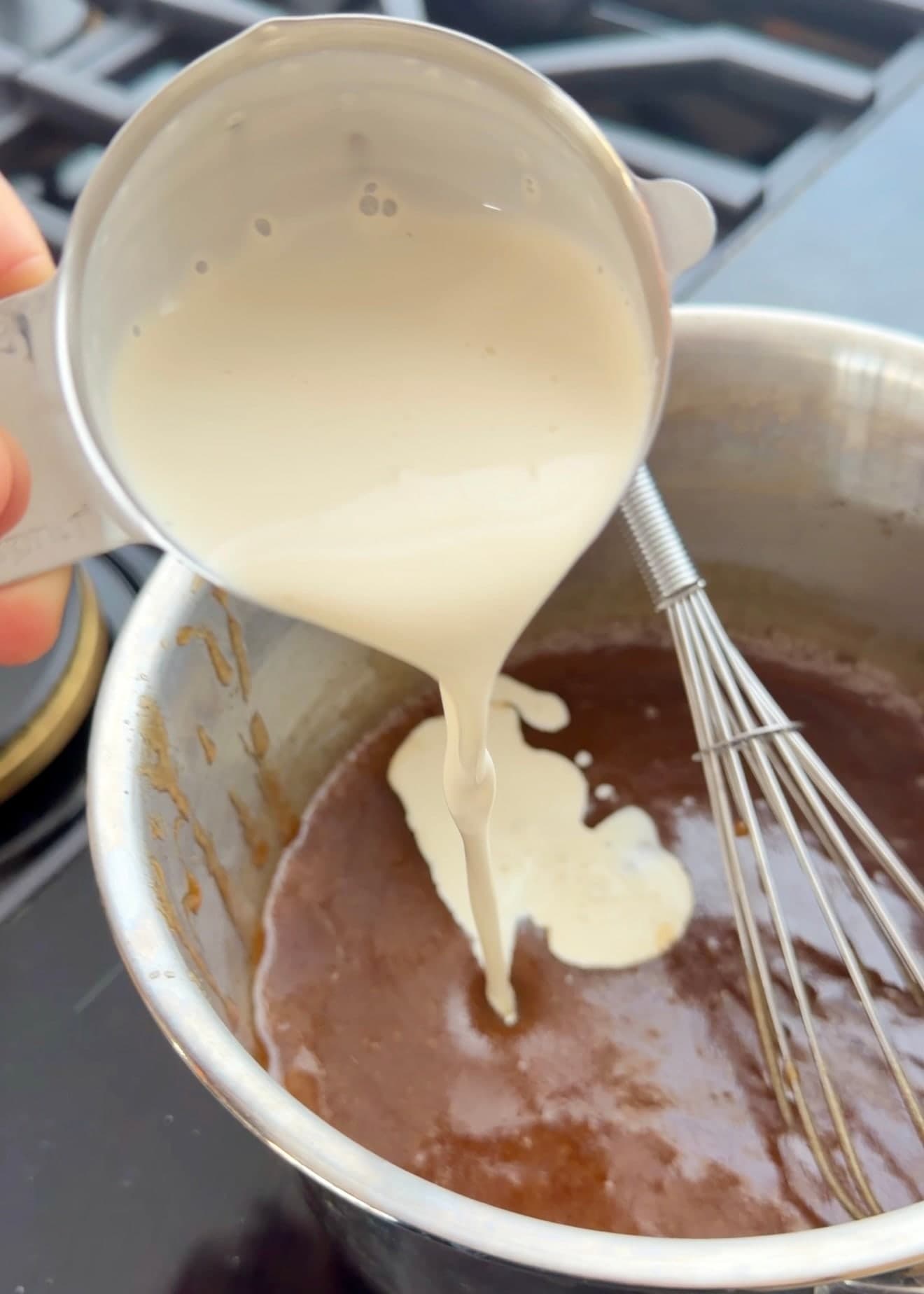
Pour in the cream slowly and keep whisking. 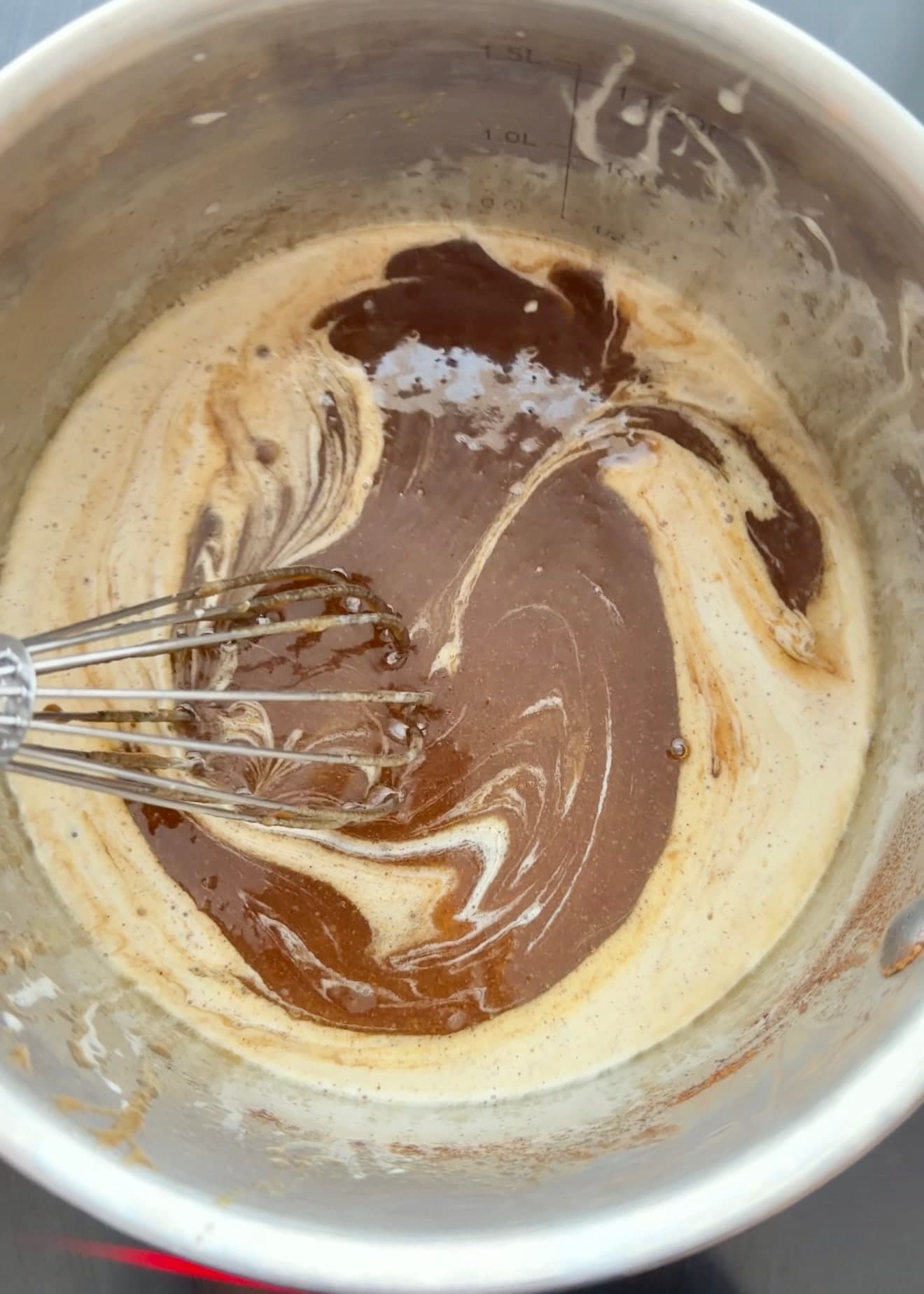
Keep whisking until the cream is fully mixed in. 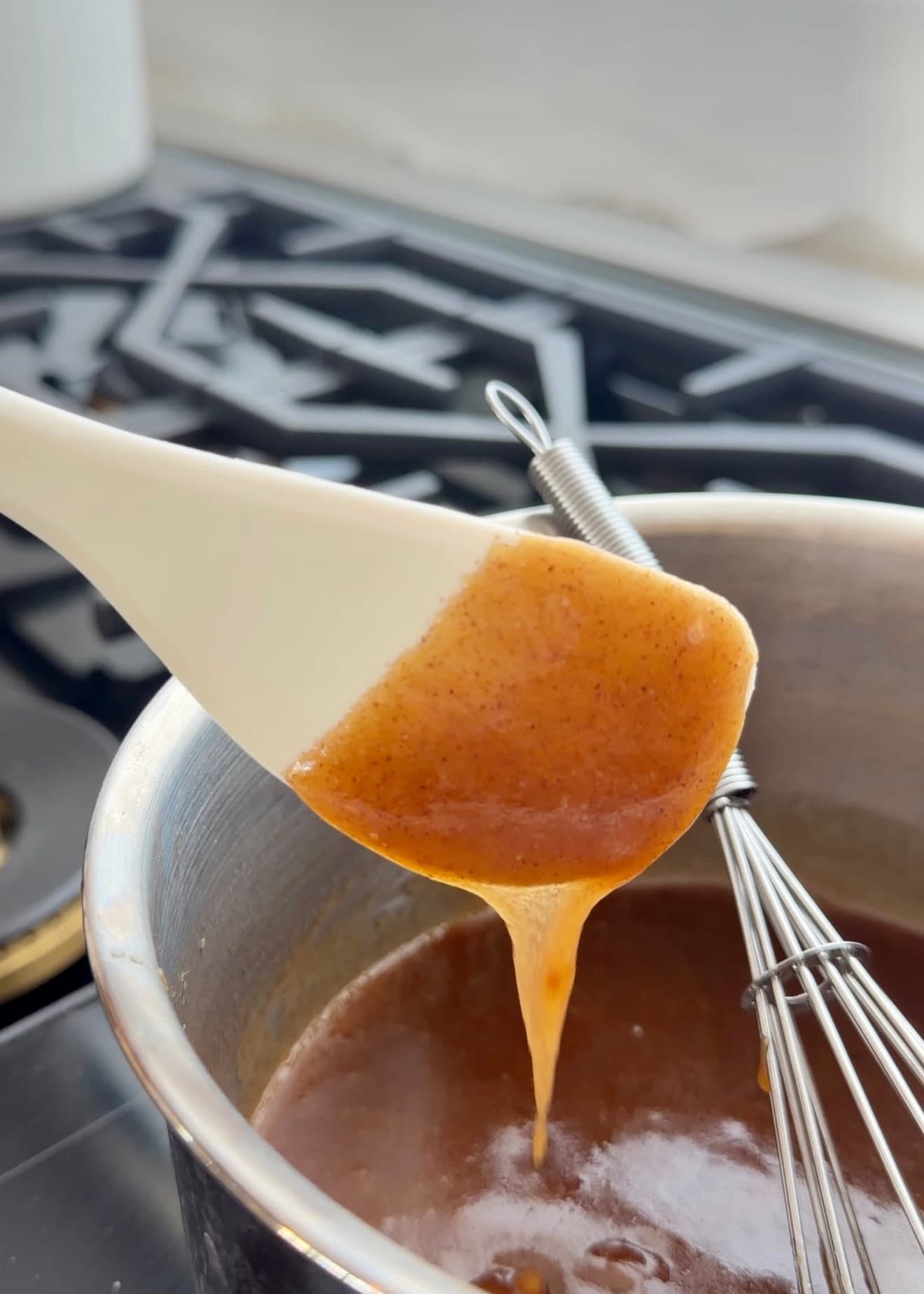
This is the filling while it's still warm. Step 4
Let the filling cool evenly
Off the heat, add the salt and vanilla. Transfer to a shallow heat-safe container and let the filling stop steaming before covering the surface with food-safe wrap suitable for warm foods. Cool completely before assembly. It will thicken considerably - the thicker ribbon shown here is exactly what I want.
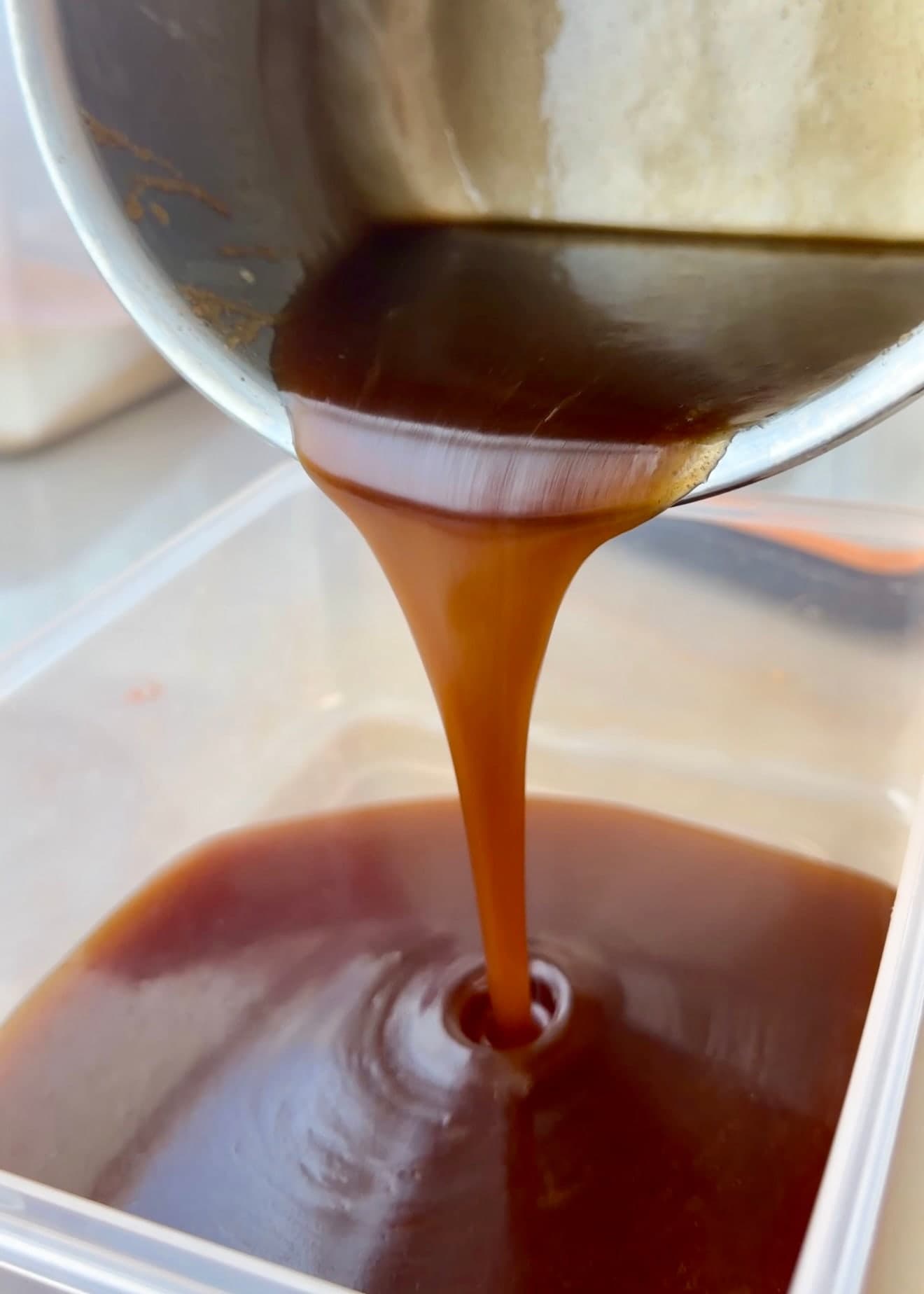
Pour it into a shallow, heat-safe container to cool. 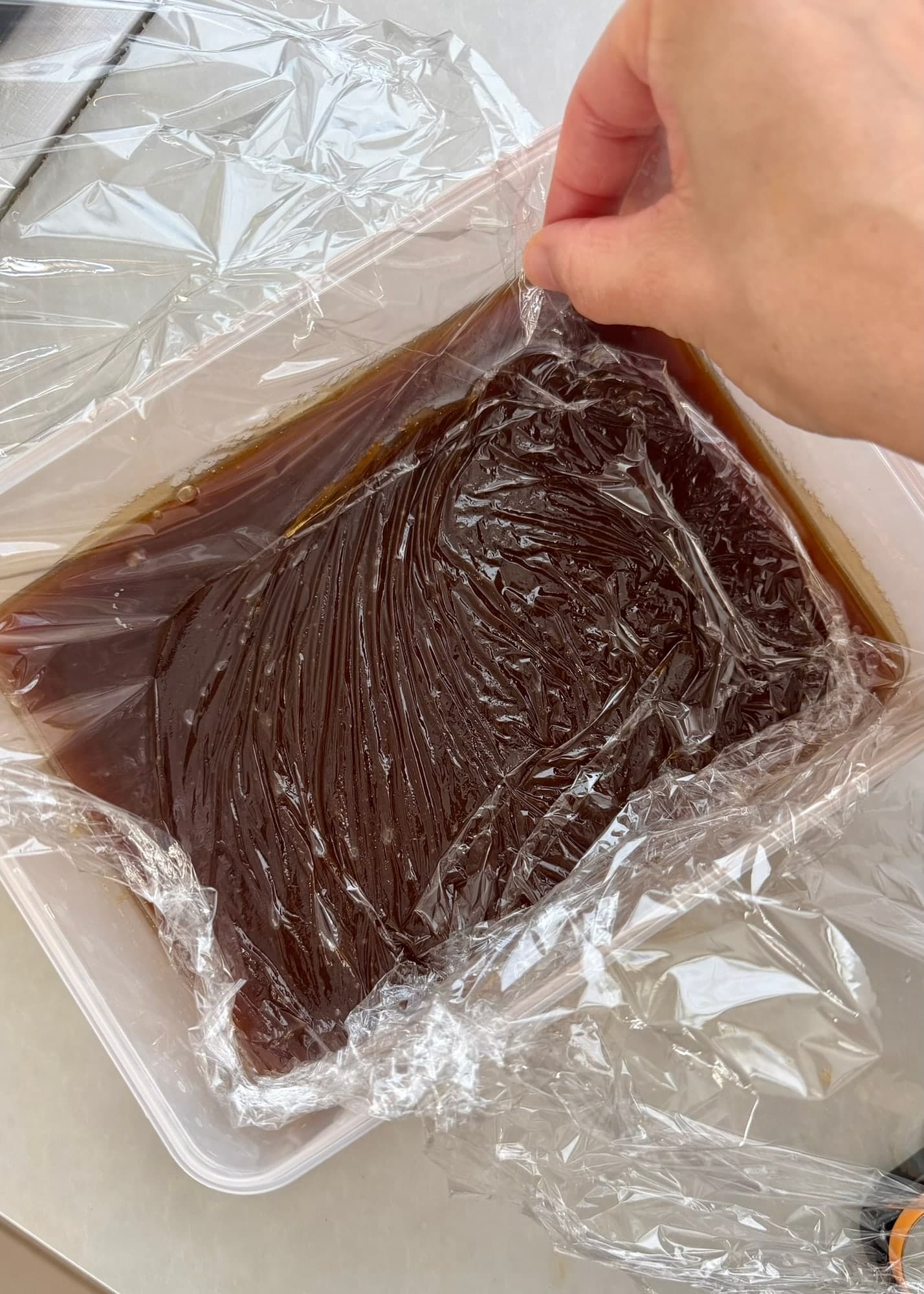
Once cool, the filling is thick enough to cling to the wrap. 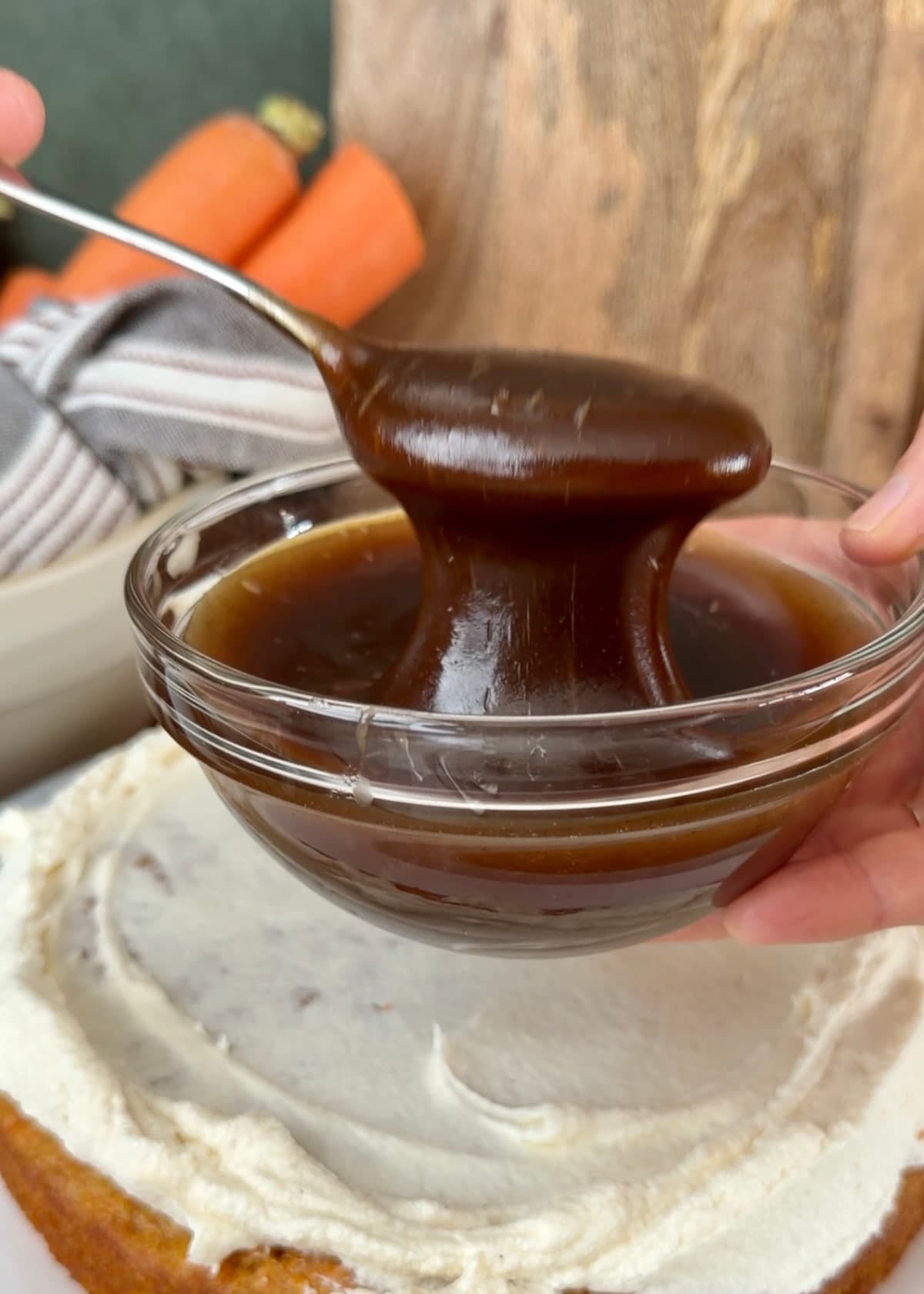
This is the thicker version, without the optional milk. Step 5
Make the frosting in this order
Beat the room-temperature butter first, then mix in the sifted powdered sugar in four additions. Add the vanilla and salt. The softened brick cream cheese goes in last, a little at a time on low. Stop as soon as it is combined; there is no final high-speed whipping.
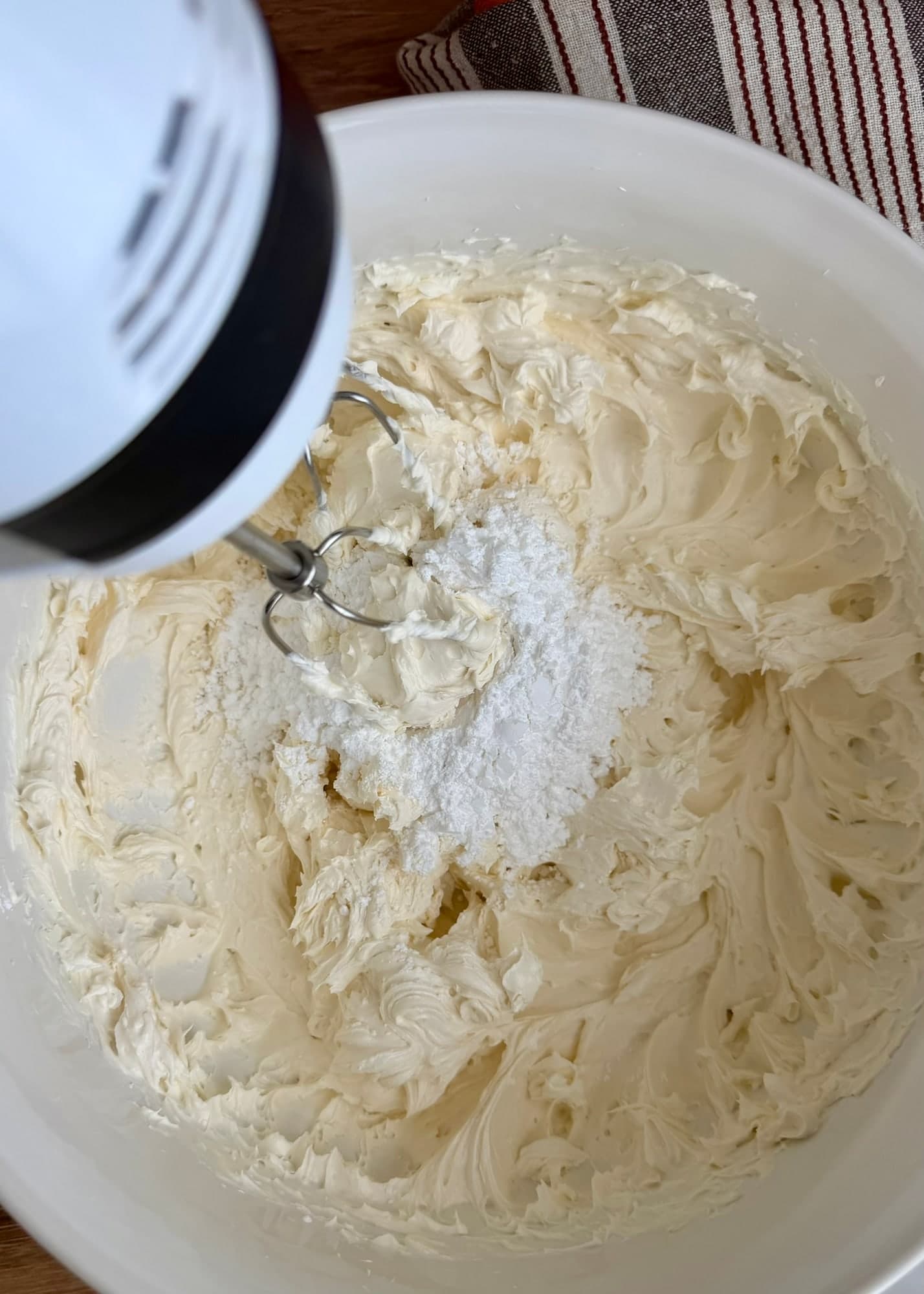
Mix the powdered sugar into the butter before adding any cream cheese. 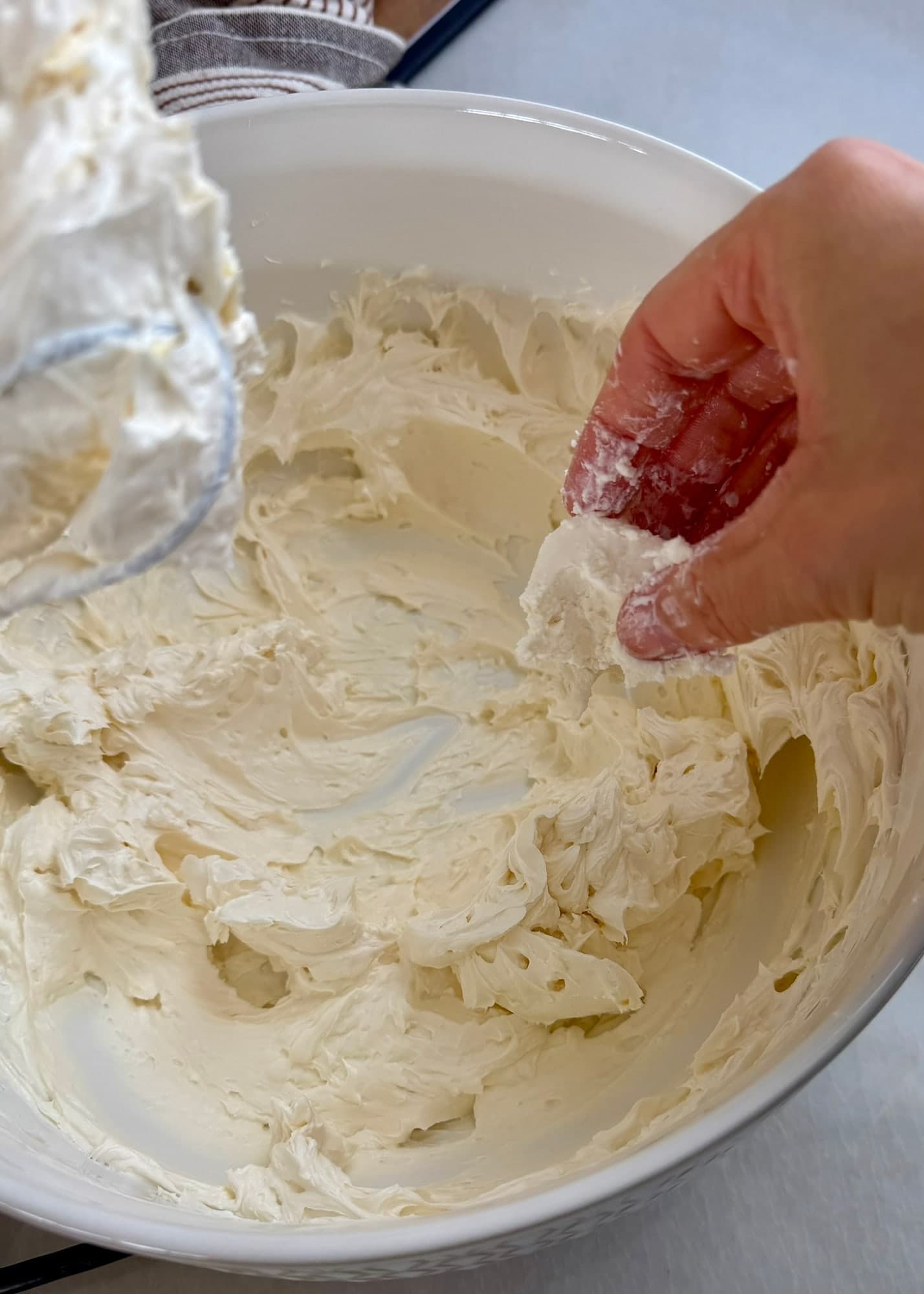
Add the softened cream cheese a little at a time, on low. 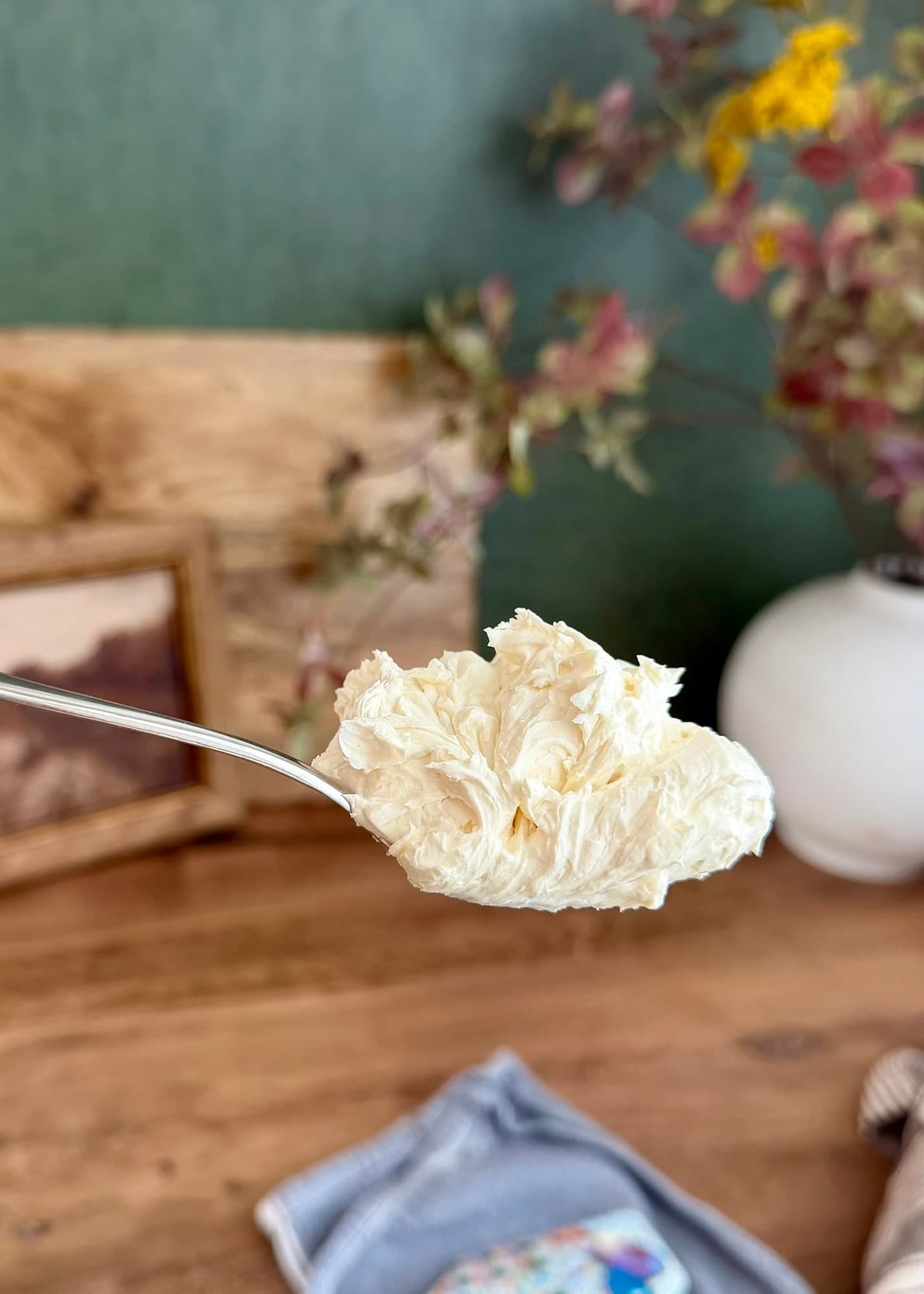
Stop mixing when the frosting is smooth and combined. Step 6
Fill the first layer
Spread a thin layer of frosting over the first cooled cake layer. Build a tall, continuous frosting border, then spoon cooled lava into the center. Keep the filling below the border so it stays inside the cake.

Start with a scoop of frosting on the cooled first layer. 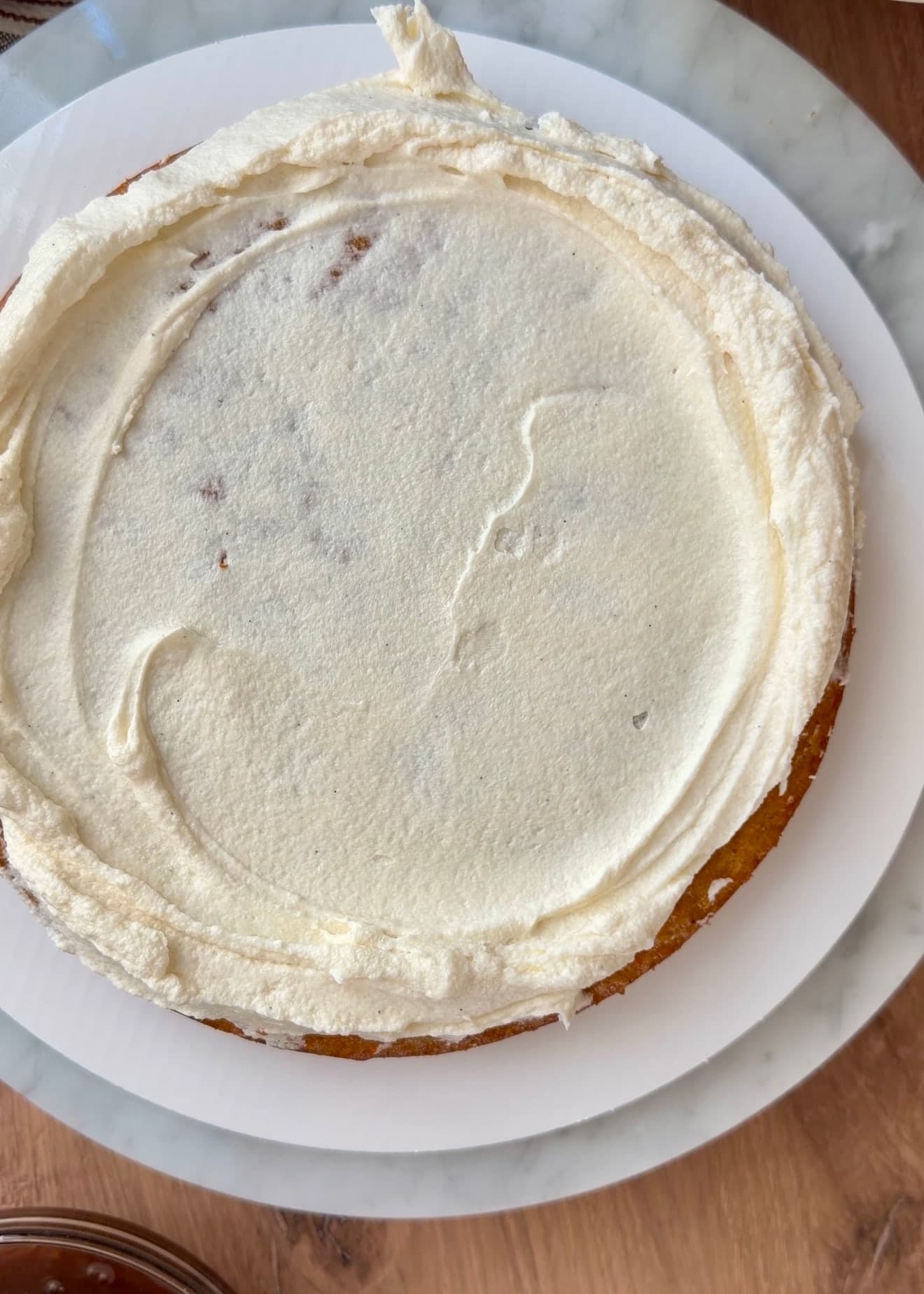
Leave a raised edge of frosting to hold in the filling. 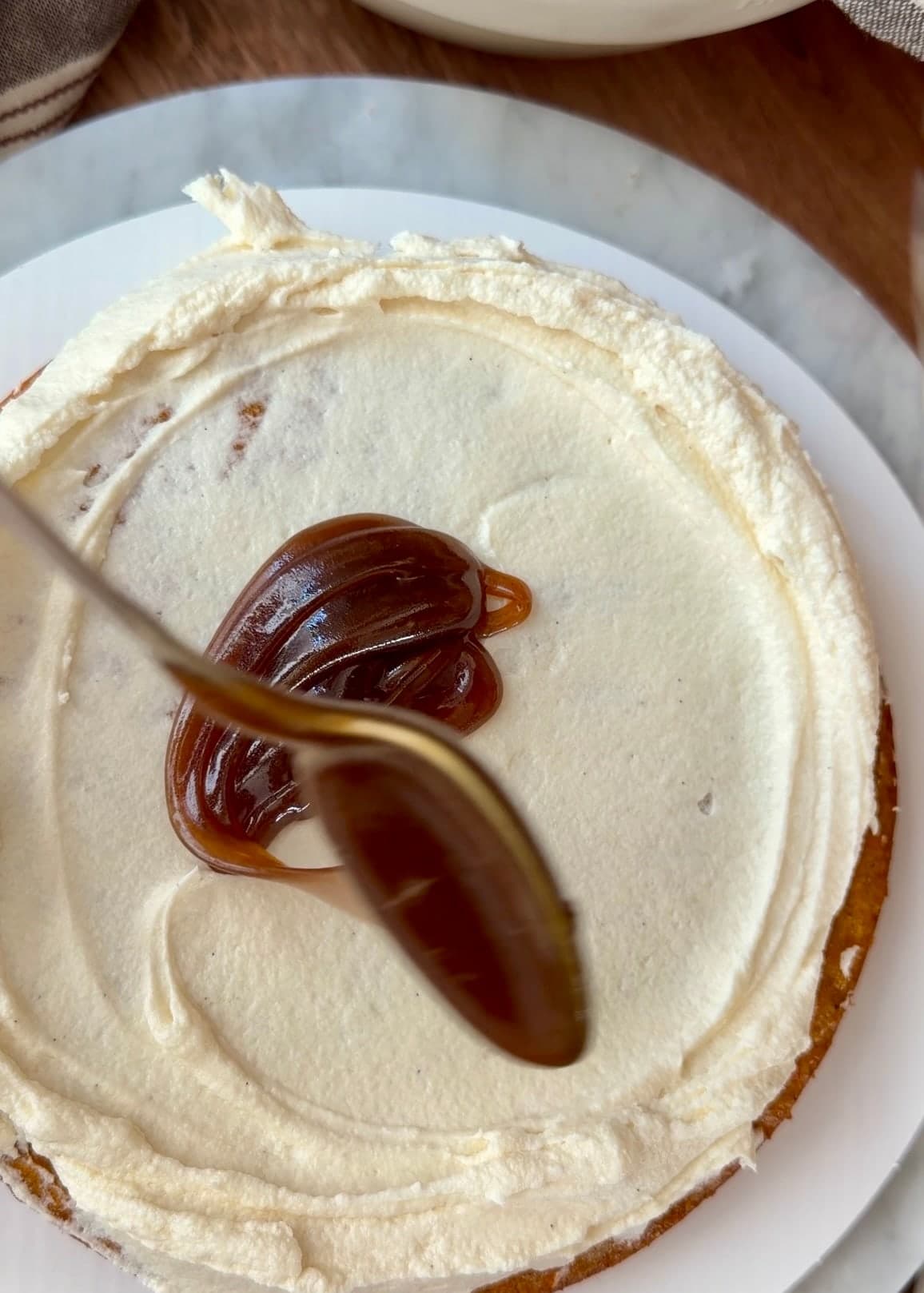
Spoon the cooled cinnamon filling inside that edge. Step 7
Stack and finish the top
Add the second layer and repeat the frosting border and filling. Add the third layer, frost the top and sides, then swirl a little remaining lava over the top. Refrigerate until the cake feels stable before cutting.
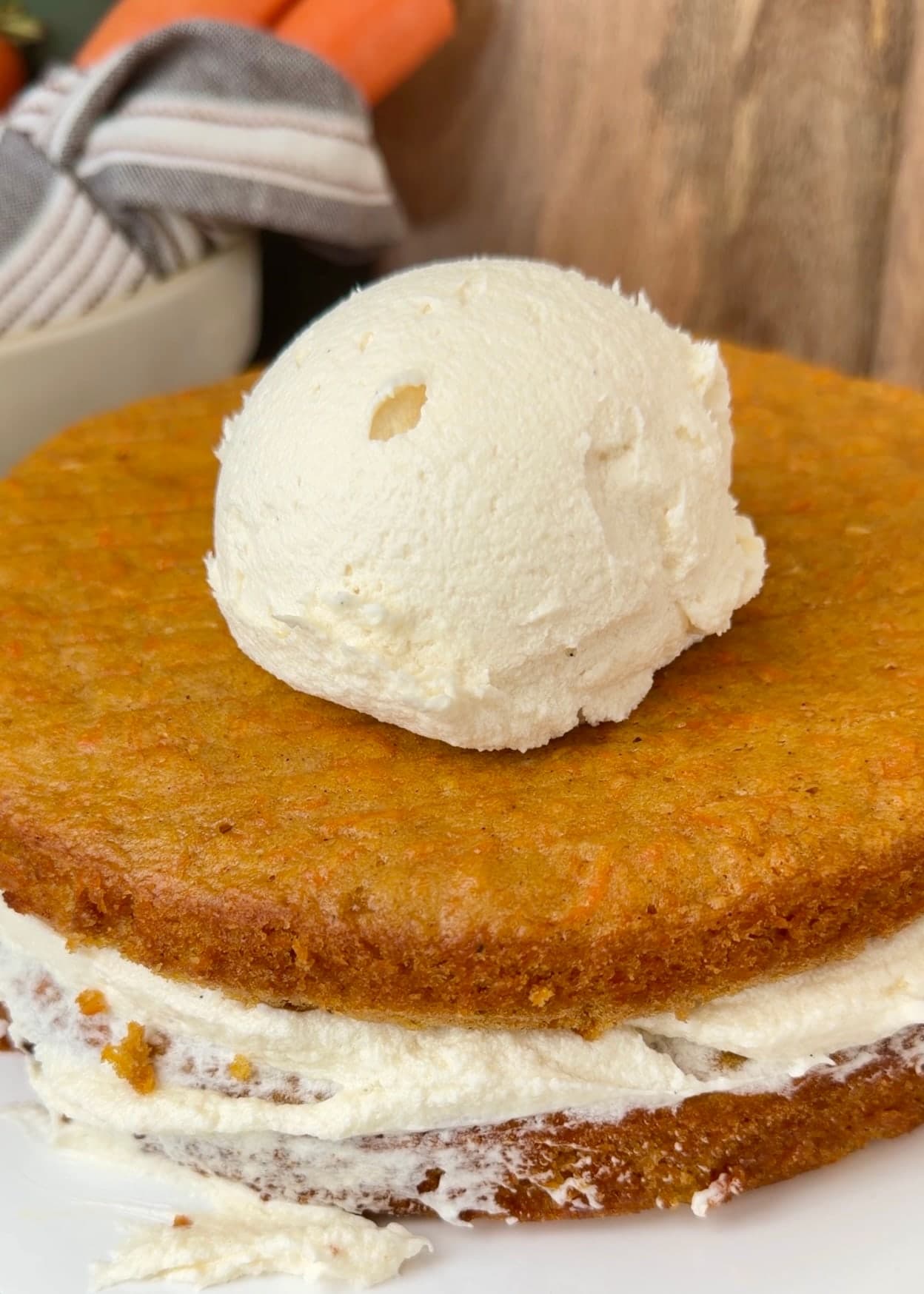
Add the next layer and repeat. 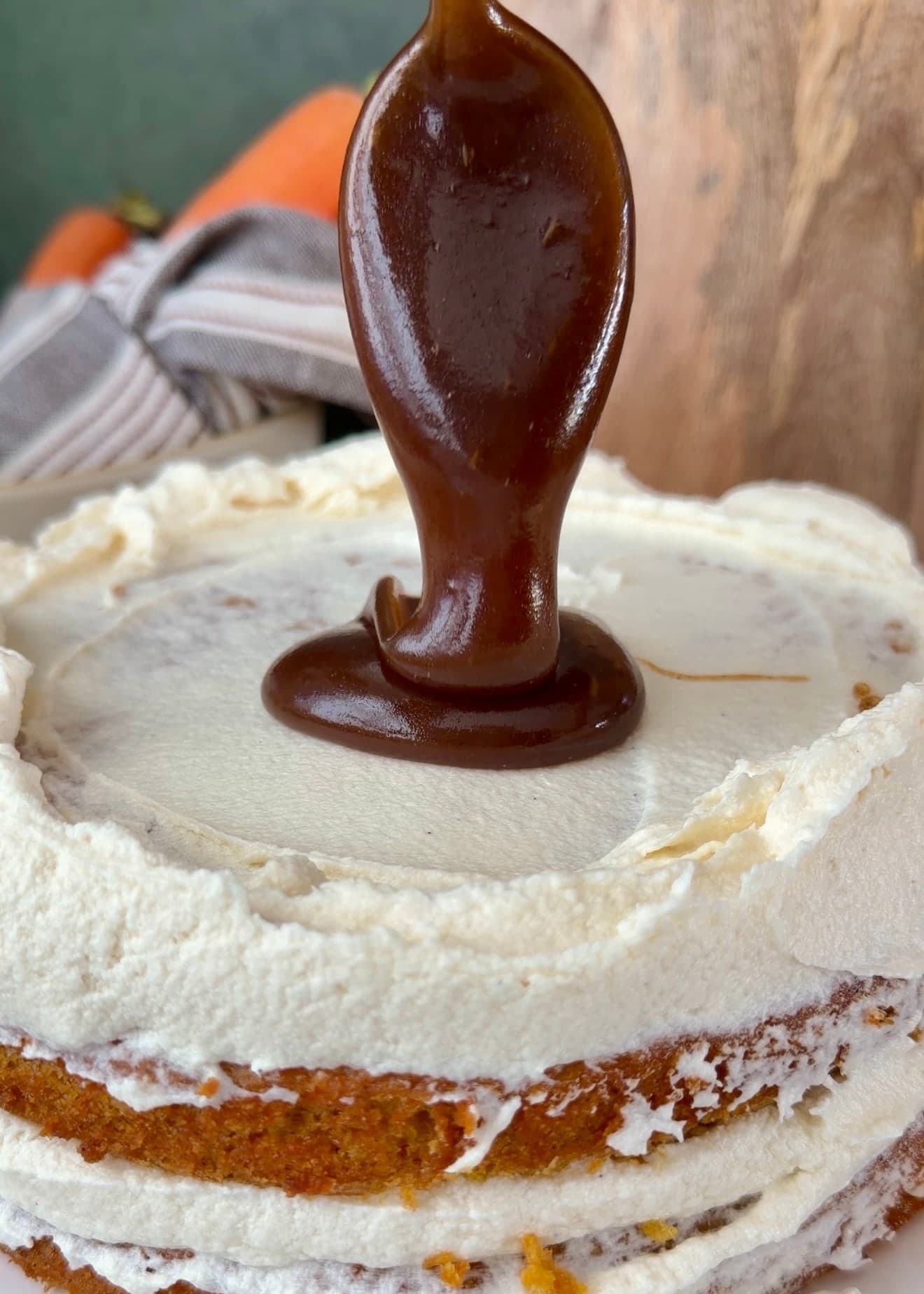
Keep the filling below the frosting edge. 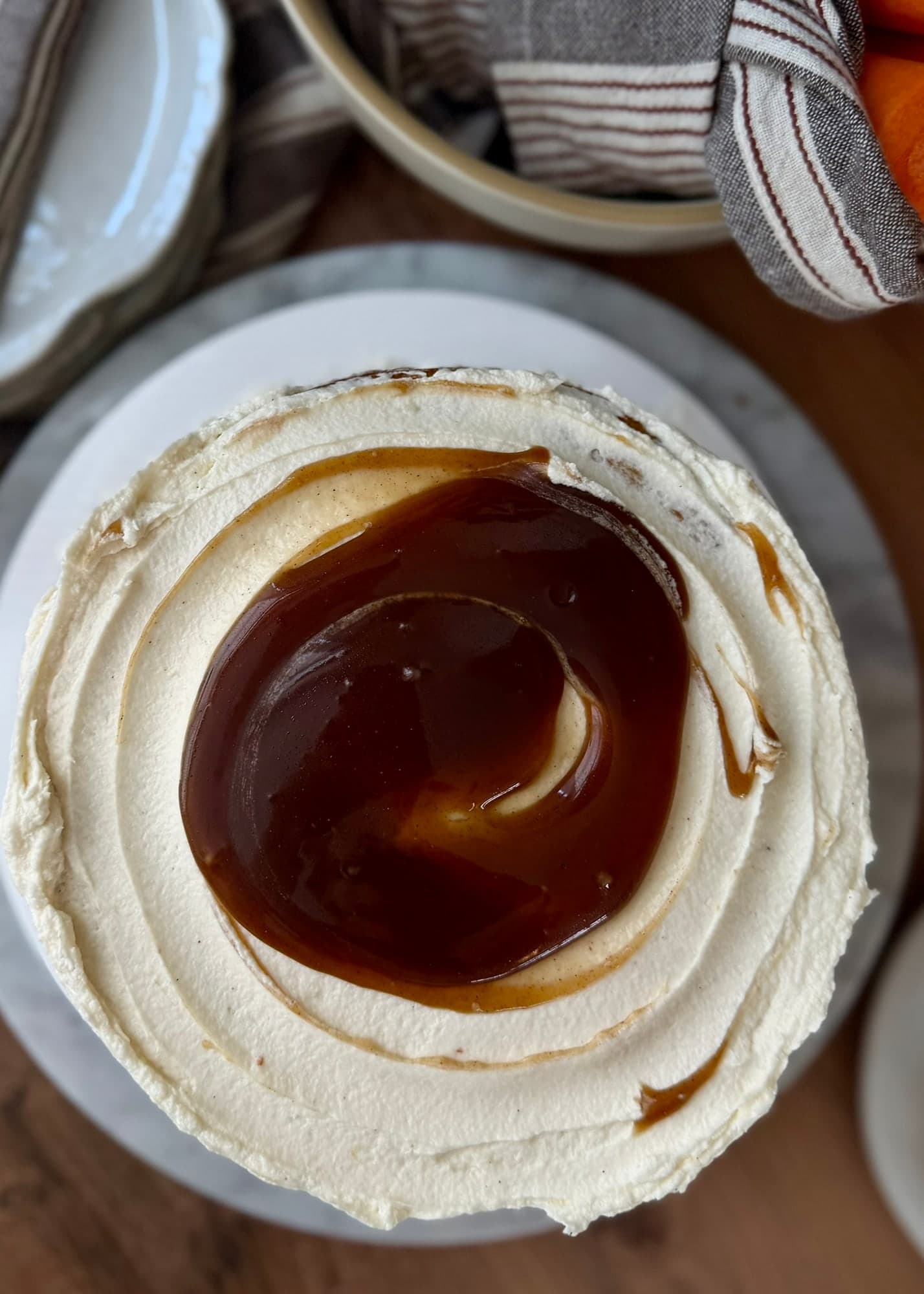
A little extra cinnamon filling swirled over the top. Step 8
Cut a slice
Use a sharp knife and wipe it between cuts. Let individual chilled slices soften briefly before serving so the cake and cinnamon filling relax.
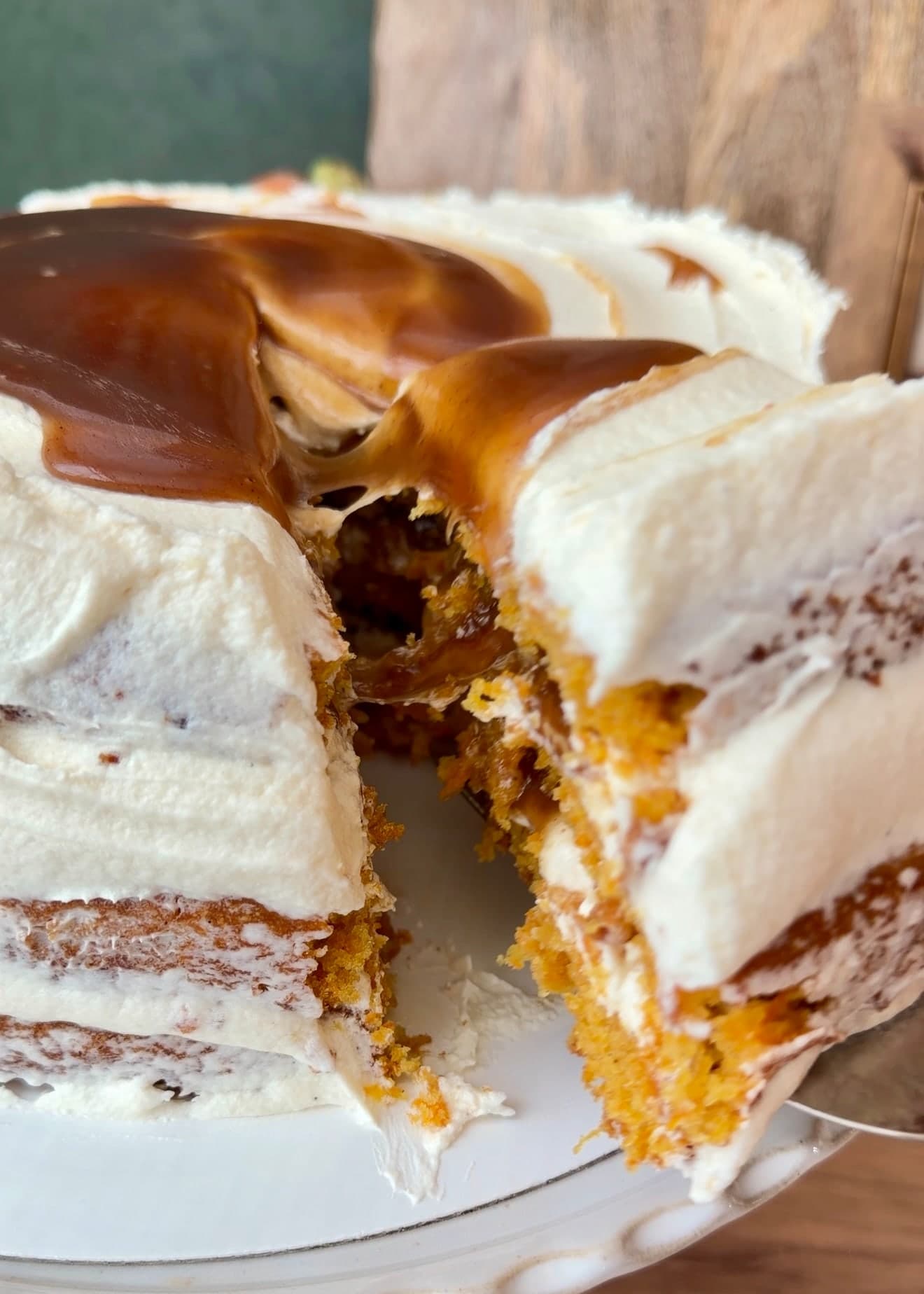
The first slice, with cinnamon filling between the layers. Three carrot cake layers, cream cheese frosting, and plenty of cinnamon filling. 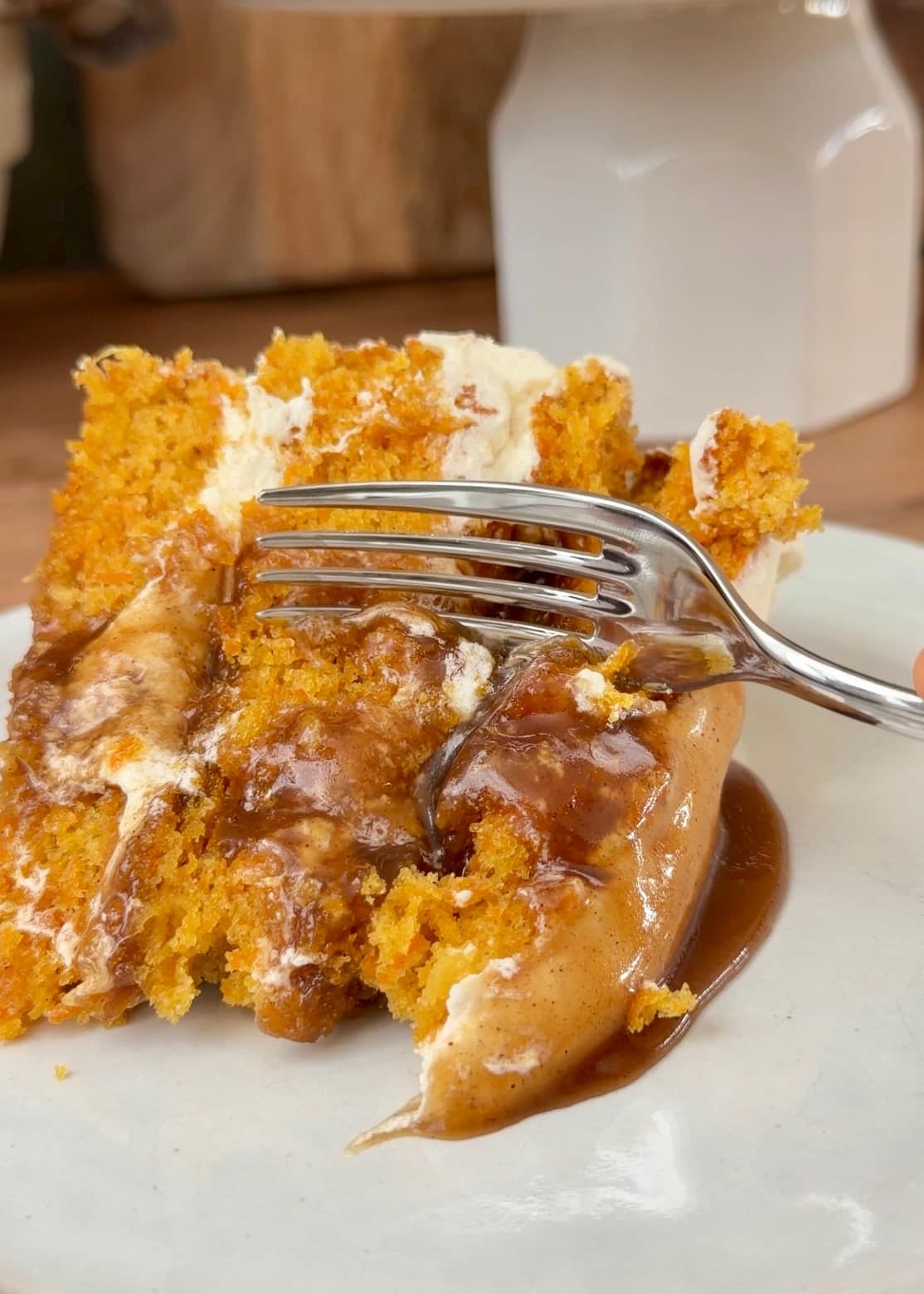
Let a chilled slice sit for 20-30 minutes before digging in.
Small things that matter
Tips for the best cake
Do not use warm filling or warm cake layers during assembly. Both will soften the frosting.
Keep the filling below the top of each frosting border. Save extra lava for the top or for individual slices.
Troubleshooting
If This Happens
The cake edges are browning quickly
Dark pans brown the edges more aggressively. Begin checking at 20 minutes, but judge the center before taking the cake out: it should be set, spring back lightly, and leave a toothpick clean or with a few moist crumbs.
The lava looks too thin while warm
Wait until it has cooled completely. It thickens substantially as it cools, so do not add more ingredients or keep cooking simply to match the cold consistency.
The frosting feels loose
Chill it for 10-15 minutes, then mix briefly on low. Use brick cream cheese, avoid greasy or melted butter, and stop mixing as soon as the cream cheese is combined. Do not try to firm it up by whipping longer.
The cake layers are sliding
Stop stacking and chill until stable. The cake and filling must be completely cool, the frosting firm enough to hold a border, and the filling kept below that border. Use less between the layers and save the rest for serving.
Before you slice
Texture and serving notes
Wipe the knife between cuts for cleaner slices. Spoon any reserved cinnamon filling over individual portions.
Keep it good
Storage
Fridge
Store the frosted cake covered in the refrigerator and enjoy within 3-4 days. Keep extra frosting and filling refrigerated, too.
Serve
Let individual slices soften at room temperature for about 20-30 minutes before serving. Refrigerate perishable components within 2 hours; do not leave the cake out all day.
Recipe FAQ
Questions that come up
Should I squeeze the carrots or pineapple dry?
No. Keep all the moisture in the carrots and weigh 250 g after finely grating. Lightly drain the pineapple, then weigh 60 g, without pressing or squeezing it. Removing more moisture changes the batter.
Will I taste pieces of pineapple?
I left my crushed pineapple textured and loved it. The flavor blends into the carrot cake instead of standing out. If you prefer a smoother texture, gently drain the pineapple first, then blend it smooth before adding it.
Can I make the cinnamon lava thinner?
Yes. The main recipe has no additional milk and makes the thicker filling shown in the photos. For a looser version, let the filling cool completely, then stir in room-temperature milk 1 tablespoon at a time, up to 3 tablespoons. Stop when you like the consistency, and keep the filling inside a sturdy frosting border.
Why did the filling become firm around the edges in the refrigerator?
The edges cool and firm up before the middle. Scrape the sides and stir the filling back together so its consistency is even. For the initial cooling, I prefer a shallow container on the counter; refrigerate within 2 hours if you are not using it right away.
Can I use cream cheese from a tub?
Not for this frosting. Use softened brick cream cheese. A spread can make the frosting too loose to hold the filling and support the cake layers.
Which cream cheese do you test with for a non-dairy version?
If you choose the non-dairy route, I test this frosting with Violife Cream Cheese Bricks. Dairy equivalents can be used at the same listed amounts and temperatures. Choose bricks rather than a tub-style spread.
Can I use all-purpose flour instead of cake flour?
Yes, of course. All-purpose flour will give the layers a slightly sturdier, less delicate crumb than cake flour, but the cake will still be great.
Can I make this cake gluten-free?
I do not have a confirmed gluten-free version of this carrot cake to share. A different flour blend can change how much liquid the batter needs and how the layers hold together.
Can I use vanilla extract instead of vanilla bean paste?
Yes. Use the same amount of vanilla extract in place of the vanilla bean paste.
Can I prepare the components ahead?
You can bake the layers and make the filling the day before assembly. Wrap the cooled layers and refrigerate them; refrigerate the filling separately. Stir the filling until even before using, and never warm it enough to melt the frosting.
Should I weigh the ingredients or use volume measurements?
I strongly recommend weighing the ingredients in grams for the most reliable result. Volume measurements are included for convenience, but the amount in a cup can change depending on how an ingredient is filled, packed, or poured. These recipes are easy to follow, but their ratios are precise, so I cannot guarantee the exact same result when volume measurements are used. I still use teaspoons and tablespoons for small amounts like leaveners, salt, spices, and flavorings because those are the most practical measurements.
More recipes to try


- Prep
- About 1 hr (estimated)
- Bake
- 22-25 min
- Total
- About 3 hr (estimated), including cooling and assembly
- Yield
- One 8-inch three-layer cake
Measurement note
For the closest match to the recipe I tested, use grams. Volume measurements are included for convenience, but cups can vary, so I cannot guarantee the exact same result when measuring by volume.
Ingredients
Tap each ingredient as you use it.
Carrot Cake Layers
- 330 g cake flour
- 8 g cornstarch
- 2 teaspoons baking powder
- 1 teaspoon baking soda
- 3/4 teaspoon fine sea salt
- 1/2 teaspoon ground cinnamon
- 1/8 teaspoon ground nutmeg
- 1/8 teaspoon ground ginger
- 220 g light brown sugar, packed
- 70 g granulated sugar
- 200 g neutral oil
- 200 g plain unsweetened Greek-style yogurt, room temperature
- 30 g milk, room temperature
- 2 teaspoons vanilla bean paste
- 10 g apple cider vinegar
- 250 g very finely grated carrots, not squeezed or drained (loosely filled)
- 60 g crushed pineapple, weighed after lightly draining; not squeezed dry
Cinnamon Roll Lava Filling
- 113 g butter
- 200 g light brown sugar, packed
- 1 teaspoon ground cinnamon
- 1/2 teaspoon fine sea salt
- 60 g heavy cream
- 1 teaspoon vanilla bean paste
Cream Cheese Frosting
- 255 g butter, room temperature
- 520 g powdered sugar, measured before sifting, then sifted
- 1 teaspoon vanilla bean paste
- 1/2 teaspoon fine sea salt
- 340 g brick cream cheese, softened
- Up to 1 tablespoon milk, only if needed
Pan used
I use three 8-inch round cake pans for these layers. Shop Fat Daddio's round cake pans - choose 8-inch. Not sponsored.
I personally prefer light-colored aluminum pans for these layers. Dark or black pans brown the edges more quickly, so start checking at 20 minutes if that is what you have, or if your oven runs fast. I baked with dark pans for years and still loved the results - you do not need new pans to make this cake.
Instructions
- 1Preheat the oven to 350°F (175°C). Grease three 8-inch round cake pans and line the bottoms with parchment paper.
- 2Gently drain the crushed pineapple without squeezing it dry, then weigh 60 g. If you prefer it smooth, blend it after draining and weighing. Very finely grate the carrots and weigh 250 g, keeping all their natural moisture. Do not squeeze or drain the carrots.
- 3Make the carrot cake batter. In a large bowl, whisk both sugars, oil, room-temperature yogurt and milk, vanilla bean paste, and apple cider vinegar until well combined.
- 4Sift the cake flour, cornstarch, baking powder, baking soda, salt, cinnamon, nutmeg, and ginger directly over the wet ingredients. Fold gently until mostly combined. Fold in the carrots and pineapple just until evenly distributed and no dry flour remains. Do not overmix.
- 5Divide the batter evenly among the prepared pans and gently level the tops. Bake for 22-25 minutes, until the centers are set, spring back lightly, and a toothpick comes out clean or with a few moist crumbs. Start checking at 20 minutes with dark pans or a fast oven.
- 6Let the layers cool briefly in their pans, then carefully turn them onto wire racks. Remove the parchment and cool completely before frosting.
- 7Make the cinnamon roll lava while the layers cool. Melt the butter in a saucepan over medium-low heat. Add the brown sugar and cinnamon and stir constantly until smooth. Keep the heat controlled; do not let the mixture scorch.
- 8Carefully pour in the heavy cream while whisking; the mixture may bubble up. Simmer gently for about 3 minutes, whisking almost constantly, until smooth and coating a spatula in a dark amber layer.
- 9Remove from the heat and stir in the salt and vanilla bean paste. Pour into a shallow heat-safe container. Once it stops steaming, cover the surface with food-safe plastic wrap suitable for warm foods, following the wrap manufacturer's temperature guidance. Let it cool completely on the counter; refrigerate within 2 hours if not using right away. The filling will thicken as it cools. Do not add milk for the thicker version shown here; see the note for a looser option.
- 10Make the cream cheese frosting. Beat the room-temperature butter on medium speed for 2-3 minutes, until smooth. Add the sifted powdered sugar in four additions, starting on low after each addition, then beating the butter and sugar base until smooth and fluffy. Mix in the vanilla bean paste and salt.
- 11With the mixer on low, add the softened brick cream cheese in four additions, scraping the bowl as needed. Mix only until combined and smooth. Do not finish by whipping on medium or high speed. Add milk 1 teaspoon at a time only if needed, up to 1 tablespoon. If the frosting feels too soft, chill for 10-15 minutes, then mix briefly on low.
- 12Assemble the cake. Place the first completely cooled layer on a cake board or serving plate. Spread a thin layer of frosting over it, then pipe or build a tall, continuous frosting border around the edge. Spoon cooled cinnamon filling into the center, keeping it below the top of the border.
- 13Set the second cake layer on top and repeat the frosting, border, and filling. Add the third layer. If the stack feels soft, refrigerate until stable before continuing. Keep enough frosting for the top and a thin coat around the sides; reserve some lava for the top or serving.
- 14Frost the top and sides, then swirl a little remaining cinnamon filling over the top. Refrigerate until stable before slicing. Let individual chilled slices soften briefly before serving, and keep the remaining cake refrigerated.
Helpful notes
- The gram amounts are the recipe standard. Cup and spoon equivalents are approximate, especially for grated carrots, packed sugar, and drained pineapple. Weighing gives you the closest match; do not change the gram amounts to match a cup measure.
- For a looser lava filling, stir in room-temperature milk after the filling has cooled completely, 1 tablespoon at a time, up to 3 tablespoons. The photographed version has no extra milk.
- Canola, vegetable, and avocado oil are suitable neutral oils. Use brick cream cheese, not a tub-style spread, and add it last on low speed.

Meet the baker
Angela Heckler
Angela Heckler is the recipe developer, baker, and photographer behind Obsessed Cakes. Her Old-Fashioned Donut Loaf series is a growing collection of cake-donut-inspired loaves with soft, deeply moist crumbs, buttery streusel, and crackly glaze. Angela develops and tests every recipe in her Arizona kitchen. Follow Obsessed Cakes on Instagram, TikTok, and YouTube.
Made it? Tell us.
Ratings and reviews
Be the first to rate this recipe.
No reviews yet.
Make the recipe, leave a rating, and share how it turned out.Did you make this?
Share your bake on Instagram - tag @obsessedwithcashews and use #obsessedcakes.