Donut Loaves
Carrot Cake Old-Fashioned Donut Loaf
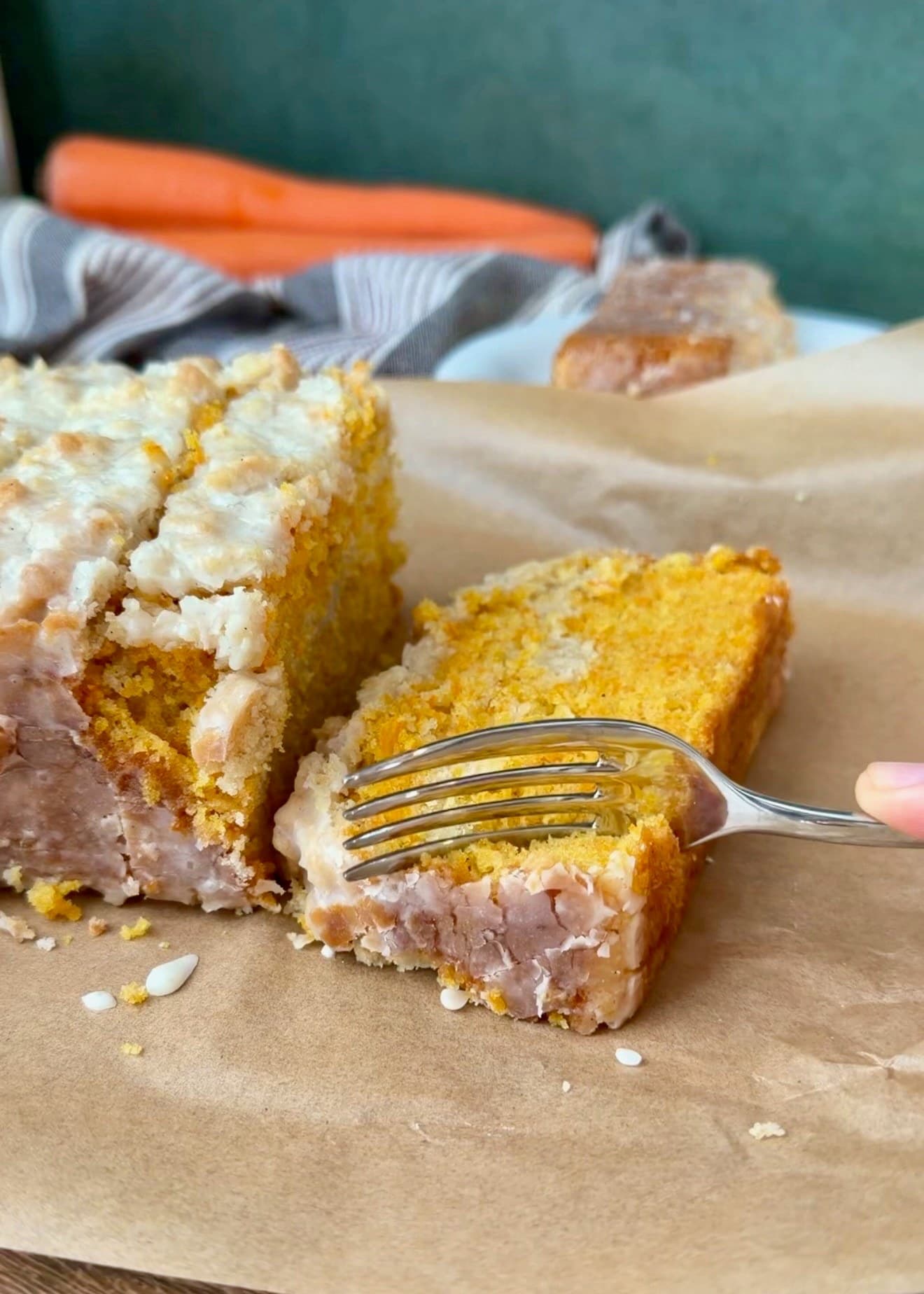
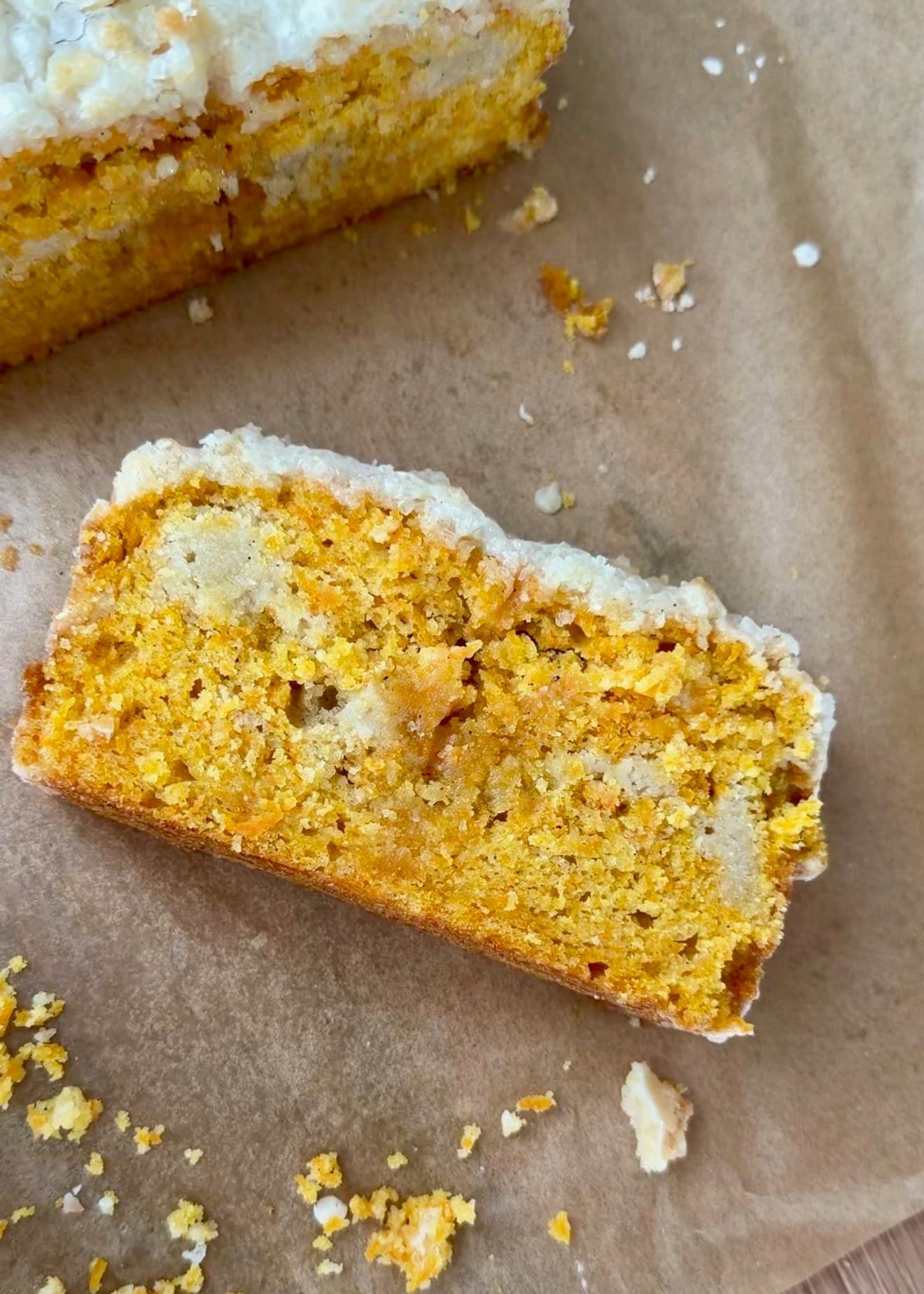
This carrot cake old-fashioned donut loaf brings together finely grated carrots, a little warm spice, buttery streusel, and vanilla bean glaze. It is plush and delicate while warm, with a denser cake-donut bite once chilled.
Save this recipe
Want to save this recipe for later?
Enter your email and I’ll send it to your inbox.
Thinking out loud
Worth every minute of grating
This one has been widely requested, and carrot cake is one of my favorites. Somehow, though, my carrot recipes always take a little longer to arrive. Grating carrots feels like blow-drying my hair - I keep thinking I must be nearly finished, and somehow I'm still going. Push through. This loaf is worth it.
I kept the spices light so the sweet, delicate cake could shine. That little hint of nutmeg, together with the glaze, gives me the old-fashioned donut flavor I love without frying anything.
It is so plush and delicate while warm that waiting for it to set in the refrigerator takes some restraint. But fully chilled is my favorite. That is when it really takes on the texture of a cake donut.
Ingredient notes
Key ingredients
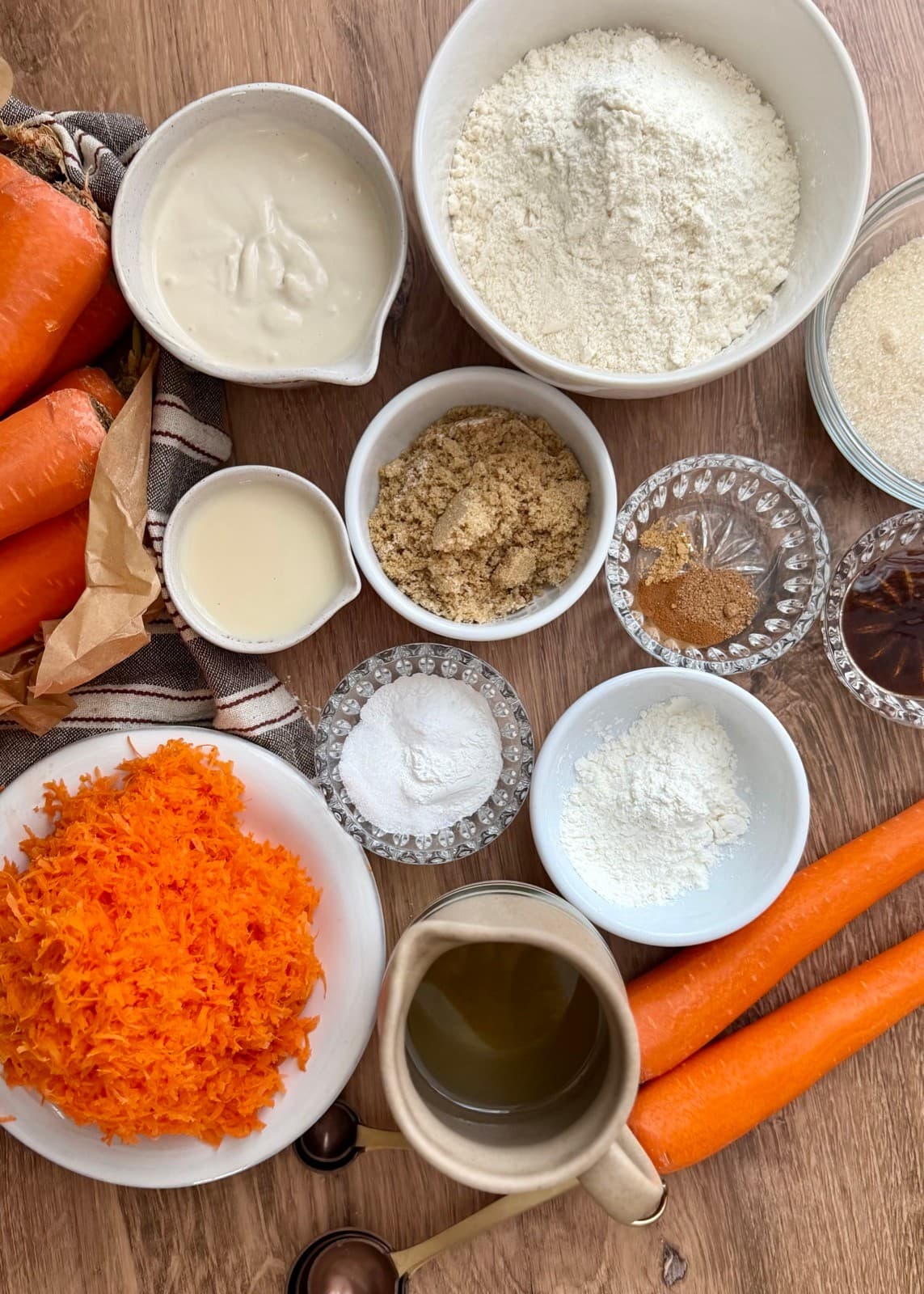
Finely grated carrots
Weigh 200 g after grating and leave all the moisture in. Do not squeeze, strain, press, or blot them.
Plain unsweetened Greek yogurt
Use Greek yogurt for this loaf, and bring it and the milk to room temperature before mixing.
Nutmeg, cinnamon, and ginger
The small amounts are intentional. The spices should support the sweet carrot cake, with nutmeg giving that familiar donut flavor.
Cold butter
Work it into the streusel in small cubes, then keep the crumbs chilled while making the batter.
Vanilla bean paste
It goes into the streusel, batter, and glaze for vanilla flavor throughout.
Testing notes
Why this works
A thick batter before the carrots
Do not add extra milk just because the batter looks thick. Fold in the carrots after the dry ingredients; their moisture loosens the mixture. Mix gently but thoroughly so the carrots are evenly distributed.
Leave room in the pan
After adding the second layer of batter, stop when the pan is just over halfway full. Do not force excess batter into the pan. Add the remaining streusel and a light sprinkle of coarse sanding sugar on top.
Give the glaze somewhere to go
Glaze the cooled loaf directly on a wire rack with a tray underneath. Parchment under the loaf catches the glaze against the bottom instead of letting it drain, so remove it first.
Step by step
How It All Comes Together
Step 1
Make the streusel
Combine the flour, sugar, and salt. Work in the cold butter and vanilla bean paste with your fingertips until you have irregular crumbs, leaving some larger clusters. Refrigerate while you make the batter.
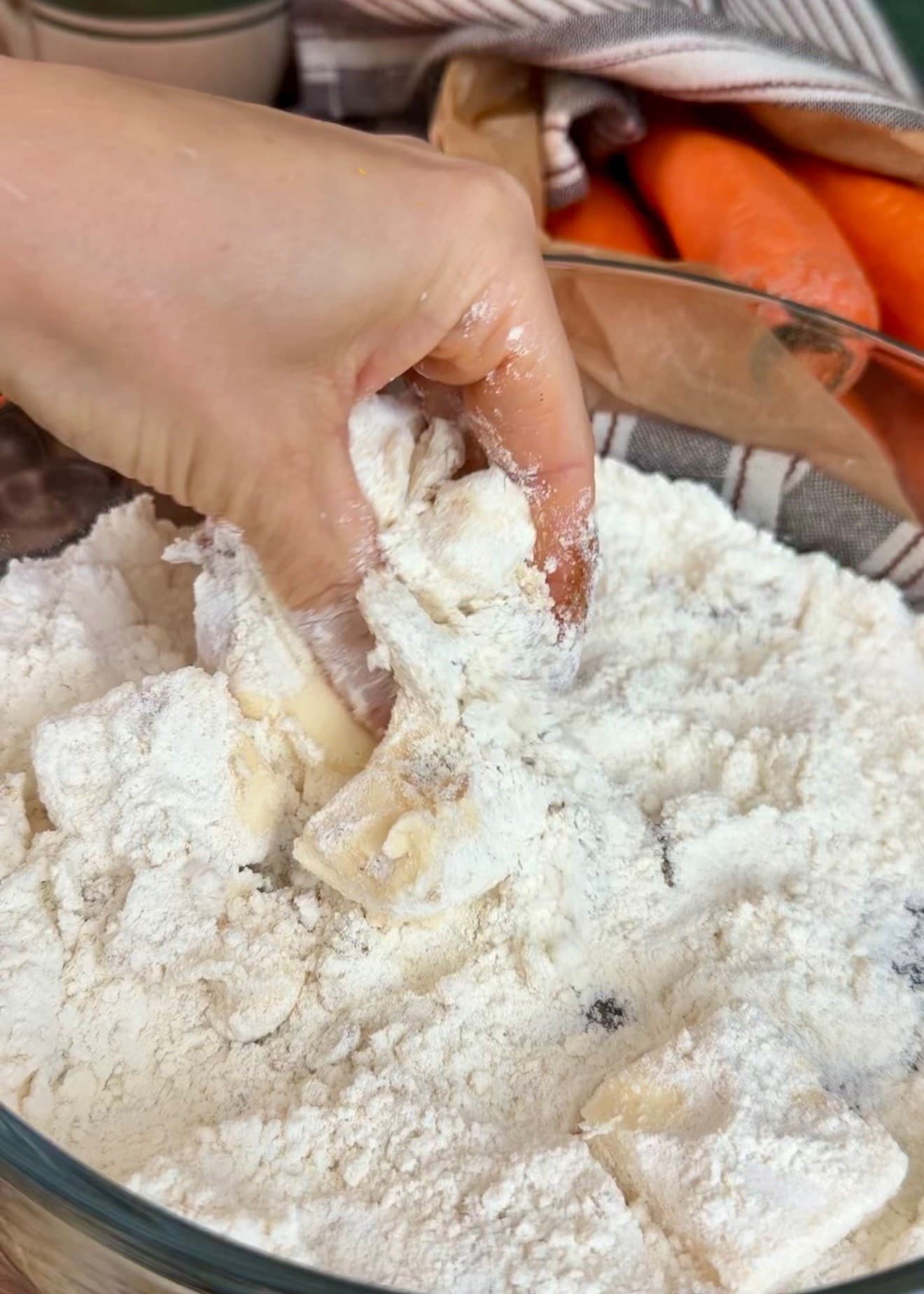
Leave a mix of small crumbs and larger clusters. Step 2
Mix the batter, then fold in the carrots
Whisk the sugars, oil, yogurt, milk, and vanilla until smooth. Fold in the dry ingredients, then the finely grated carrots. The batter is very thick before the carrots go in; their moisture loosens it. Fold gently but thoroughly so no pockets of carrot remain.
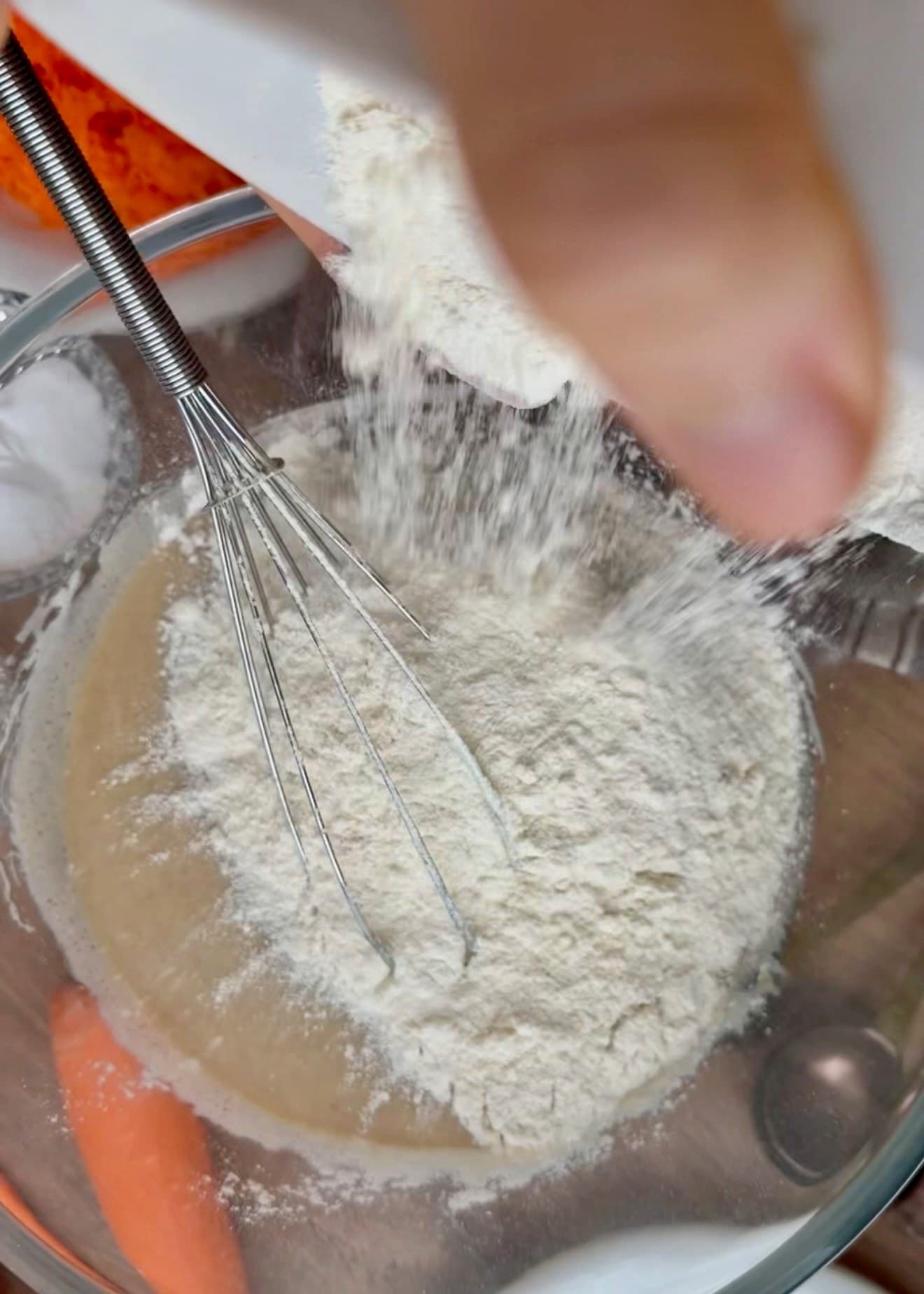
The dry ingredients go in before the carrots. 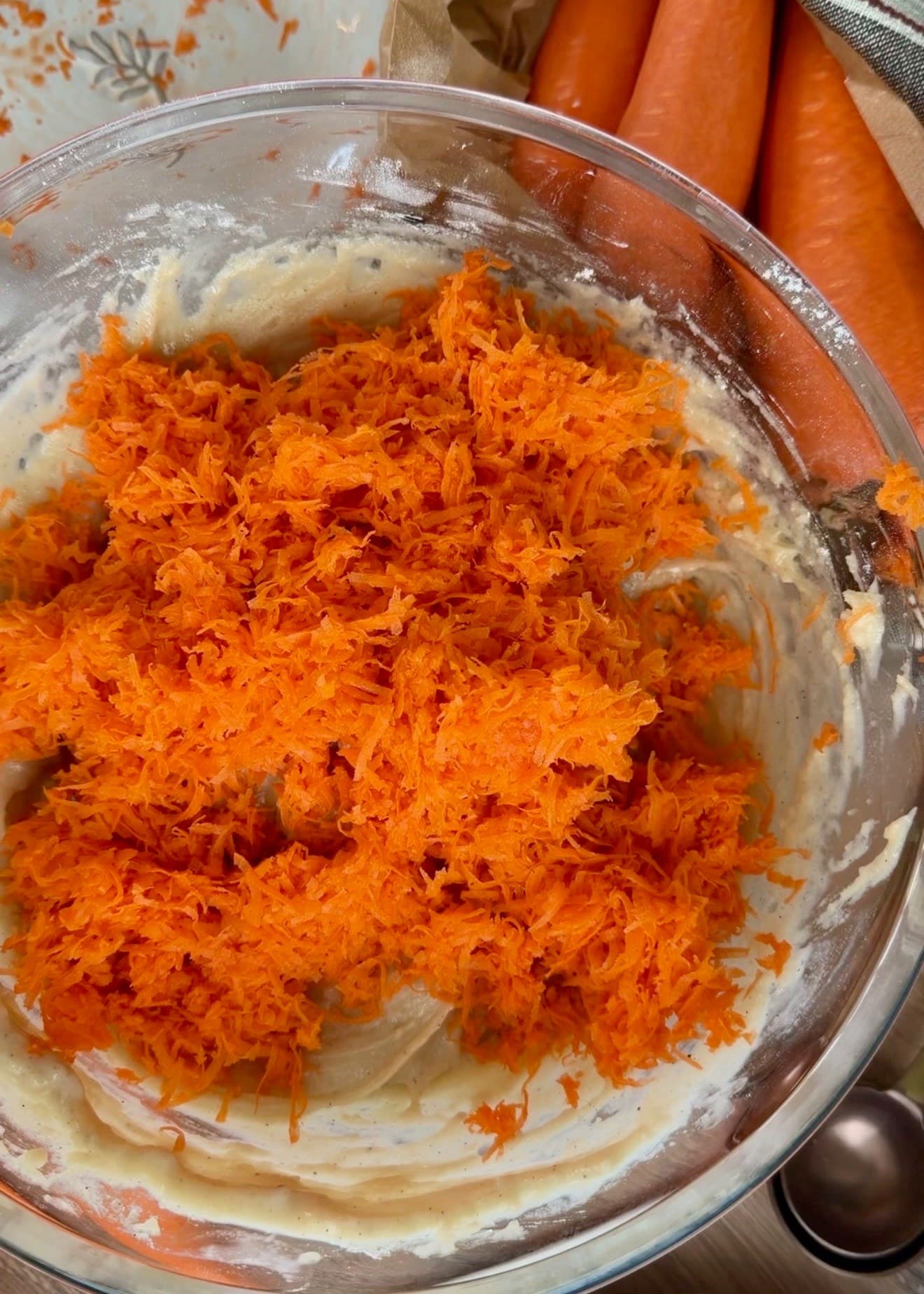
Keep all the moisture in the carrots - no squeezing or blotting. 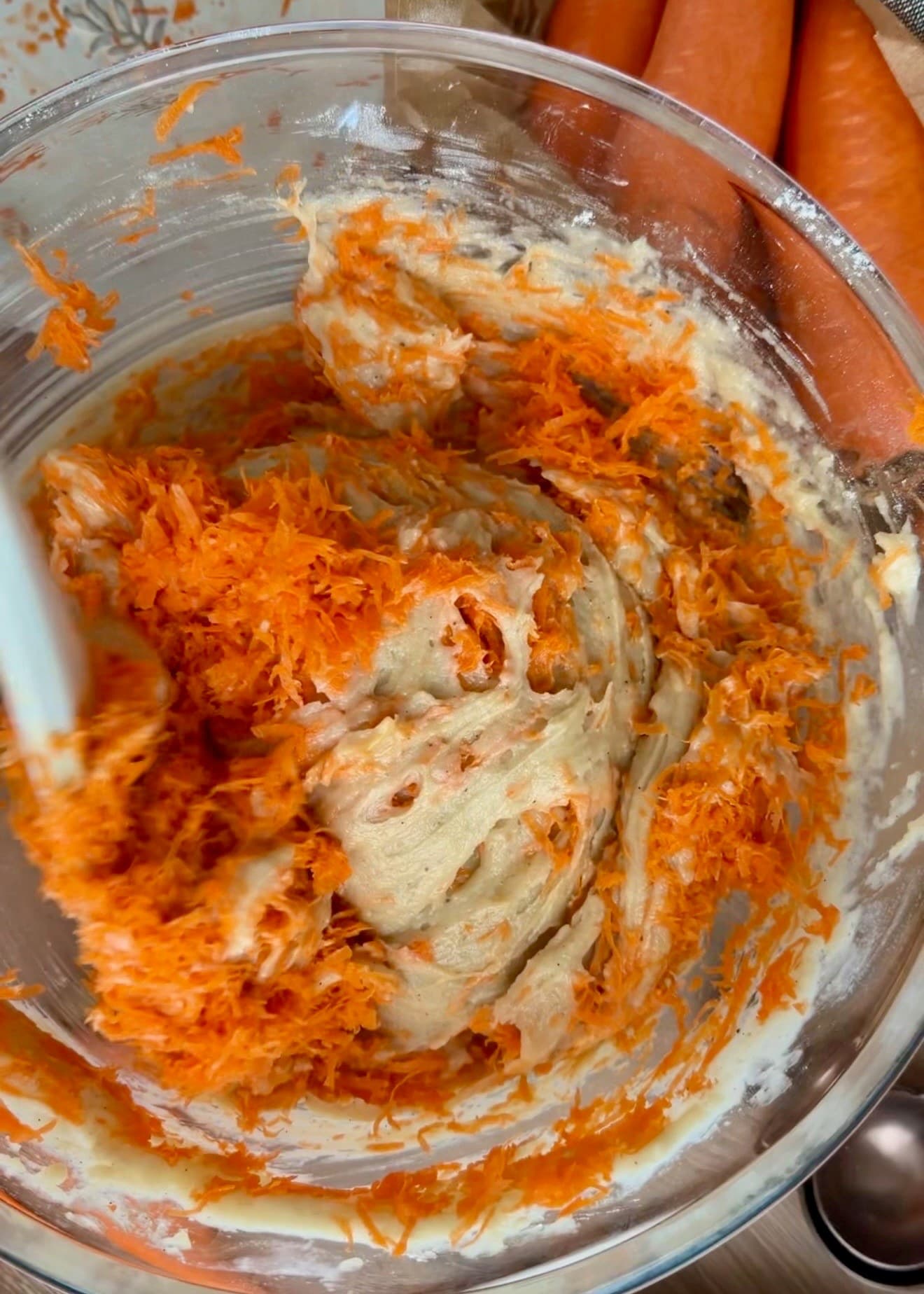
Bring the batter up from the bottom to distribute the carrots evenly. Step 3
Layer the batter and streusel
Spread about half the batter in the lined pan. Add about half the chilled streusel, keeping it slightly away from the edges. Spoon the remaining batter over it and spread gently. Stop when the pan is just over halfway full; do not force in excess batter. Finish with the remaining streusel and a light sprinkle of coarse sanding sugar.
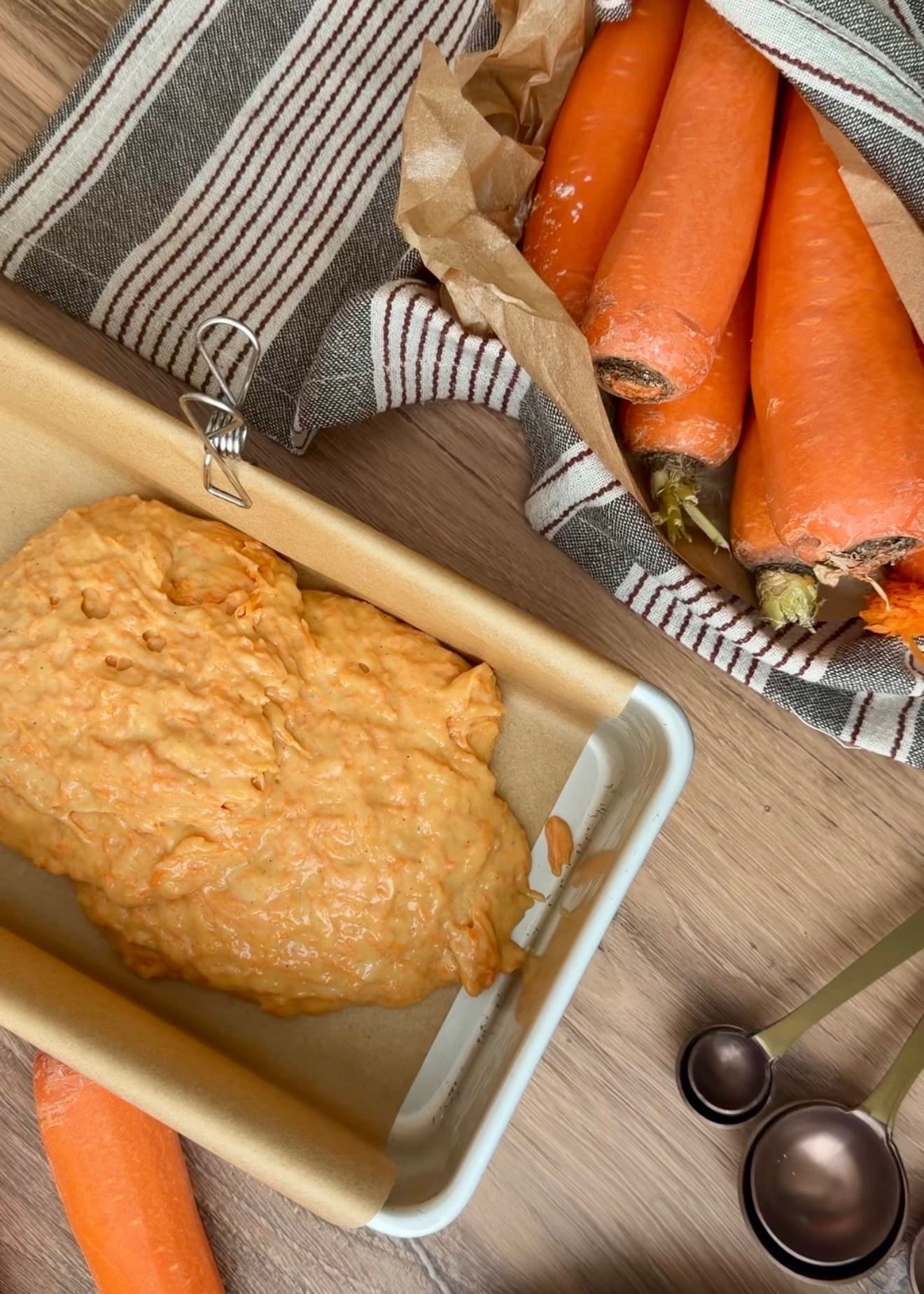
Spread the first layer evenly across the base. 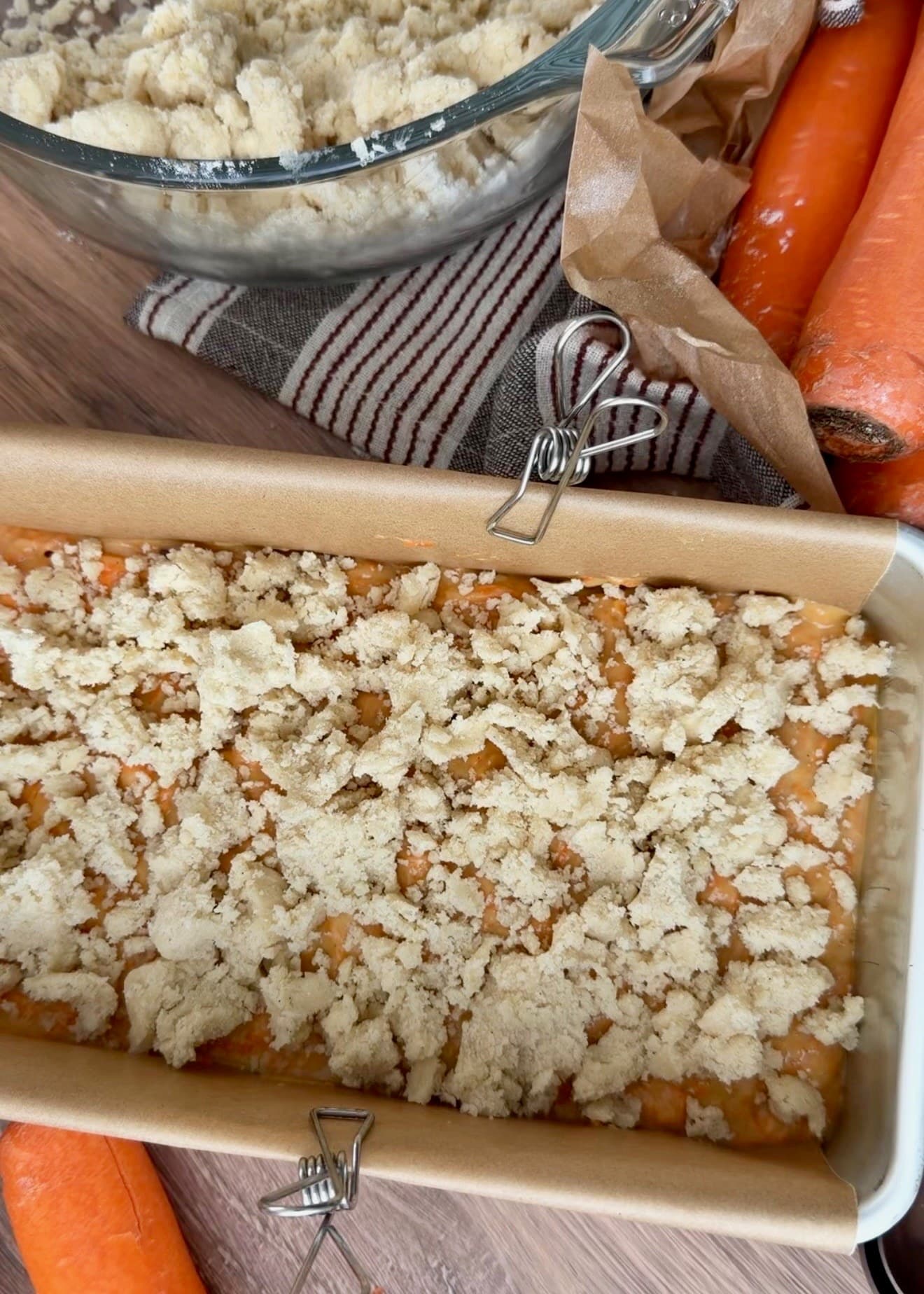
The middle layer of streusel sits between the two layers of batter. 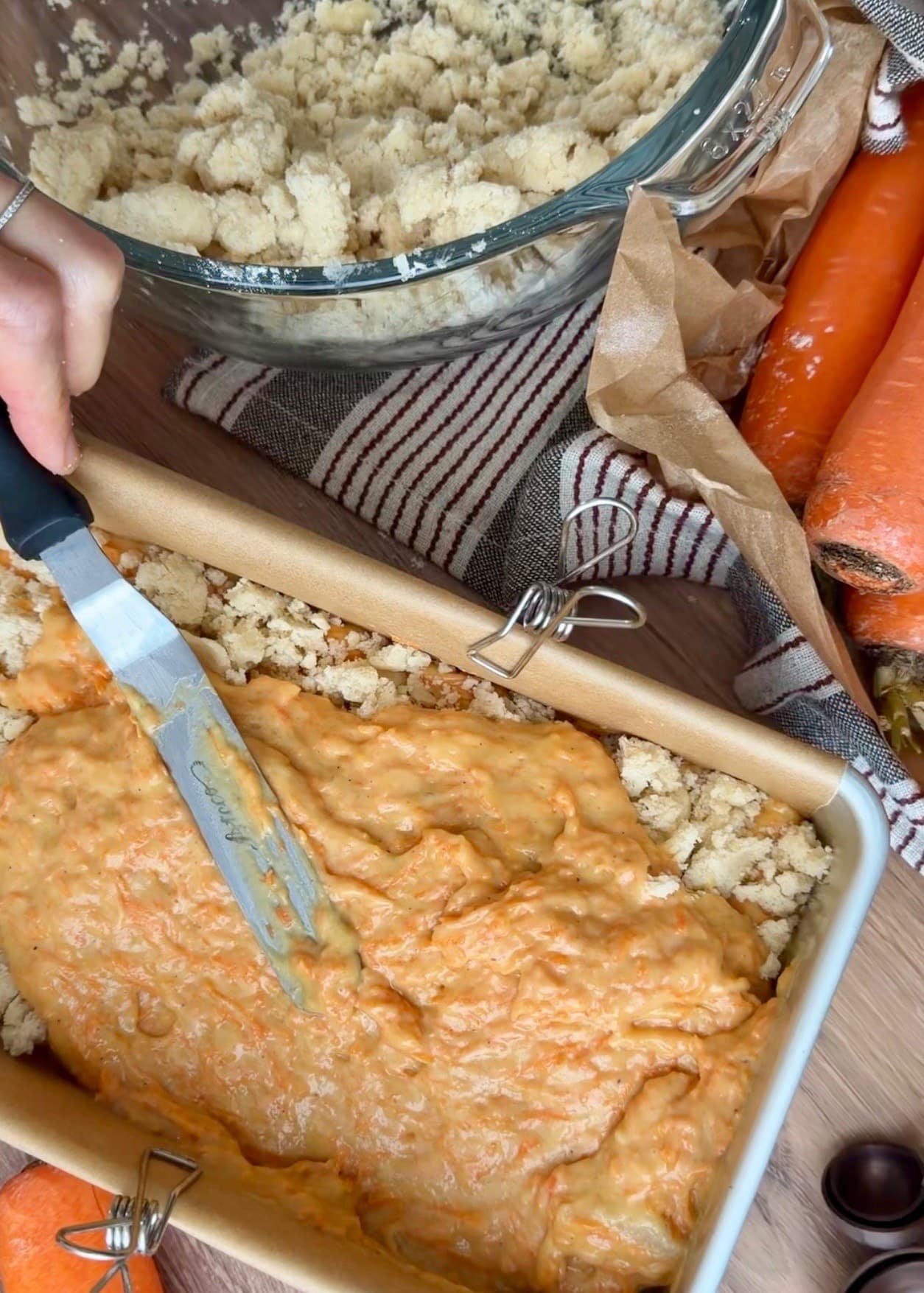
Spread gently to keep the streusel layer underneath. Step 4
Bake and check the center
Bake at 350°F (175°C) for 50-60 minutes. Once the top is set and browned, tent loosely with foil as needed. The center should be fully set, with a few moist crumbs on a toothpick rather than wet batter.
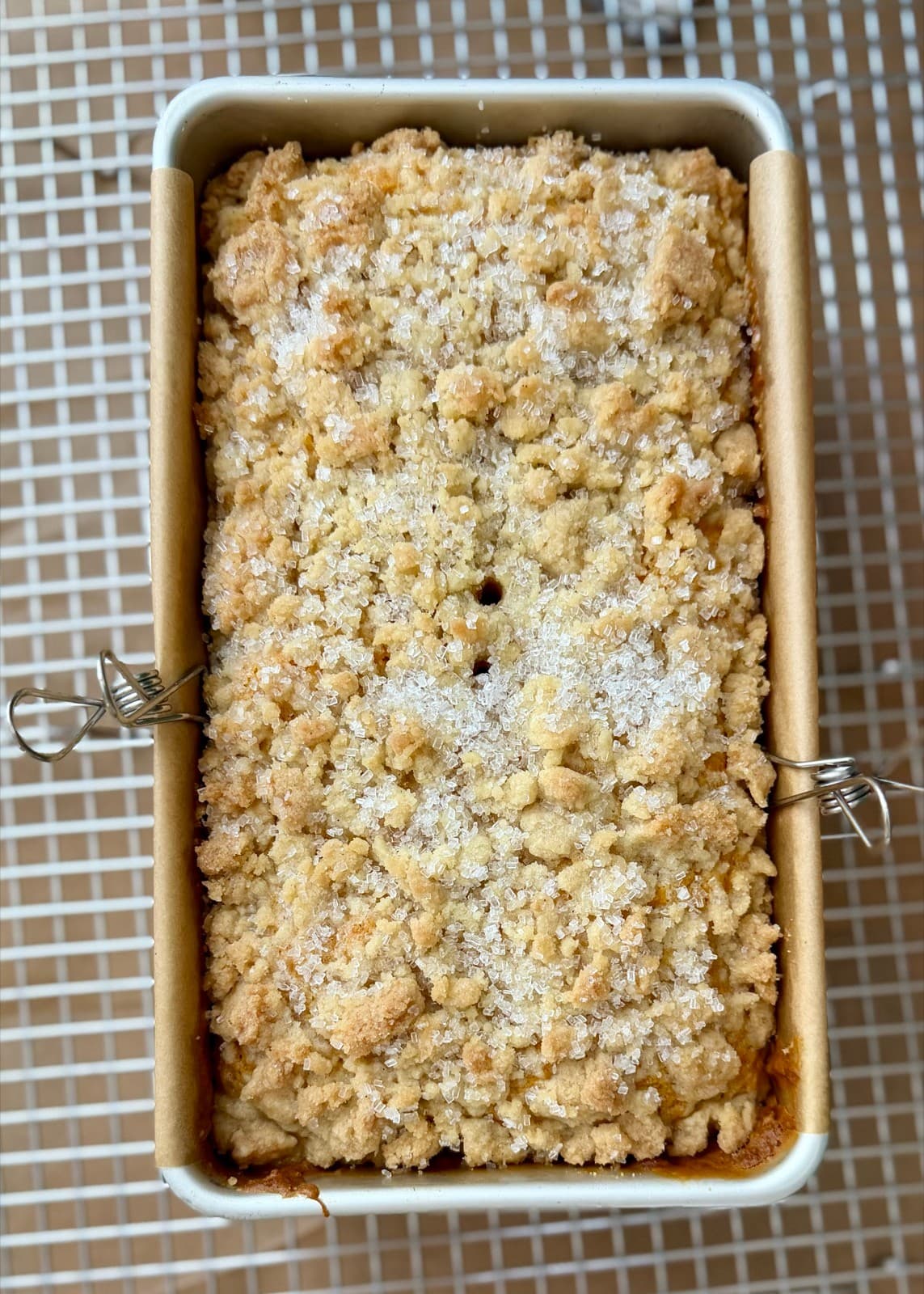
Look for a set, browned top before loosely tenting with foil. 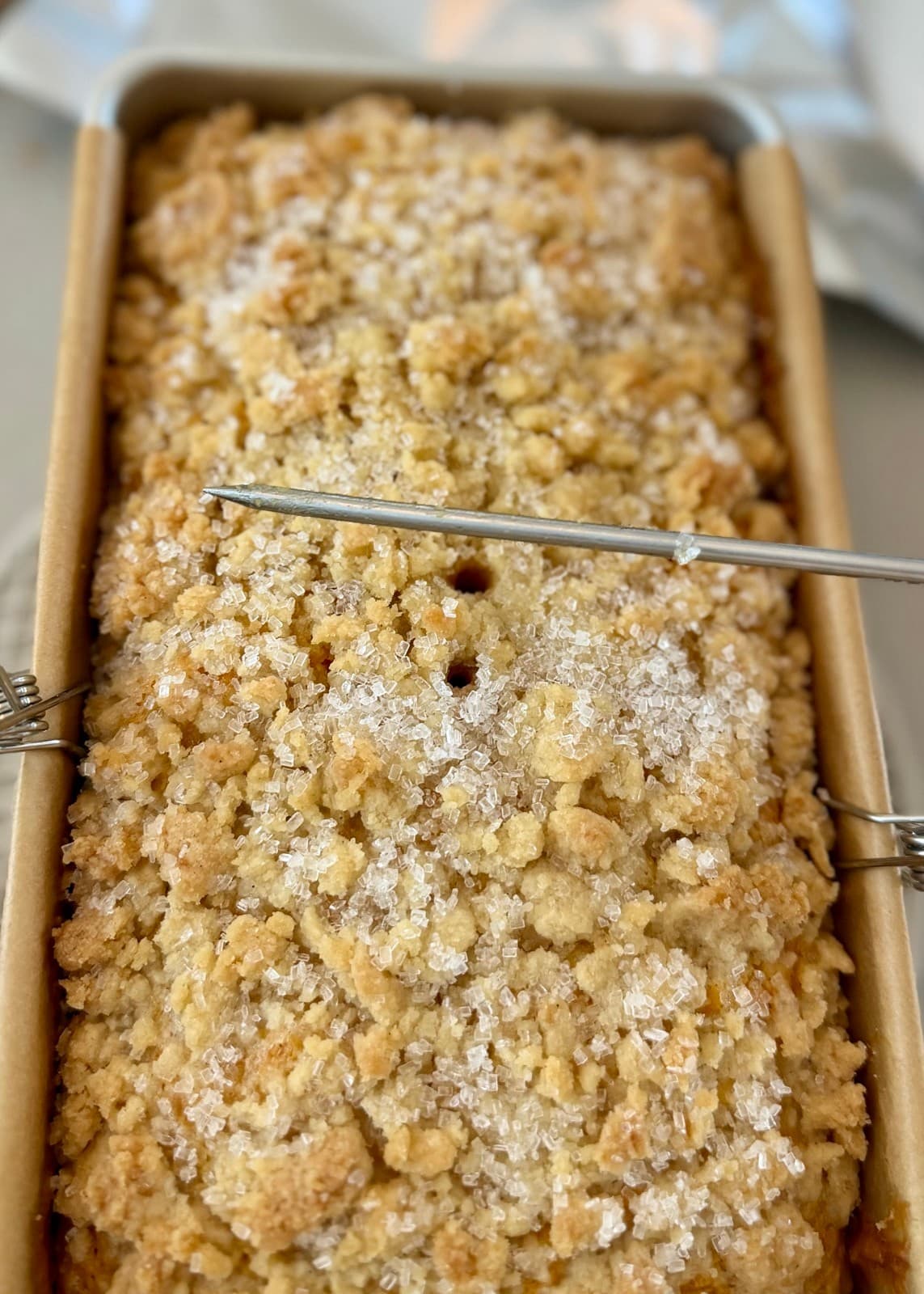
A few moist crumbs are the cue; wet batter needs more time. Step 5
Cool and remove the parchment
Cool in the pan for 20-25 minutes, then carefully lift the loaf out. When it is only slightly warm and sturdy enough to handle, support it with both hands and gently peel away the parchment. Let it finish cooling directly on a wire rack, with a tray underneath to catch the glaze.
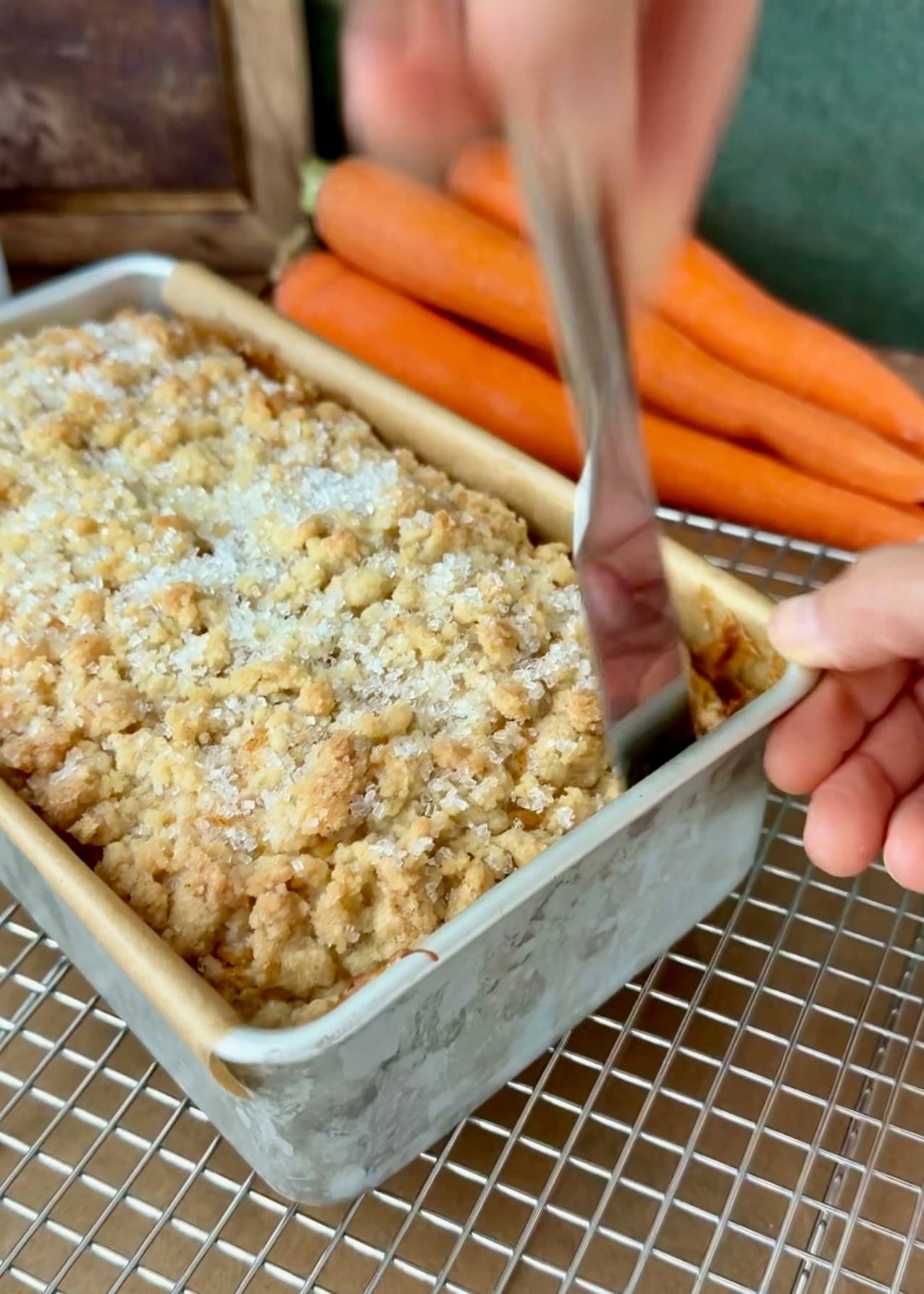
Loosen the exposed ends carefully before lifting the loaf out. 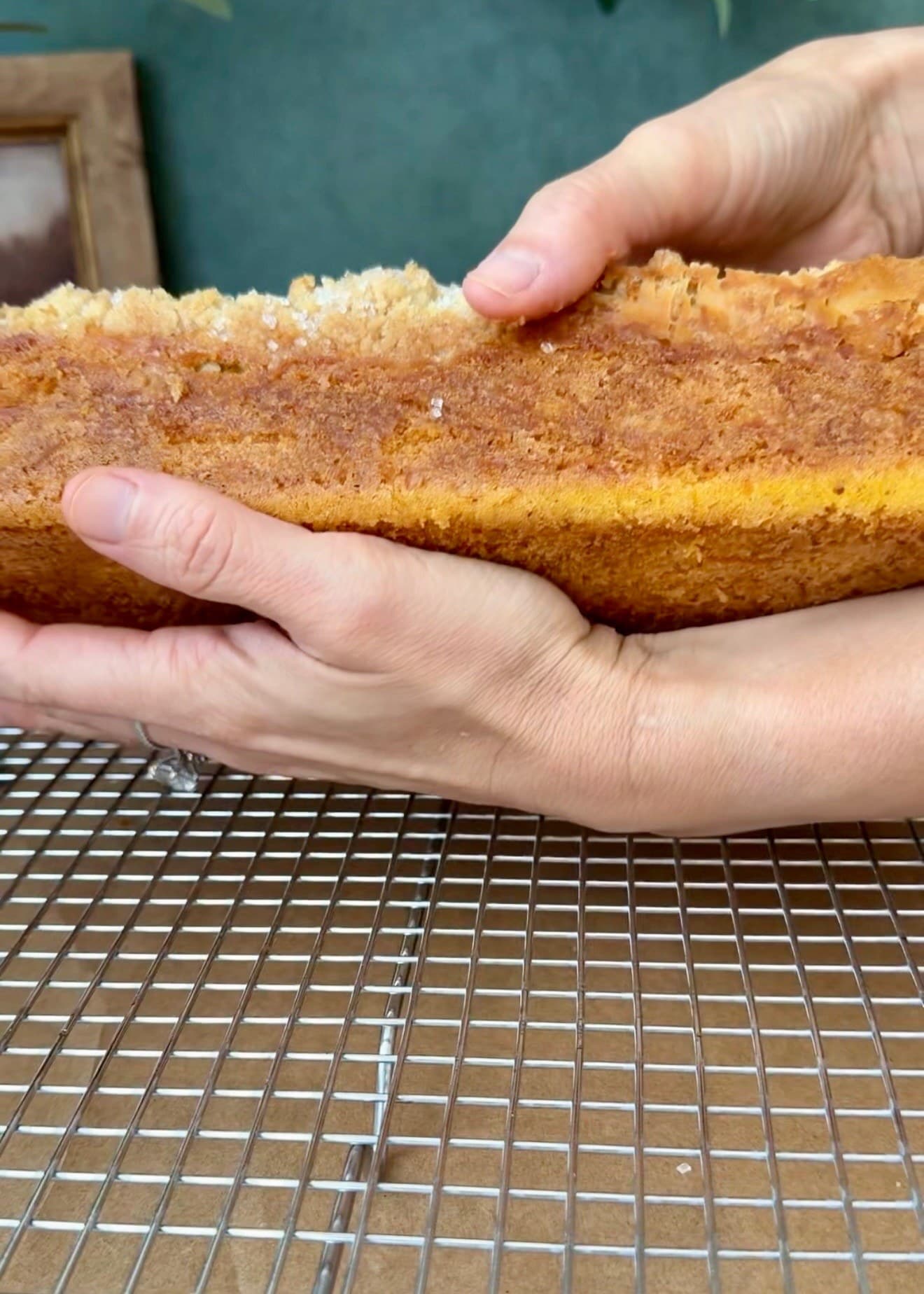
Support the loaf as you remove the parchment so the delicate cake stays intact. Step 6
My optional glaze-draining finish
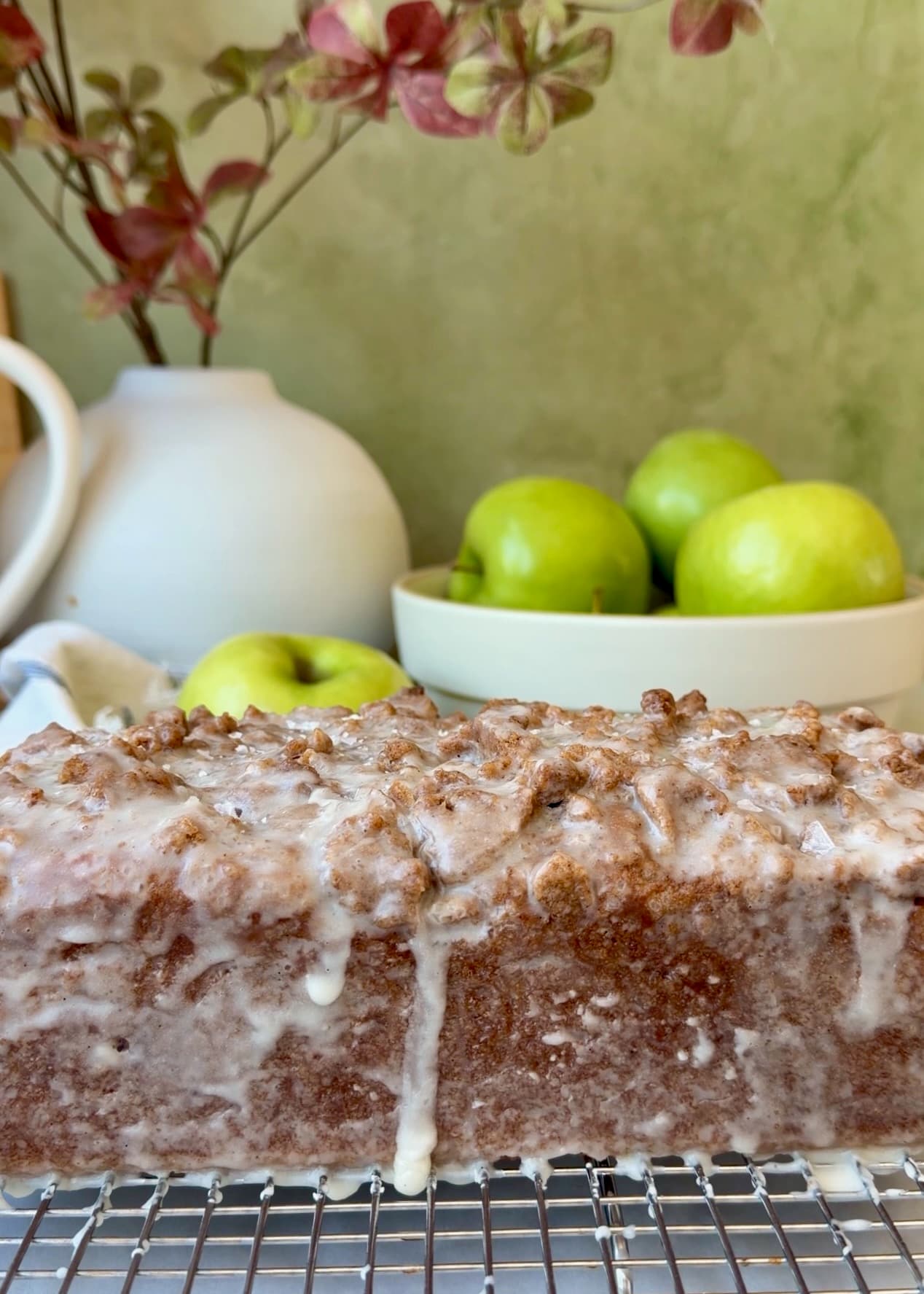
Glaze the cooled loaf on the rack. While the glaze is still fluid, I like to support the loaf from underneath and gently tilt it onto its side over the tray so excess glaze runs off instead of pooling on top. This is my preference with my loaves, not a required step. Carefully return it upright to the rack and let the glaze set before moving or slicing.
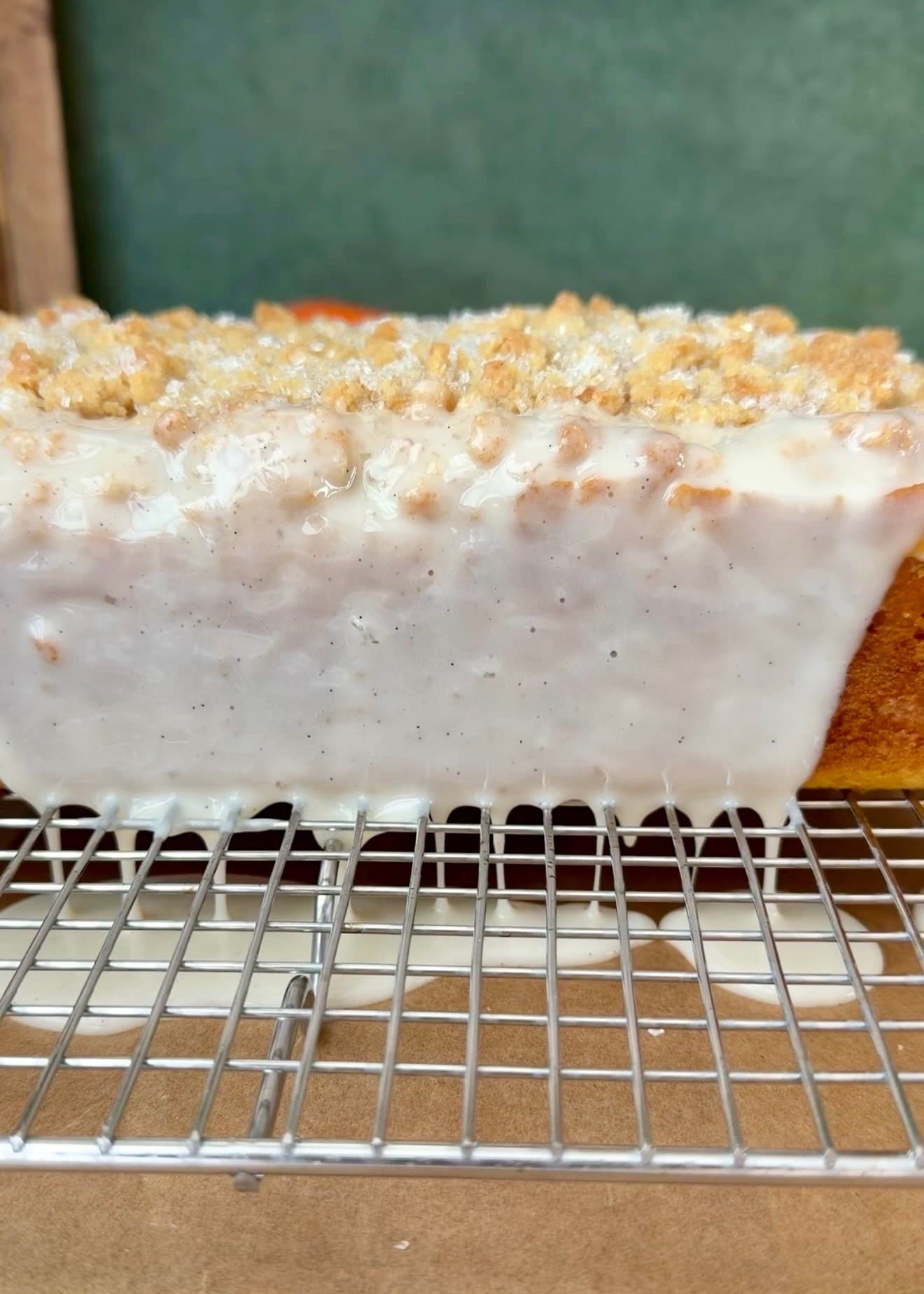
Keep parchment off the rack so excess glaze can drip away. 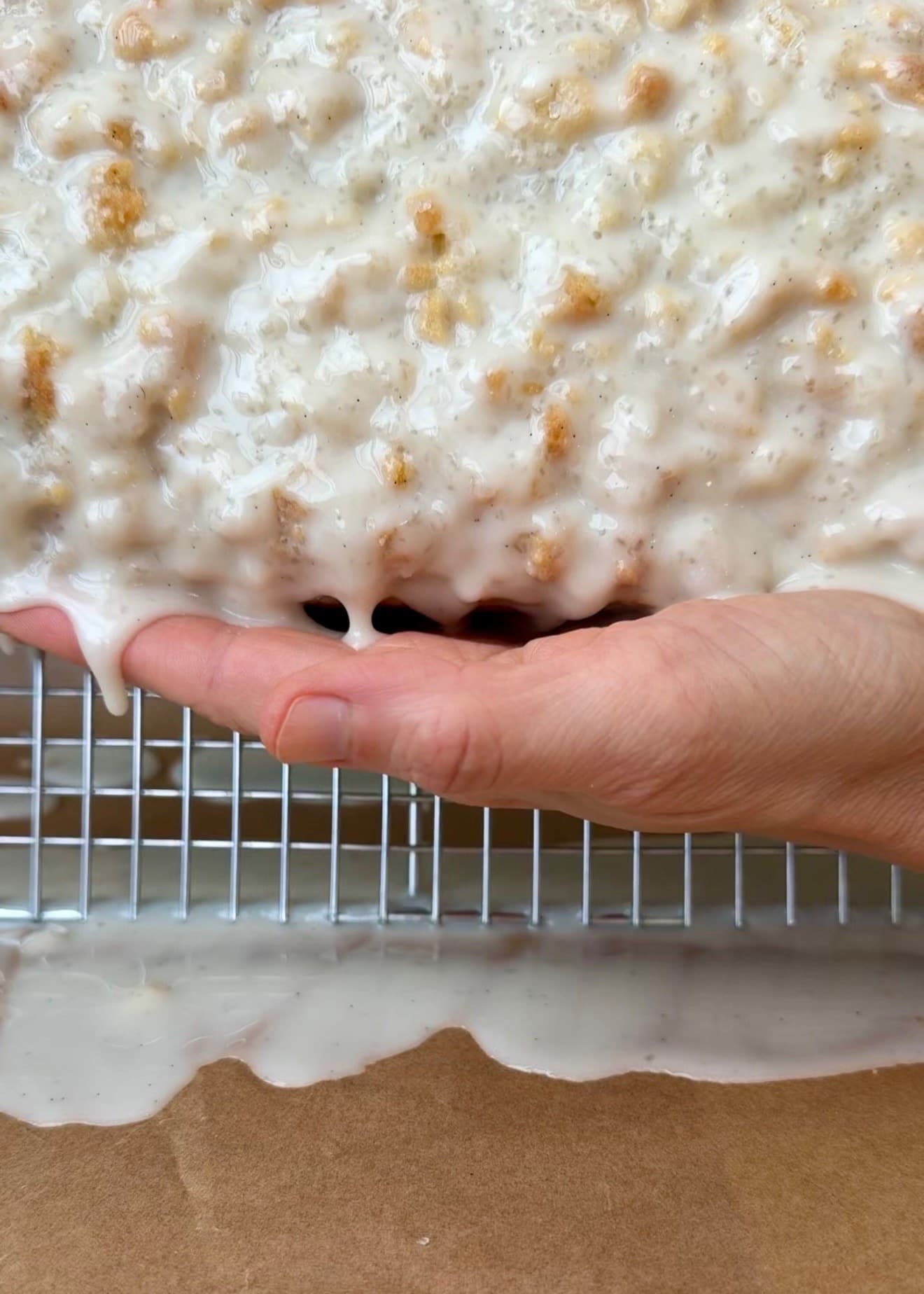
I gently tilt the loaf while the glaze is fluid to let any excess drain from the top. 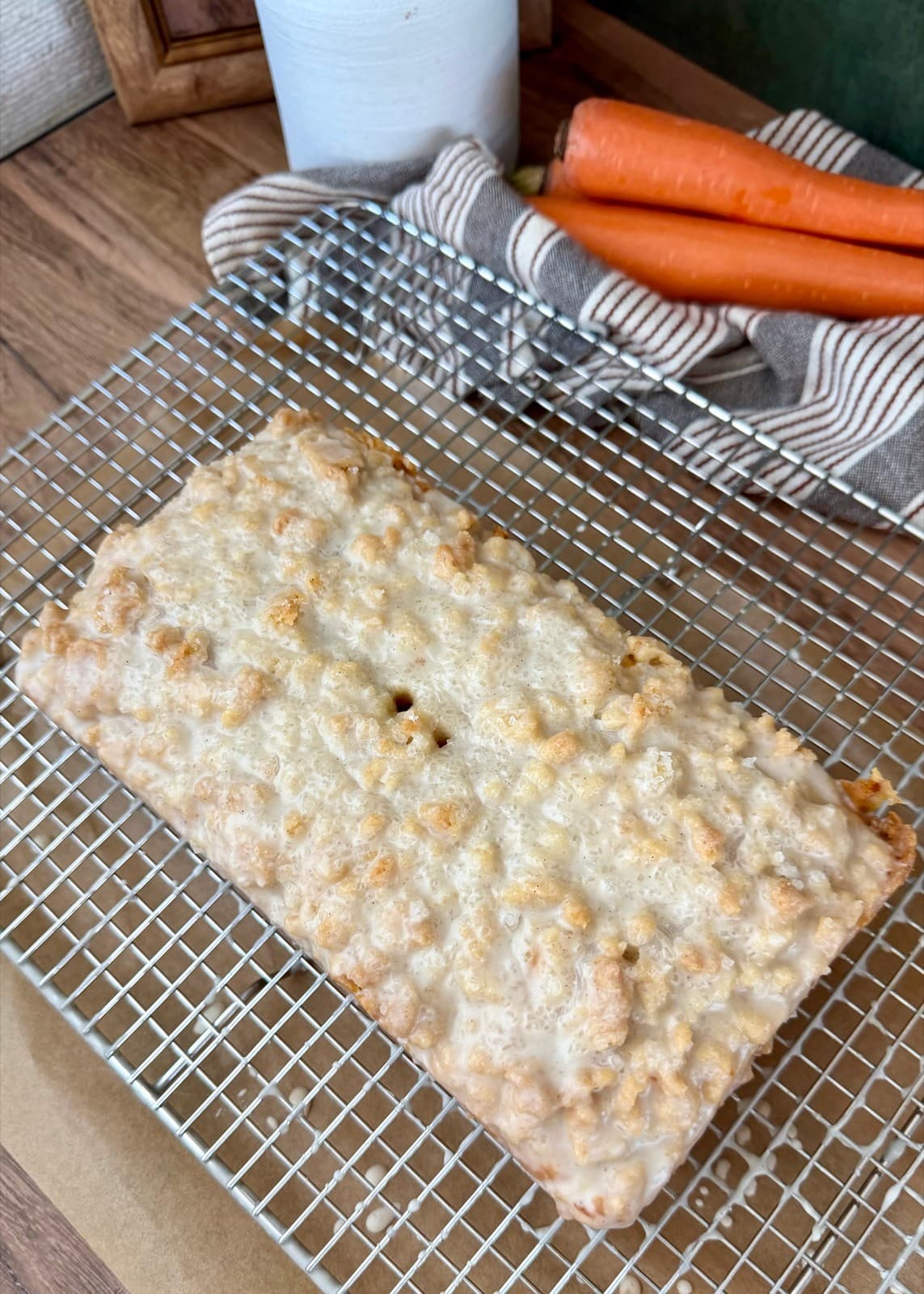
Return the loaf upright and let the glaze set. Step 7
Slice and enjoy
Once the glaze has set, slice the loaf. It is especially delicate while warm; chilling gives it the denser cake-donut texture I love.
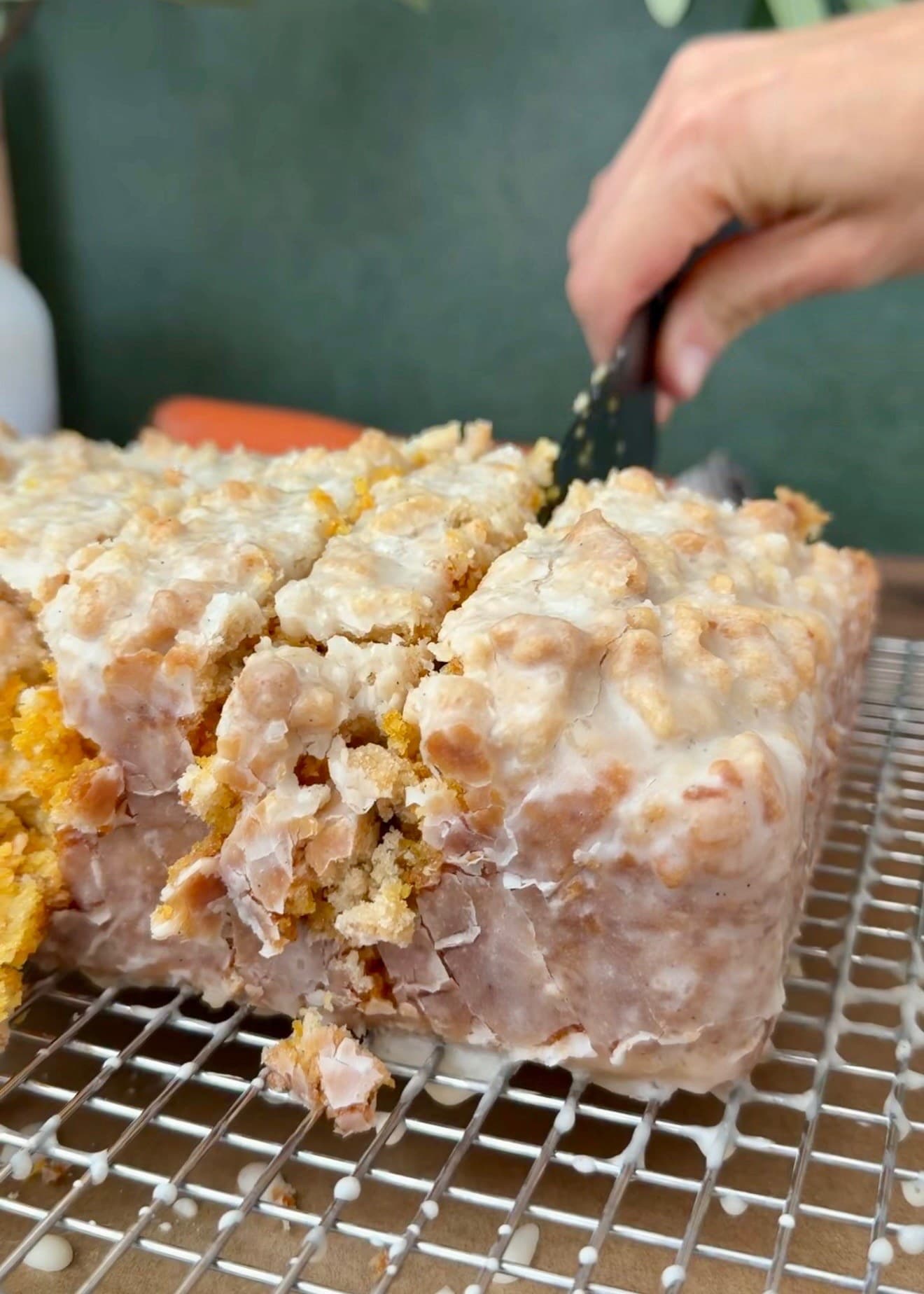
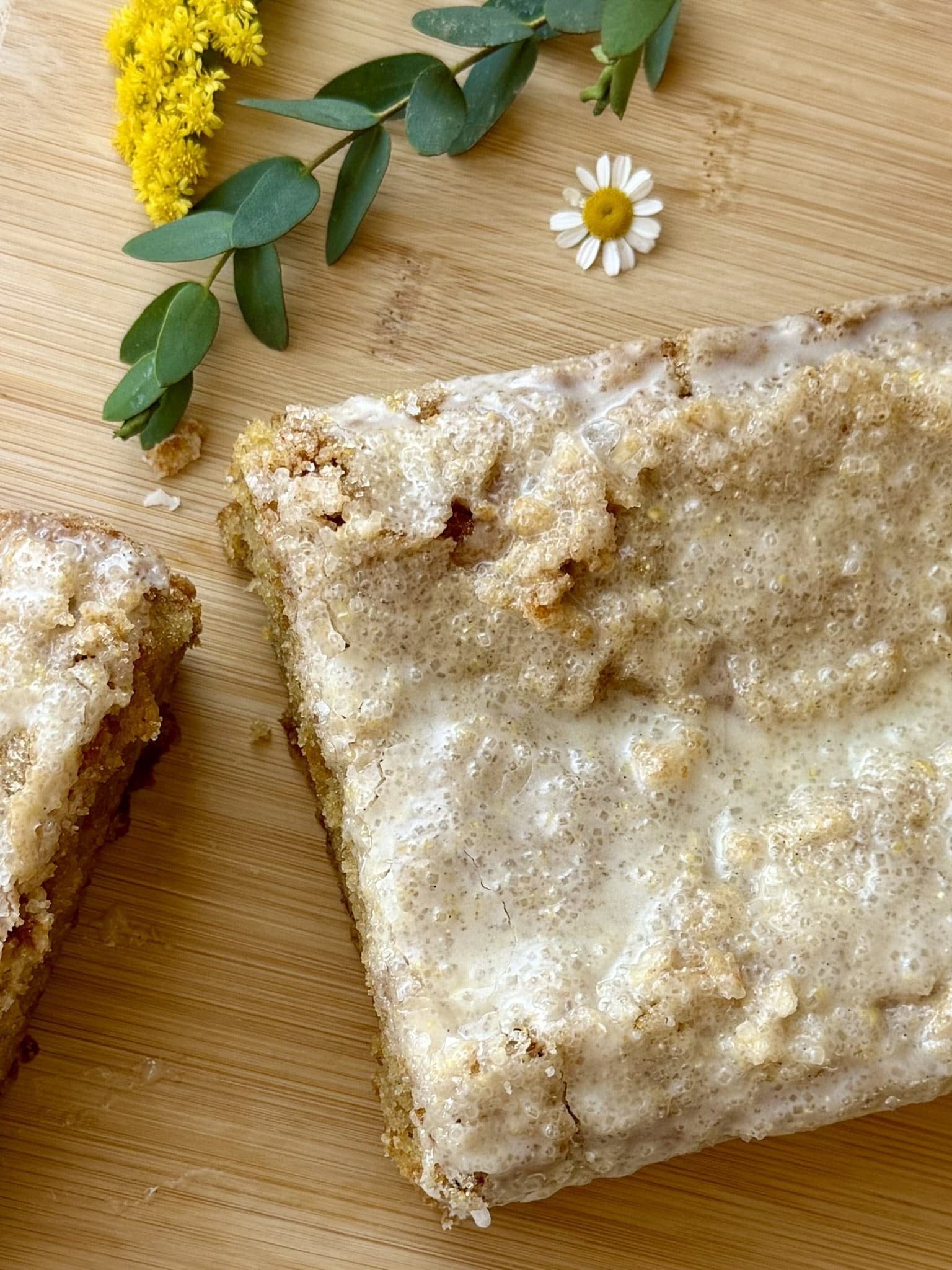
The set glaze breaks into thin flakes as you slice. 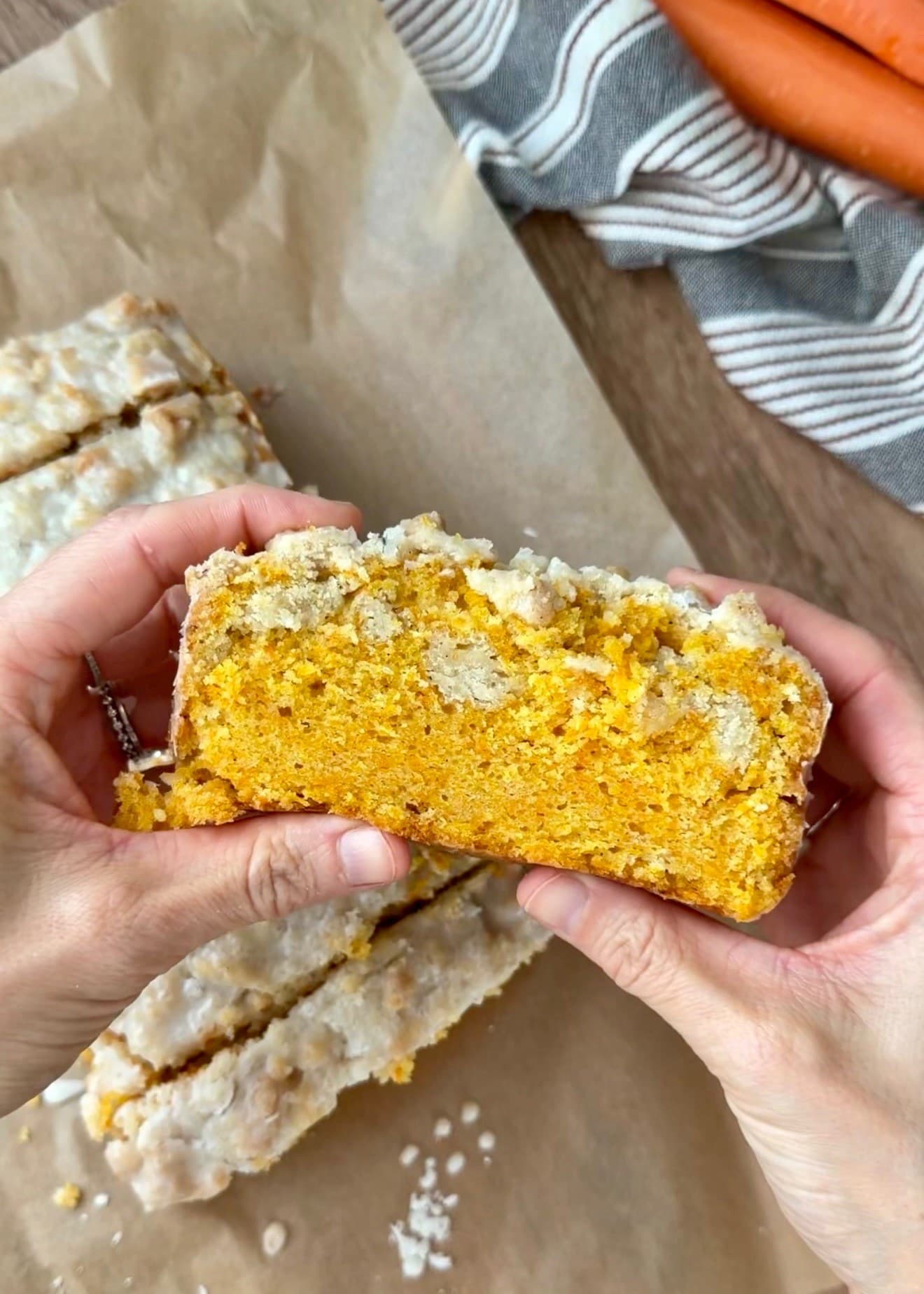
You can see the streusel tucked into the carrot cake. A close look at the carrot crumb, streusel, and thin glaze.
Small things that matter
Tips for the best loaf
Peel the carrots and choose large, thick ones. Start grating from the wide end so more carrot meets the grater with each pass.
I prefer an aluminum pan for an even bake with this moist loaf. Baking time can vary with the pan and oven, especially with glass.
If using glass, watch the browning around 30 minutes, ideally through the oven window. Once the top is set and browned, open the door briefly to tent it with foil if needed.
Avoid repeatedly opening the oven early in the bake. It lets heat escape while the loaf's structure is still setting. Keep any necessary checks brief.
Troubleshooting
If This Happens
The batter looks very thick
That is expected before the carrots go in. Fold in all 200 g of finely grated, unstrained carrots before judging the consistency.
There are pockets of carrot
Fold gently from the bottom of the bowl until the shreds are distributed throughout, with no clumps or dry flour remaining. Stop once evenly combined.
The top is browned but the middle needs more time
Loosely tent the set top with foil and continue baking until the center is fully set. A toothpick should have a few moist crumbs, not wet batter.
The loaf feels too fragile to unwrap
Let it cool further before removing the parchment. It should be only slightly warm and sturdy enough to support without breaking.
Glaze is pooling around the bottom
Remove the parchment before glazing and place the loaf directly on the wire rack. Keep a tray below the rack to catch the excess.
Before you slice
Texture and serving notes
The loaf is plush and delicate while warm. Chill it fully for the denser, more traditional cake-donut texture I love.
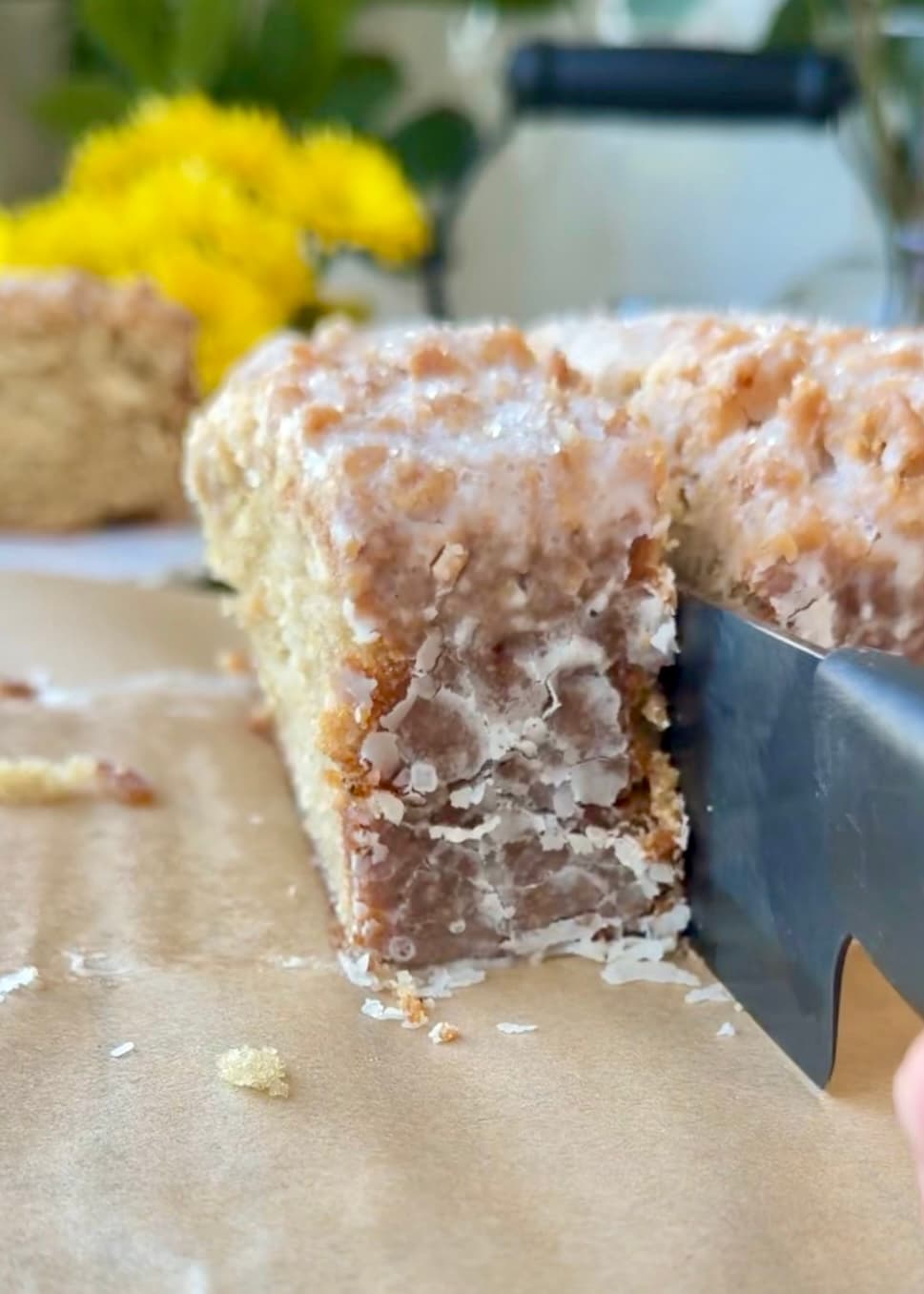
Let the glaze set before slicing so it forms a thin, shattery shell.
Keep it good
Storage
Fridge
Store covered in the refrigerator for up to 4 days.
Freezer
Freeze individual slices for up to 2 months. Thaw overnight in the refrigerator or at room temperature before serving.
Recipe FAQ
Questions that come up
Should I squeeze the carrots?
No. Finely grate them, weigh 200 g, and keep all their moisture. Do not strain, press, or blot them.
When do the carrots go in?
After the dry ingredients. The batter will look very thick at first, then loosen as you fold in the carrots. Mix gently and evenly without leaving carrot pockets.
Why is there only a little cinnamon?
I want the sweet carrot cake and vanilla to come through. The spices are deliberately light, with a hint of nutmeg for that old-fashioned donut flavor.
Can I use a glass loaf pan?
I prefer aluminum, but if you use glass, watch the browning around 30 minutes and tent the top once it is set and browned. Pan material can change the timing, so check the center for doneness rather than relying only on the clock.
Should the loaf be warm when I glaze it?
For this recipe, let it cool before glazing. Remove the parchment while it is only slightly warm and sturdy enough to handle, then let it finish cooling on the rack.
Can I make this ahead?
Yes. I love the cake-donut texture once it is fully chilled. Keep it covered in the refrigerator for up to 4 days, or freeze individual slices for up to 2 months.
Will it turn out the same if I use volume measurements?
Often, yes - but not always. Flour and other ingredients can weigh differently from one cup to the next depending on how they are filled or packed, and even humidity can make a difference. That is why I recommend using a scale when you can. These loaves are easy to make, but their ratios are precise. Baking ingredients are expensive, and there is nothing more frustrating than a loaf that does not turn out as expected. Volume measurements are included for convenience, but weighing gives you the closest match to the recipe I tested.
More donut loaves to try

- Prep
- 30 min
- Bake
- 50-60 min
- Total
- About 2 hr, including cooling and glaze setting
- Yield
- One 9 x 5-inch loaf
Measurement note
For the closest match to the recipe I tested, use grams. Volume measurements are included for convenience, but cups can vary, so I cannot guarantee the exact same result when measuring by volume.
Ingredients
Tap each ingredient as you use it.
Volume measurements use US cups and level spoons and are approximate. Spoon flour and powdered sugar into the cup, level, then sift if directed. For cocoa and freeze-dried fruit powders, scoop the unsifted powder and level without packing, then sift if directed. Measure sprinkles loosely and level. Pack brown sugar. For ingredients marked "weigh for accuracy", use the listed grams.
Old-Fashioned Donut Streusel
- 115 g all-purpose flour
- 80 g granulated sugar
- 1/2 teaspoon fine sea salt
- 85 g cold butter, cubed
- 1/2 teaspoon vanilla bean paste
Carrot Cake Old-Fashioned Donut Loaf
- 260 g all-purpose flour
- 15 g cornstarch
- 1 3/4 teaspoons baking powder
- 1/4 teaspoon baking soda
- 3/4 teaspoon fine sea salt
- 1/4 teaspoon ground nutmeg
- 1/4 teaspoon ground cinnamon
- Pinch ground ginger
- 150 g granulated sugar
- 50 g light brown sugar, packed
- 120 g neutral oil
- 150 g plain unsweetened Greek yogurt, room temperature
- 85 g milk, room temperature
- 2 teaspoons vanilla bean paste
- 200 g finely grated carrots, unstrained (weigh for accuracy)
Vanilla Bean Glaze
- 250 g powdered sugar
- 50 g milk
- 1 teaspoon vanilla bean paste
- Pinch fine sea salt
Before Baking
- Coarse sanding sugar, for sprinkling
Pan used
One 9 x 5-inch loaf pan. I prefer aluminum for this loaf.
Removing the parchment
Remove the parchment when the loaf is only slightly warm and sturdy enough to handle. Let it finish cooling directly on the wire rack before glazing so excess glaze can drain away.
Instructions
- 1Preheat the oven to 350°F (175°C). Grease a 9 x 5-inch loaf pan and fully line it with parchment.
- 2Make the streusel: combine the flour, granulated sugar, and salt in a medium bowl. Add the cold cubed butter and vanilla bean paste. Work together with your fingertips until irregular crumbs form, leaving some larger clusters. Refrigerate while preparing the batter.
- 3Peel and finely grate the carrots, then weigh 200 g. Do not squeeze, strain, press, or blot them.
- 4In a large bowl, whisk the granulated sugar, brown sugar, oil, Greek yogurt, milk, and vanilla bean paste until smooth and combined.
- 5Add the flour, cornstarch, baking powder, baking soda, salt, nutmeg, cinnamon, and ginger. Fold gently to incorporate the dry ingredients. The batter will be very thick at this stage.
- 6Fold in the finely grated carrots. Mix gently but thoroughly until the carrots are evenly distributed and no dry flour or carrot pockets remain. Their moisture will loosen the batter. Do not overmix.
- 7Spread approximately half the batter evenly in the prepared pan. Scatter approximately half the chilled streusel over it, keeping it slightly away from the edges.
- 8Spoon the remaining batter over the streusel and spread gently. Stop when the pan is just over halfway full; do not force in excess batter.
- 9Scatter the remaining streusel generously over the top, then add a light sprinkle of coarse sanding sugar.
- 10Bake for 50-60 minutes, tenting loosely with foil as needed once the top is set and browned. The center should be fully set, and a toothpick should come out with a few moist crumbs, not wet batter.
- 11Cool in the pan for 20-25 minutes, then carefully transfer to a wire rack. Remove the parchment when the loaf is only slightly warm and sturdy enough to handle. Let it finish cooling directly on the rack, with a tray underneath to catch the glaze.
- 12Whisk the powdered sugar, milk, vanilla bean paste, and salt until smooth, thick, and pourable.
- 13Once the loaf has cooled, glaze generously. Optional: while the glaze is still fluid, support the loaf from underneath and gently tilt it onto its side over the tray to drain any glaze pooling on top. This is my preference with my loaves. Return it upright to the rack and let the glaze set before slicing.

Meet the baker
Angela Heckler
Angela Heckler is the recipe developer, baker, and photographer behind Obsessed Cakes. Her Old-Fashioned Donut Loaf series is a growing collection of cake-donut-inspired loaves with soft, deeply moist crumbs, buttery streusel, and crackly glaze. Angela develops and tests every recipe in her Arizona kitchen. Follow Obsessed Cakes on Instagram, TikTok, and YouTube.
Made it? Tell us.
Ratings and reviews
Be the first to rate this recipe.
No reviews yet.
Make the recipe, leave a rating, and share how it turned out.Did you make this?
Share your bake on Instagram - tag @obsessedwithcashews and use #obsessedcakes.