Banana Biscoff Fritter Coffee Cake
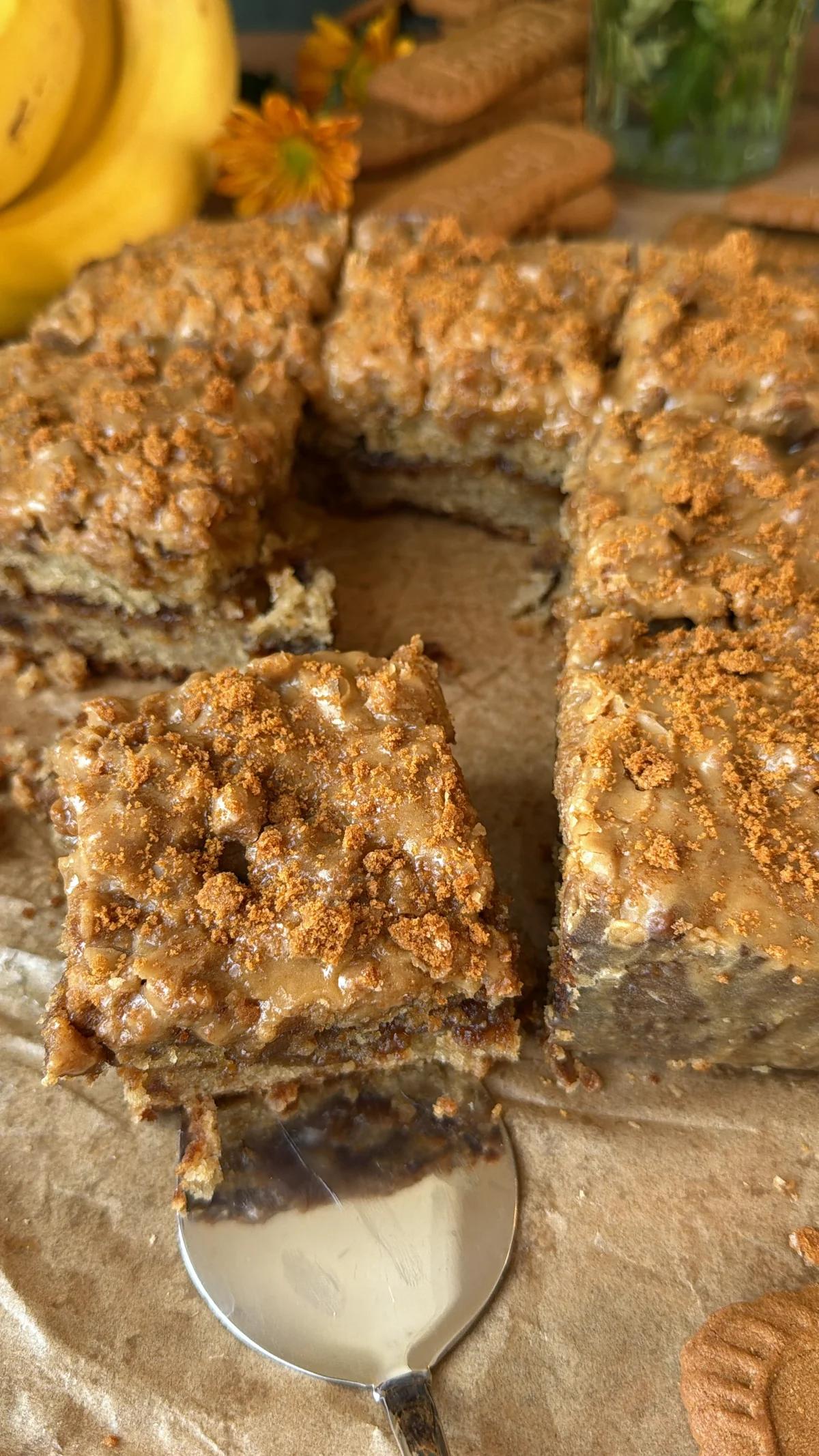
Be the first to reviewBanana and Biscoff in every layer! There are cookie pieces in the banana cake and crumble, finely ground cookies in the filling, and Biscoff spread in the glaze. The center stays gooey but holds together when you slice it.
 Save to Pinterest
Save this recipe
Want to save this recipe for later?
Enter your email and I’ll send it to your inbox.
Ingredient notes
Key ingredients
Ripe banana
Puree 200 g of peeled banana without adding liquid, then whisk it into the wet ingredients.
Biscoff cookies and spread
Use roughly crushed cookies for the crumble and batter, finely powdered cookies for the filling, and smooth Biscoff spread for the glaze. Each has its own job.
Plain unsweetened Greek yogurt
Greek or regular plain unsweetened yogurt both work here. Use nonfat or full-fat yogurt if that is what you have on hand, keeping the listed amount the same. Bring the yogurt and batter milk to room temperature.
From this recipe
Tested notes
I've made this with bananas that weren't super ripe, and it turned out just fine! No need to wait for them to get extra spotty or bake them first. Just go for it!
220°F is on the higher side for baked goods, but it was the sweet spot when I tested this cake! It stayed super moist, and the center was gooey but held its shape. I recommend using a thermometer for reassurance, because the filling can make a tester a little confusing.
I love a thick layer of Biscoff glaze on top! If you are a Biscoff lover too, use the rest at the same consistency to brush the sides. Or glaze the top, then thin the remaining glaze with milk for a very light coating on the sides. For less glaze overall, add a little more milk to the whole batch until it reaches the consistency you like. I have tried these options - it is purely preference!
Testing notes
Why this works
A little filling on the tester is normal
A little paste at the bottom of your tester is usually the Biscoff filling, and that can be normal when this cake is done. Check near the center in a second spot, too - the probe will pass through the crumble and filling. You want set cake with moist crumbs, rather than a heavy coating of wet batter. Use those texture cues alongside the temperature.
Keep the layers separate
Let the filling cool before layering it over the batter. Add the upper batter in small dollops so you can connect them gently without mixing everything together.
Step by step
How It All Comes Together
Step 1
Make and chill the Biscoff crumble
Work the cold butter through the flour, sugars, cinnamon and salt until the mixture holds together when squeezed. Mix in the vanilla and crushed Biscoff, then refrigerate. Reserve one-quarter for the middle and three-quarters for the top.
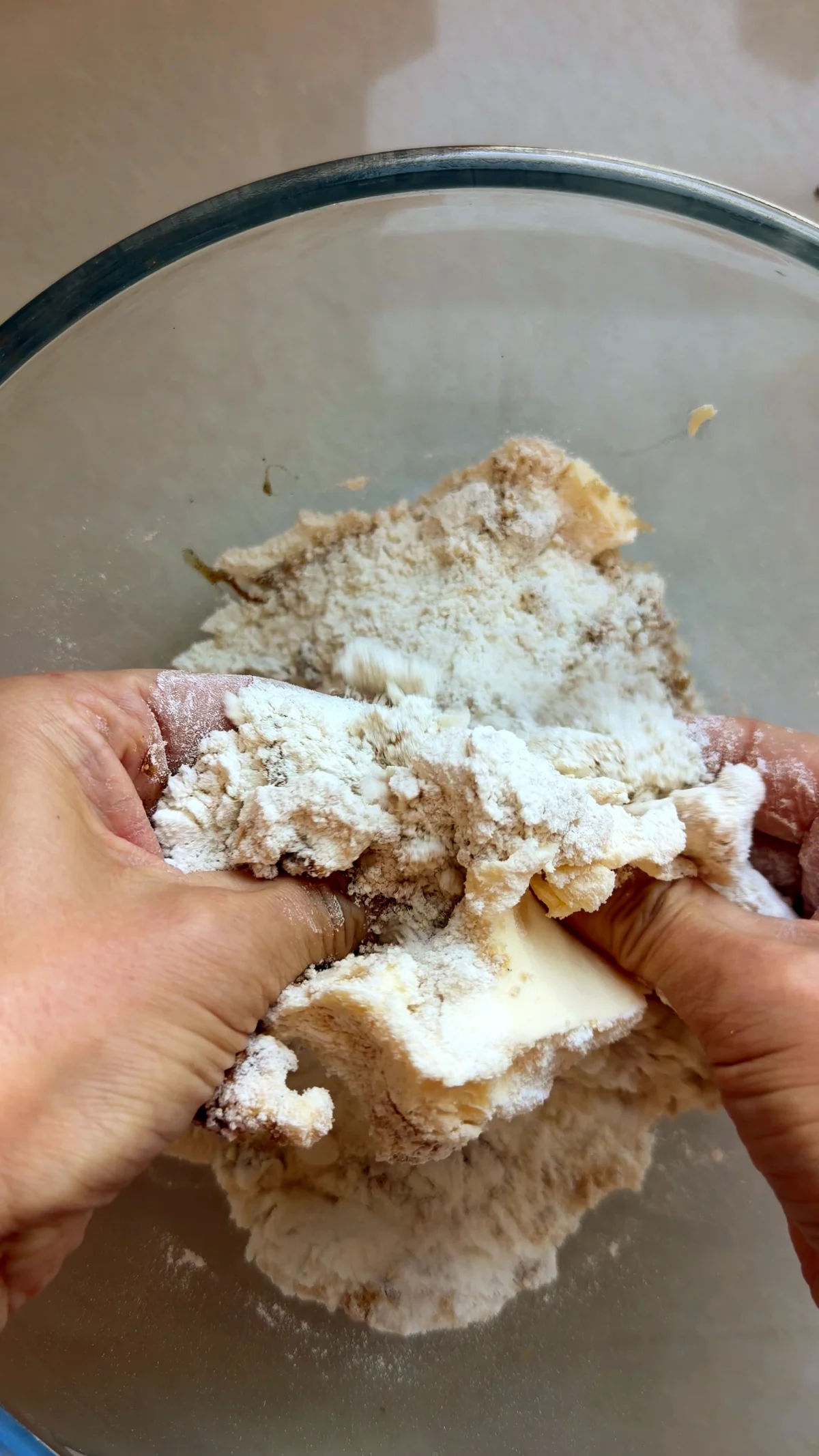
Work the full listed amount of butter through the dry ingredients before judging the texture. 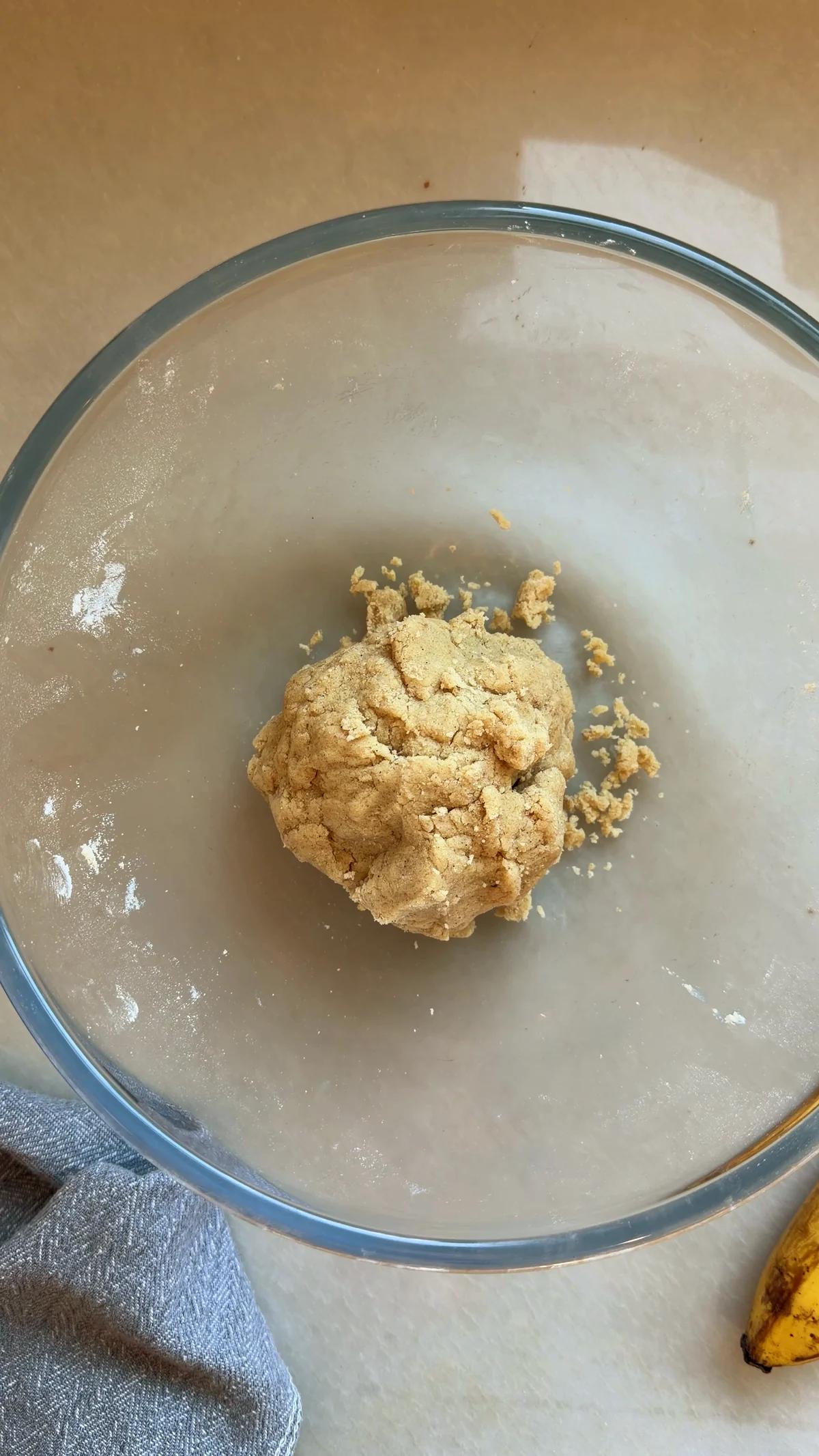
The mixture should hold together when squeezed, then break into crumbs. 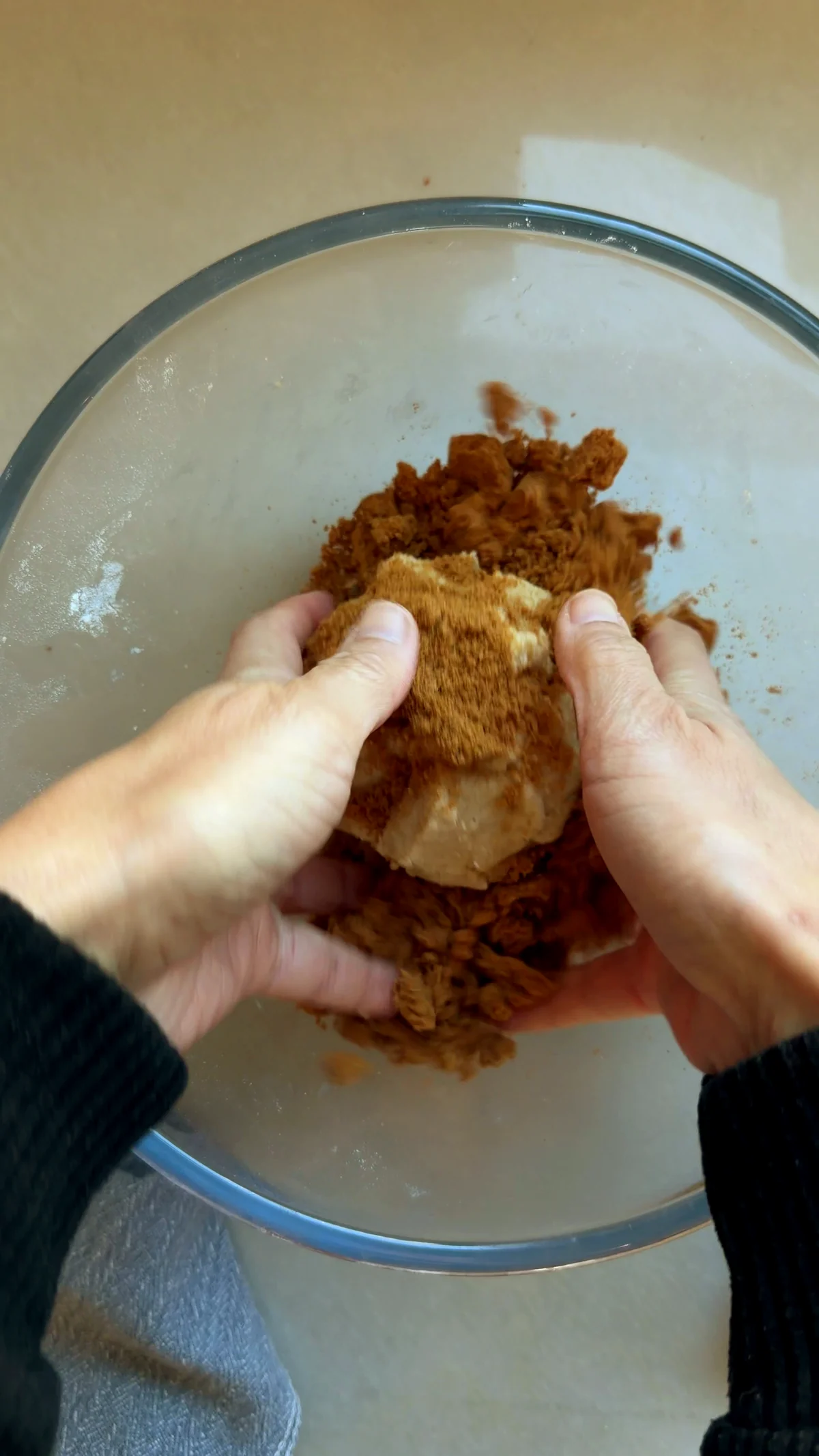
Work the crushed cookies through the crumble, then chill it. Step 2
Stir the Biscoff filling
Melt the filling butter with the sugar and milk in short microwave bursts, stirring between each. Stir in the finely powdered cookies, vanilla and salt. Let it cool and thicken before layering.
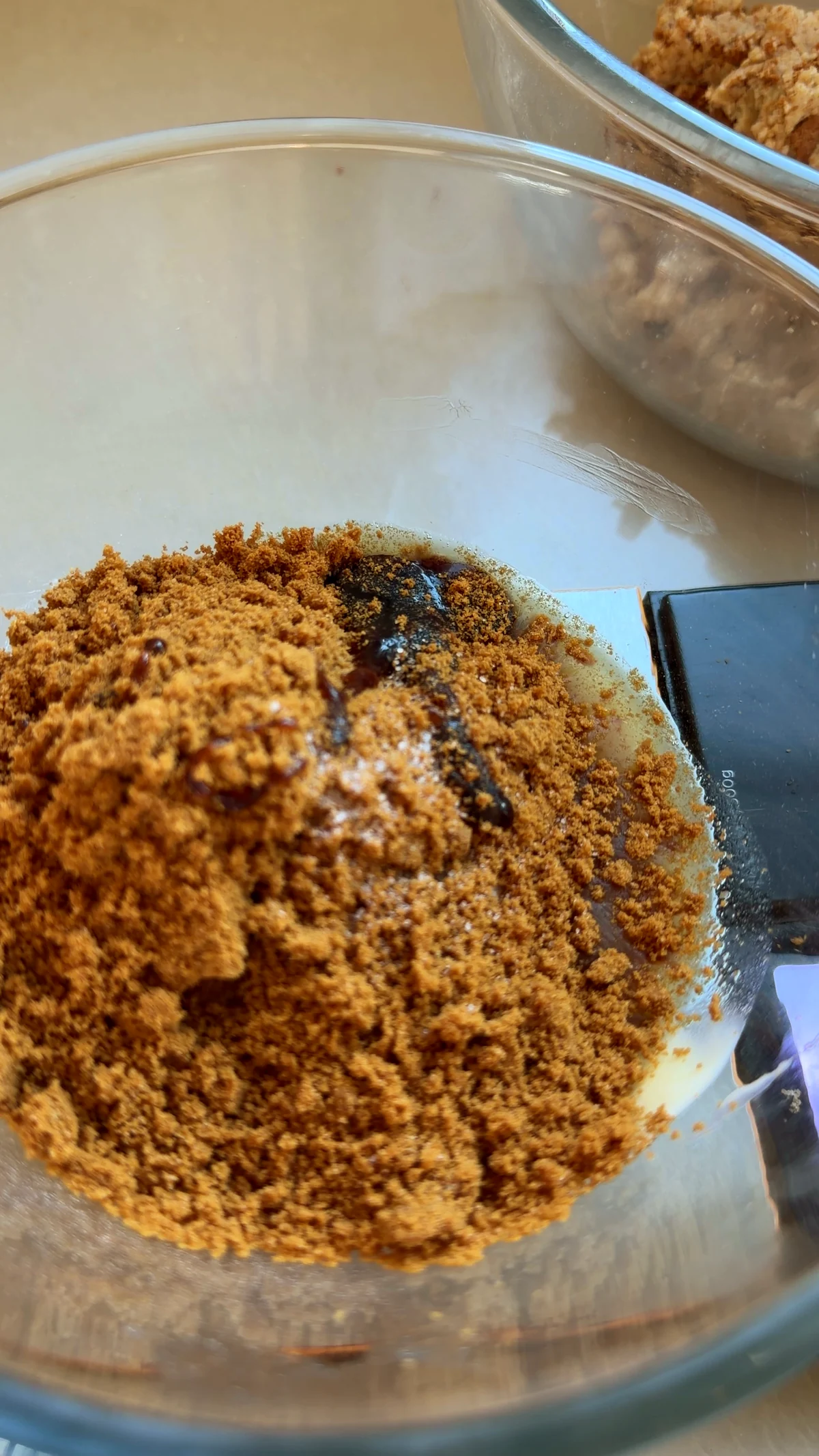
Use finely ground cookies for the filling, rather than the larger crumble pieces. 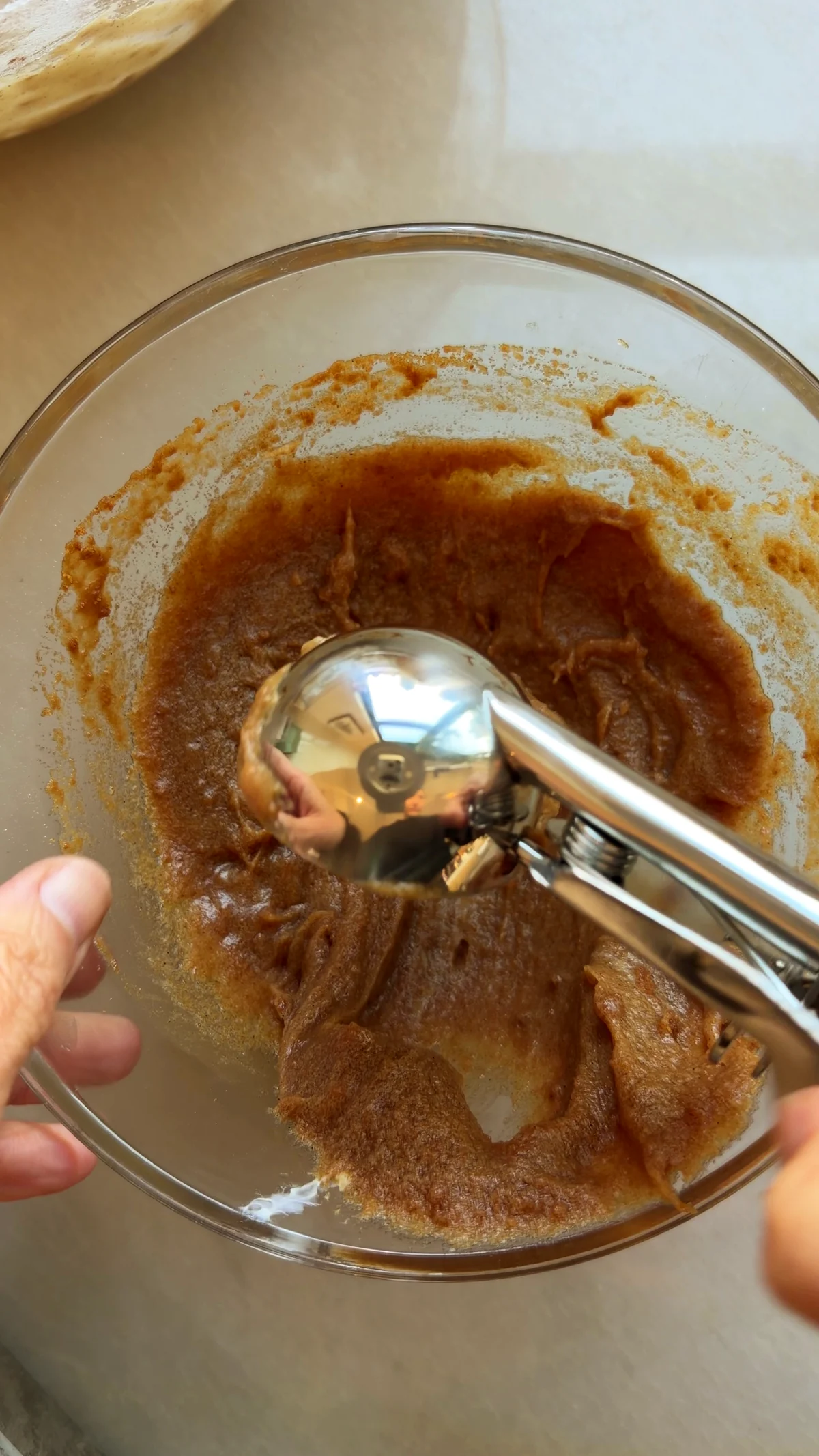
Let the filling cool until it can be spooned into small dollops. Step 3
Whisk the banana mixture
Puree the banana without adding liquid. Whisk it with the cake sugars, oil, yogurt, milk and vanilla bean paste.
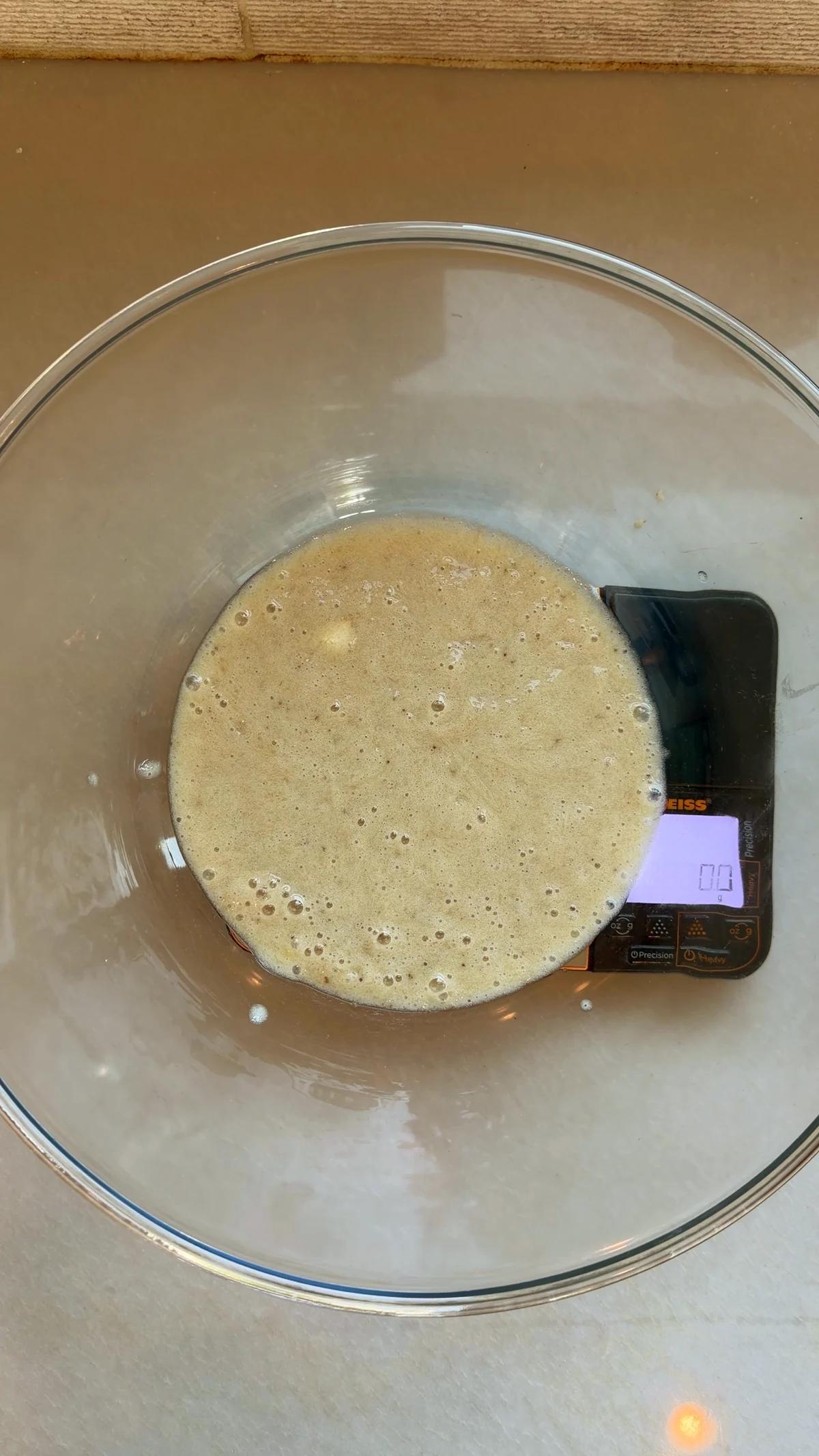
Weigh 200 g of banana without the peel and puree without adding liquid. 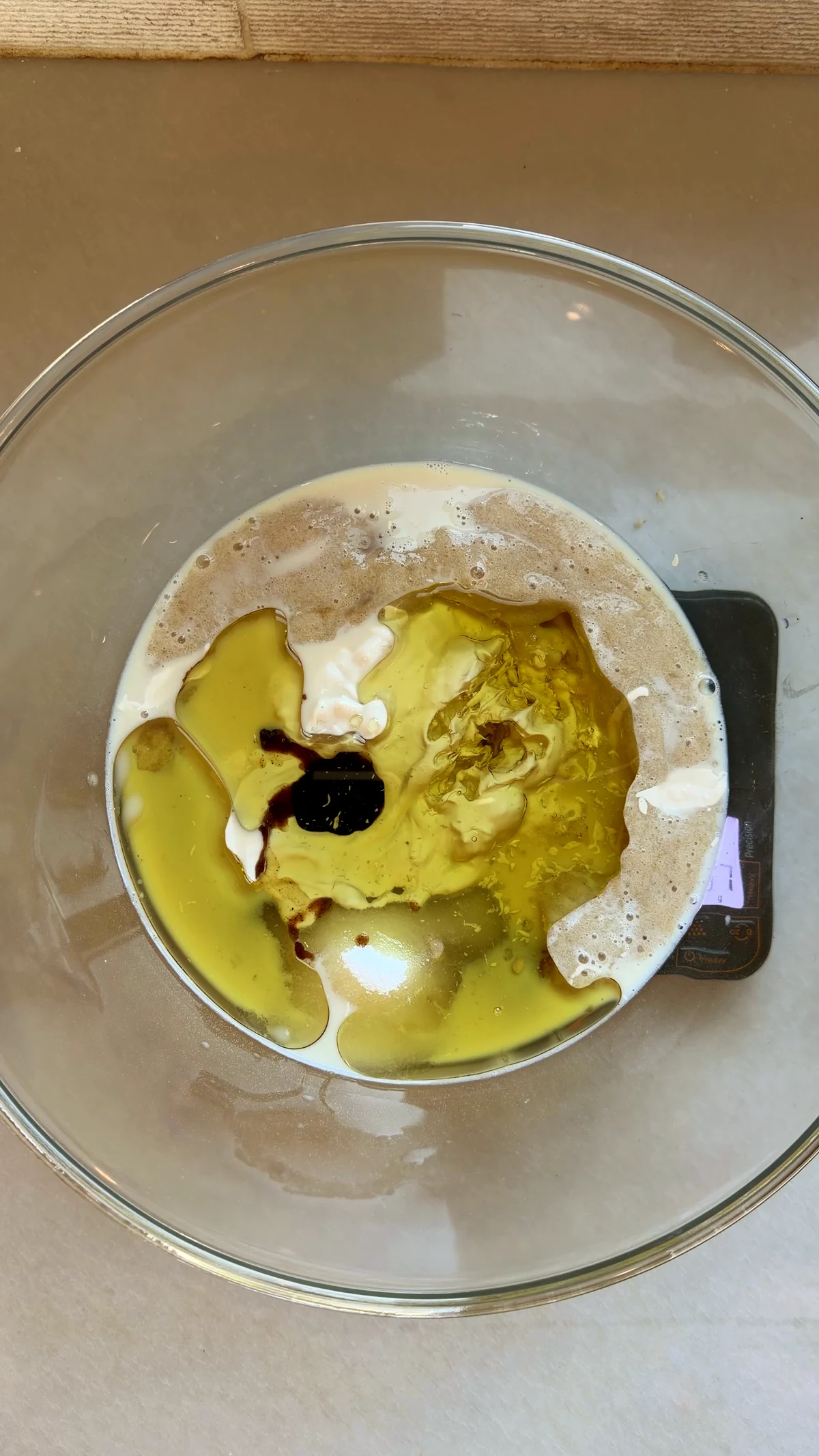
Add the sugars and wet ingredients before whisking. 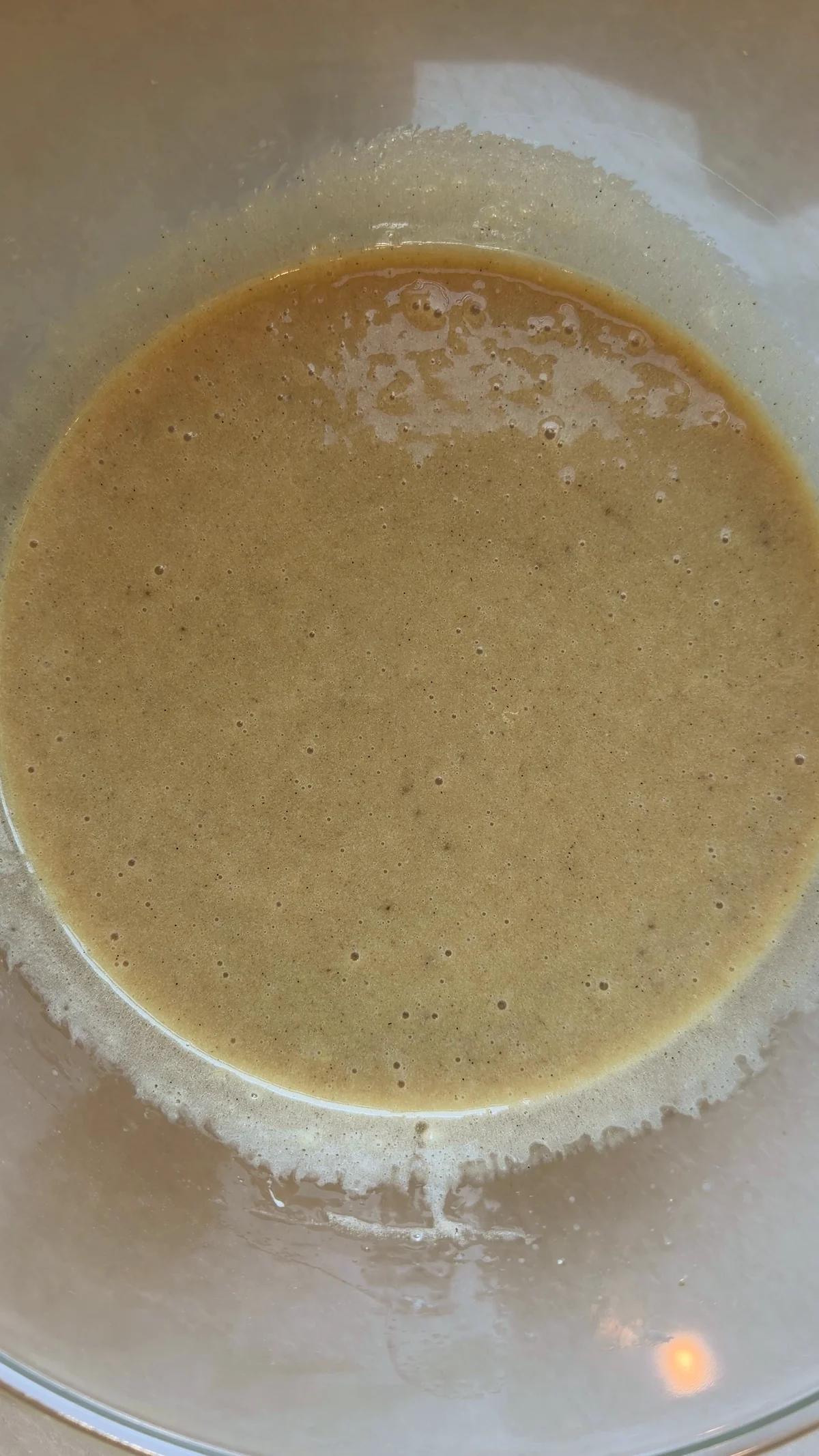
Whisk until the wet ingredients are evenly combined. Step 4
Finish the batter
Sift the dry ingredients over the wet mixture and mix gently until no dry streaks remain. Fold in the crushed Biscoff cookies.
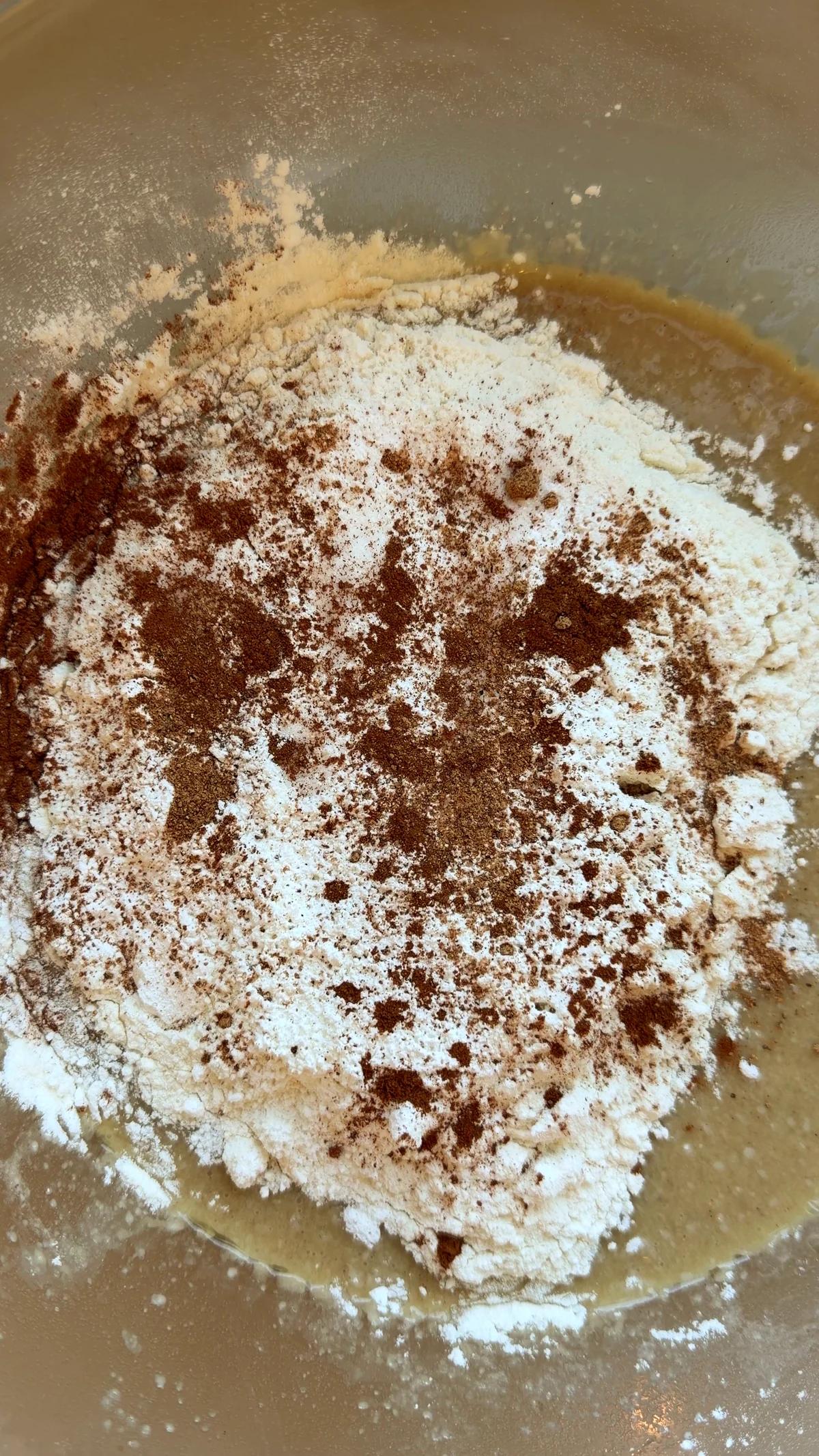
Add the dry ingredients over the wet mixture. 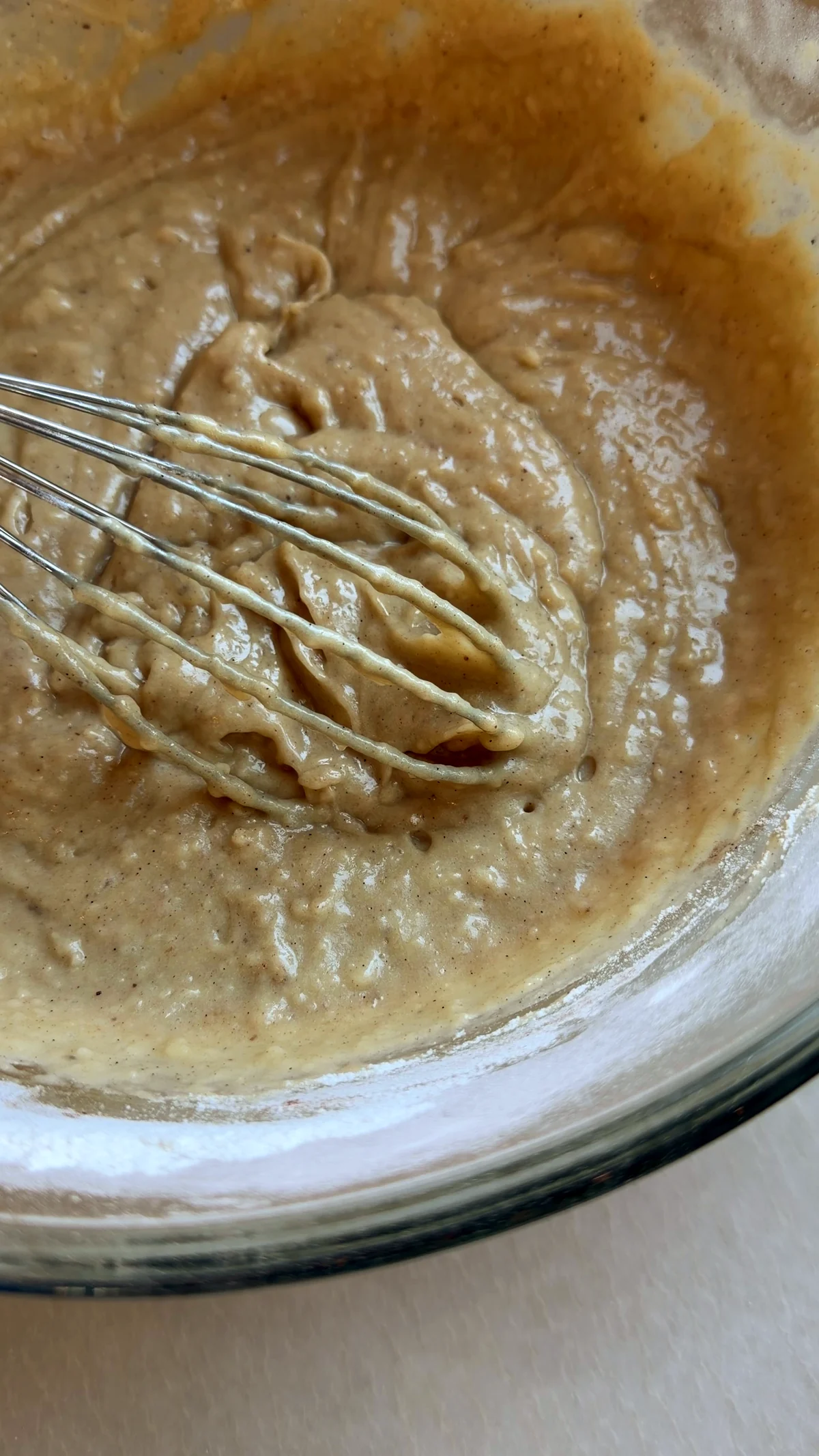
Stop mixing once the dry streaks disappear. 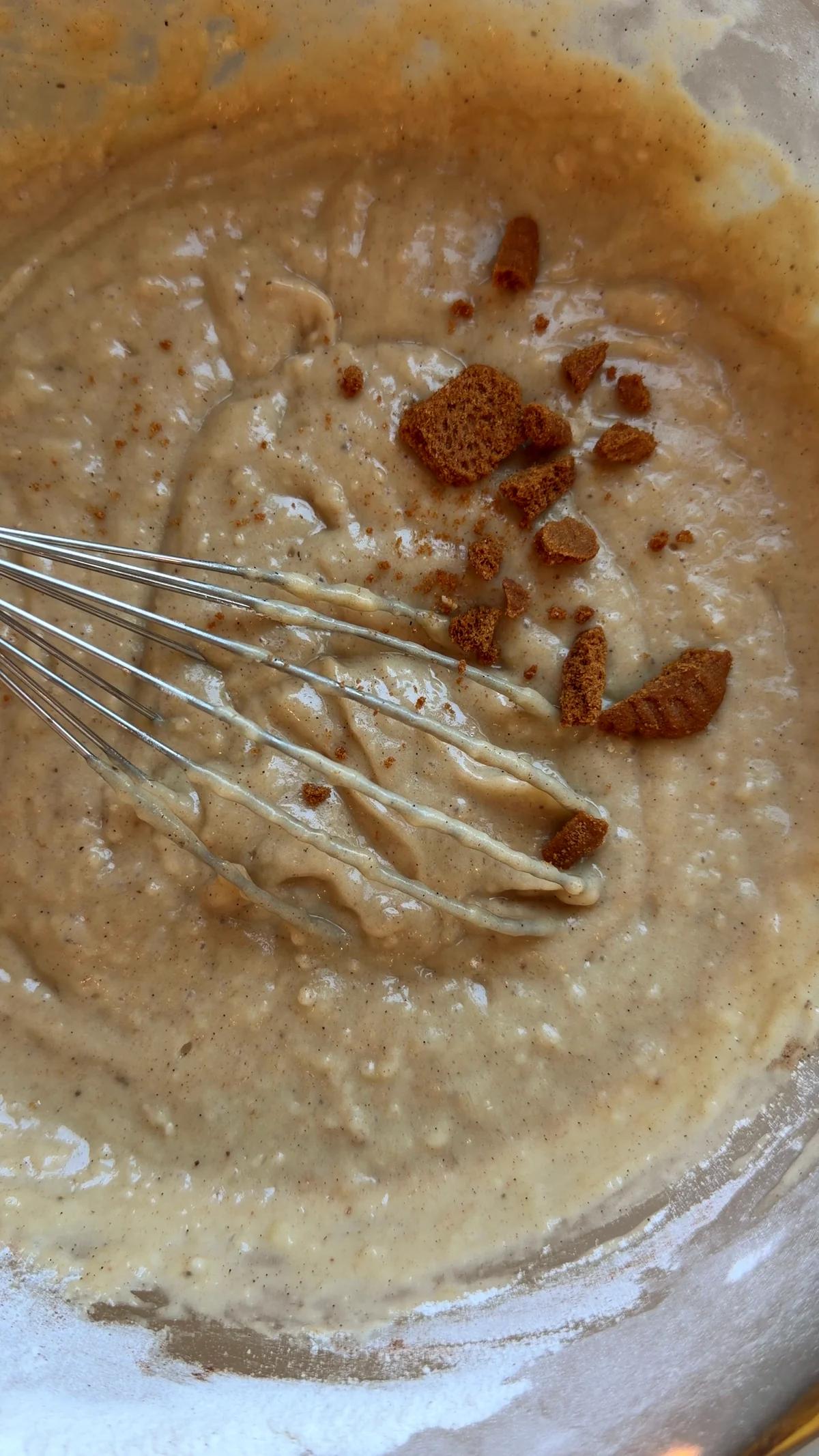
Fold the cookie pieces in after mixing the batter. 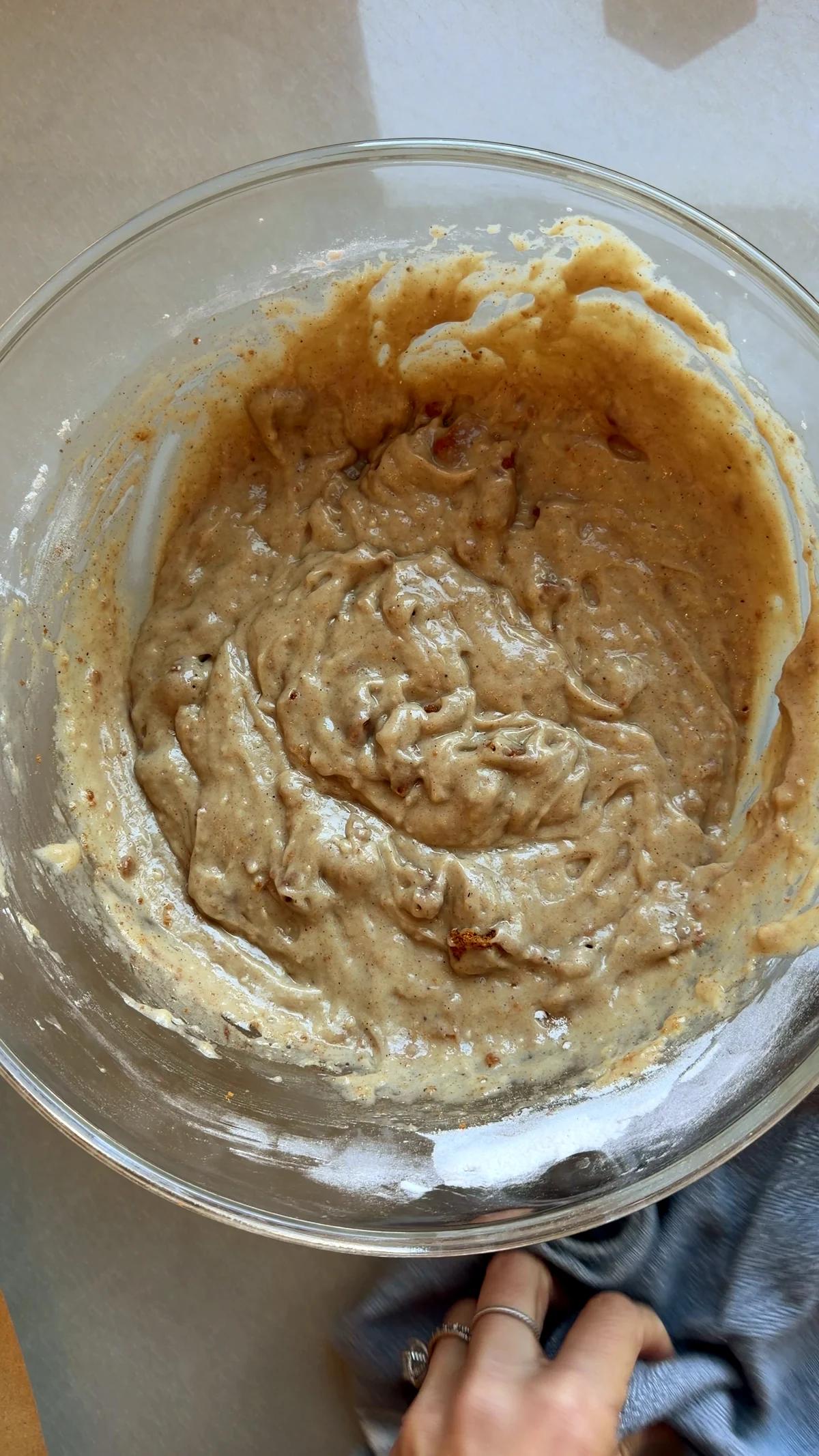
The finished batter is thick enough to spread in layers. Step 5
Start with batter and a little crumble
Spread a little over half the batter across the lined pan. Scatter one-quarter of the chilled crumble over it.
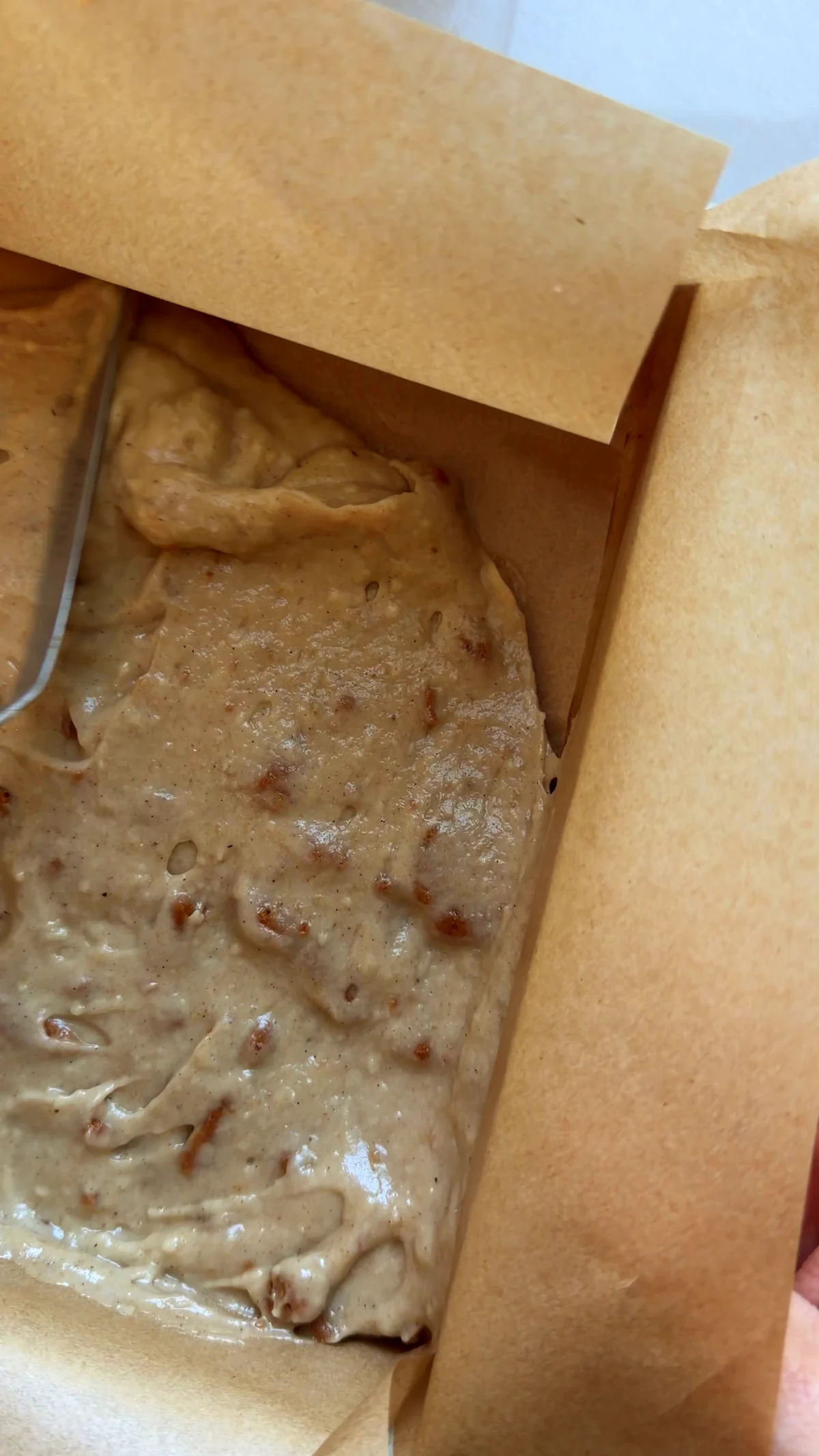
Spread a little over half the batter into the lined pan. 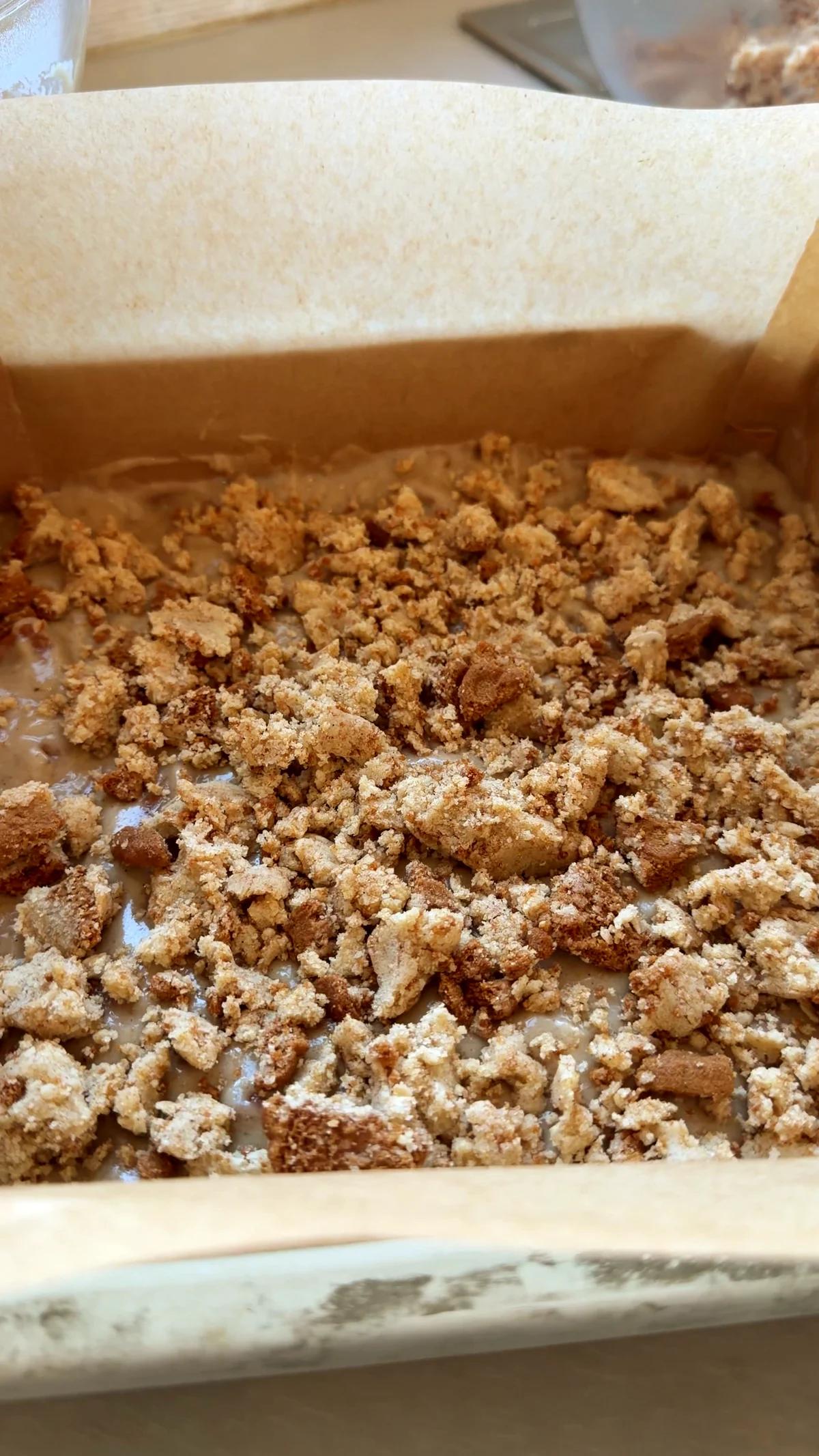
One-quarter of the crumble goes in the middle; save the rest for the top. Step 6
Add the Biscoff filling
Dot the cooled filling over the crumble in small spoonfuls, then gently spread it all the way to the sides of the pan. Those exposed edges let the filling caramelize visibly around the cake.
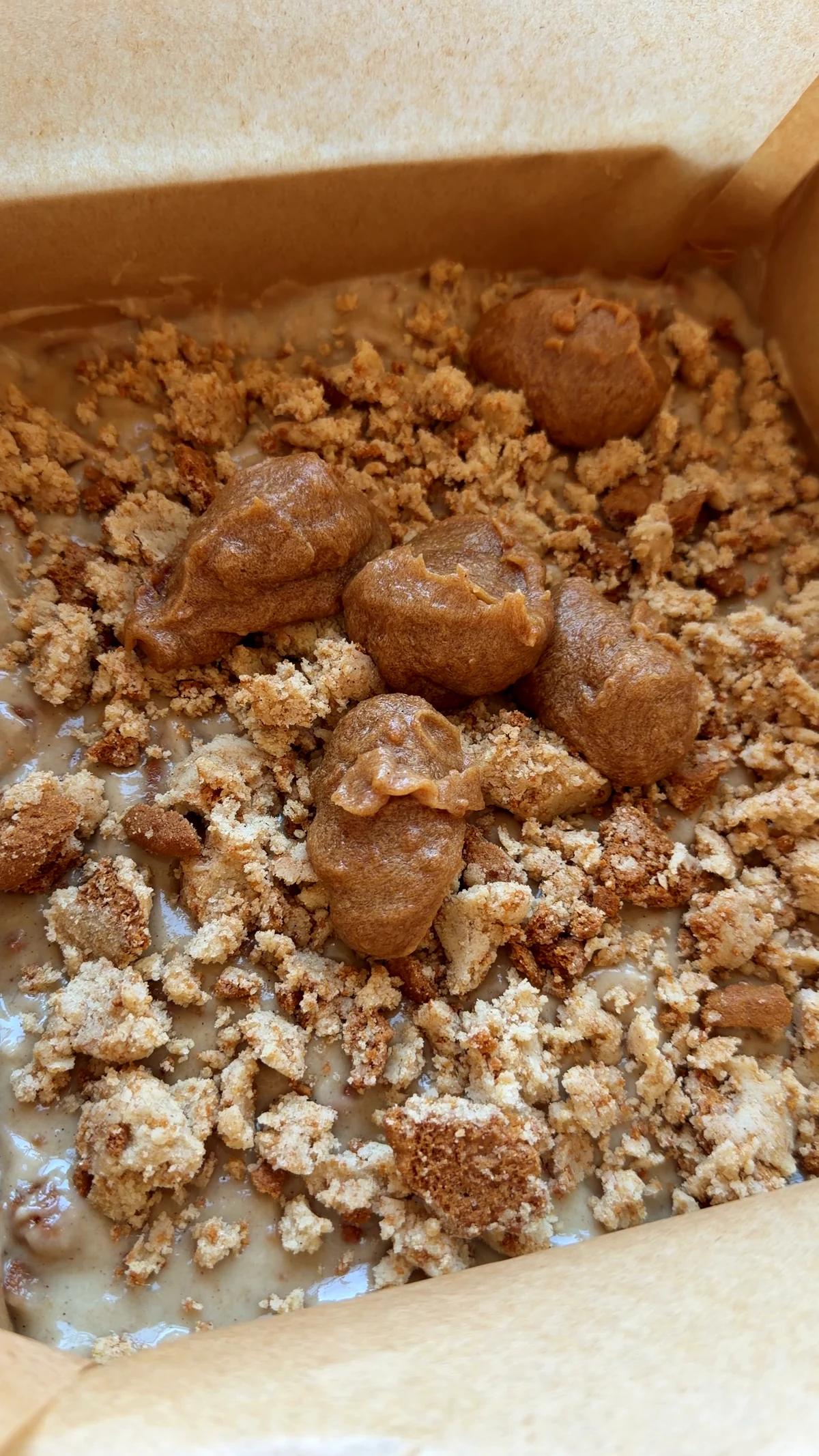
Small spoonfuls make the filling easier to spread gently. 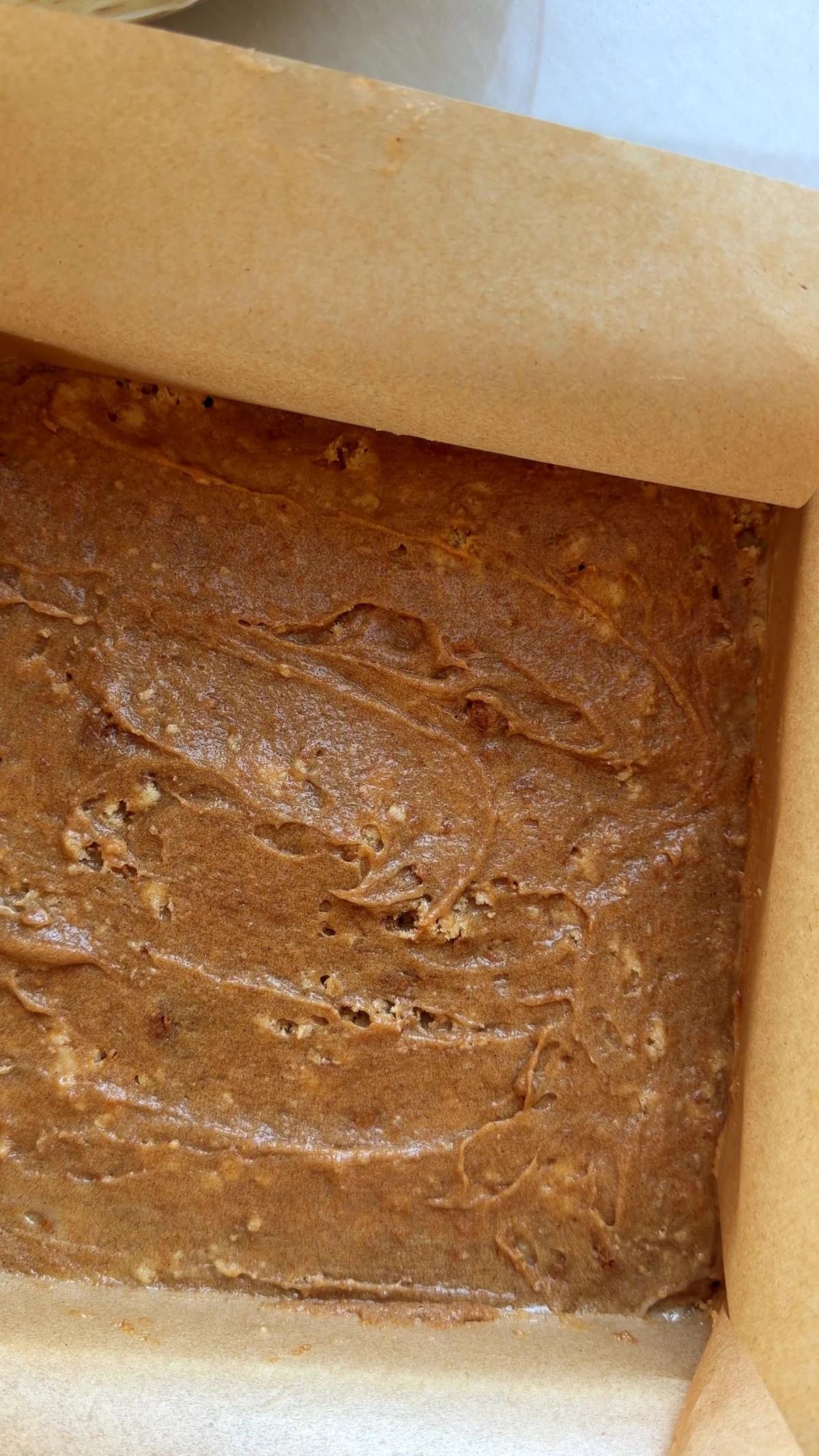
Gently connect the spoonfuls without stirring the layers together. Step 7
Cover with batter and crumble
Dollop the remaining batter over the filling, then gently join the spoonfuls. Scatter the remaining crumble across the top.
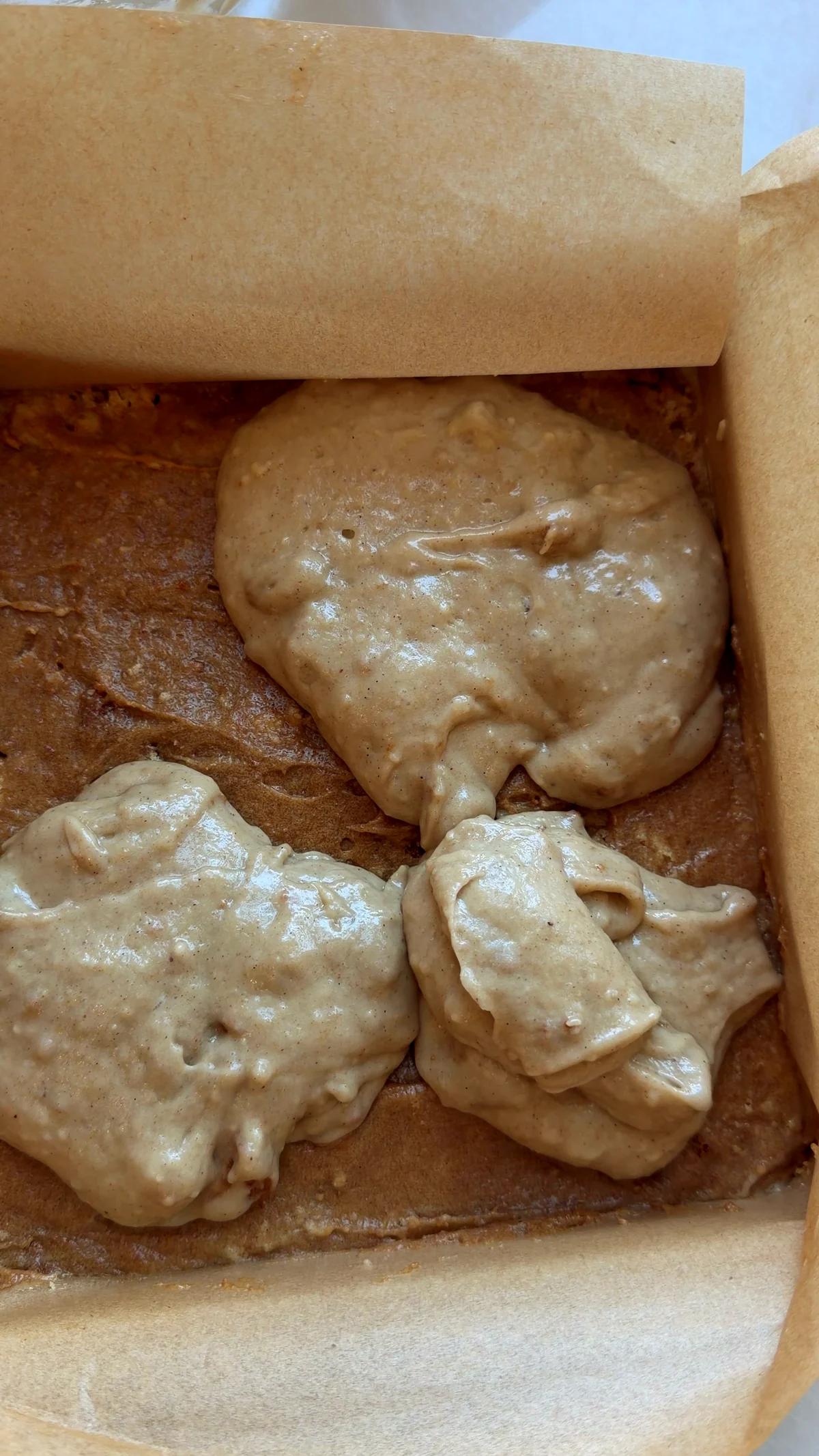
Add the remaining batter in separate dollops before spreading. 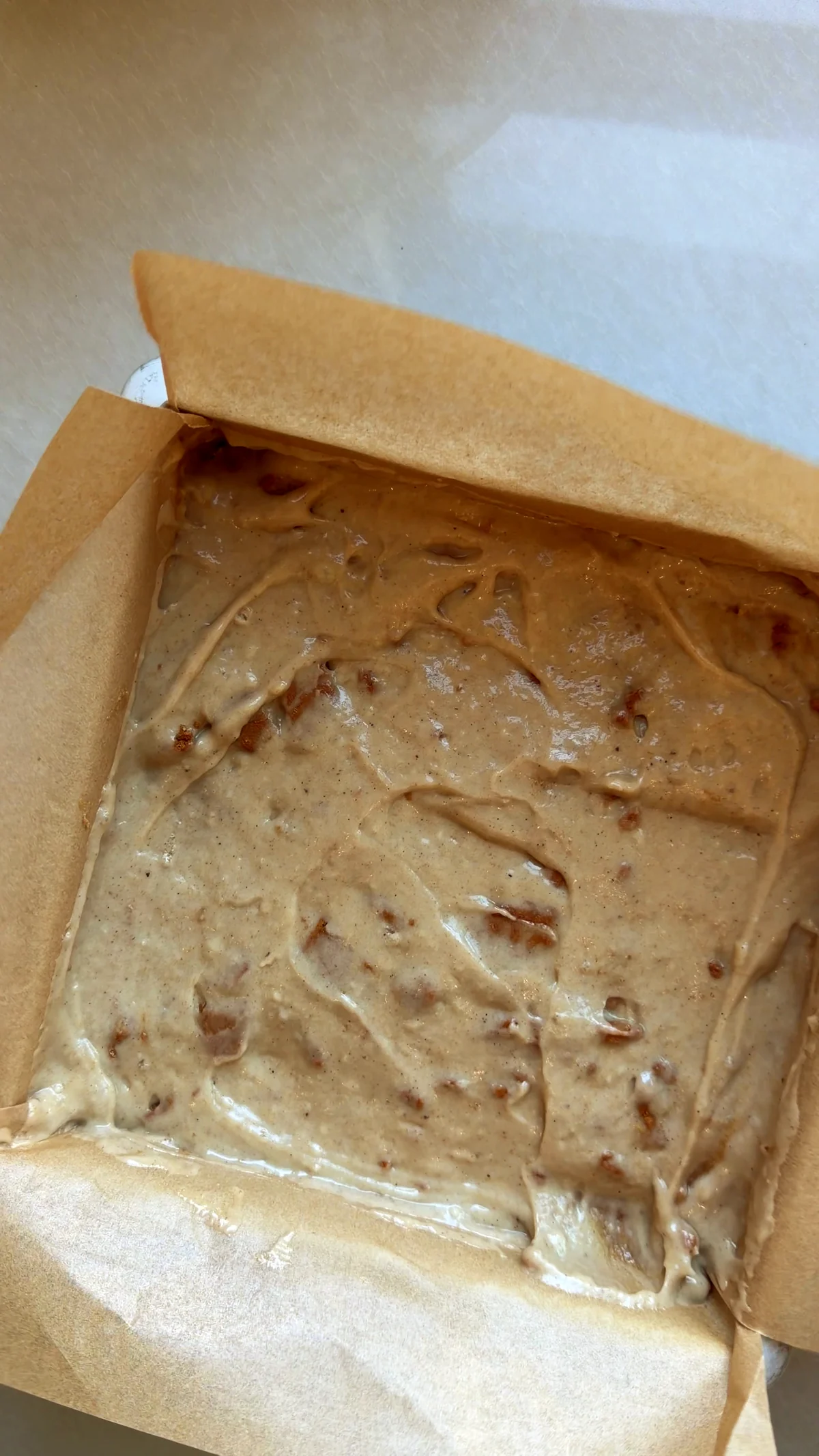
Connect the dollops with a light touch to cover the filling. 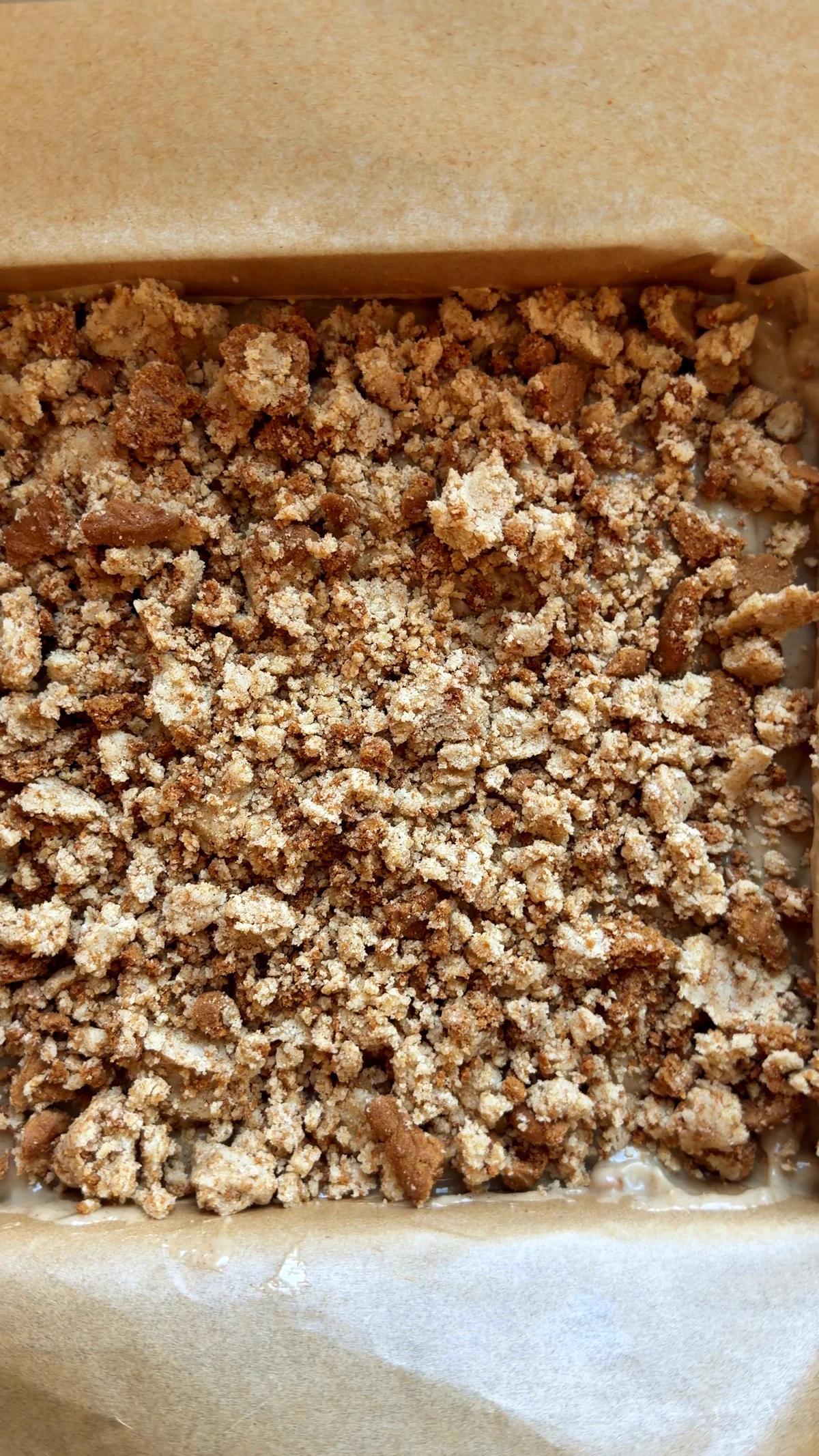
Cover the top with the remaining three-quarters of the crumble. Step 8
Check the cake with a thermometer
Mine reached 220°F during testing and stayed super moist, with a gooey but stable center. Check the cake near the center in more than one spot. A little filling on the probe tip can be normal; the cake itself should be set without wet batter.
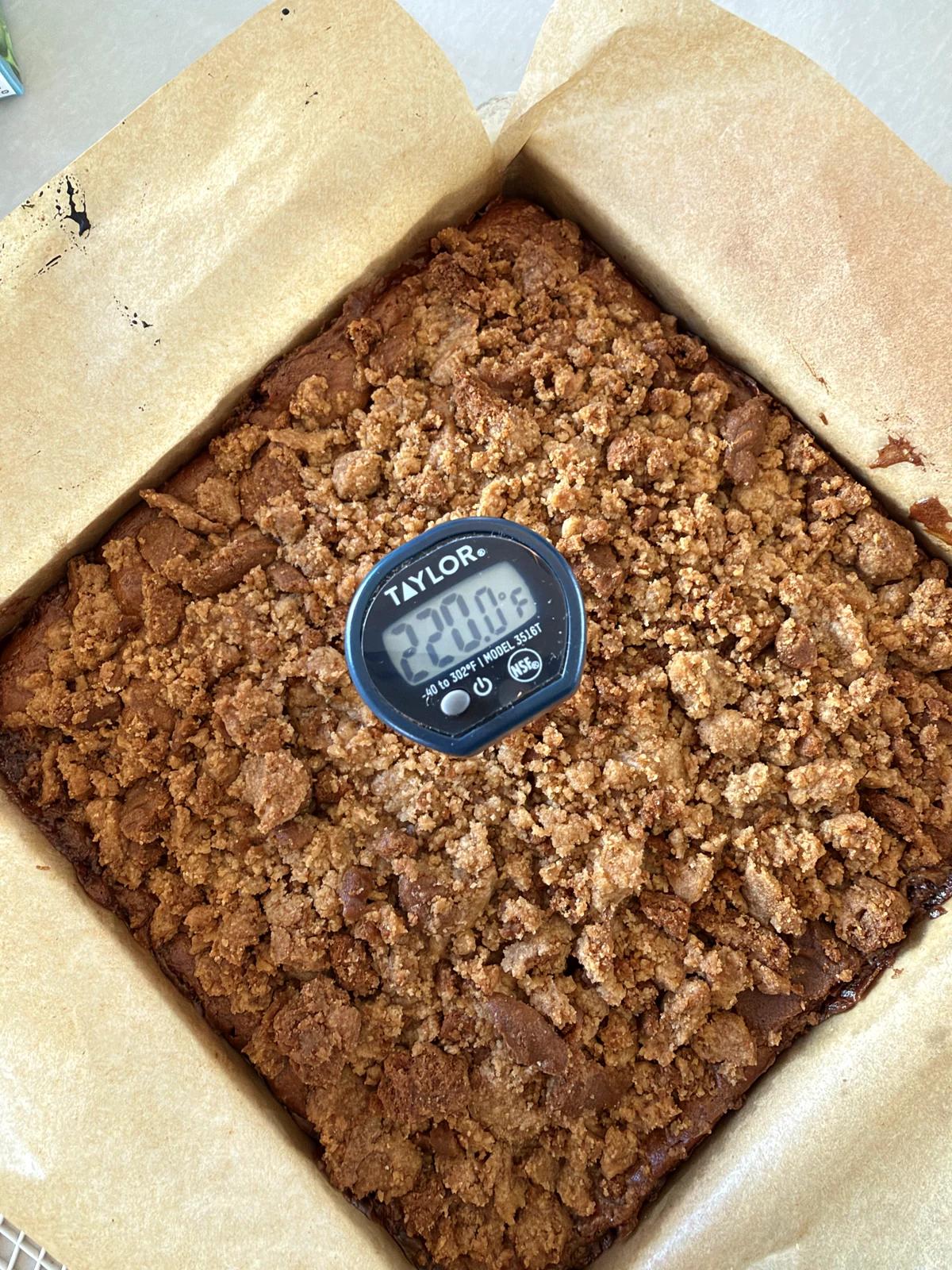
My tested cake reached 220°F and stayed super moist, with a gooey but stable center. Step 9
Glaze, let set and slice
Rest the cake until it is sturdy enough to lift, then let it cool completely. Spread a single layer of the thick Biscoff glaze over the top. Brush the sides with the remaining glaze, or thin that portion with milk for a lighter coating. Let the glaze settle before slicing.
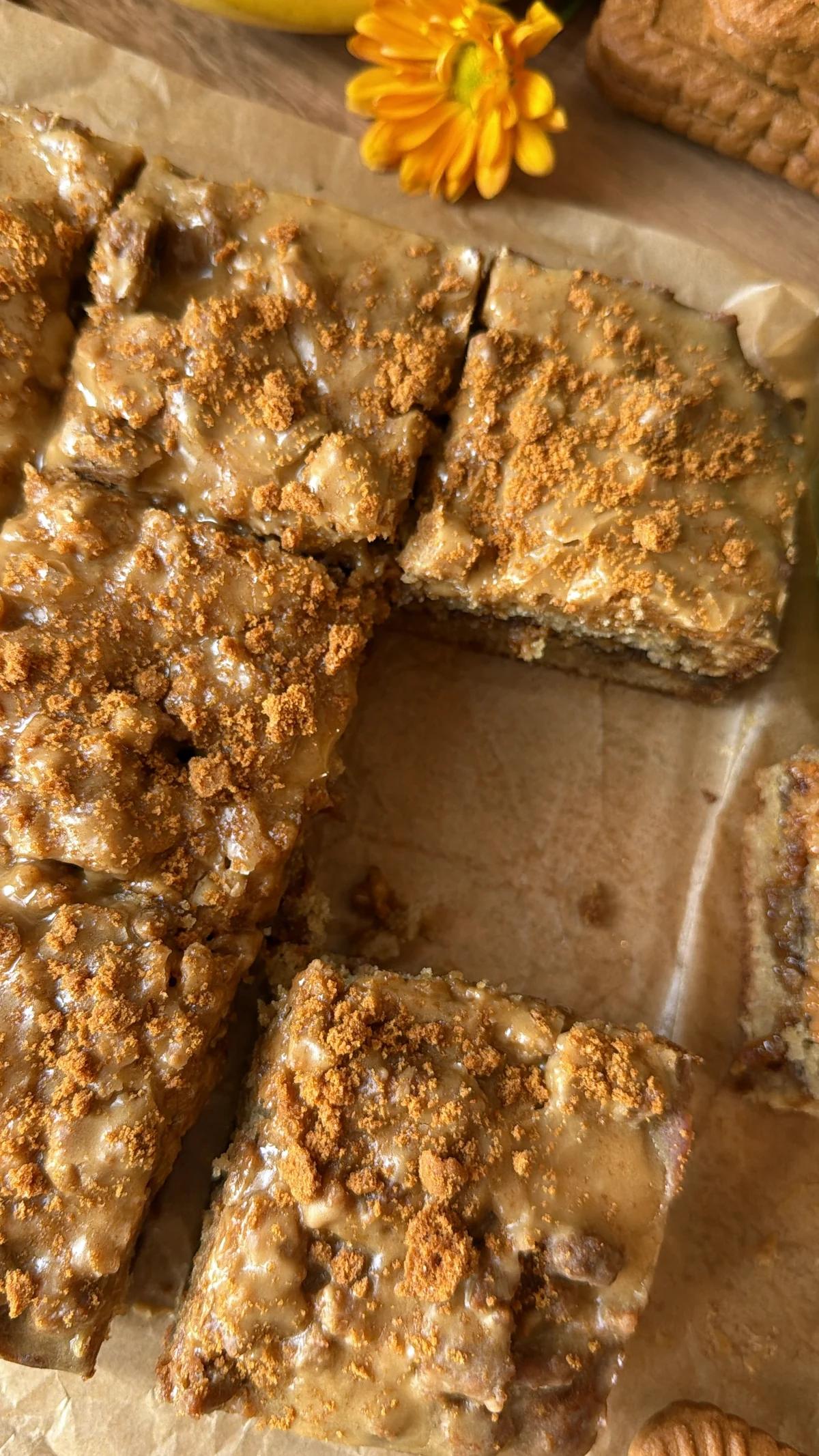
The glaze settles into the spaces between the Biscoff crumble. Let the cake cool and become sturdy before lifting out a slice. Step 10
The finished crumble and filling
These close views show the glazed crumble on top and the Biscoff filling through the middle of the banana cake.
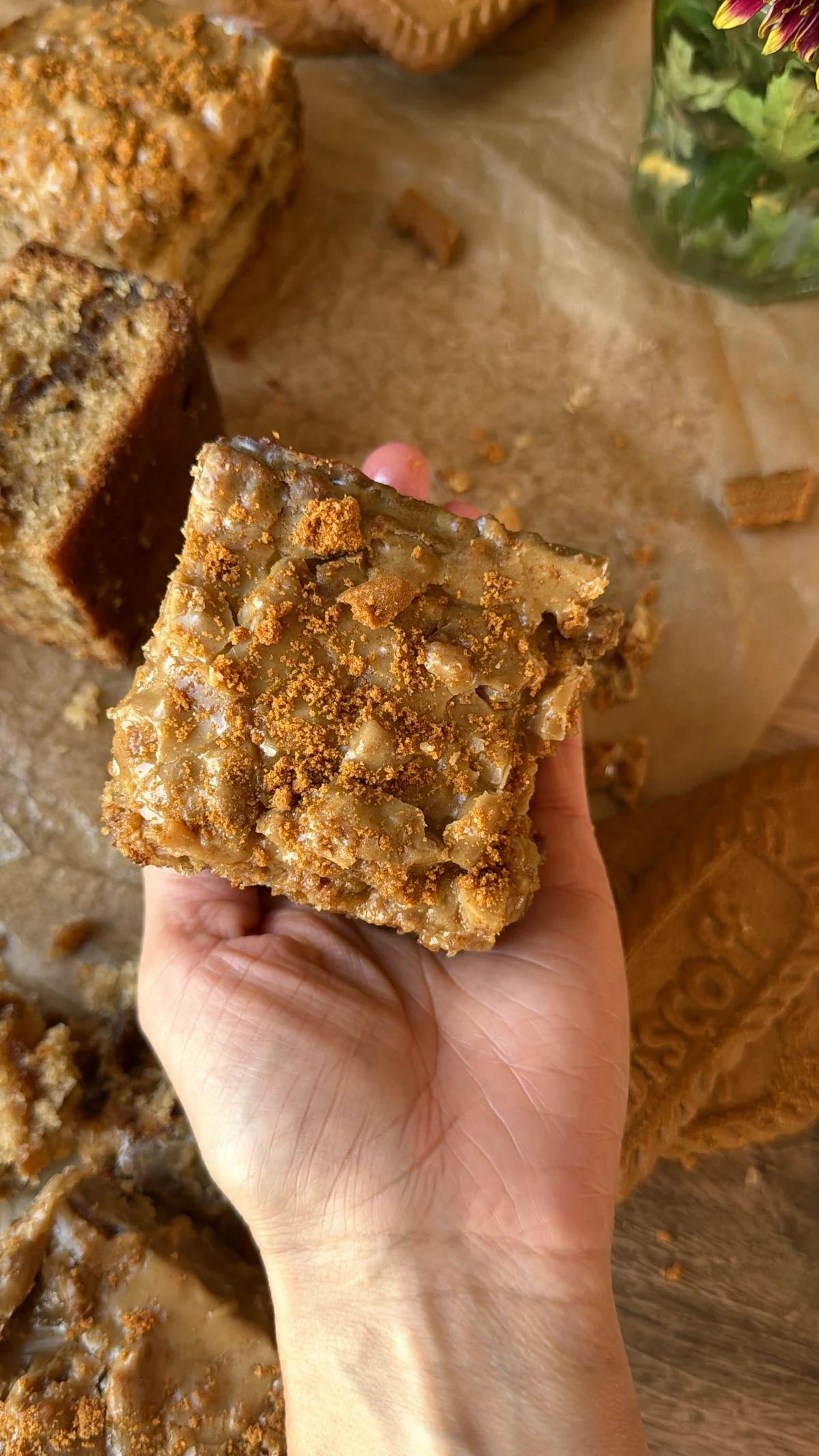
A close look at the glaze over the cookie crumble. 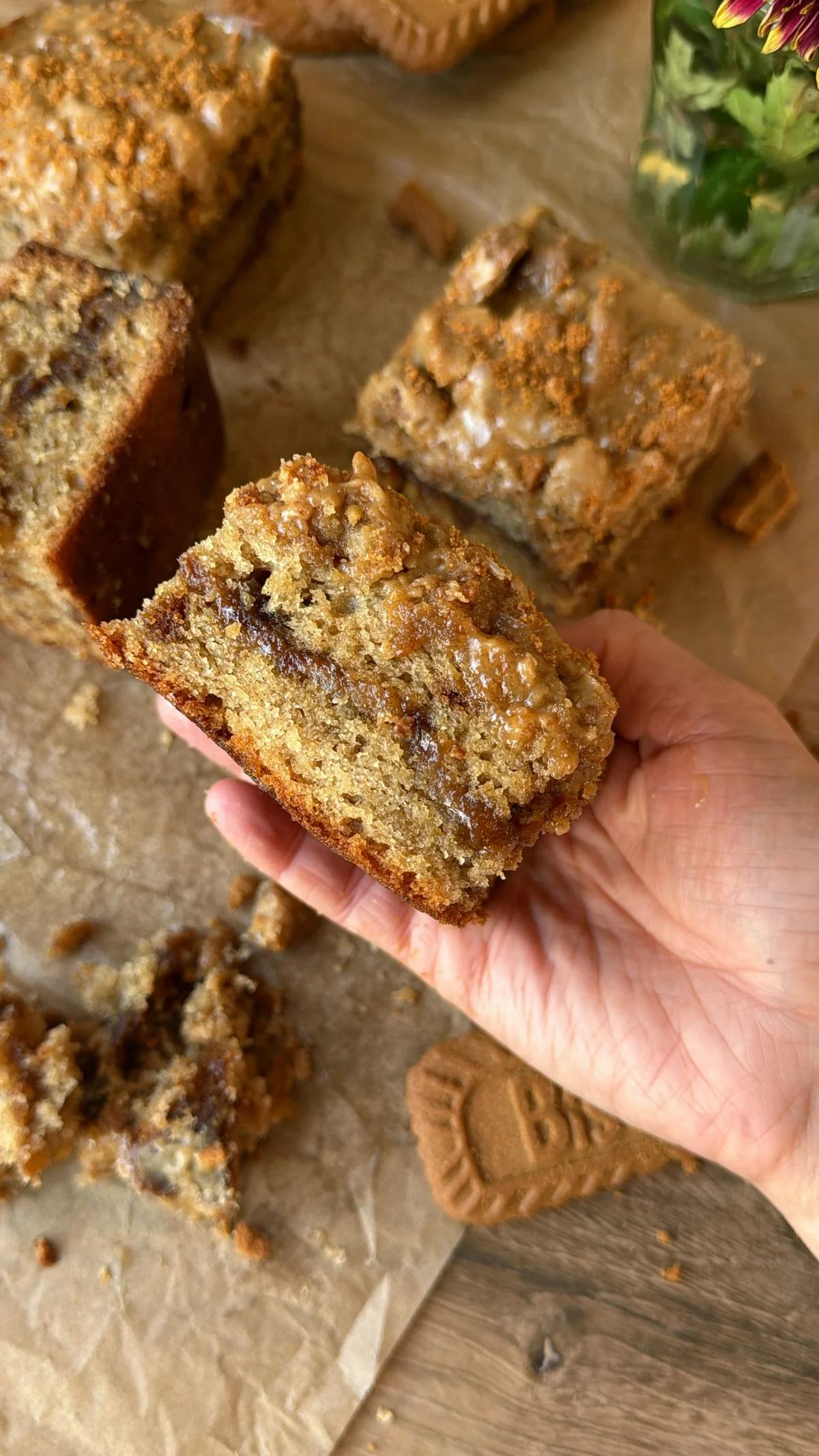
The Biscoff filling sits between the soft banana cake layers.
Small things that matter
Tips for the best cake
Chill the crumble while you prepare the filling and batter. Keep the middle and topping portions separate.
The foil-lined sheet pan goes on the rack below the cake to catch drips. A loose foil tent goes over the cake only once the crumble has browned enough.
Let the cake become sturdy before lifting it with the parchment. If it bends, lower it back into the pan and give it more time.
Troubleshooting
If This Happens
The crumble is golden but the cake needs more time
Loosely lay foil over the cake and keep baking, checking the center in 5-minute increments. The probe will pass through the crumble and filling. A little filling can cling to it; look for set cake without wet batter.
The cake bends when I lift it
Lower it back into the pan and let it rest longer. Use the parchment overhangs and support the base when lifting. Wait until the cake can hold its shape before moving it to the rack.
Keep it good
Storage
Fridge
Refrigerate cooled leftovers in an airtight container and use within 3 days.
Freezer
For longer storage, freeze the cake unglazed: cool completely, wrap individual slices tightly, and place in a freezer-safe container for up to 1 month. Thaw overnight in the refrigerator, then bring the slice to room temperature before adding fresh glaze. The crumble may soften after storage.
Recipe FAQ
Questions that come up
Which yogurt did you test for the dairy-free option?
I tested this with Forager Unsweetened Plain Greek Style Yogurt. You can also use regular dairy yogurt at the same listed amount and temperature. Greek or regular plain unsweetened yogurt is fine, including nonfat or full-fat - use what you have! See my dairy-free ingredient picks.
Do the cookies need to be ground the same way for every layer?
No. Roughly crush the cookies for the crumble and batter, but grind the filling cookies to a fine powder before weighing them. The cookie counts are estimates; weighing gives you the closest match to the recipe.
Can I use vanilla extract instead of vanilla bean paste?
Yes, vanilla extract can be substituted at the same listed amounts.
Where can I find the original banana coffee cake?
My Banana Fritter Coffee Cake has a cinnamon ribbon and a thin vanilla crackle glaze. Banana Fritter Coffee Cake
Should I weigh the ingredients or use volume measurements?
I strongly recommend weighing the ingredients in grams for the most reliable result. Volume measurements are included for convenience, but the amount in a cup can change depending on how an ingredient is filled, packed, or poured. These recipes are easy to follow, but their ratios are precise, so I cannot guarantee the exact same result when volume measurements are used. I still use teaspoons and tablespoons for small amounts like leaveners, salt, spices, and flavorings because those are the most practical measurements.
More coffee cakes to try
- Prep
- 30 min (estimated)
- Bake
- 65 min (tested; ovens vary)
- Total
- 3 hr or longer (estimated), including cooling and setting
- Yield
- One 9x9-inch cake | 9-12 slices
Measurement note
For the closest match to the recipe I tested, use grams. Volume measurements are included for convenience, but cups can vary, so I cannot guarantee the exact same result when measuring by volume.
Ingredients
Biscoff cinnamon crumble
- 115 g all-purpose flour115 g (3/4 cup + 3 tablespoons + 1 teaspoon) all-purpose flour
- 40 g brown sugar, packed40 g (3 tablespoons) brown sugar, packed
- 40 g granulated sugar40 g (3 tablespoons + 3/4 teaspoon) granulated sugar
- 1/2 teaspoon ground cinnamon1/2 teaspoon ground cinnamon
- 1/2 teaspoon fine sea salt1/2 teaspoon fine sea salt
- 85 g cold butter, cubed85 g (6 tablespoons) cold butter, cubed
- 1/2 teaspoon vanilla bean paste1/2 teaspoon vanilla bean paste
- 80 g Biscoff cookies (10 cookies), roughly crushed80 g Biscoff cookies (10 cookies), roughly crushed
Biscoff cookie filling
- 56 g butter56 g (1/4 cup) butter
- 70 g granulated sugar70 g (1/3 cup + 1 teaspoon) granulated sugar
- 30 g milk30 g (2 tablespoons) milk
- 60 g Biscoff cookies (8 cookies), finely powdered60 g Biscoff cookies (8 cookies), finely powdered
- 1 teaspoon vanilla bean paste1 teaspoon vanilla bean paste
- Small pinch fine sea saltSmall pinch fine sea salt
Banana cake
- 100 g brown sugar, packed100 g (7 tablespoons + 1 1/2 teaspoons) brown sugar, packed
- 90 g granulated sugar90 g (1/3 cup + 2 tablespoons) granulated sugar
- 120 g neutral oil120 g (1/2 cup + 2 teaspoons) neutral oil
- 200 g ripe banana, pureed without added liquid; weigh without peel200 g (3/4 cup + 2 tablespoons) ripe banana, pureed without added liquid; weigh without peel
- 120 g plain unsweetened Greek yogurt, room temperature120 g (1/2 cup + 1 teaspoon) plain unsweetened Greek yogurt, room temperature
- 105 g milk, room temperature105 g (7 tablespoons) milk, room temperature
- 1 tablespoon vanilla bean paste1 tablespoon vanilla bean paste
- 260 g all-purpose flour260 g (2 cups + 3 tablespoons) all-purpose flour
- 15 g cornstarch15 g (2 tablespoons + 1/2 teaspoon) cornstarch
- 1 3/4 teaspoons baking powder1 3/4 teaspoons baking powder
- 1/4 teaspoon baking soda1/4 teaspoon baking soda
- 3/4 teaspoon fine sea salt3/4 teaspoon fine sea salt
- 1/2 teaspoon ground cinnamon1/2 teaspoon ground cinnamon
- 1/4 teaspoon ground nutmeg1/4 teaspoon ground nutmeg
- 62 g Biscoff cookies (8 cookies), roughly crushed62 g Biscoff cookies (8 cookies), roughly crushed
Biscoff doughnut glaze
- 225 g powdered sugar, sifted225 g (1 3/4 cups + 2 tablespoons) powdered sugar, sifted
- 100 g smooth Biscoff spread100 g (1/3 cup + 1/2 teaspoon) smooth Biscoff spread
- 80 g milk, plus more as needed for your preferred glaze consistency80 g (1/3 cup) milk, plus more as needed for your preferred glaze consistency
- 1 teaspoon vanilla bean paste1 teaspoon vanilla bean paste
Pan used
One 9x9-inch light-colored metal pan, lined across the bottom and all four sides with two crossed sheets of parchment.
Instructions
- 1Heat the oven to 350°F (175°C). Grease a 9x9-inch light-colored metal pan. Line the bottom and all four sides with crossed sheets of parchment, leaving generous lifting overhangs.
- 2Mix the flour, both sugars, cinnamon, and salt. Rub in the cold butter and vanilla until the mixture holds when squeezed. Mix in the 80 g roughly crushed Biscoff and squeeze into clusters. Reserve 1/4 for the middle and 3/4 for the top; refrigerate both portions.
- 3Put the 56 g butter, 70 g granulated sugar, and 30 g milk in a large microwave-safe bowl. Heat in 20-30-second bursts, stirring thoroughly between each, until the butter melts and everything is evenly combined. Stir in the 60 g cookie powder, vanilla, and salt. Rest until cool and thick enough to spoon in small dollops.
- 4Puree the 200 g peeled banana without adding liquid. Whisk with both cake sugars, oil, yogurt, milk, and vanilla bean paste until evenly combined. Sift the flour, cornstarch, baking powder, baking soda, salt, cinnamon, and nutmeg over the wet mixture. Gently mix just until no dry streaks remain. Then gently fold in the 62 g (8 cookies) roughly crushed Biscoff cookies.
- 5Spread a little over half the batter into the pan. Scatter the middle 1/4 of the crumble over it. Dot the cooled filling evenly over the surface in small spoonfuls, then gently spread it all the way to the sides of the pan so the filling can caramelize visibly around the edges. Dollop the remaining batter over the filling and gently connect it. Cover with the remaining 3/4 of the crumble.
- 6Bake uncovered on the center rack, with a foil-lined sheet pan on the rack below to catch drips. Check the topping after the first 30 minutes and tent loosely with foil once it is golden enough; I tented mine at 30 minutes. Bake for 25 more minutes, then check the center - that is 55 minutes total from when the cake went into the oven. If it needs longer, continue in 5-minute increments. Mine took roughly 65 minutes total: 30 minutes uncovered, then another 35 minutes under foil.
- 7Check doneness with a thermometer and the cake texture: mine reached 220°F during testing and stayed super moist, with a gooey but stable center. Check near the center in two spots. The probe will pass through the crumble and filling. A small smear of Biscoff filling at the bottom of the probe can be normal when the cake is done. The cake itself should be set without a loose wobble or wet batter; continue baking if it is not.
- 8Rest in the pan for at least 30-35 minutes, allowing longer if fragile. Lift with the parchment while supporting the base; lower it back if it bends. Transfer to a rack, peel back the side parchment, and cool completely. Once sturdy, support the base with wide spatulas while removing the bottom parchment.
- 9Make the Biscoff glaze: gently warm the Biscoff spread just until soft enough to whisk. Whisk with the powdered sugar, vanilla bean paste, and 80 g milk until smooth. This makes a relatively thick glaze. Set the cooled cake on a rack over a tray and spread a single layer over the top. For more Biscoff flavor, brush the sides with the remaining thick glaze. For thinner sides, add milk a little at a time to the reserved glaze, then brush on a very thin layer. If you prefer a lighter coating all over, thin the whole batch with extra milk before glazing. You may not need all the glaze.
- 10Let the glaze settle before slicing. Refrigerate briefly if needed to firm the cake, and refrigerate covered leftovers once cool.
Helpful notes
- I've made this with bananas that weren't super ripe, and it turned out just fine! No need to wait for them to get extra spotty or bake them first. Just go for it!
- 220°F is on the higher side for baked goods, but it was the sweet spot when I tested this cake! It stayed super moist, and the center was gooey but held its shape. I recommend using a thermometer for reassurance, because the filling can make a tester a little confusing.
- A little paste at the bottom of your tester is usually the Biscoff filling, and that can be normal when this cake is done. Check near the center in a second spot, too - the probe will pass through the crumble and filling. You want set cake with moist crumbs, rather than a heavy coating of wet batter. Use those texture cues alongside the temperature.
- I love a thick layer of Biscoff glaze on top! If you are a Biscoff lover too, use the rest at the same consistency to brush the sides. Or glaze the top, then thin the remaining glaze with milk for a very light coating on the sides. For less glaze overall, add a little more milk to the whole batch until it reaches the consistency you like. I have tried these options - it is purely preference!

Meet the baker
Angela Heckler
Angela Heckler is the recipe developer, baker, and photographer behind Obsessed Cakes. Her Old-Fashioned Donut Loaf series is a growing collection of cake-donut-inspired loaves with soft, deeply moist crumbs, buttery streusel, and crackly glaze. Angela develops and tests every recipe in her Arizona kitchen. Follow Obsessed Cakes on Instagram, TikTok, and YouTube.
Made it? Tell us.
Ratings and reviews
Be the first to rate this recipe.
No reviews yet.
Make the recipe, leave a rating, and share how it turned out.Did you make this?
Share your bake on Instagram - tag @obsessedwithcashews and use #obsessedcakes.