Baking notes · Angela Heckler
How to Get That Thin Fritter Glaze
A light coating, glazed sides, and time to set make the finish on my fritter cakes and donut loaves.
Start with the glaze in your recipe
Whisk until smooth. The glaze should pour in a thin ribbon rather than drop off the whisk in a heavy mound. Use the milk amount and adjustments in the individual recipe; the same thickness is not a reason to give every glaze the same formula.
Set the cake on a wire rack over a tray so extra glaze can drip away. Follow the recipe's cooling instructions first. My original donut loaf is glazed while warm but no longer hot; a hot loaf can absorb the glaze before a shell forms.
Give the sides some attention
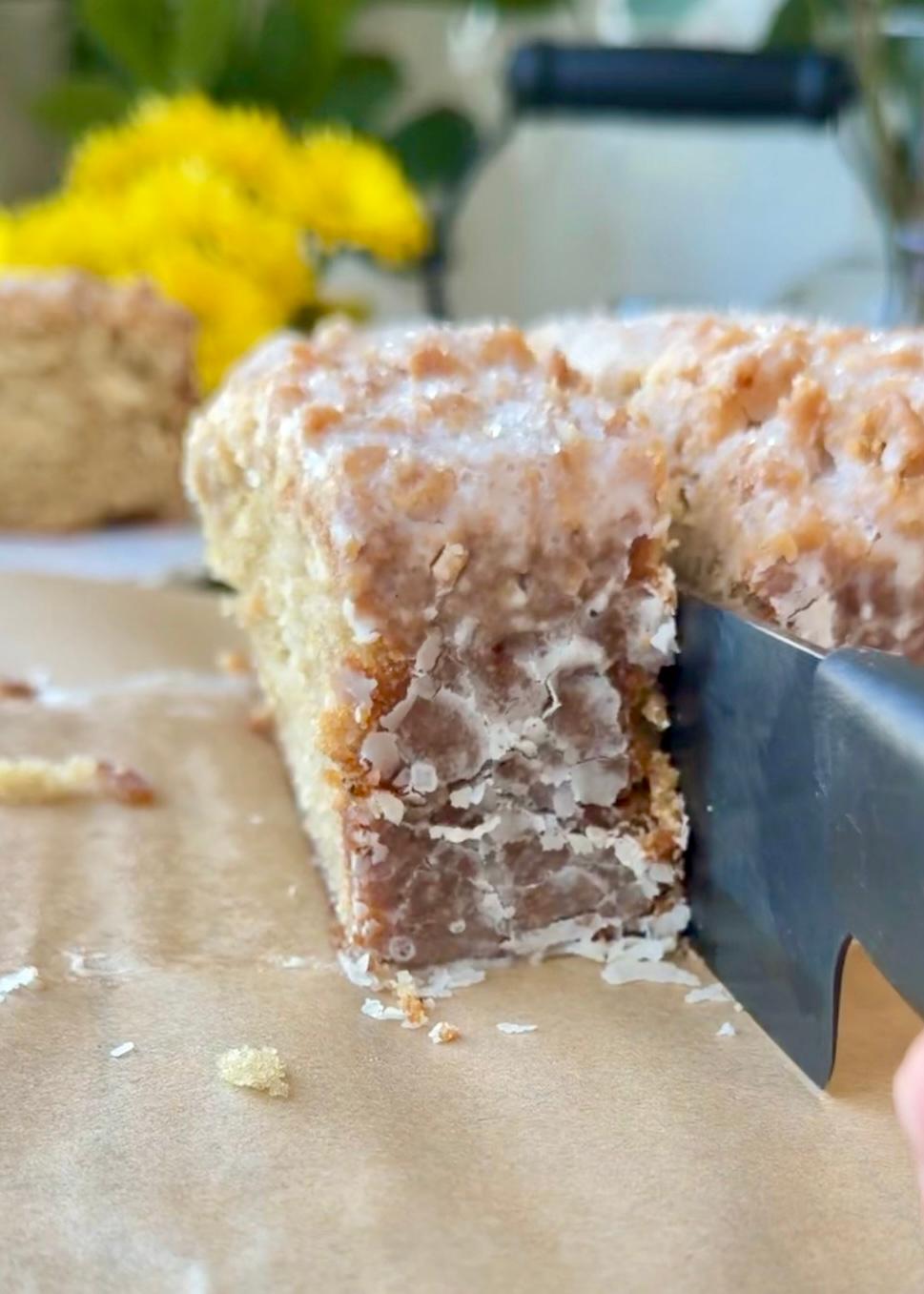
The glaze is part of the fritter finish, including those caramelized edges. For a lighter coating, drizzle a little over the top and brush a thin layer over the sides. You do not need a thick white blanket to get that effect.
Let extra glaze drain onto the tray. If it collects on top, gently tilt the cake only once it is sturdy and supported so the excess can run off. A fragile, freshly baked cake needs more resting time before handling.
Let the coating set before you slice
Wait until the glaze is completely set. That thin shell is part of the bite, and cutting too early loses it.
For freezer prep, use the individual recipe's storage directions. The gingerbread and maple fritter cakes are frozen without glaze, thawed overnight in the refrigerator while wrapped, and brought to room temperature before unwrapping and glazing.