Banana & Graham Cracker Cookie Dough Cheesecake Cake
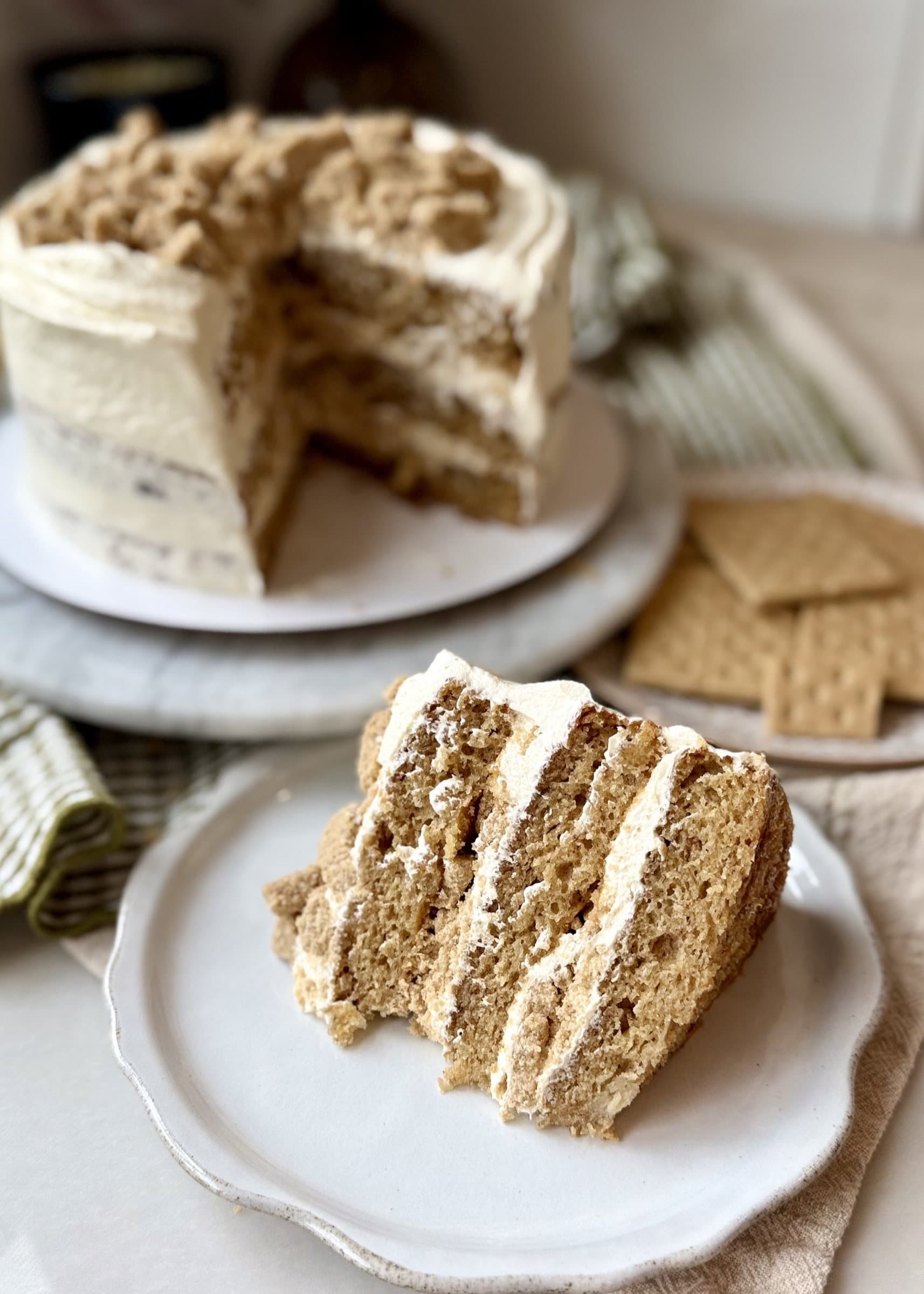
Be the first to reviewThis cake gives the graham cracker its own thick, chewy place between the layers instead of letting it disappear into the background. The soft banana cake and cool cheesecake frosting balance all that buttery, toasted flavor.
The cheesecake frosting is made without butter, so it stays especially creamy and gives the cake a true cheesecake-like finish. It is also more delicate than a traditional buttercream, which means temperature matters: chill the frosting until firm, work efficiently while assembling, and return both the frosting and cake to the refrigerator whenever they begin to soften.
If this is your first filled layer cake, use a conservative amount of cookie dough and frosting between the layers. You will still get every flavor in each bite, with a little more insurance against shifting or collapsing.
Save this recipe
Want to save this recipe for later?
Enter your email and I’ll send it to your inbox.
Graham Cracker Cookie Dough Deserves More Love
Whenever I eat cheesecake, I always wish there were more graham cracker crust. I cannot get enough of that buttery flavor and texture, and the ratio has always felt a little off to me. For this cake, I wanted the graham cracker to get real attention instead of disappearing into a thin crust beneath all the other layers.
I considered using a traditional graham crust between the cake layers, but I worried it would soften and get lost. Maybe I will experiment with that one day. This time, my mind went straight to cookie dough: everyone loves it, its chew holds up, and it already has the buttery quality I wanted. Turning graham crackers into a cookie-dough layer let their light honey and brown sugar flavor stand on its own rather than feeling like an afterthought.
Once I had the graham cracker cookie dough where I wanted it, the cake needed a frosting that could match it. I wanted the cultured tang and subtle savory depth we associate with cream cheese, but I did not want buttercream with a little cream cheese flavor. I wanted pure cheesecake delivery.
Creating cheesecake frostings is one of my favorite challenges because I loved cheesecake growing up. My goal is always for someone who normally eats dairy to take a bite without feeling that anything is missing or noticeably different. The soft banana cake is the perfect match for the graham cracker's honey and brown sugar notes, while the bright, velvety cheesecake frosting balances all that buttery richness. Together, the three layers make every bite as dreamy as I hoped it would be.
Ingredient notes
Key ingredients
Very ripe bananas
Use deeply speckled, fragrant bananas and mash them until smooth. Their moisture, sweetness, and concentrated banana flavor form the backbone of the cake layers.
Graham cracker crumbs
Grind the graham crackers finely so the cookie dough holds together without large, dry crumbs.
Cream cheese
Firm block-style cream cheese gives the frosting enough body to support the cake. Nutritional yeast adds a subtle baked note, while a tiny amount of mild miso makes the cheesecake flavor feel fuller.
Lemon juice
A small amount brightens the frosting and adds familiar cheesecake tang. Taste the cream cheese first and leave it out if the frosting is already tangy enough.
Brands I used for this recipe
These are preferences, not requirements. If you choose the non-dairy route, these are the products I test with. Dairy equivalents can be used at the same listed amounts and temperatures.
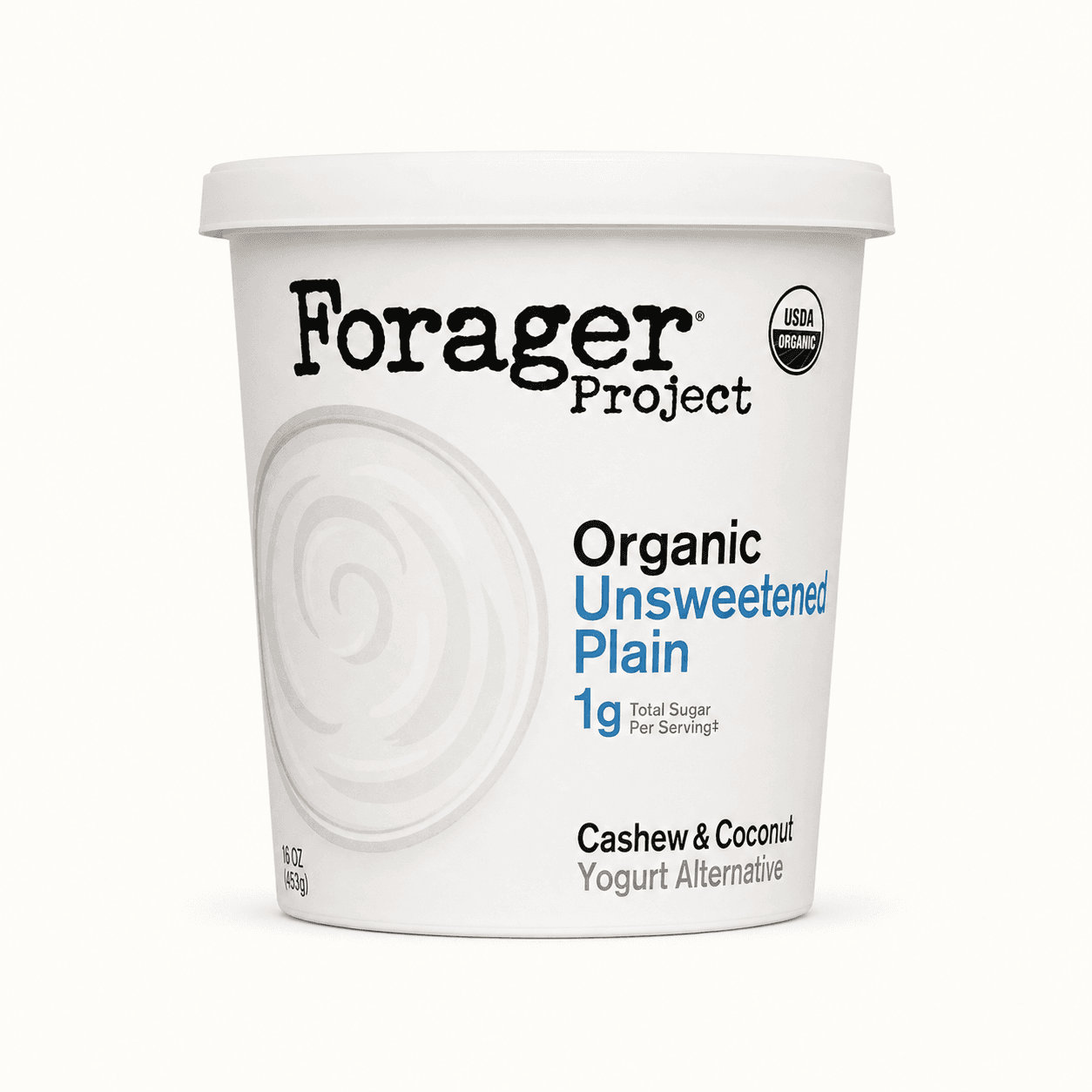
Forager Unsweetened Plain Yogurt
Plain unsweetened yogurt adds moisture, acidity, and body so the crumb bakes up tender without tasting tangy.
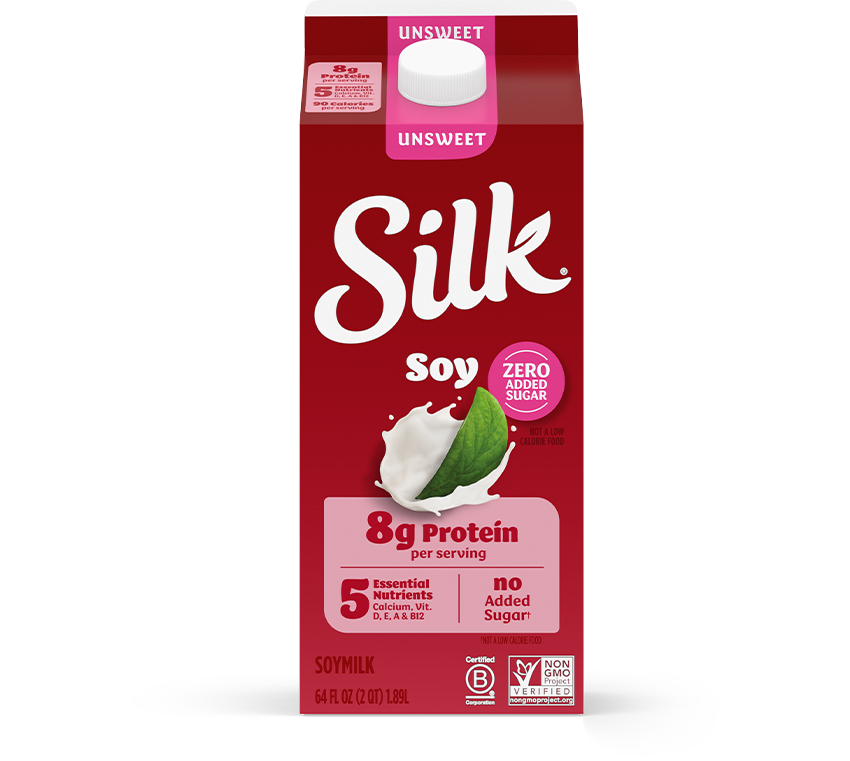
Silk Original Unsweet
Milk affects how smoothly a batter, filling, or frosting comes together. Soy milk and Ripple tend to emulsify well because their protein and fat help create a creamy, cohesive finish.
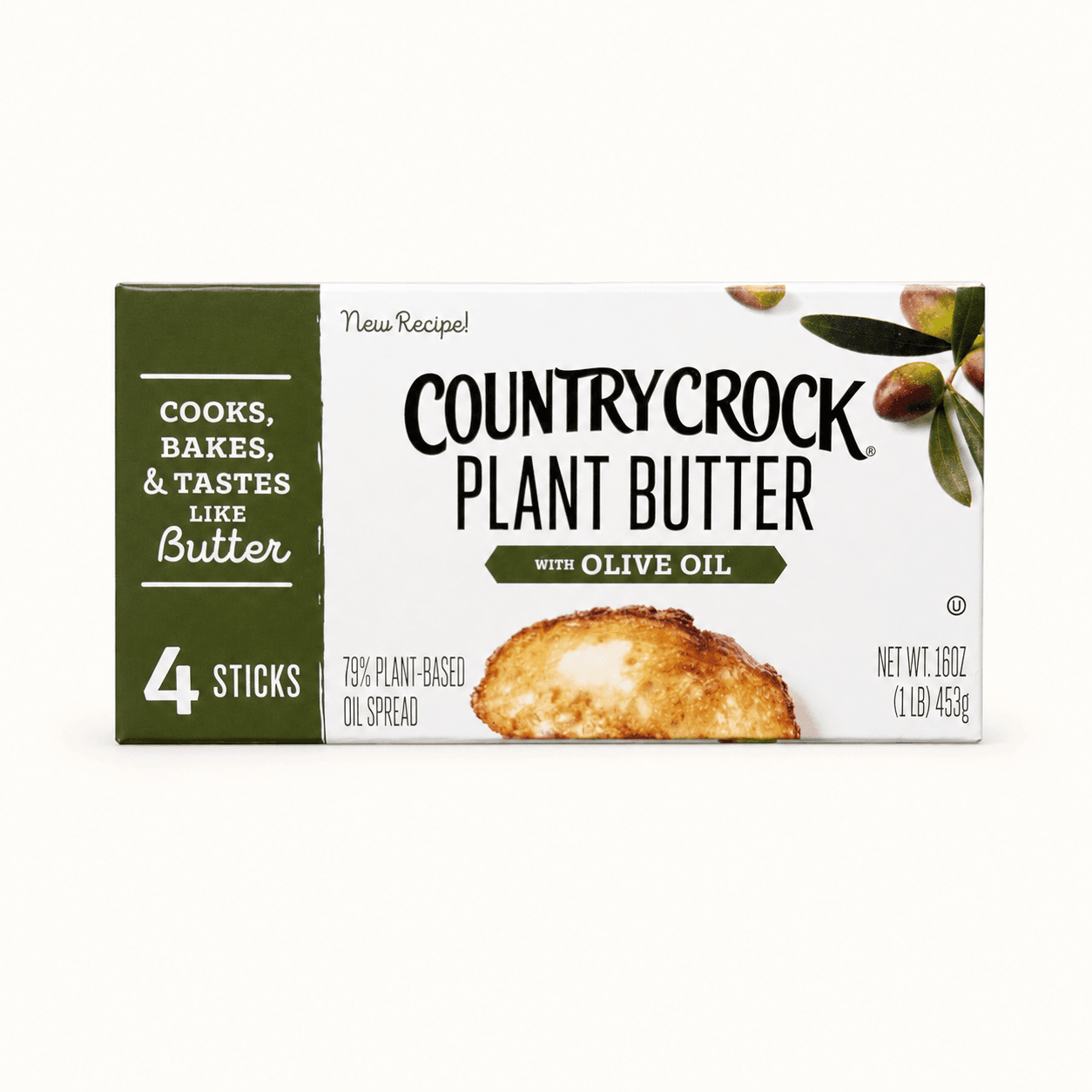
Country Crock Plant Butter Sticks
Use butter sticks for buttercream and fillings that need to hold their shape.

Philadelphia Plant-Based Cream Cheese
Philadelphia Plant-Based Cream Cheese is my dependable choice when cream cheese is used in a cake batter, frosting, or icing.
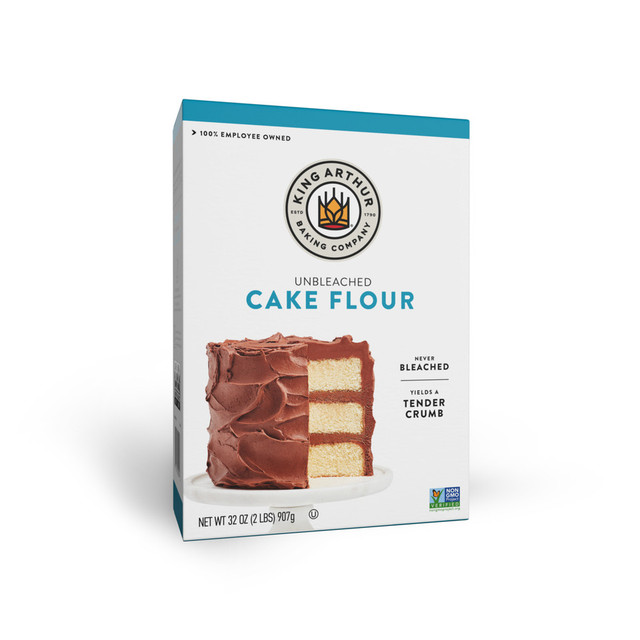
King Arthur Unbleached Cake Flour
I use King Arthur Unbleached Cake Flour for this recipe.

Rising Star Baking Supply Vanilla Bean Paste
I use Rising Star Baking Supply Vanilla Bean Paste for this recipe.
Testing notes
Why this works
Why the frosting stays cold
A butter-free cream cheese frosting softens quickly as it warms. Refrigerate it until firm before assembly, work with purpose, and return the bowl and cake to the refrigerator whenever the frosting starts to loosen.
How much filling to use
Keep each filling layer even and modest, especially if you are new to tall cakes. Overfilling adds pressure between the layers and makes the stack more likely to shift or collapse.
Flour for the unbaked cookie dough
Heat-treat the flour to 165°F, then let it cool completely before making the cookie dough.
Why the finished cake chills
A thorough chill firms the frosting and cookie-dough layers, helps the cake settle, and makes the first slices much cleaner.
Step by step
How It All Comes Together
Step 1
Start with cold cake and firm frosting
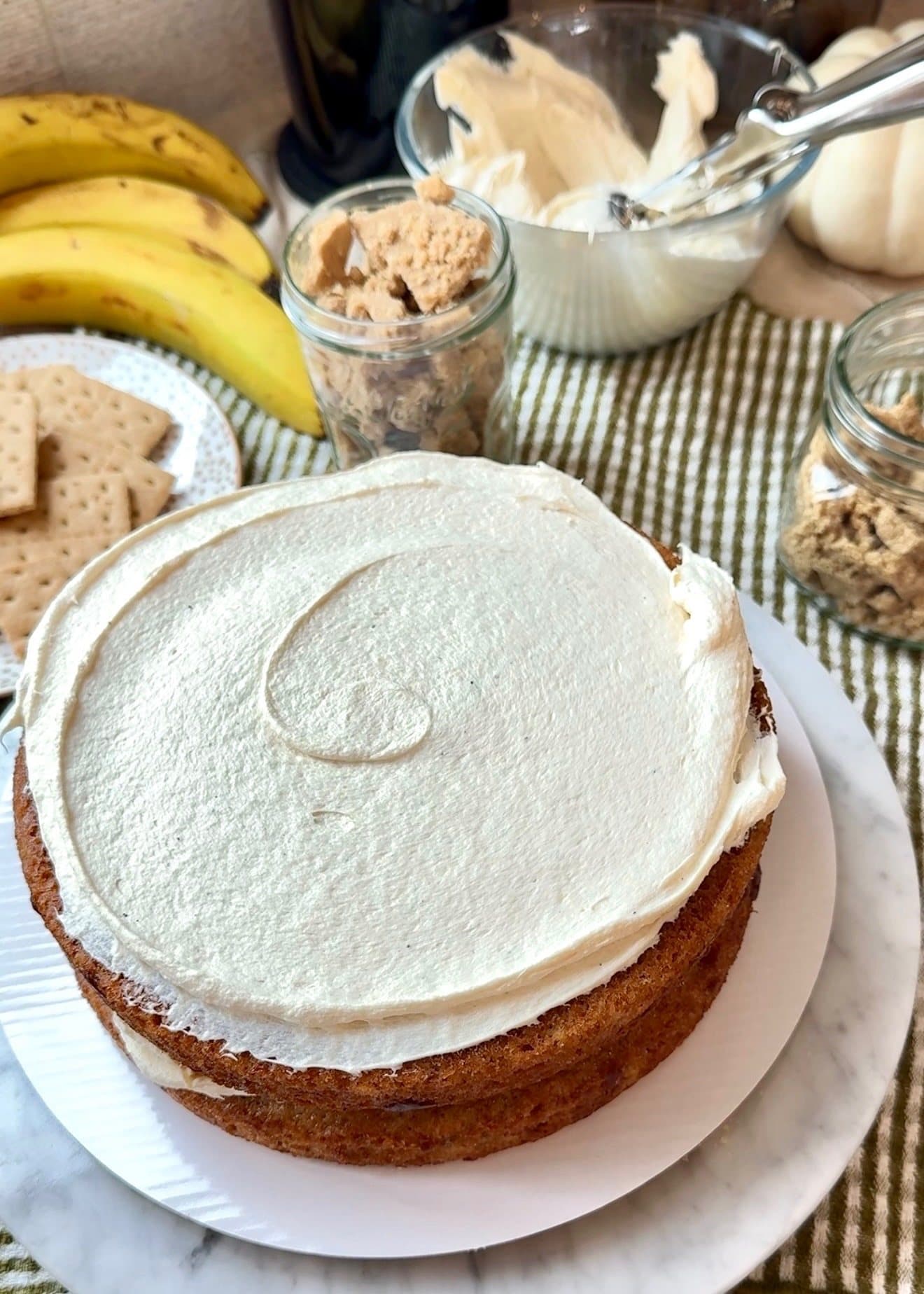
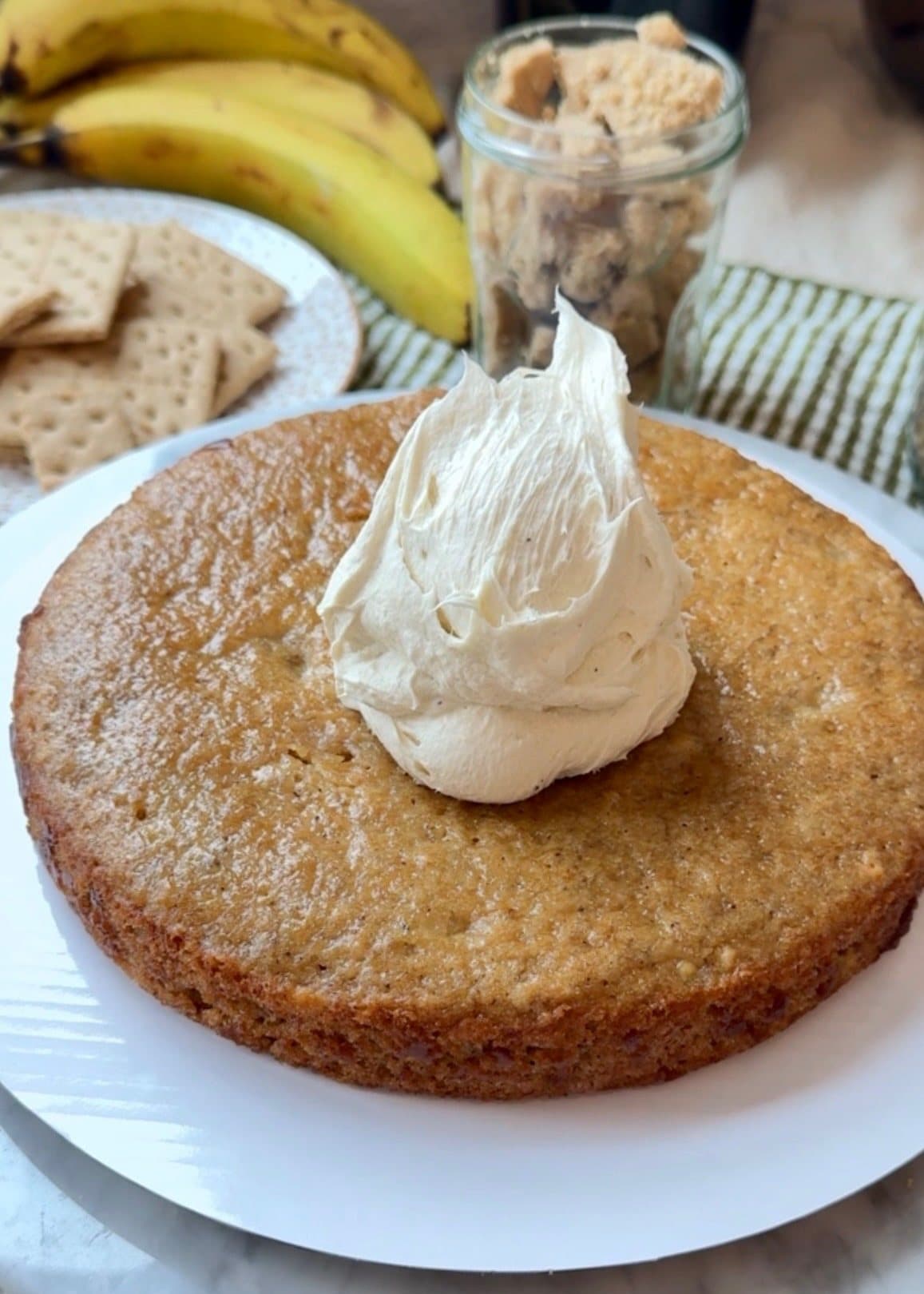
Place the first cold banana cake layer on a cake board and spread an even layer of chilled cheesecake frosting over the top. Return the frosting to the refrigerator if it starts to soften.
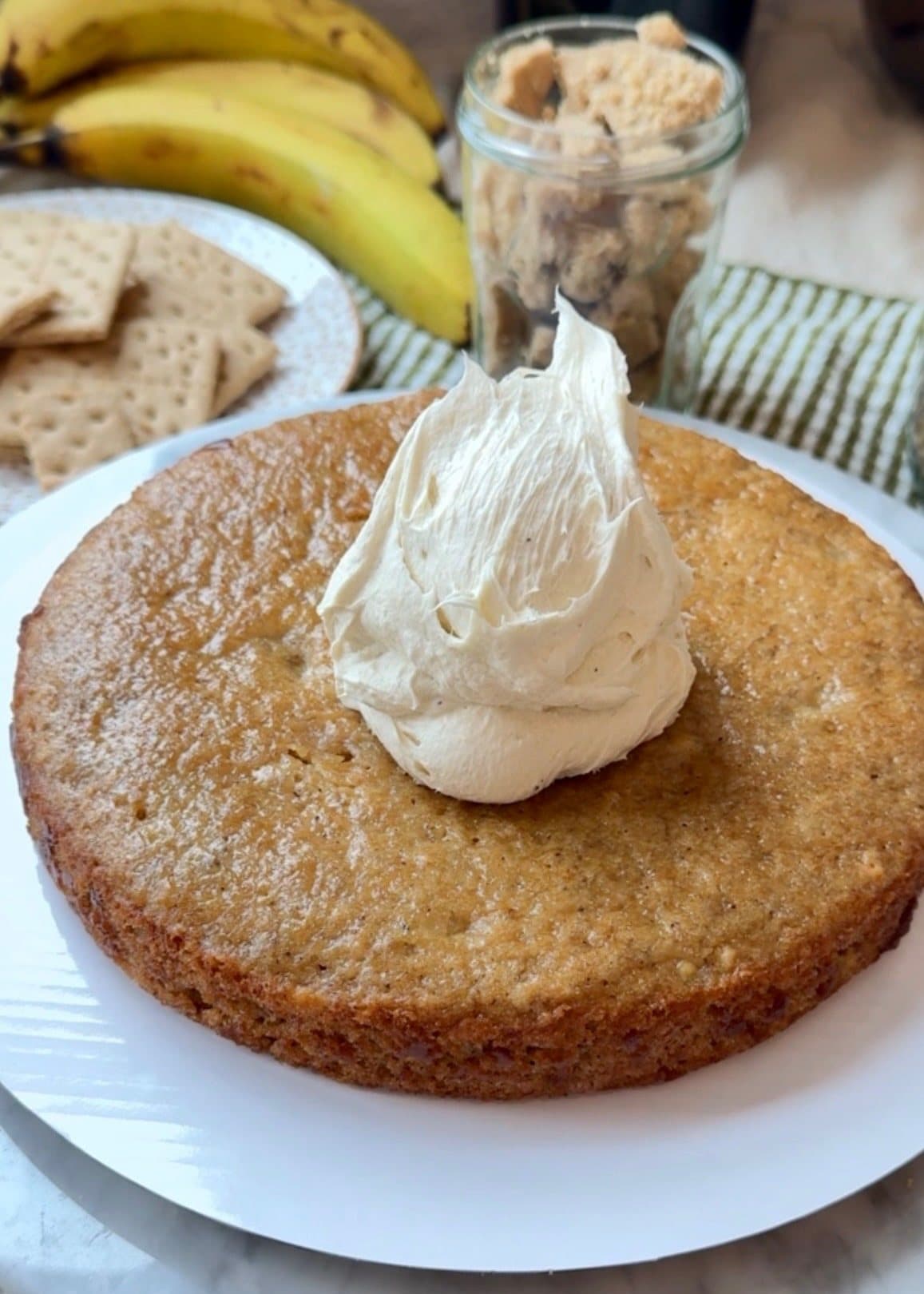
Spread the frosting over the cold cake before adding the cookie dough. Step 2
Add the first cookie-dough layer
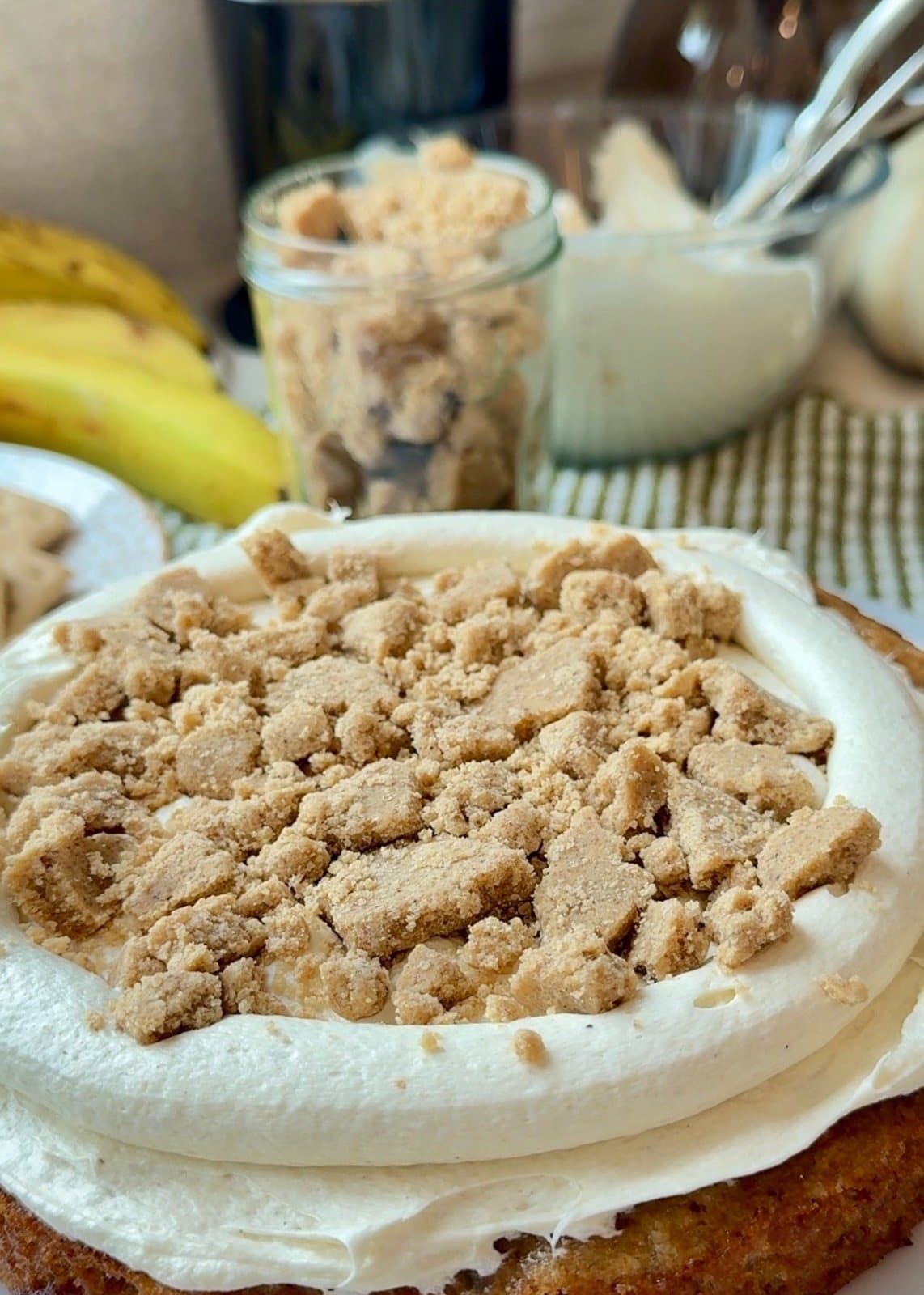
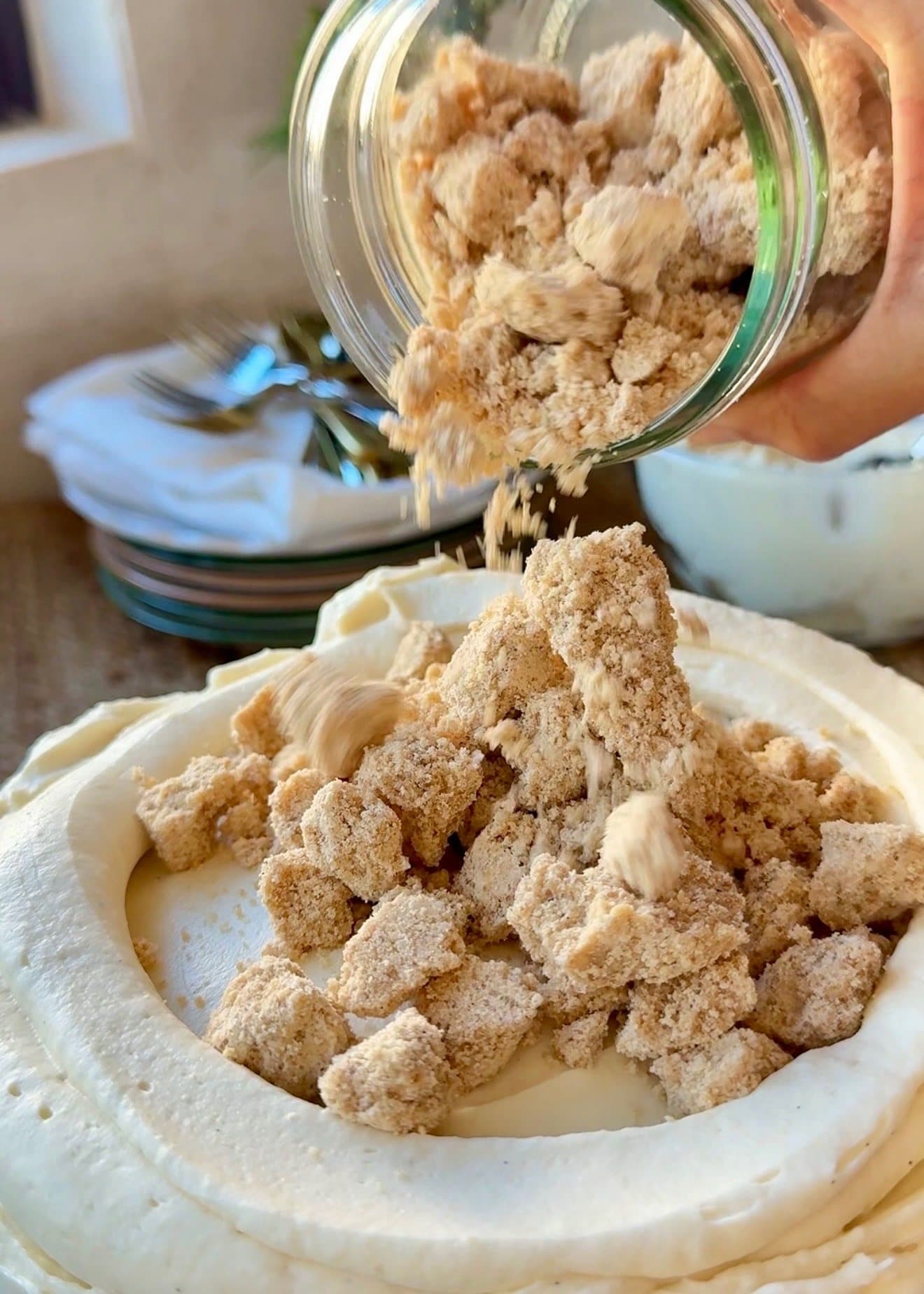
Distribute half of the chilled graham cracker cookie-dough pieces evenly over the frosting. Leave a little room near the edge so the filling does not press outward.
Distribute the cookie-dough pieces evenly, leaving room around the edge. Step 3
Stack the second cake layer
Spread a modest, even layer of cold cheesecake frosting over the cookie dough, then add the second cold cake layer. Check the cake from every side and adjust it now so the stack stays straight.
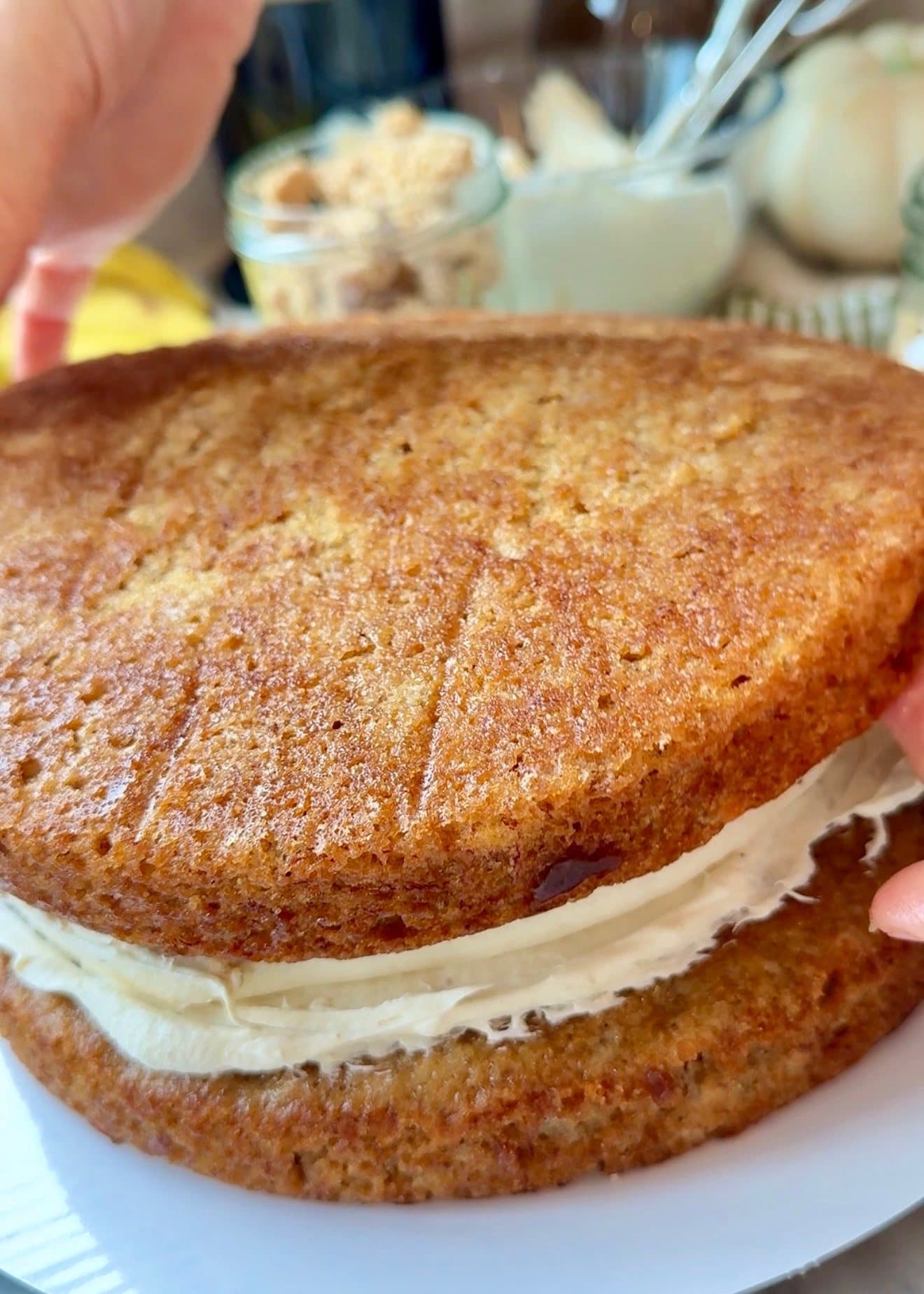
Center the next cake layer so the stack stays straight. Step 4
Repeat the frosting and cookie dough
Spread a thin layer of cold cheesecake frosting, add the remaining chilled cookie-dough pieces, then cover them with a modest, even layer of frosting. Place the final cake layer on top.
Keep the frosting smooth and level before adding the second filling. Add the second portion of chilled graham cracker cookie dough. Step 5
Chill, frost, and finish
Apply a thin crumb coat and refrigerate for 20-25 minutes, or until firm. Finish with the remaining cold cheesecake frosting and your chosen toppings, then refrigerate for at least 1 hour, preferably 2 hours, before slicing.
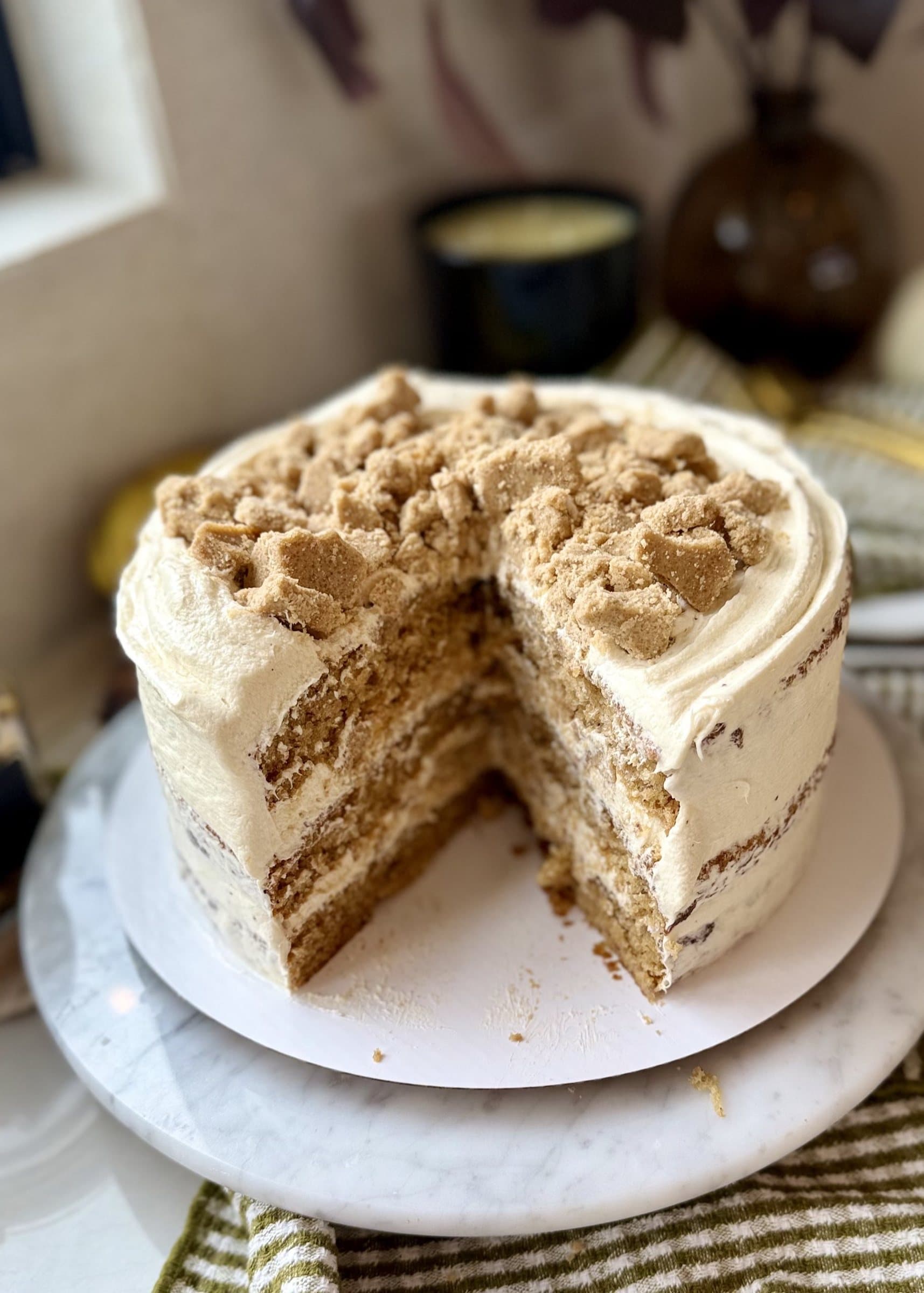
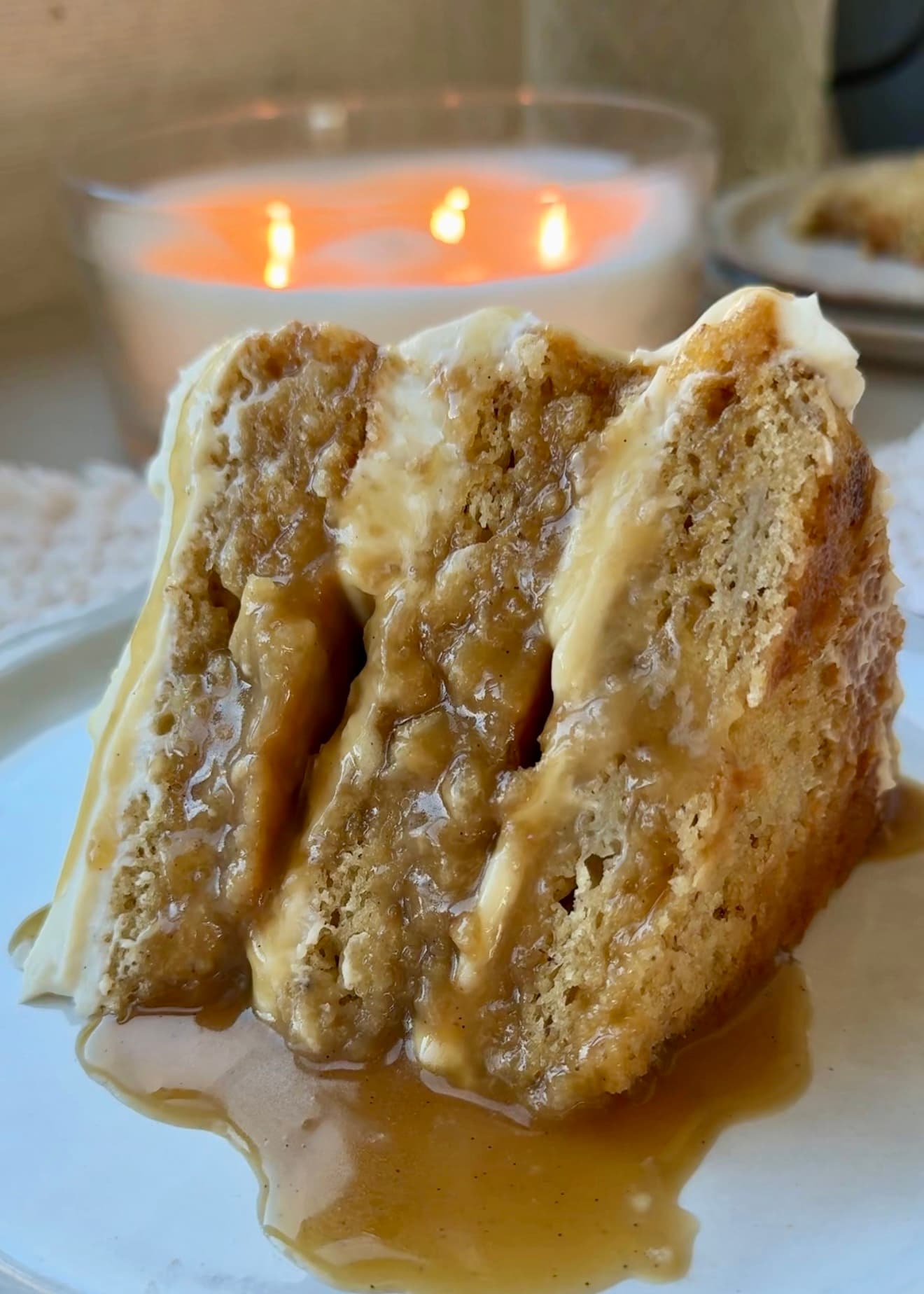
The cut cake shows the banana cake, cheesecake frosting, and cookie dough in each layer. Serve slightly chilled so the frosting and filling hold their shape.
From Instagram
Watch the reel
Watch the banana cake, graham cracker cookie dough, and chilled cheesecake frosting come together layer by layer.
Open the reelSmall things that matter
Tips for the best cake
Use block-style cream cheese rather than a soft spread from a tub for the strongest frosting.
Have the cold cake layers, chilled cookie-dough pieces, cake board, and tools ready before removing the frosting from the refrigerator.
If the frosting begins to soften, refrigerate the frosting and the partially assembled cake until both are firm again, then continue.
Keep the filling layers modest and level so the cake stacks straight and stays supported.
Troubleshooting
If This Happens
The cheesecake frosting is getting soft
Return the frosting and the cake to the refrigerator until both feel firm again. This frosting is more delicate than buttercream, so work in short stretches and keep every component cold.
The cake layers are sliding
Use less frosting between the layers and distribute the cookie-dough pieces evenly. Chill the stacked cake before adding the final coat so the structure has time to firm up.
The graham cracker cookie dough is too dry
Add milk 1 teaspoon at a time only until the dough holds together. The pieces should hold their shape without becoming sticky.
Before you slice
Texture and serving notes
Serve the cake slightly chilled for the creamiest cheesecake texture and the cleanest layers.
Use a hot, dry knife and wipe it clean between cuts.
Keep it good
Storage
Fridge
Store the assembled cake covered in the refrigerator for up to 4 days.
Fridge
Chill the finished cake for at least 1 hour, and preferably 2 hours, before slicing.
Serve
Let individual slices sit at room temperature for 10–15 minutes before serving.
Recipe FAQ
Questions that come up
Why is my cheesecake frosting getting soft?
This frosting is made without butter, so it is naturally more delicate than buttercream. Refrigerate the frosting and cake until firm whenever either begins to soften, then continue assembling.
Can I use dairy cream cheese?
Yes. Use firm block-style cream cheese. If you choose the non-dairy route, I test with firm non-dairy cream cheese at the same listed amount. Taste before adding the lemon juice because dairy cream cheese may already provide enough tang.
Can I make the cake ahead?
Yes. Bake and chill the cake layers and prepare the cookie dough up to 2 days ahead. Make and chill the frosting, then assemble the cake while every component is cold and firm.
How do I keep the layers from sliding?
Use cold cake layers, firm chilled frosting, and conservative, even filling layers. Chill the cake as soon as the layers are stacked so the structure can set before the final coat.
Should I weigh the ingredients or use volume measurements?
I strongly recommend weighing the ingredients in grams for the most reliable result. Volume measurements are included for convenience, but the amount in a cup can change depending on how an ingredient is filled, packed, or poured. These recipes are easy to follow, but their ratios are precise, so I cannot guarantee the exact same result when volume measurements are used. I still use teaspoons and tablespoons for small amounts like leaveners, salt, spices, and flavorings because those are the most practical measurements.
Can I make this recipe gluten-free?
I have not tested this recipe with gluten-free flour, so I cannot guarantee the same texture, rise, or structure. If you would like to experiment, a cup-for-cup (1:1) gluten-free baking blend intended to replace all-purpose flour is the best place to start. Results may differ from the recipe as written.
Can I use all-purpose flour instead of cake flour?
Yes, of course. Replace the cake flour with the same amount of all-purpose flour by weight. The cake will have a slightly sturdier, less delicate crumb, but it will still be great.
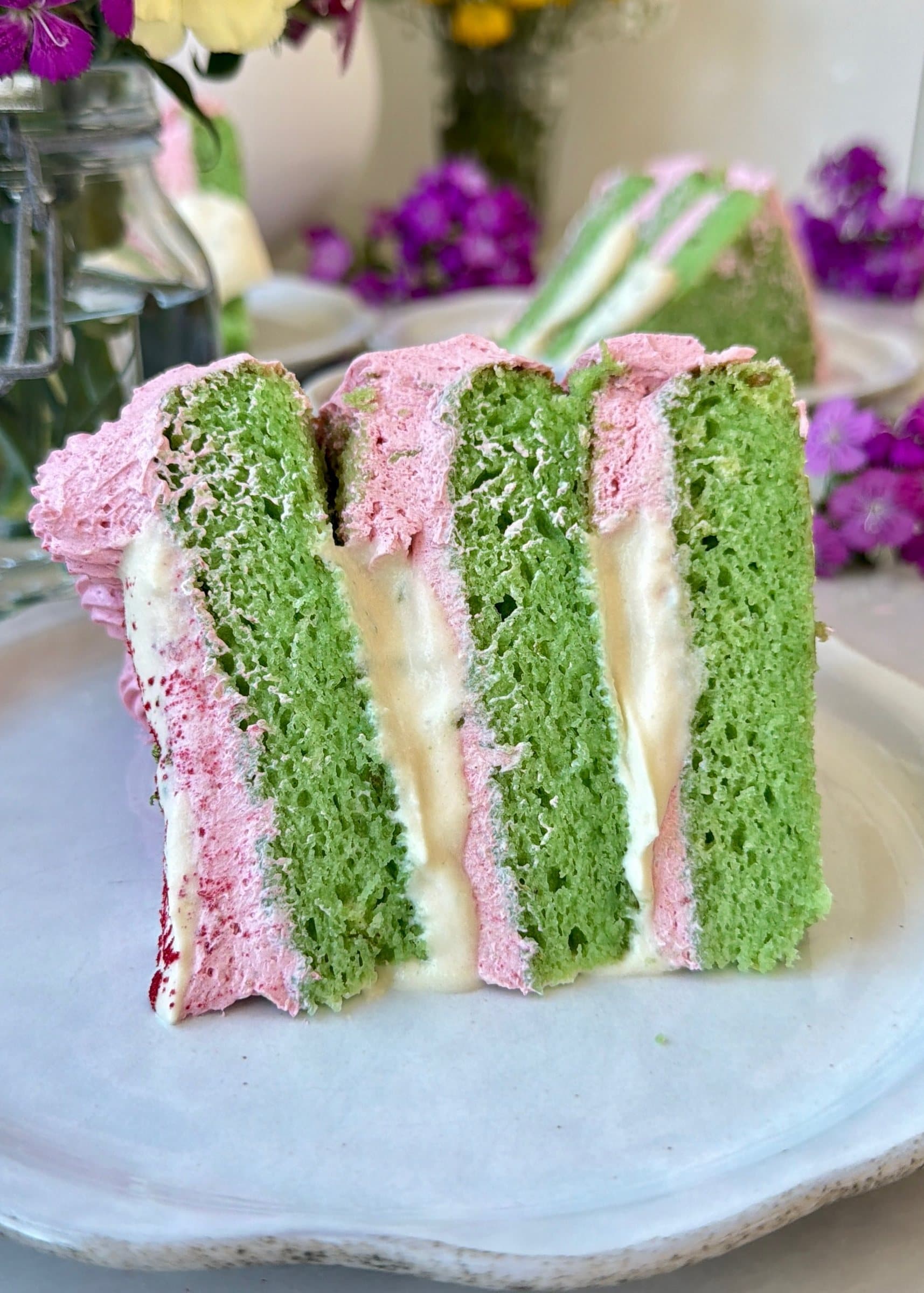
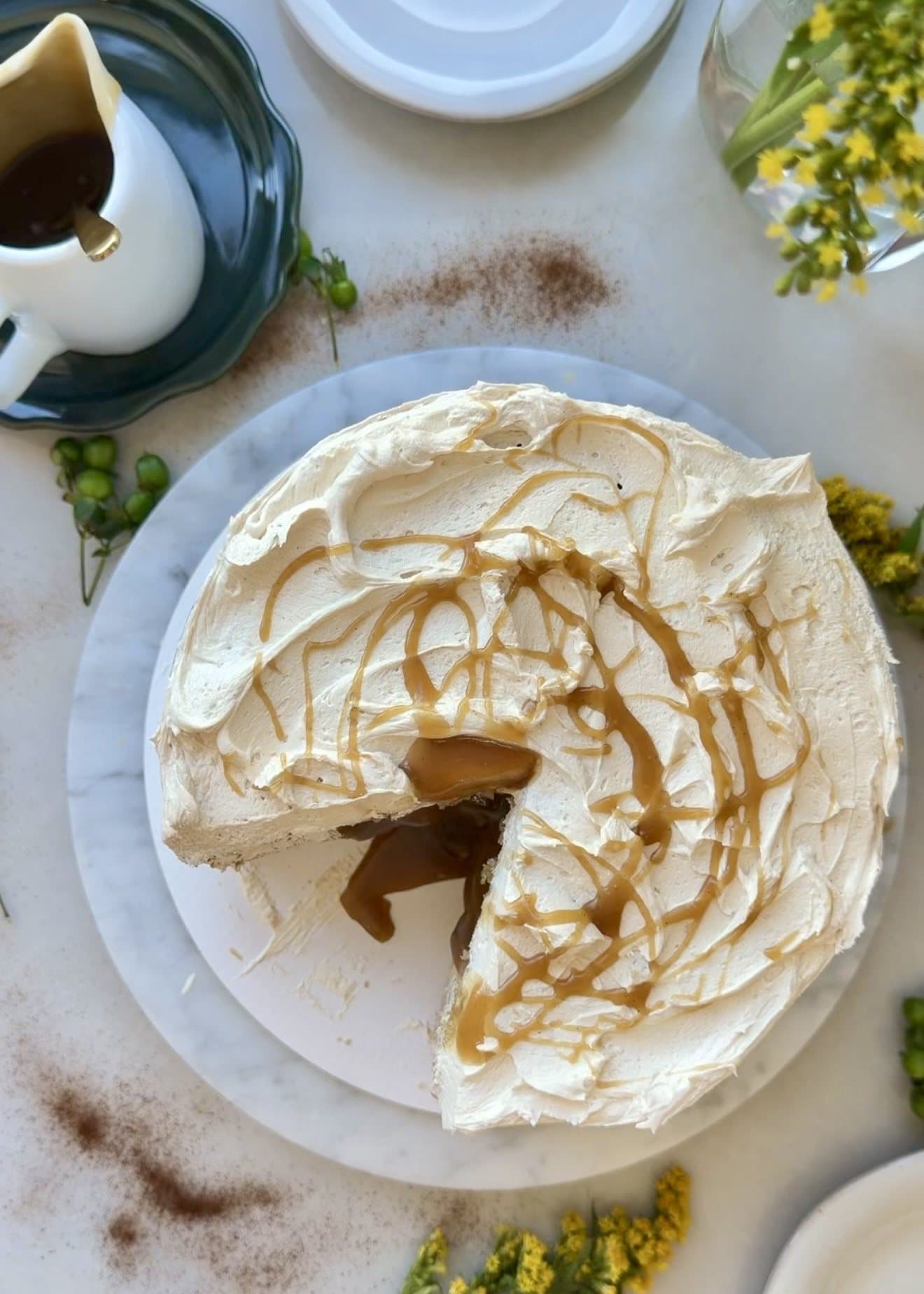
More layer cakes to try


- Prep
- 1 hr
- Bake
- 22–26 min
- Total
- About 3 1/2 hr, including cooling and chilling
- Yield
- One 3-layer 8-inch cake
Measurement note
For the closest match to the recipe I tested, use grams. Volume measurements are included for convenience, but cups can vary, so I cannot guarantee the exact same result when measuring by volume.
Ingredients
Banana Cake
- 305 g cake flour305 g (about 2 1/2 cups) cake flour
- 10 g cornstarch10 g (about 1 tablespoon + 1 1/4 teaspoons) cornstarch
- 1 1/2 teaspoons baking powder1 1/2 teaspoons baking powder
- 3/4 teaspoon baking soda3/4 teaspoon baking soda
- 1 teaspoon fine sea salt1 teaspoon fine sea salt
- 220 g light brown sugar (packed)220 g (about 1 cup + 2 teaspoons) light brown sugar (packed)
- 120 g granulated sugar120 g (about 1/2 cup + 1 tablespoon + 2 teaspoons) granulated sugar
- 150 g neutral oil, such as canola or sunflower150 g (about 2/3 cup) neutral oil, such as canola or sunflower
- 160 g plain unsweetened yogurt, room temperature160 g (about 1/3 cup + 5 tablespoons) plain unsweetened yogurt, room temperature
- 1 tablespoon vanilla bean paste1 tablespoon vanilla bean paste
- 260 g (about 2 medium) very ripe bananas, mashed smooth260 g (about 1 cup + 2 tablespoons) (about 2 medium) very ripe bananas, mashed smooth
- 120 g milk, room temperature120 g (about 1/2 cup) milk, room temperature
- 1 teaspoon apple cider vinegar1 teaspoon apple cider vinegar
Graham Cracker Cookie Dough
- 130 g all-purpose flour, prepared and cooled as noted130 g (about 1 cup + 1 tablespoon) all-purpose flour, prepared and cooled as noted
- 80 g finely ground graham cracker crumbs80 g (about 3/4 cup + 2 teaspoons) finely ground graham cracker crumbs
- 1/2 teaspoon fine sea salt1/2 teaspoon fine sea salt
- 100 g light brown sugar (packed)100 g (about 7 tablespoons + 1 1/2 teaspoons) light brown sugar (packed)
- 15 g powdered sugar15 g (about 2 tablespoons) powdered sugar
- 100 g butter, softened100 g (about 7 tablespoons) butter, softened
- 1 teaspoon vanilla bean paste1 teaspoon vanilla bean paste
- Milk, only if neededMilk, only if needed
Cheesecake Frosting
- 680 g (24 ounces / three 8-ounce blocks) firm block-style cream cheese, cool but pliable680 g (about 3 cups) (24 ounces / three 8-ounce blocks) firm block-style cream cheese, cool but pliable
- 212 g granulated sugar212 g (about 1 cup + 1 tablespoon) granulated sugar
- 2 1/4 teaspoons nutritional yeast, sifted2 1/4 teaspoons nutritional yeast, sifted
- 3/4 teaspoon mild white or yellow miso paste3/4 teaspoon mild white or yellow miso paste
- 3/4 teaspoon lemon juice; omit if using dairy cream cheese, if desired3/4 teaspoon lemon juice; omit if using dairy cream cheese, if desired
- 1 tablespoon vanilla bean paste1 tablespoon vanilla bean paste
Pan used
I use Fat Daddio's 8-inch anodized aluminum round cake pans for this recipe.
Instructions
- 1Make the one-bowl banana cake. Preheat the oven to 350°F (177°C). Grease and line three 8-inch round cake pans with parchment paper.
- 2In one large bowl, add the brown sugar, granulated sugar, oil, yogurt, vanilla bean paste, mashed banana, milk, and apple cider vinegar. Whisk until completely smooth and uniform.
- 3Add the cake flour, cornstarch, baking powder, baking soda, and salt directly to the same bowl. Whisk gently just until the batter is fluid and glossy with no dry streaks remaining; do not overmix.
- 4Divide the batter evenly between the prepared pans by weight and tap each pan lightly once or twice to release large air bubbles.
- 5Bake for 22–26 minutes, beginning to check at 22 minutes. The layers are done when the centers spring back lightly and a tester inserted into the center comes out with a few moist crumbs and no wet batter.
- 6Cool the layers in the pans for 10 minutes, then turn them onto wire racks and cool completely. Refrigerate the wrapped layers until cold before assembly.
- 7Make the graham cracker cookie dough. Beat the softened butter, brown sugar, and powdered sugar for about 2 minutes, scraping the bowl as needed, until pale and fluffy.
- 8Add the vanilla bean paste and salt and mix until smooth. Add the prepared flour and graham cracker crumbs, then mix on low just until a cohesive dough forms. If the dough is too dry to hold together, add milk 1 teaspoon at a time only as needed.
- 9Pinch the dough into loose pieces. If you want cookie dough for decorating, reserve a little, then divide the rest into two equal portions. Refrigerate until cold and firm.
- 10Make the cheesecake frosting. Add the cool but pliable cream cheese, granulated sugar, sifted nutritional yeast, miso, lemon juice if using, and vanilla bean paste to a mixing bowl.
- 11Mix on low just until completely smooth, creamy, and fully incorporated, scraping the bowl once or twice. Do not overmix. Cover and refrigerate until the frosting is cold and firm before assembly.
- 12Prepare to assemble before removing the frosting from the refrigerator: place the cold cake layers, chilled cookie-dough pieces, cake board, offset spatula, and frosting within reach.
- 13Place the first cold cake layer on the board and spread a very thin layer of cheesecake frosting over it. Distribute half of the chilled graham cracker cookie-dough pieces evenly over the frosting, leaving a little room near the edge.
- 14Spread a modest, even layer of cold cheesecake frosting over the cookie dough. For beginning bakers, use less filling; keeping the layer conservative gives the cake more stability.
- 15Top with the second cake layer and repeat the thin frosting layer, remaining cookie-dough pieces, and modest frosting layer. Add the final cake layer.
- 16Apply a thin crumb coat, then refrigerate the cake for 20–25 minutes, or until firm. If the frosting softens at any point, refrigerate both the bowl of frosting and the cake until firm before continuing.
- 17Apply the remaining cold cheesecake frosting in a smooth or softly swirled final coat. Decorate with graham cracker crumbs, reserved graham cracker cookie-dough pieces, or banana chips as desired.
- 18Refrigerate the finished cake for at least 1 hour, and preferably 2 hours, before slicing so the layers and frosting can set completely.
Helpful notes
- Heat-treat the flour to 165°F, then let it cool completely before making the cookie dough.
Cheesecake collection
Browse the Non-Dairy Cheesecake Recipes collection
Meet the baker
Angela Heckler
Angela Heckler is the recipe developer, baker, and photographer behind Obsessed Cakes. Her Old-Fashioned Donut Loaf series is a growing collection of cake-donut-inspired loaves with soft, deeply moist crumbs, buttery streusel, and crackly glaze. Angela develops and tests every recipe in her Arizona kitchen. Follow Obsessed Cakes on Instagram, TikTok, and YouTube.
Made it? Tell us.
Ratings and reviews
Be the first to rate this recipe.
No reviews yet.
Make the recipe, leave a rating, and share how it turned out.Did you make this?
Share your bake on Instagram - tag @obsessedwithcashews and use #obsessedcakes.