Donut Loaves
Lemon Poppy Seed Donut Loaf
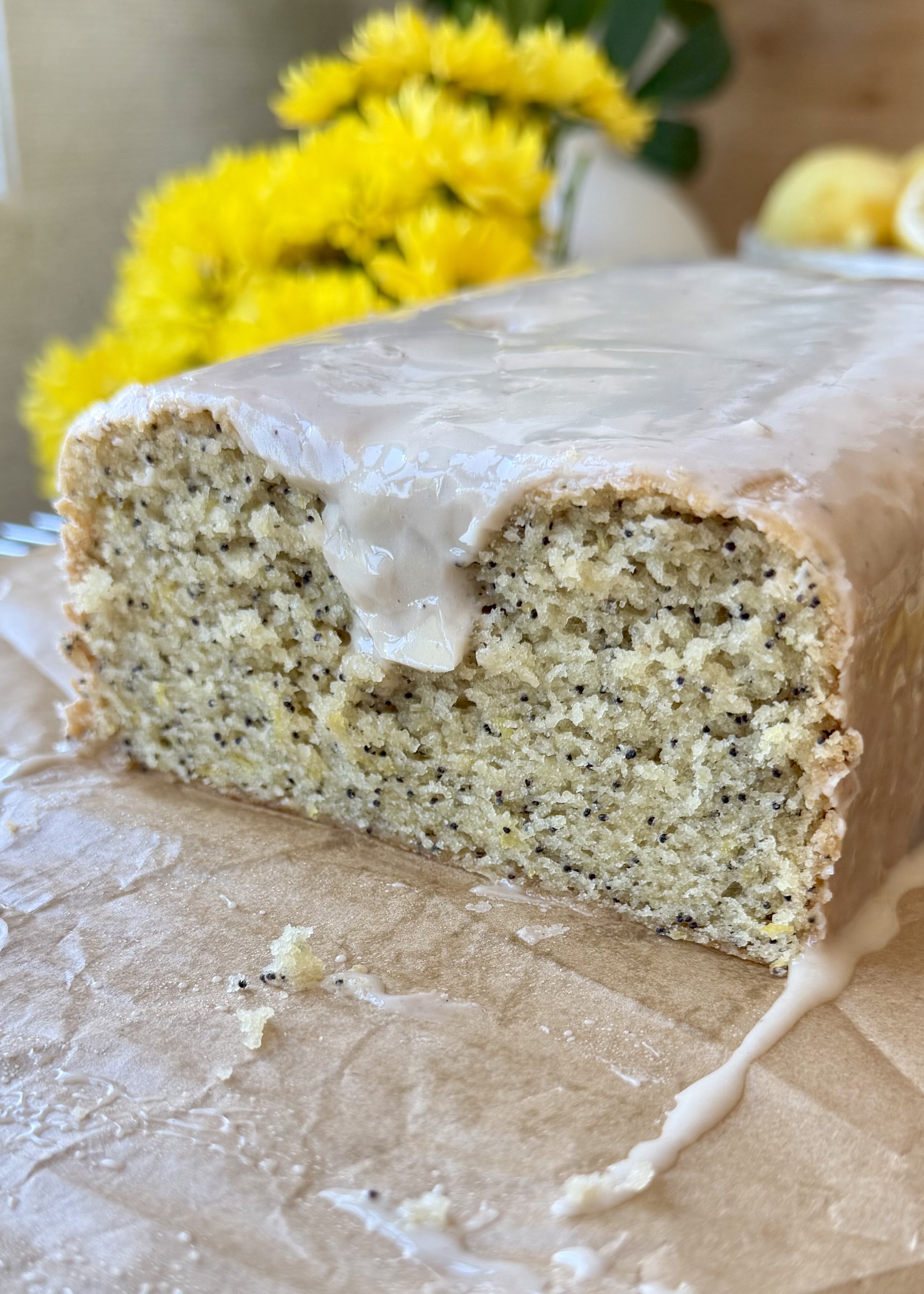
A bright, one-bowl lemon poppy seed loaf with a soft oil-based crumb and a thin vanilla glaze that sets with the best little shatter.
Prep
20 min
Bake
45-55 min
Total
About 2 hr, including cooling and glaze setting
Yield
One 9x5-inch loaf
A note from my kitchen
Before you bake this
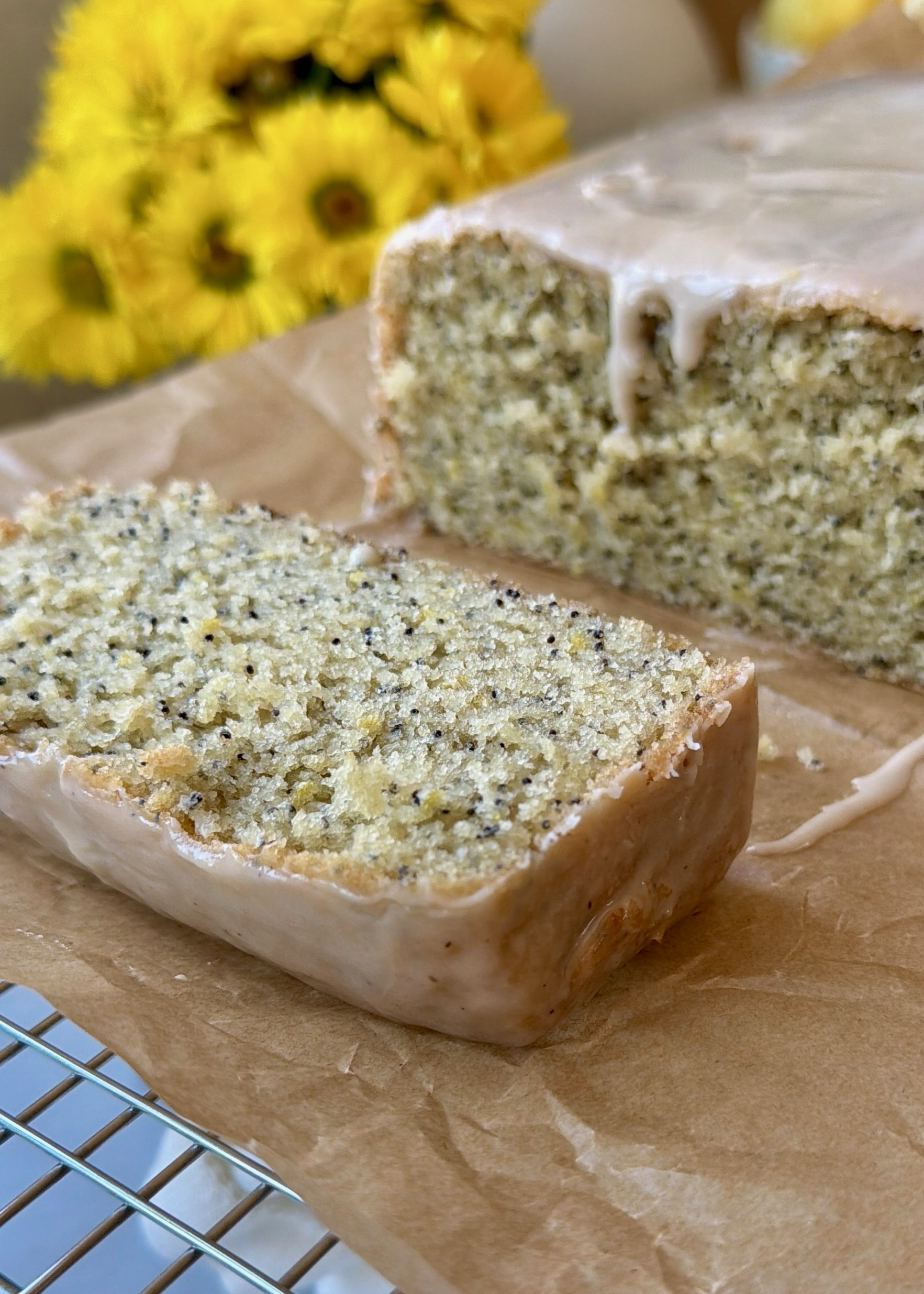
This is the kind of easy classic that somehow never gets old: fresh lemon, tiny pops of poppy seed, an incredibly moist and fluffy crumb, and a thin vanilla glaze that breaks delicately over every slice.
The batter comes together in one bowl, the oil keeps the loaf soft, and rubbing the zest into the sugar makes the lemon taste bright before a single wet ingredient goes in. It is simple in the way my favorite recipes are simple - every small detail is doing something.
Save me a slice ;)
Thinking out loud
When the Boxed Mix Is the Benchmark
The cravings, questions, and running commentary behind this bake.
Lemon poppy seed reminds me so much of childhood. We bought the boxed lemon poppy seed mixes, and at the time I thought that was as homemade as it got. They were absolutely delicious: light, moist, sweet, and unmistakably lemony.
Making things from scratch is clearly one of my favorite things to do, and a from-scratch loaf is always going to taste a little fresher. But if I can make that freshness live in the same recipe as the flavor and softness I remember from the boxed mix, that is the true win for me.
This loaf does exactly that. It is oil-based, just like the mix I grew up with, which keeps the crumb incredibly moist, fluffy, and light. Fresh lemon juice and zest make it bright, while a tiny amount of lemon extract gives it that familiar, nostalgic lemon flavor.
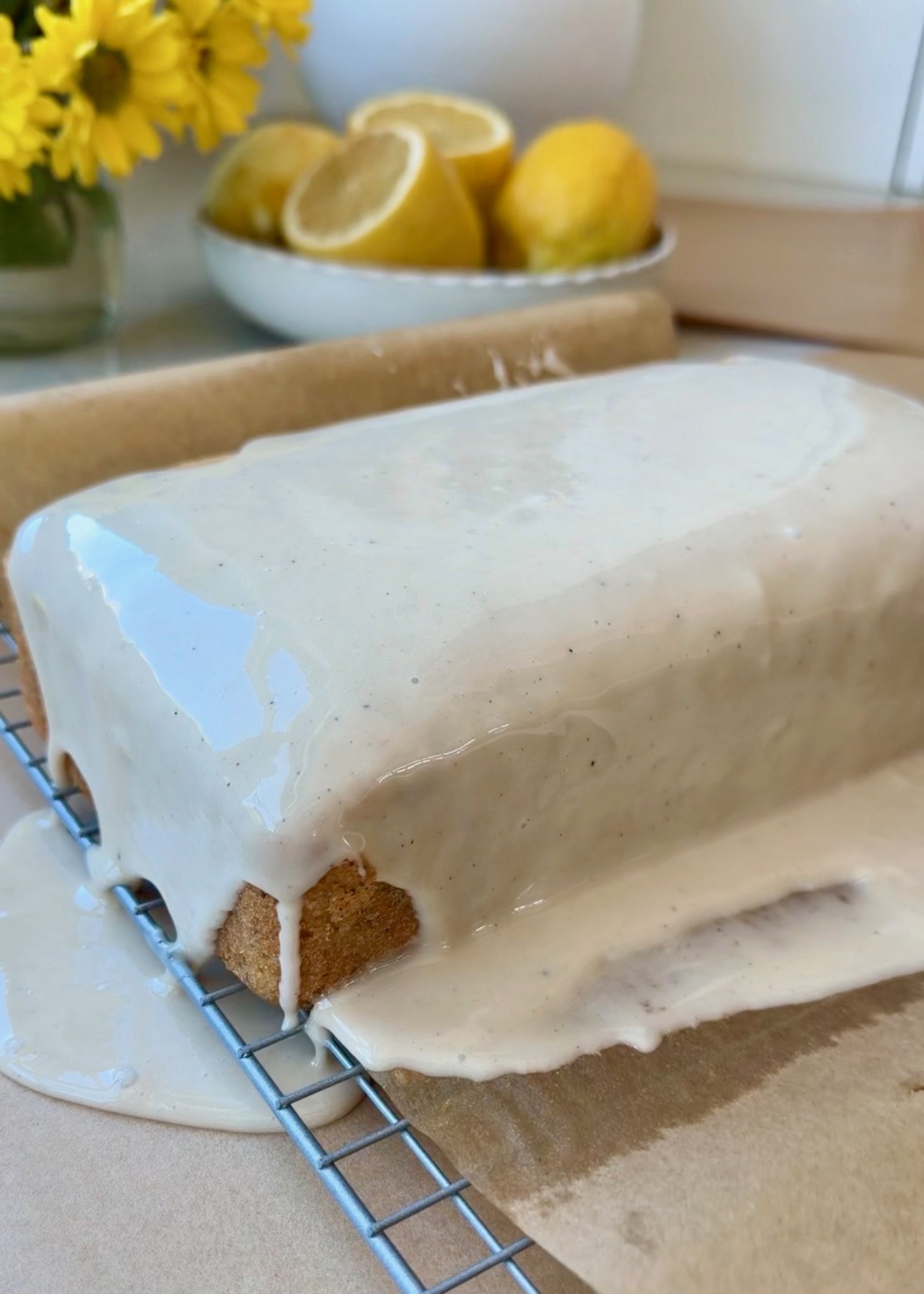
I rarely make a loaf without a glaze, and this one was never going to be the exception. The sweet-tart lemon, those tiny pops of poppy seed, and the thin vanilla glaze that sets into a delicate shell make it almost impossible to get tired of. It is easy, classic, and so much fun to make - the kind of loaf everyone is happy to see.
Read this first
The quick notes.
Flavor
Sweet-tart lemon, vanilla, and gentle nuttiness from the poppy seeds.
Texture
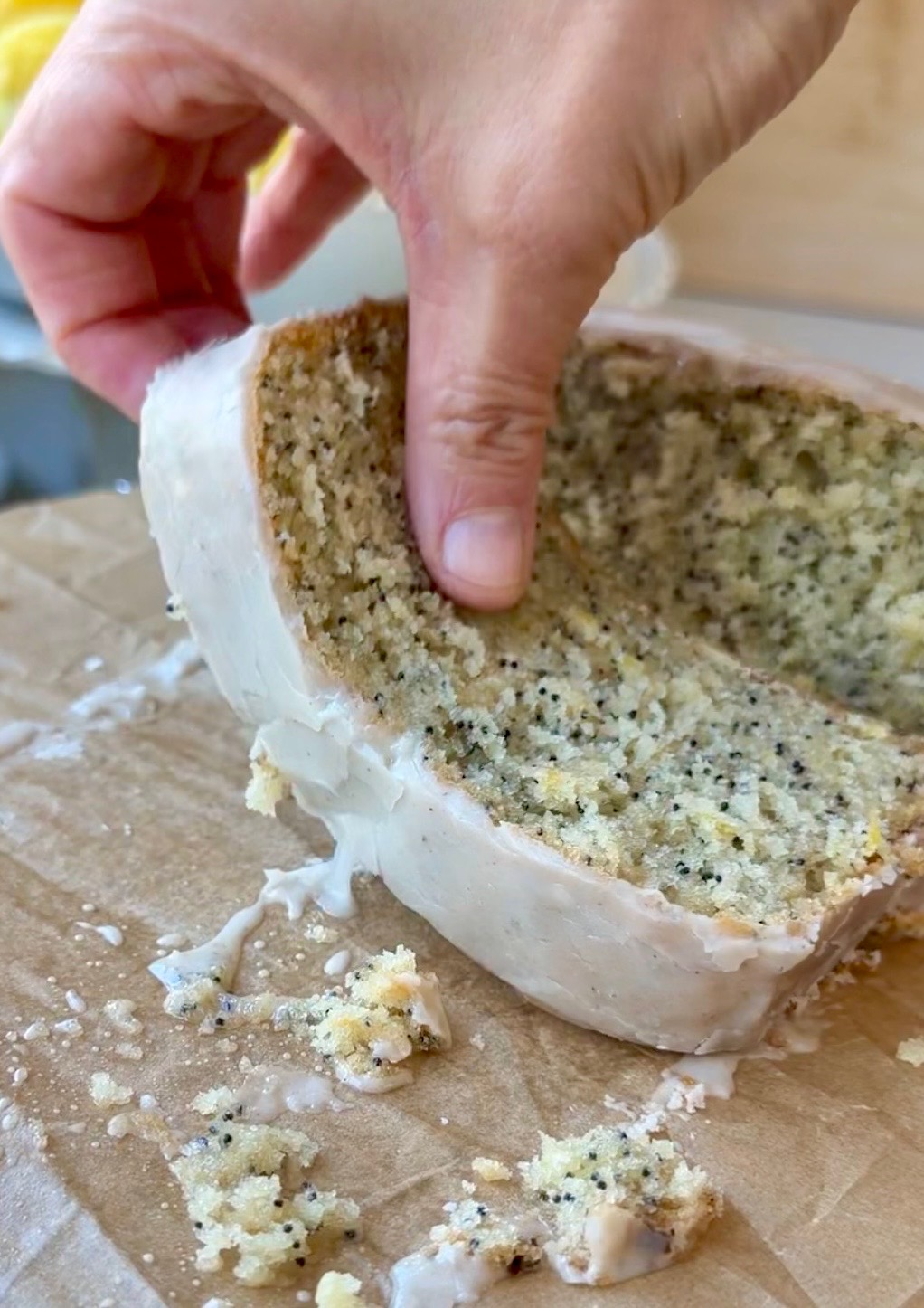
Moist, fluffy oil-based crumb with tiny poppy seed pops and a thin shatter glaze.
Best moment
Pouring the vanilla glaze over the slightly warm loaf and watching it fall down every side.
From this recipe
Tested notes
This batter is intentionally mixed in one bowl. Distribute the baking powder, baking soda, and salt evenly over the flour before whisking.
Use regular plain unsweetened yogurt rather than Greek yogurt for the moisture level this loaf was designed around.
Trust the tester in the center of the loaf: moist crumbs are done, while wet batter needs more baking time.
Fresh zest is the most important source of bright lemon aroma, even if you use bottled lemon juice.
The loaf can be glazed while it is still warm, but give it the full 20-minute pan rest first so the delicate crumb has time to settle.
Ingredient notes
Key ingredients
Fresh lemon zest
The zest carries the most fragrant lemon oils. Rubbing it into both sugars releases those oils and flavors the entire loaf before the batter is mixed.
Fresh lemon juice
Lemon juice brings tartness and reacts with the baking soda for lift. It works with the zest and extract rather than trying to provide all of the lemon flavor on its own.
Lemon extract
Just 1/4 teaspoon adds the familiar, nostalgic lemon note I remember from boxed lemon poppy seed mixes without making the loaf taste artificial.
Neutral oil
Oil creates the exceptionally moist, soft crumb and helps the loaf stay tender even after it has been chilled.
Plain unsweetened yogurt
Yogurt gives this egg-free loaf body, moisture, and a plush crumb. Use regular plain yogurt rather than Greek yogurt.
Poppy seeds
Two tablespoons give every slice those tiny, gentle pops of texture without overwhelming the lemon.
Brand notes
Brands that matter here
For the ingredients where brand choice changes texture, set, or flavor, these are the tested options I use.
Yogurt
Plain unsweetened yogurt
Plain unsweetened yogurt adds moisture, acidity, and body so the crumb bakes up tender without tasting tangy.
- 01Forager Unsweetened Plain Yogurt
- 02Silk Plain Unsweetened Yogurt
Milk
Milk
Milk affects how smoothly a batter, filling, or frosting comes together. Soy milk and Ripple tend to emulsify well because their protein and fat help create a creamy, cohesive finish.
- 01Silk Original Unsweet
- 02Plain unsweetened soy milk
- 03Ripple Original
- 04Oatly Barista Edition
Butter sticks
Butter sticks
Use butter sticks for buttercream and fillings that need to hold their shape.
- 01Country Crock Plant Butter Sticks
- 02Violife Plant Butter Sticks
- 03Earth Balance
- 04Miyoko's
Testing notes
Why this works
Why this is a one-bowl batter
The sugars and wet ingredients are whisked smooth first, then the dry ingredients are added directly to the same bowl. Add the leaveners and salt evenly across the surface before whisking so they distribute without needing a second bowl.
Why the zest is rubbed into the sugar
The pressure from your fingertips releases the lemon's fragrant oils into the sugar. The mixture should feel slightly damp and smell deeply lemony before you add the oil.
Why the loaf is oil-based
Oil stays fluid when cool, which gives this loaf its soft, moist crumb and captures the texture I loved in boxed lemon poppy seed cake mixes.
What the cold butter line does
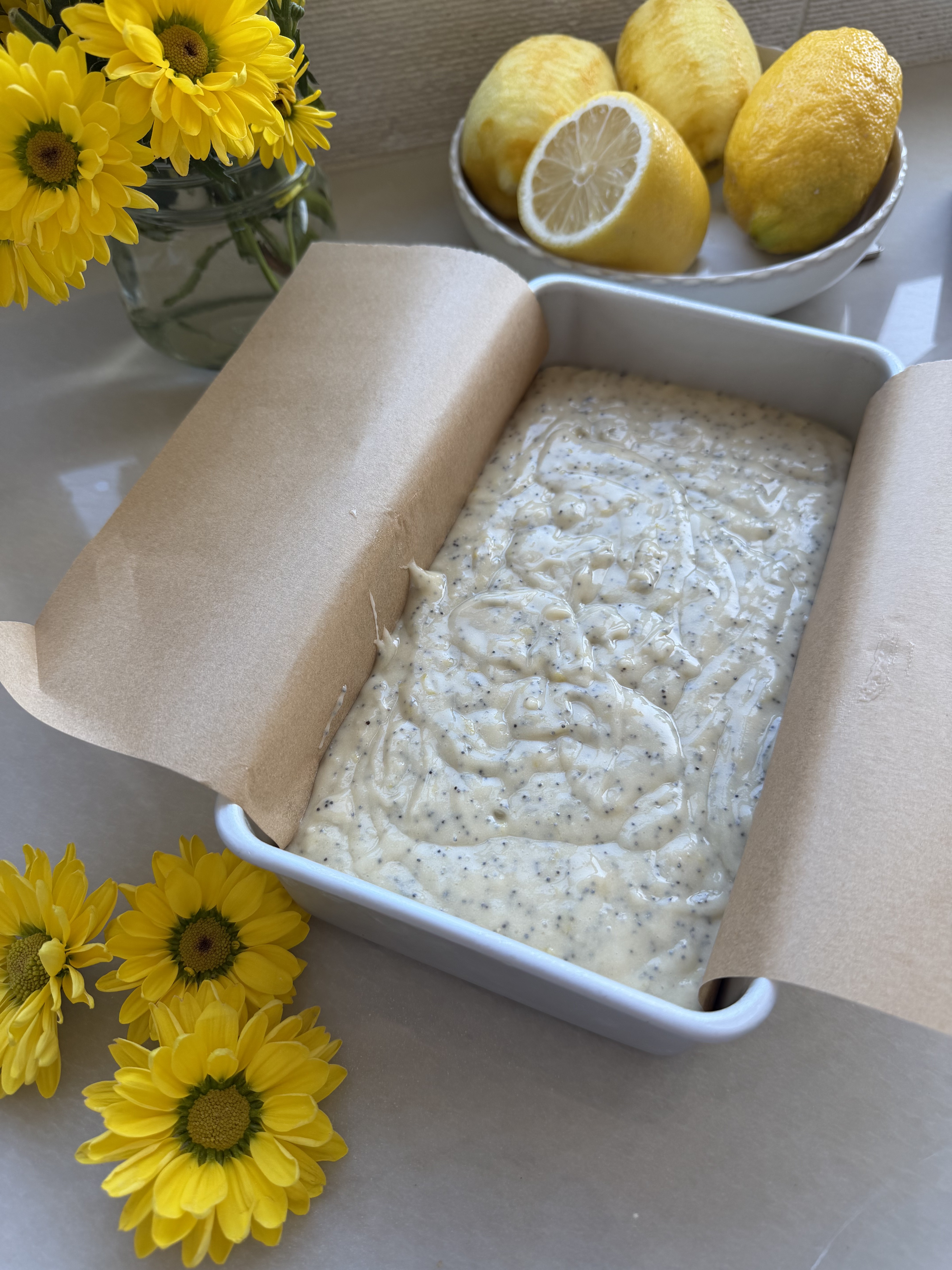
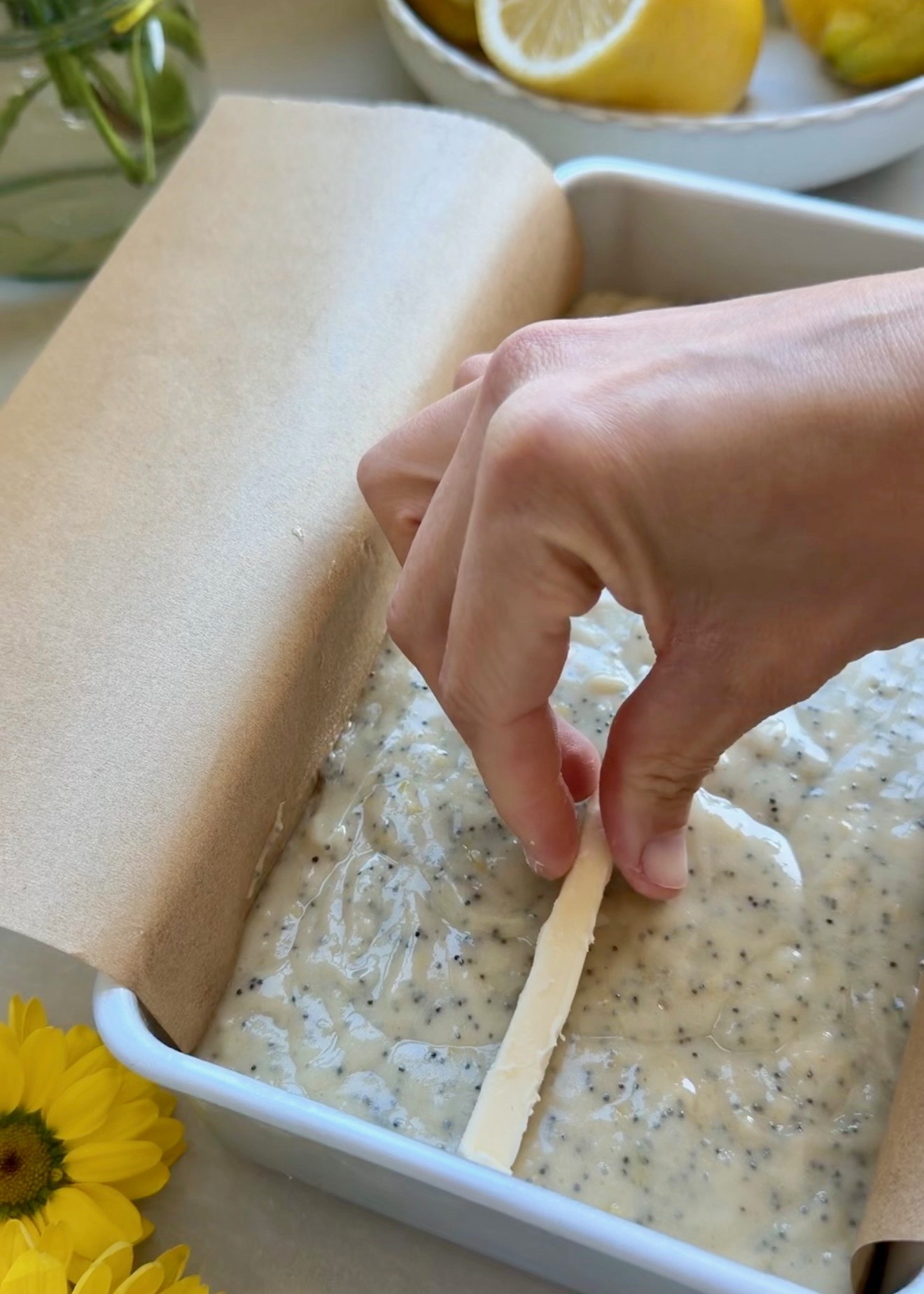
A very thin line of cold butter down the center guides the batter toward a clean bakery-style split as it rises. Keep the line narrow; about 2 teaspoons is enough.
How to know the center is baked
Insert a tester into the center of the loaf. It should come out with moist crumbs but no wet batter. If the top is browning before the middle is ready, tent it loosely with foil and continue baking.
When to glaze the loaf
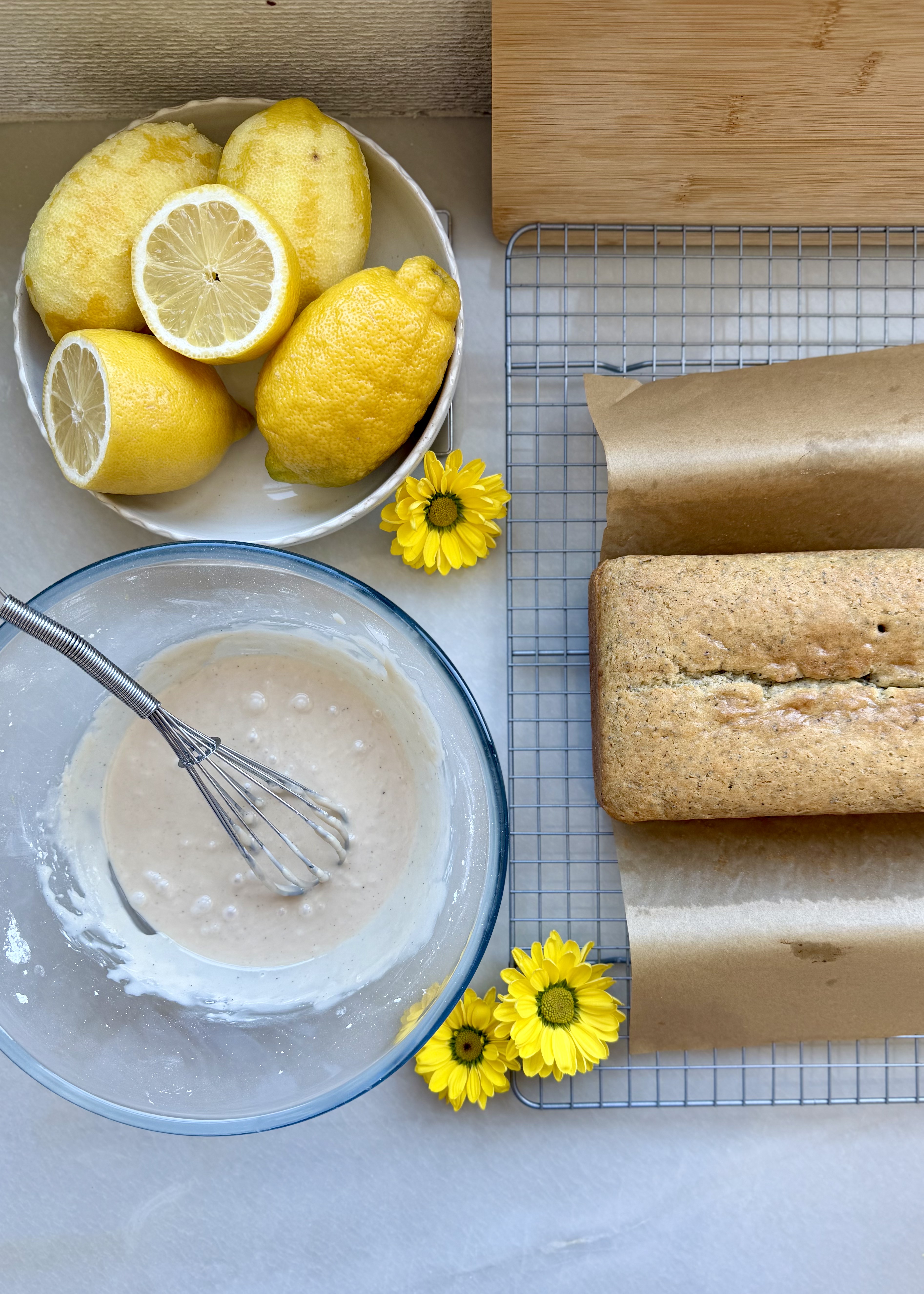
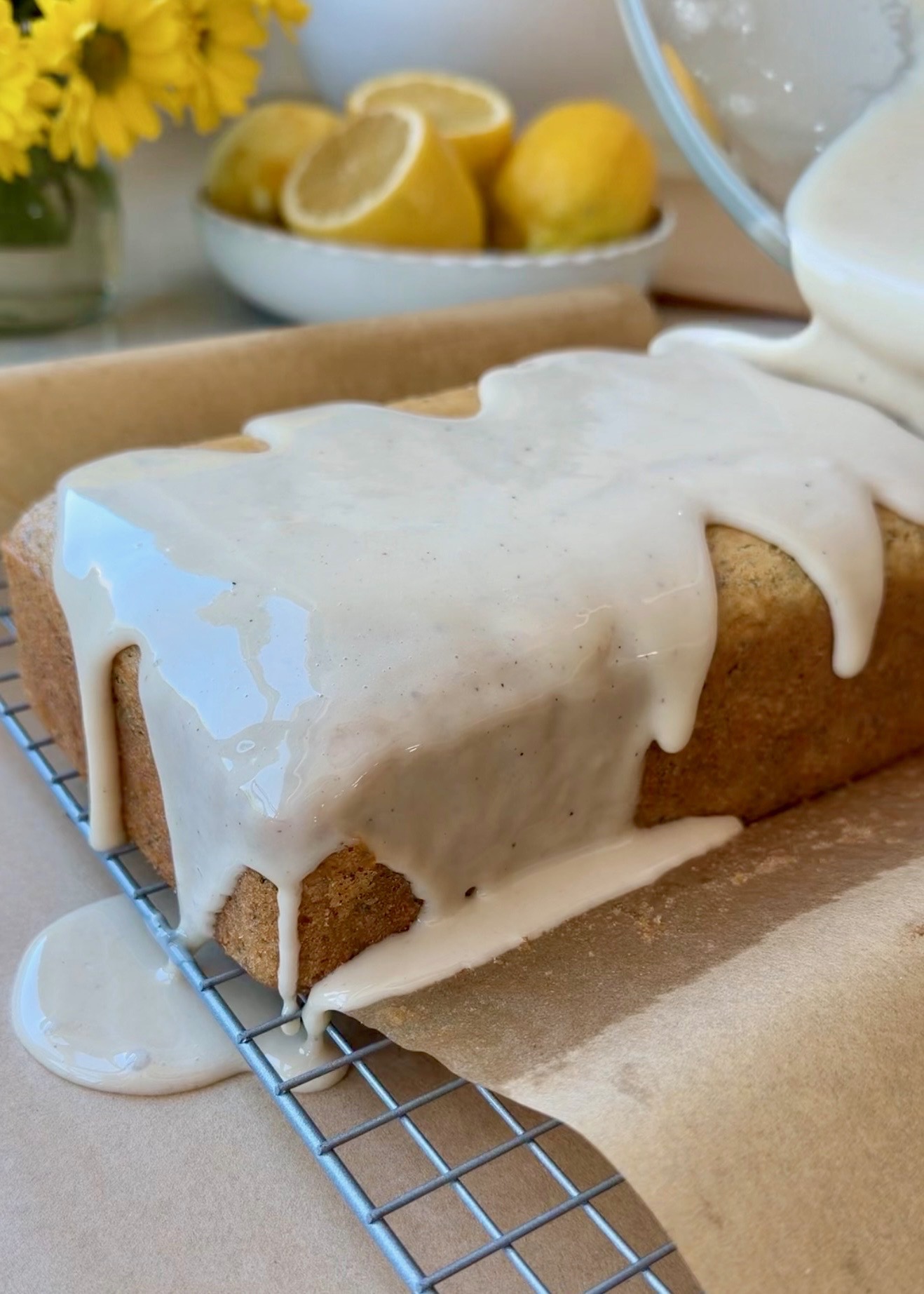
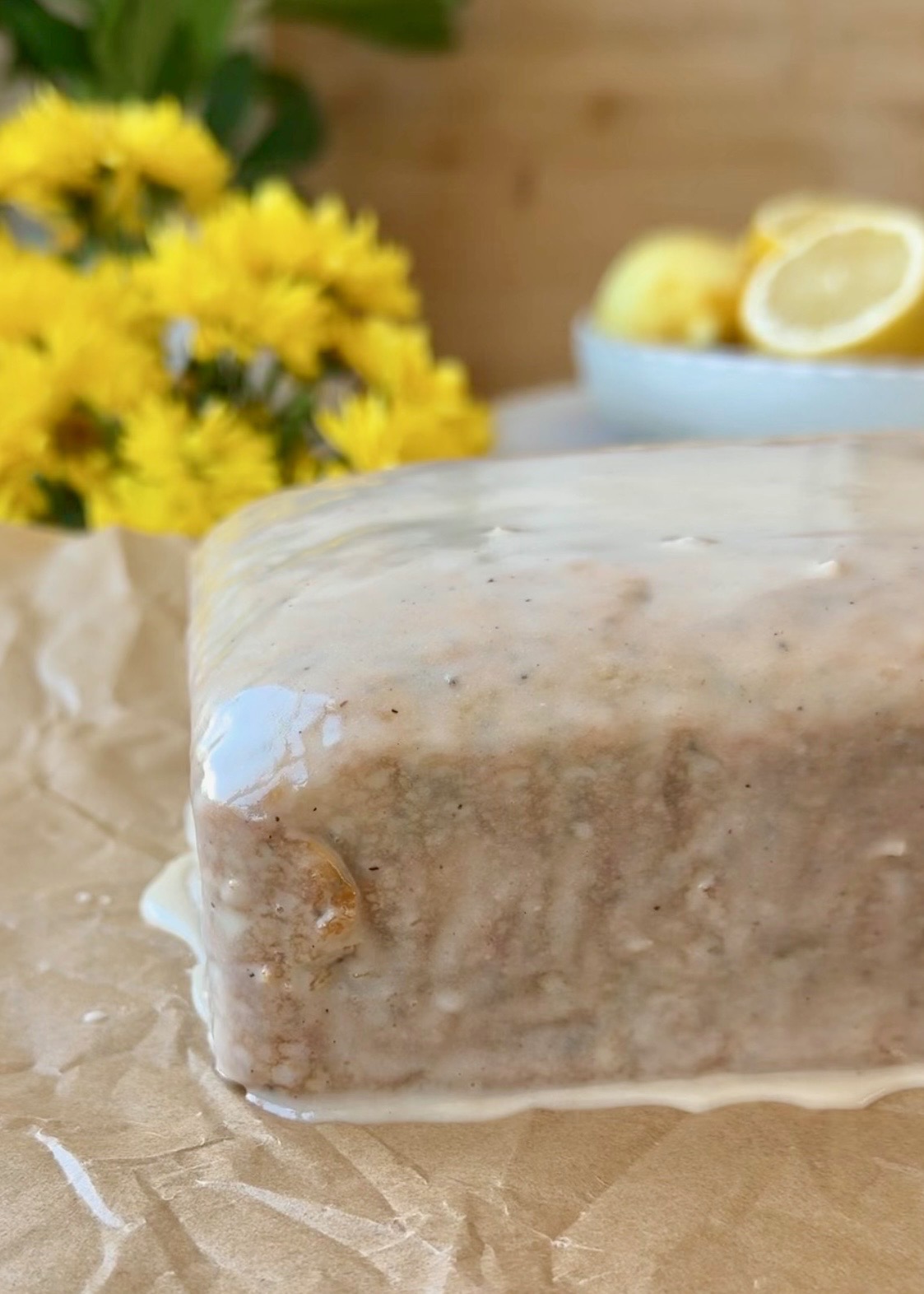
Let the loaf rest in the pan for the full 20 minutes, then lift it onto a wire rack. You can glaze it while it is still warm; the glaze will settle around the loaf, soak in just slightly, and still set into a delicate shell as it cools.
How it comes together
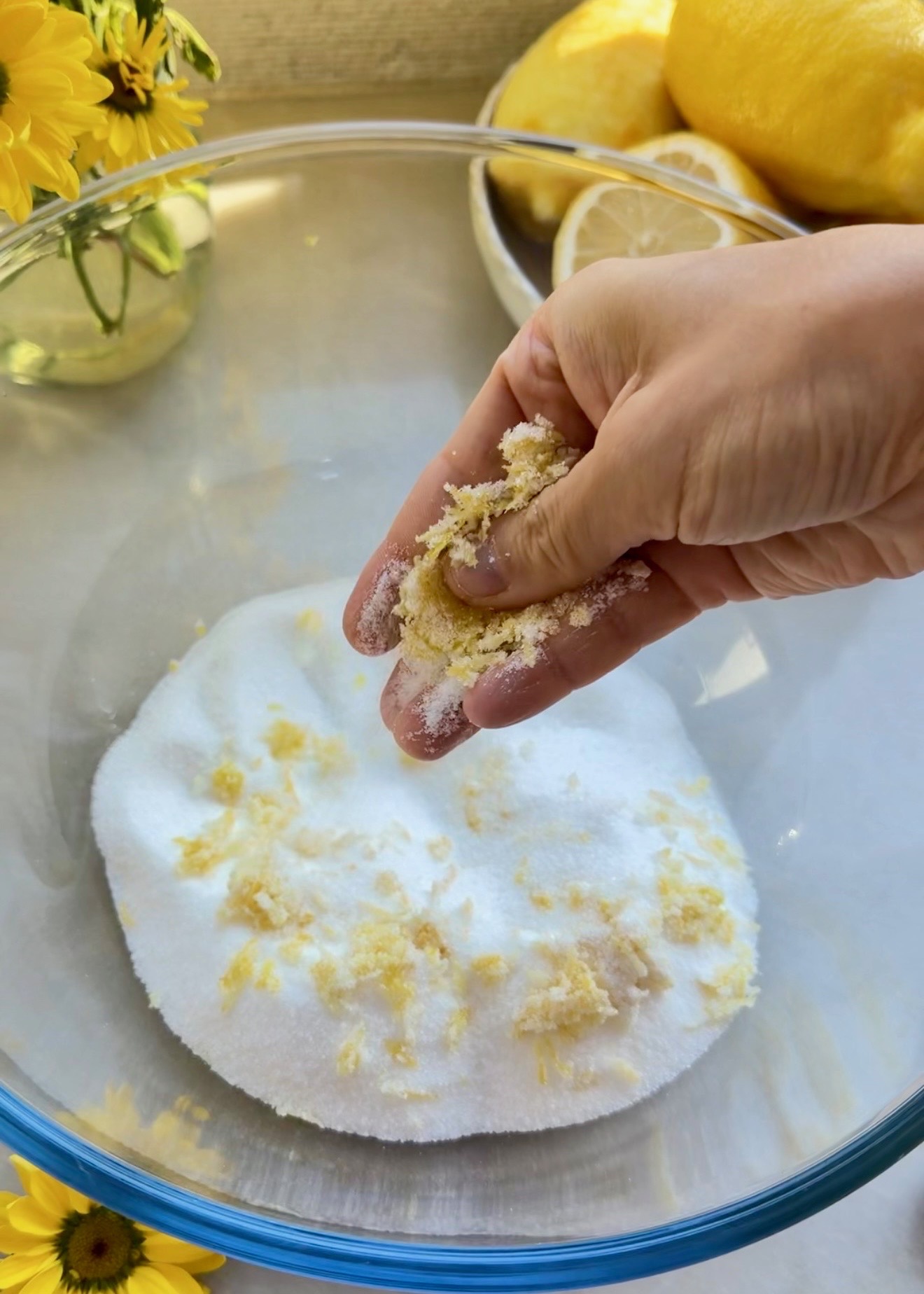
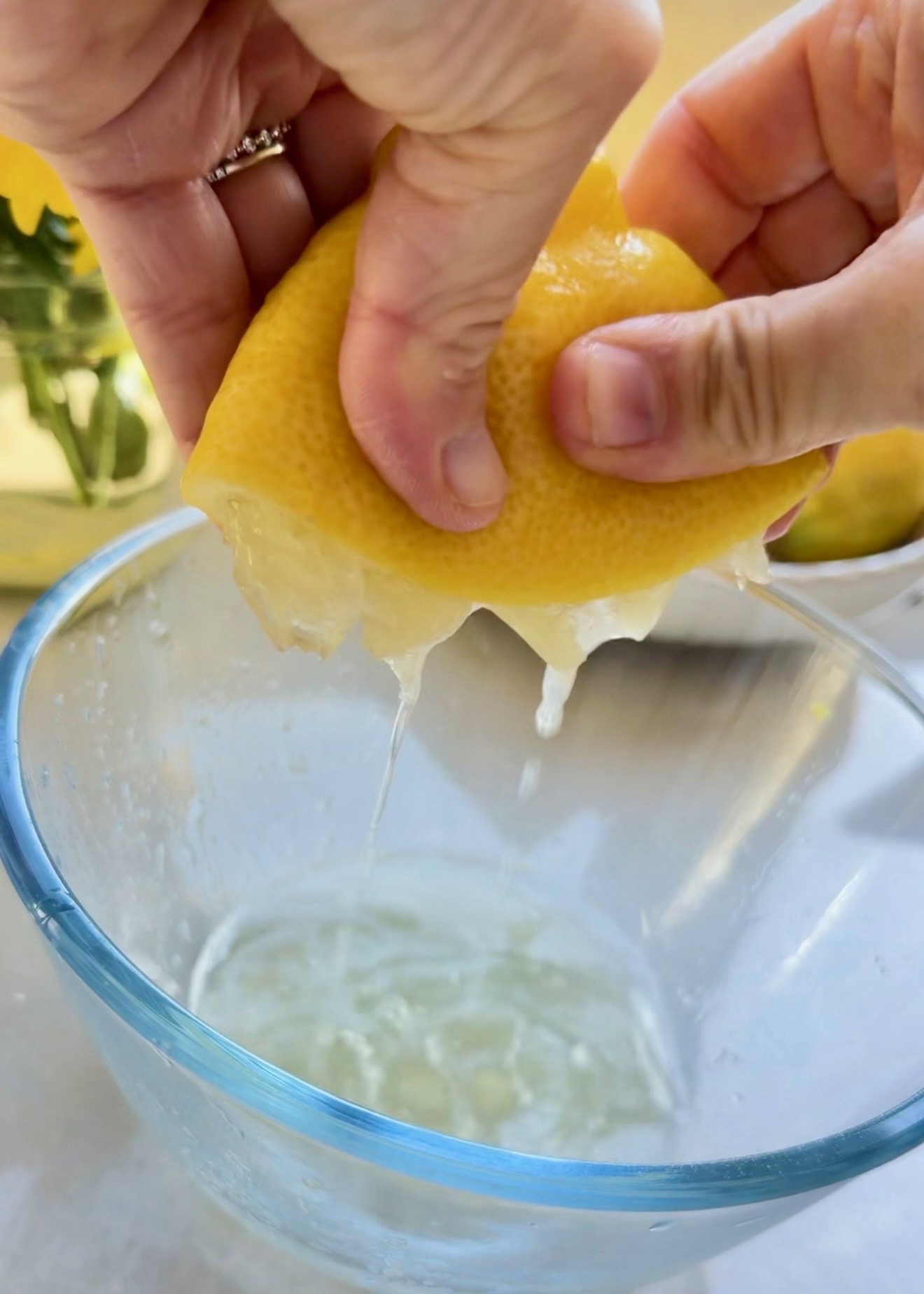
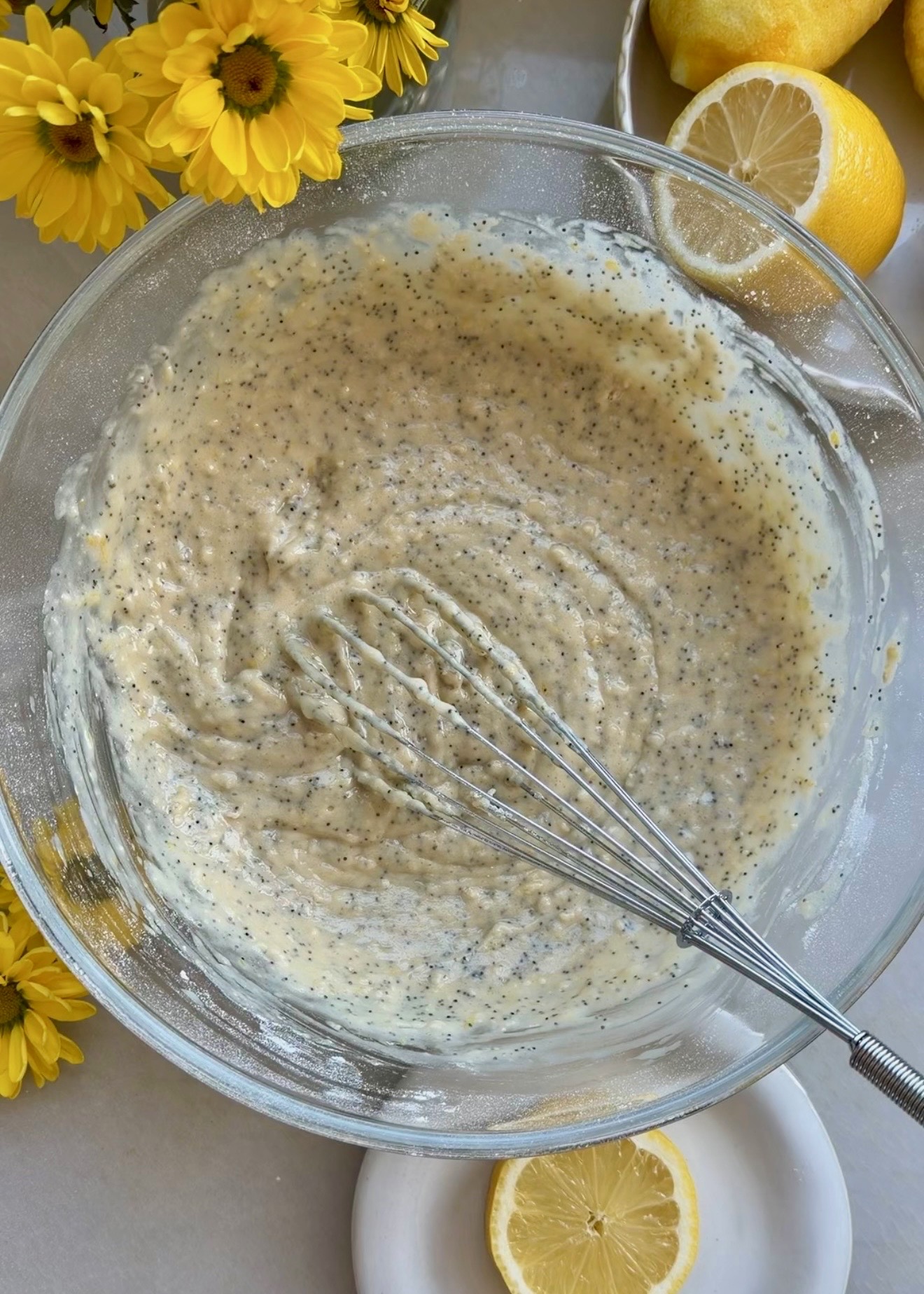
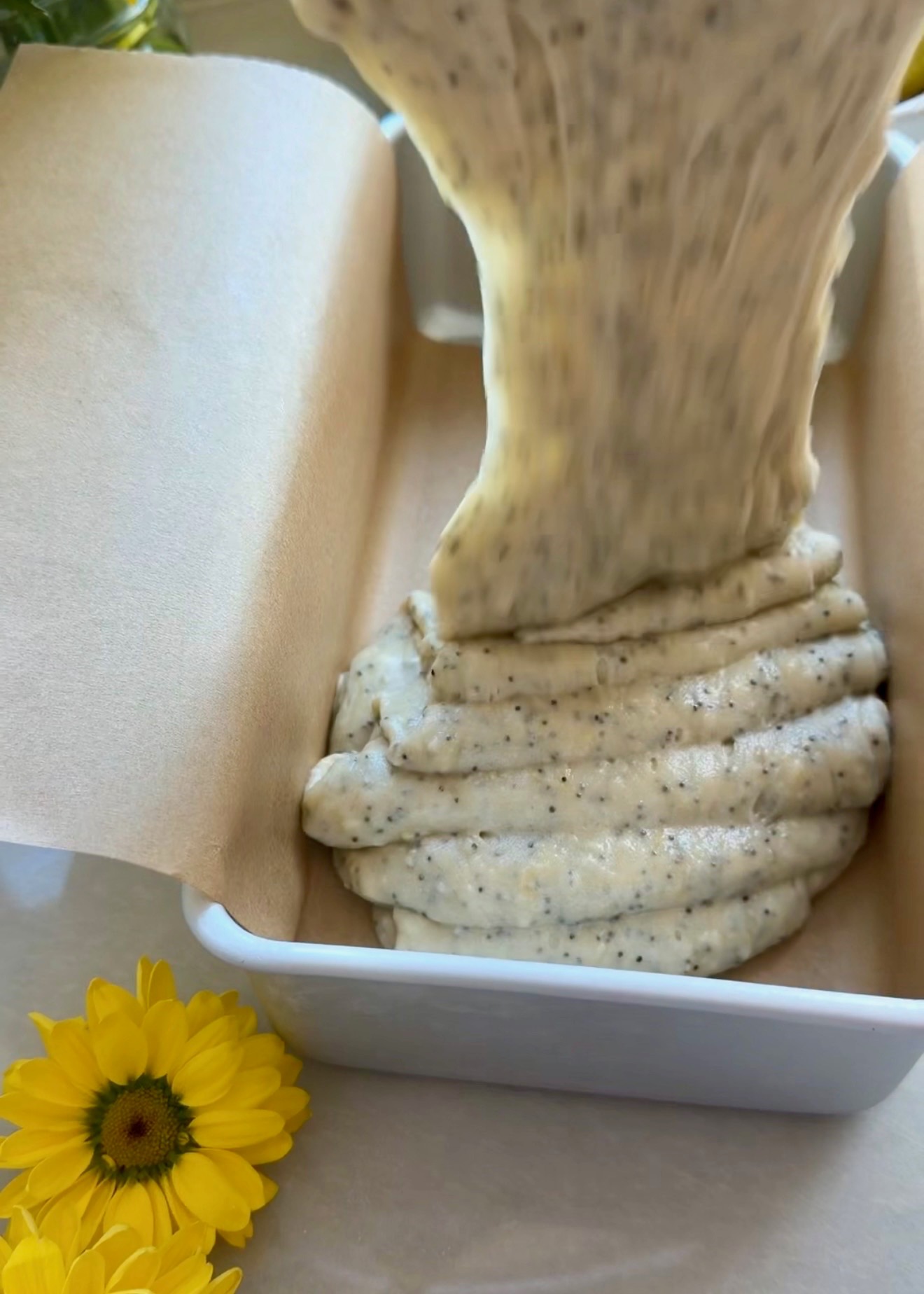
From Instagram
Watch the reel
Watch this one-bowl lemon poppy seed batter become a soft loaf beneath a full thin-shell vanilla glaze.
Open the reelSmall things that matter
Tips for the best loaf
Use a microplane or fine grater for the zest and stop before reaching the bitter white pith.
Bring the yogurt and milk to room temperature so they emulsify smoothly with the oil.
Once the dry ingredients go in, whisk only until no dry streaks remain. Overmixing can make the crumb less tender.
Pipe or lay only a very thin line of cold butter along the center of the batter for the controlled split.
Begin checking at 45 minutes and trust the tester: moist crumbs are welcome, but wet batter means the loaf needs more time.
Let the loaf complete its 20-minute pan rest before glazing. Once it is on the rack, it can still be warm.
Before you slice
Texture and serving notes
Serve at room temperature for the lightest, softest crumb and the fullest lemon flavor.
A thick slice is wonderful on its own, but it also belongs on a brunch table with fresh berries and coffee or tea.
Keep it good
Storage
Fridge
Store the glazed loaf covered at room temperature for up to 1 day or in the refrigerator for up to 4 days.
Serve
Let refrigerated slices come back to room temperature before serving for the softest crumb.
Freezer
Freeze unglazed individual slices for up to 2 months. Thaw at room temperature, then glaze before serving when possible.
Recipe FAQ
Questions that come up
Can I use pure lemon juice from a bottle?
Yes. Use the same 30 g (2 tablespoons) of 100% pure lemon juice, not sweetened lemonade or a lemon-flavored drink. Bottled juice is usually less bright than freshly squeezed juice, so keep the fresh zest in the recipe; the zest is doing most of the work for that fresh lemon aroma.
Can I make this loaf in advance with the glaze already on it?
Yes. You can make and glaze the loaf one day ahead. Let the glaze set completely uncovered before covering the loaf so it does not smear. Store it covered in the refrigerator, then bring it to room temperature before serving. The glaze may soften slightly overnight, but it will still be delicious; for the sharpest shatter, glaze it the day you plan to serve it.
Can I replace the lemon juice with another citrus?
Yes, with a few flavor adjustments. Lime is the closest swap: use the same amount of juice and zest, and replace or omit the lemon extract. Orange will make a sweeter, softer citrus loaf because it is less tart, so use orange zest and juice and expect a different balance. I would not mix one citrus juice with another citrus zest; matching them gives the cleanest flavor.
Can I leave out the poppy seeds?
Yes. The poppy seeds add their signature tiny pops of texture, but they are not needed for the loaf's structure. Leave them out without changing any other ingredient.
Can I make this recipe gluten-free?
I have not tested this recipe with gluten-free flour, so I cannot guarantee the same texture, rise, or structure. If you would like to experiment, a cup-for-cup (1:1) gluten-free baking blend intended to replace all-purpose flour is the best place to start. Results may differ from the recipe as written.
Can I use Greek yogurt in this donut loaf?
I do not recommend it. Greek yogurt is much thicker and contains less moisture than the plain unsweetened yogurt used here, which can make the batter too thick and the finished loaf denser or drier. Use regular plain unsweetened yogurt for the texture this recipe was designed to have.
Can I substitute sour cream for the yogurt?
Yes, regular full-fat sour cream is the closest substitute. Replace the plain unsweetened yogurt with the same amount by weight. Sour cream is thicker and higher in fat, so the batter may be slightly thicker and the finished loaf a little richer and denser than the version I tested with yogurt. Avoid reduced-fat or fat-free sour cream, which can behave differently.
Did you make this?
Share your bake on Instagram—tag @obsessedcakes and use #obsessedcakes.